How Denmark's Municipal Sewage Network Is Structured
Denmark operates approximately 1,500 municipal sewage treatment plants, ranging in size from 30-PE village units to the 1.1 million-PE Lynetten facility in Copenhagen, with more than 90% of households connected (Ministry of Environment and Energy, Denmark). The receiving load splits into roughly 5 million population-equivalents (PE) from households plus another 4 million PE from industrial sources, a ratio that shapes how Danish plants are sized and how process trains are configured. Combined hydraulic throughput at Lynetten alone is on the order of 3.2 million liters per second of mixed industrial and municipal influent, establishing the country's reference scale (Lynetten operator data).
Below Lynetten, the distribution is long-tailed: a small number of plants above 100,000 PE serve the major cities, while the majority handle fewer than 10,000 PE. The Danish EPA's supervisory split assigns municipalities the role of authority for sewer networks, pumping stations, overflow events, and the physical and biological monitoring of receiving watercourses (Danish EPA, "Waste Water" page). This decentralized model means that equipment specifications, while anchored in EU directive limits, are implemented at the municipal utility level—a structure that favors standardized, containerized or skid-mounted process trains over bespoke civil works for smaller sites.
EU Directive 91/271/EEC and the 2024 Recast: Compliance Baseline for 2026
EU Urban Waste Water Directive 91/271/EEC set the binding timetable that Denmark met by 2005: collecting systems were required for agglomerations above 15,000 PE by 31 December 2000, and for 2,000–15,000 PE by 31 December 2005, with secondary biological treatment mandatory on the same schedule (Ministry of Environment source). The directive sets a 70%–90% removal performance band for BOD5, COD, suspended solids, total nitrogen, and total phosphorus—confirmed by Denmark's 1987 Action Plan on the Aquatic Environment, which aligned national discharge limits with the EC framework before accession.
The 2024 recast of the Urban Waste Water Treatment Directive tightens this baseline. From 2026, plants above 150,000 PE must install quaternary treatment—ozone, granular or powdered activated carbon, or UV-AOP—targeting a defined list of micropollutants; nitrogen and phosphorus caps are lowered; and an energy-neutrality obligation applies to all plants above 10,000 PE by 2040 (per EU recast language). For a 2026 procurement decision, polishing equipment, online nutrient analyzers, and energy-recovery blowers are no longer optional at the upper end of the Danish plant size distribution.
| Parameter | 91/271/EEC baseline (Denmark, met) | 2024 recast — 2026 obligation |
|---|---|---|
| BOD5 removal | 70–90% | Maintained |
| COD removal | 75% min | Maintained, lower cap on effluent concentration |
| Total nitrogen | 70–80% removal | Tightened cap; <10 mg/L for sensitive catchments |
| Total phosphorus | 80% removal | <0.5–1.0 mg/L depending on plant size |
| Micropollutants | Not regulated | Mandatory quaternary (O3/GAC/UV-AOP) for >150,000 PE |
| Energy neutrality | Not regulated | Required by 2040 for >10,000 PE |
Inside a Modern Danish Treatment Plant: Process Train and Unit Operations
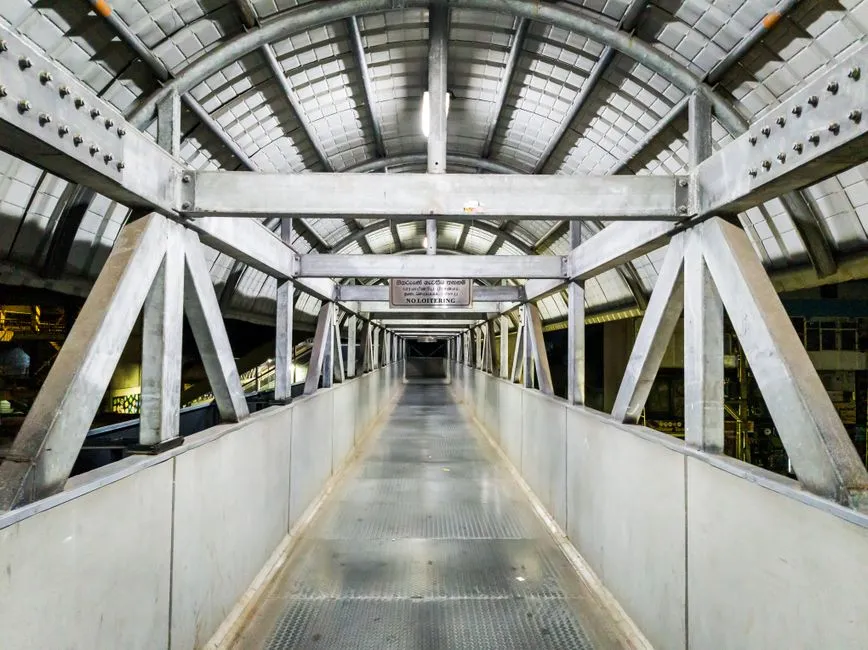
Danish-spec plant unit operations follow a consistent headworks-to-disinfection sequence, with the biological stage sized for combined nitrification, denitrification, and enhanced biological phosphorus removal.
Headworks. A rotary mechanical bar screen with 6 mm aperture (3 mm for plants above 10,000 PE) protects downstream equipment, followed by vortex grit removal and FOG skimming. Fine screens typically operate at 600–1,200 m³/m²·h hydraulic loading.
Primary treatment. A high-efficiency lamella clarifier or conventional primary settling tank removes 50–70% of TSS, reducing the organic load on the biological stage and improving downstream sludge settleability.
Biological stage. An A/O or A2O configuration handles nitrification and denitrification plus enhanced biological phosphorus removal. Typical operating envelopes are MLSS 3,000–5,000 mg/L, HRT 6–10 h, and SRT 10–20 days, with internal mixed-liquor recycle ratios of 2:1 to 4:1.
Solid-liquid separation. Conventional secondary clarifiers or an integrated MBR system using submerged PVDF flat-sheet membrane modules (0.1–0.4 µm pore) deliver sub-5 mg/L TSS effluent. MBR retrofits reduce footprint by 50–70% versus gravity clarifiers.
Tertiary polishing and disinfection. Sand or disc filtration polishes residual TSS, followed by UV or an on-site chlorine dioxide generator for microbiological compliance with EU Bathing Water Directive targets.
| Stage | Unit operation | Typical design parameter | Effluent target |
|---|---|---|---|
| Headworks | Rotary bar screen + grit/FOG | 3–6 mm aperture; 600–1,200 m³/m²·h | Debris-free, <5% TSS reduction |
| Primary | Lamella clarifier / settling tank | HRT 1.5–2.5 h | 50–70% TSS removal |
| Biological | A2O / BNR | MLSS 3,000–5,000 mg/L; SRT 10–20 d | TN <8 mg/L; TP <1 mg/L |
| Separation | CAS clarifier or MBR (0.1–0.4 µm) | Flux 15–25 L/m²·h (MBR) | TSS <5 mg/L (MBR); <30 mg/L (CAS) |
| Tertiary | Sand / disc filter + UV or ClO2 | Filtration rate 10–15 m/h | TSS <5 mg/L; fecal coliforms <100 CFU/100 mL |
MBR vs Conventional Activated Sludge: Which Fits a Danish Retrofit?
MBR has become the default upgrade path for Nordic sites where land is constrained and effluent consent limits are tightening. Conventional activated sludge (CAS) remains competitive for greenfield sites above 50,000 PE where footprint is available and tertiary filtration downstream of the clarifier is acceptable. The deciding factors for a Danish retrofit are footprint, effluent quality, and total lifecycle cost.
MBR delivers sub-5 mg/L TSS and under-1 µm particulate filtration in a single step, cutting civil footprint by 50–70% versus CAS. The trade-offs are higher specific energy demand (0.4–0.8 kWh/m³ versus 0.2–0.4 kWh/m³ for CAS) and membrane replacement every 8–12 years. HydropureWater's integrated MBR system covers a 10–2,000 m³/day capacity range, with the submerged PVDF flat-sheet membrane modules rated at 32–135 m³/day per module (HydropureWater product data, 2026)—directly relevant to the 5,000–50,000 PE retrofit segment that dominates Danish municipal tenders.
| Parameter | CAS (conventional) | MBR (submerged PVDF) |
|---|---|---|
| Effluent TSS | 10–30 mg/L | <5 mg/L |
| Effluent TN | 5–10 mg/L (with BNR) | 3–8 mg/L (with BNR) |
| Footprint | Reference (1.0×) | 0.3–0.5× |
| Energy (kWh/m³) | 0.2–0.4 | 0.4–0.8 |
| CAPEX ($/m³·d) | Lower (~70–80% of MBR) | Higher civil offset by smaller tankage |
| OPEX ($/m³) | Lower energy; higher sludge haulage | Higher energy; membrane replacement 8–12 yr |
2026 Equipment Selection Framework for Danish-Spec Projects
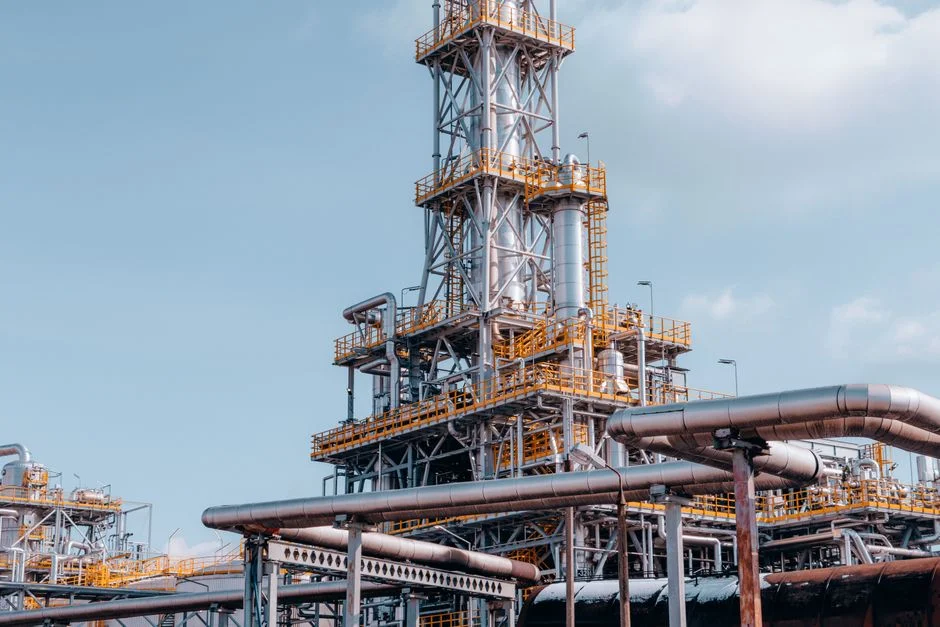
The framework for translating influent characterization into an OEM shortlist consists of five steps: (1) characterize influent flow and load; (2) map required effluent against 91/271/EEC plus 2024 recast obligations; (3) select the process train (CAS, BNR, MBBR, or MBR); (4) size unit operations; (5) build the OEM shortlist. Below is the stage-by-stage shortlist for 2026 Danish-spec procurement.
Headworks. A rotary mechanical bar screen with 3 mm aperture and overload bypass for plants above 10,000 PE.
Pre-treatment. A dissolved air flotation unit in the 4–300 m³/h range for high-FOG or industrial co-influent streams (food, dairy, slaughterhouse) that frequently feed Danish municipal plants.
Biological / decentralized. An integrated WSZ package unit for sites below 80 m³/h where burial, low visual impact, and fast install are priorities; otherwise an integrated MBR system for above-ground retrofit at higher capacities.
Sludge line. A plate-and-frame filter press in the 1–500 m² filtration area range to hit 20–25% dry solids cake and reduce haulage cost to Danish incineration or landfilling destinations.
Disinfection and dosing. An on-site chlorine dioxide generator (50 g/h to 20,000 g/h) compliant with EU Drinking Water Directive 98/83/EC and WHO guidelines, paired with a PLC-controlled chemical dosing skid for coagulant and polymer conditioning.
Frequently Asked Questions
How many municipal sewage treatment plants are in Denmark?
Denmark operates approximately 1,500 municipal sewage treatment plants, ranging from 30-PE village units to the 1.1 million-PE Lynetten facility in Copenhagen, with over 90% of households connected (Ministry of Environment and Energy, Denmark).
What does the EU Urban Waste Water Directive 91/271/EEC require Denmark to meet?
Collecting systems for agglomerations above