Chile operates 267 municipal sewage treatment plants as of April 2026, with 49 in Araucanía (18.4% of total) and 31 in Maule. Regulatory compliance is governed by SISS under DS 90/2000, which mandates effluent limits of 30 mg/L BOD₅, 125 mg/L COD, and 30 mg/L TSS for discharges to surface waters. The El Trebal-Mapocho plant in Santiago, upgraded by SUEZ in 2010, achieves 95% BOD removal at 800,000 m³/day capacity, serving as a benchmark for Chilean projects. This guide provides engineering specs, cost data, and equipment selection frameworks for 2025 upgrades, focusing on critical compliance and operational challenges unique to the Chilean context.
Chile’s Municipal Sewage Treatment Landscape: Data, Gaps, and Opportunities
Chile's municipal sewage treatment infrastructure comprises 267 plants as of April 2026, with a significant concentration in specific regions. Araucanía leads with 49 facilities (18.4% of the national total), followed by Maule with 31 plants, reflecting the distribution of population centers and agricultural activity (Poidata, April 2026). This regional concentration highlights both established capacity and areas with potential for upgrades and new construction, particularly in underserved regions.
Major operators shaping the Latin American compliance guide are Aguas Andinas (serving Santiago), Essbio (Biobío region), Ecopreneur (with a national presence), AMYSA (Rancagua), and Indurres (Santiago). Despite the number of operational plants, approximately 30% lack readily available website or contact data, indicating a fragmented information landscape for prospective project partners (Poidata analysis). Capacity gaps remain acute in regions like Atacama and Arica y Parinacota, which each operate fewer than five plants, despite facing severe water scarcity challenges. These regions present a clear need for flexible, rapidly deployable solutions such as containerized or mobile treatment units.
The La Farfana plant in Maipú, operated by Aguas Andinas, exemplifies high-capacity treatment in Chile, serving 3.7 million people with a design capacity of 8.8 m³/s (Aguas Andinas data). This scale is comparable to significant global facilities, though still smaller than giants like Shanghai’s Bailonggang plant, which processes 2.8 million m³/day. Understanding these benchmarks helps engineers contextualize project scope and performance targets within Chile's evolving municipal sewage treatment plant in Chile landscape.
| Region | Number of Plants (April 2026) | % of National Total | Key Operators (Examples) | Capacity Status |
|---|---|---|---|---|
| Araucanía | 49 | 18.4% | Ecopreneur, Local Municipalities | High Concentration, Food Processing Demands |
| Maule | 31 | 11.6% | Essbio, Agricultural Cooperatives | Significant Presence, Agricultural Runoff Challenges |
| Metropolitana (Santiago) | ~25 | ~9.3% | Aguas Andinas, Indurres | High Capacity, Urban Density |
| Atacama | <5 | <1.9% | Regional Utilities | Significant Gaps, Water Scarcity |
| Arica y Parinacota | <5 | <1.9% | Regional Utilities | Significant Gaps, Water Scarcity |
Chilean Regulatory Compliance: SISS Standards, DS 90/2000, and NCh 1333 Requirements
Regulatory compliance for municipal sewage treatment plant in Chile projects is primarily governed by the Superintendencia de Servicios Sanitarios (SISS), which enforces Supreme Decree 90/2000 (DS 90/2000). This decree establishes stringent effluent limits for discharges to surface waters, mandating a maximum of 30 mg/L for Biochemical Oxygen Demand (BOD₅), 125 mg/L for Chemical Oxygen Demand (COD), 30 mg/L for Total Suspended Solids (TSS), and 10 mg/L for Ammonia Nitrogen (NH₄-N). Adherence to these standards is critical for avoiding environmental penalties and ensuring sustainable water resource management.
For applications involving water reuse, Chilean Standard NCh 1333 specifies additional requirements. This standard mandates fecal coliform levels of less than 1,000 CFU/100mL and a residual chlorine concentration of less than 1 mg/L for irrigation purposes. Notably, a 2023 UNFCCC report indicates that approximately 60% of Chilean plants currently lack tertiary treatment, highlighting a significant opportunity for upgrades to meet reuse standards and mitigate water scarcity. sludge management is regulated by DS 609/2013, which categorizes biosolids: Class A biosolids (with less than 1,000 MPN/g pathogens) are approved for unrestricted land application, while Class B biosolids (less than 2 million MPN/g) require specific permits and restrictions. Utilizing a plate-frame filter press for DS 609/2013 sludge compliance can significantly reduce sludge volume and facilitate compliance.
Non-compliance with SISS regulations can result in substantial penalties, with fines reaching up to 1,000 Unidades Tributarias Mensuales (UTM), equivalent to approximately $75,000 USD (SISS 2024 enforcement report). This financial risk underscores the importance of robust design and operational protocols that meet or exceed all applicable Chile sewage treatment standards.
| Parameter | DS 90/2000 Effluent Limit (Surface Water Discharge) | NCh 1333 (Irrigation Reuse) |
|---|---|---|
| BOD₅ | 30 mg/L | N/A (Tertiary treatment implies low BOD) |
| COD | 125 mg/L | N/A (Tertiary treatment implies low COD) |
| TSS | 30 mg/L | <1 mg/L (Implied for high-quality reuse) |
| NH₄-N | 10 mg/L | N/A (Often reduced by advanced treatment) |
| Fecal Coliforms | N/A | <1,000 CFU/100mL |
| Residual Chlorine | N/A | <1 mg/L |
Engineering Specs for Chilean Sewage Plants: Flow Rates, Removal Efficiencies, and Process Design
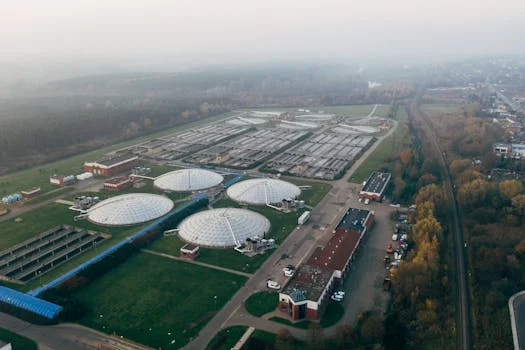
The average capacity of a municipal sewage treatment plant in Chile ranges from 5,000 to 50,000 Population Equivalent (PE), with approximately 10% of facilities exceeding 100,000 PE, such as the El Trebal-Mapocho plant in Santiago, which handles 800,000 PE. This spectrum dictates diverse engineering approaches, from compact modular systems to large-scale urban infrastructure. Hydraulic retention times (HRT) for conventional activated sludge systems in Chile typically fall between 6 and 12 hours, which is longer than the 4–8 hours often observed in EU or US plants. This extended HRT often necessitates larger footprints, making solutions like lamella clarifiers valuable for reducing tank volumes and overall plant area.
BOD/COD removal efficiencies for secondary treatment in Chile average 85–92% (SISS 2023 data), though only 60% of plants achieve consistently above 90% due to aging infrastructure and inconsistent operational practices. This contrasts with advanced systems such as MBR systems for space-constrained plants, which can consistently achieve 95–98% BOD removal and produce effluent suitable for reuse. Sludge production rates in Chilean plants adhere to DS 609/2013 guidelines, typically ranging from 0.2 to 0.4 kg TSS per kg of BOD removed. Facilities in regions with significant industrial and food processing contributions, such as Araucanía, often encounter FOG-heavy influent, where a DAF for high-FOG wastewater proves highly effective in primary treatment for TSS and FOG removal.
Energy consumption in Chilean sewage treatment plants averages 0.3–0.6 kWh/m³, which is higher than the 0.2–0.4 kWh/m³ observed in many European facilities. This difference underscores the importance of energy-efficient designs and operational optimization. The Santiago Biofactory project, for instance, aims for carbon-neutral operation, demonstrating a commitment to reducing energy footprint (UNFCCC case study). Engineers designing upgrades or new facilities must consider these El Trebal Mapocho engineering specs and operational parameters to achieve both regulatory compliance and cost-effectiveness.
| Parameter | Typical Chilean Plant (Secondary Treatment) | Global Benchmark (e.g., EU/US Advanced) | Impact/Opportunity |
|---|---|---|---|
| Average Capacity | 5,000–50,000 PE | 10,000–500,000+ PE | Scale-up potential for larger urban centers. |
| Hydraulic Retention Time (HRT) | 6–12 hours (Conventional AS) | 4–8 hours (Conventional AS) | Longer HRT implies larger footprint; opportunity for compact technologies. |
| BOD Removal Efficiency | 85–92% (60% achieve >90%) | 95–98% (Advanced systems like MBR) | Aging infrastructure limits performance; MBR offers significant improvement. |
| Sludge Production | 0.2–0.4 kg TSS/kg BOD removed | 0.15–0.3 kg TSS/kg BOD removed | Higher rates increase disposal costs; dewatering optimization needed. |
| Energy Consumption | 0.3–0.6 kWh/m³ | 0.2–0.4 kWh/m³ | Higher energy use; focus on efficient equipment and process optimization. |
Equipment Selection for Chilean Conditions: DAF vs MBR vs Lamella Clarifiers
Selecting appropriate wastewater treatment equipment for Chile requires a nuanced understanding of local challenges, including seismic activity, volcanic ash, and specific influent characteristics. For instance, engineering deep dive on DAF systems reveals their suitability. Dissolved Air Flotation (DAF) systems, such as the DAF for high-FOG wastewater, are particularly effective for treating wastewater with high concentrations of Fats, Oils, and Grease (FOG) and Total Suspended Solids (TSS), common in regions like Araucanía with its thriving food processing industry. These systems can achieve 92–97% TSS removal at flow rates ranging from 4–300 m³/h, though they typically require pH adjustment (6.5–8.5) for optimal performance.
Membrane Bioreactor (MBR) systems, like MBR systems for space-constrained plants, represent a superior option for urban areas with limited land availability, such as Santiago. MBR systems can reduce the plant footprint by up to 60% compared to conventional activated sludge systems, while producing a high-quality effluent with less than 1 mg/L TSS, suitable for reuse. The post-2010 upgrade of the El Trebal-Mapocho plant in Santiago serves as a testament to the benefits of advanced treatment technologies. Lamella clarifiers offer a cost-effective solution for plants dealing with high-turbidity influent, often encountered with agricultural runoff in regions like Maule. Their inclined plates increase the effective settling area, allowing for surface loading rates of 20–40 m/h, significantly higher than the 1–2 m/h for conventional clarifiers.
Seismic considerations are paramount in Chile, a country located in a high earthquake zone. All wastewater infrastructure must adhere to NCh 2369, the national standard for earthquake-resistant design. Underground WSZ Series for seismic zones offer inherent stability and protection against seismic forces. plants situated near active volcanoes, such as Villarrica or Puyehue, must contend with volcanic ash, which can clog screens and compromise treatment efficiency. Rotary mechanical bar screens equipped with self-cleaning brushes are recommended in such areas to maintain continuous operation. This comparative analysis aids in making informed decisions for a Chile DAF vs MBR comparison, ensuring resilience and compliance.
| Equipment Type | Ideal Chilean Application | Key Advantages | Considerations/Limitations |
|---|---|---|---|
| DAF System | Food processing wastewater (Araucanía), high FOG/TSS influent | 92-97% TSS/FOG removal, compact primary treatment | Requires pH adjustment (6.5-8.5), chemical consumption |
| MBR System (Integrated) | Space-constrained urban plants (Santiago), high effluent quality for reuse | 60% smaller footprint, <1 mg/L TSS effluent, high BOD removal | Higher CAPEX/OPEX than conventional, membrane fouling risk |
| Lamella Clarifier | High-turbidity influent (Maule), cost-effective secondary settling | High surface loading rate (20-40 m/h), reduced footprint vs. conventional | Less effective for very fine particles, requires proper flocculation |
Cost Breakdown for Chilean Sewage Projects: CAPEX, OPEX, and ROI Models
Understanding the financial implications of municipal sewage treatment plant in Chile projects is crucial for procurement teams. Capital Expenditure (CAPEX) for a 5,000 PE conventional sewage treatment plant in Chile typically ranges from $800,000 to $2 million. For an MBR system of similar capacity, CAPEX can increase to $1.2 million–$3 million (2025 data, adjusted for Chilean labor and material costs). This difference is primarily due to the advanced technology and higher material specifications of MBR systems, which often yield a smaller footprint and superior effluent quality.
Operational Expenditure (OPEX) for conventional plants generally falls between $0.15–$0.30/m³ of treated wastewater, while MBR systems incur higher OPEX, ranging from $0.25–$0.45/m³, largely driven by increased energy consumption for membrane aeration and cleaning. The Santiago Biofactory project aims to reduce its OPEX to $0.22/m³ through energy efficiency and resource recovery initiatives. Sludge disposal represents another significant operational cost, typically ranging from $50–$150/ton for landfilling, in compliance with DS 609/2013. Implementing a plate-frame filter press for DS 609/2013 sludge compliance can reduce sludge volume by up to 70%, leading to substantial savings in disposal costs.
Return on Investment (ROI) drivers are increasingly important for Araucanía sewage plant costs and other regions. Water reuse, enabled by achieving NCh 1333 standards, can generate significant revenue, estimated at $0.50–$1.00/m³ from sales of treated water for irrigation or industrial applications. The JY Series for NCh 1333 reuse compliance offers the tertiary treatment necessary to achieve this quality. SISS offers financial incentives, including 30–50% subsidies for new plant construction or significant upgrades in regions with less than 50% sewage coverage, such as Atacama, as outlined in their 2024 grant program. For a detailed MBR vs conventional cost comparison, further analysis is available.
| Cost Metric | Conventional Activated Sludge | MBR System | DAF System (Primary Treatment) |
|---|---|---|---|
| CAPEX (5,000 PE plant) | $800K – $2M | $1.2M – $3M | $150K – $500K (for primary stage) |
| OPEX (per m³ treated) | $0.15 – $0.30/m³ | $0.25 – $0.45/m³ | $0.05 – $0.10/m³ (for primary stage) |
| Sludge Disposal Cost | $50 – $150/ton | $60 – $180/ton (higher dewatering may reduce volume) | $40 – $100/ton (for primary sludge) |
| Energy Consumption | 0.3 – 0.6 kWh/m³ | 0.4 – 0.7 kWh/m³ | 0.05 – 0.1 kWh/m³ |
Procurement Checklist: 10 Steps to Selecting Equipment for Chilean Sewage Plants
Effective procurement for municipal sewage treatment plant in Chile projects demands a structured approach that accounts for local regulations, environmental conditions, and economic factors. This 10-step checklist guides procurement teams through the critical decision-making process:
- Confirm SISS Discharge Limits: Verify compliance with DS 90/2000 for effluent discharge and NCh 1333 if water reuse is a project goal.
- Audit Influent Quality: Conduct a minimum 30-day sampling program to characterize influent TSS, FOG, and pH. For FOG concentrations exceeding 200 mg/L, consider a DAF for high-FOG wastewater in primary treatment.
- Size System for Peak Flow: Design the treatment system to accommodate peak hydraulic loads, as Chilean plants typically experience peak flows of 1.5 times the average dry weather flow.
- Evaluate Seismic/Wind Loads: Ensure equipment and plant design meet NCh 2369 standards for earthquake and wind resistance. Underground WSZ Series for seismic zones offer enhanced structural stability.
- Compare CAPEX/OPEX: Conduct a comprehensive cost-benefit analysis comparing the Capital Expenditure and Operational Expenditure for at least three different system types (e.g., conventional, MBR, DAF) over a 20-year lifecycle.
- Request Vendor References in Chile: Obtain and verify references from vendors with successful installations in Chile, ideally with local operators like Ecopreneur or AMYSA.
- Verify Local Service Support: Confirm the vendor's local service capabilities, including spare parts availability and technical support, as approximately 30% of Chilean plants lack adequate maintenance contracts.
- Pilot-Test Equipment: For critical or novel technologies, consider pilot-testing equipment (e.g., MBR vs. DAF) for 3–6 months to validate performance under site-specific conditions.
- Secure SISS Permits: Factor in a 6–12 month lead time for obtaining all necessary SISS permits and environmental approvals.
- Plan for Sludge Disposal: Develop a detailed sludge management plan compliant with DS 609/2013. Incorporate technologies such as a plate-frame filter press for DS 609/2013 sludge compliance to minimize disposal volume and cost.
Frequently Asked Questions
What are the effluent limits for sewage treatment plants in Chile?
DS 90/2000 sets the primary effluent limits for surface water discharges in Chile, mandating 30 mg/L BOD₅, 125 mg/L COD, and 30 mg/L TSS. For water reuse applications, NCh 1333 specifies additional requirements, such as less than 1,000 CFU/100mL fecal coliforms and less than 1 mg/L residual chlorine, often requiring advanced tertiary treatment.
How much does a sewage treatment plant cost in Chile?
The Capital Expenditure (CAPEX) for a 5,000 PE conventional sewage treatment plant in Chile typically ranges from $800,000 to $2 million. For an MBR system of the same capacity, CAPEX can be higher, between $1.2 million and $3 million. Operational Expenditure (OPEX) averages $0.15–$0.30/m³ for conventional plants and $0.25–$0.45/m³ for MBR systems. Plants in Araucanía, benefiting from local labor costs, sometimes report up to 15% lower project costs.
What equipment is best for high-FOG wastewater in Chile?
For wastewater with high concentrations of Fats, Oils, and Grease (FOG), common in regions like Araucanía due to food processing, Dissolved Air Flotation (DAF) systems are highly effective. The DAF for high-FOG wastewater, for example, can remove 92–97% of FOG and TSS, making it ideal for primary treatment in such applications.
Do Chilean sewage plants need seismic-resistant design?
Yes, due to Chile's seismic activity, all sewage treatment plants must comply with NCh 2369, the national standard for earthquake-resistant design. Underground systems, such as the underground WSZ Series for seismic zones, are often recommended for their inherent stability and protection against seismic forces in high-risk zones.
Can treated sewage be reused in Chile?
Yes, treated sewage can be reused in Chile under the guidelines of NCh 1333, primarily for irrigation. To meet these standards, tertiary treatment is required, achieving effluent quality typically below 1 mg/L TSS and less than 1,000 CFU/100mL fecal coliforms. Systems like the JY Series for NCh 1333 reuse compliance are designed to produce water suitable for these applications.