What Makes Casting Wastewater Different from Other Industrial Streams
Casting wastewater is a four-contaminant stream: free oils and lubricants (50–500 mg/L), emulsified oils and surfactants (200–1,500 mg/L), suspended solids and foundry sand (500–5,000 mg/L TSS), and dissolved heavy metals — Zn, Pb, Cu, Ni, Fe, Cr (1–50 mg/L each). The matrix is generated from cooling water blowdown, quench water overflow, die release agent rinse water, sand mold wash water, and pickling rinse water, depending on whether the plant runs iron, steel, aluminum die casting, or investment casting lines.
Each upstream source pushes a different segment of the contaminant profile. Quench water delivers thermal load (often 40–60 °C) and suspended iron scale. Die release agent rinse water carries the bulk of the emulsified hydrocarbons and silicones. Sand mold wash water drives the TSS and silica load, while pickling rinse is the principal source of dissolved zinc, lead, and iron.
The Idaho National Engineering and Environmental Laboratory field demonstration at Lester Precision Die-Casting documented exactly this combination — oils, hydrocarbons, heavy metals, and silicones — in a single die casting wastewater stream, and the same conclusion applies across iron, steel, and aluminum foundries. Generic municipal wastewater design, like the activated-sludge framework in the Springer 2022 chapter on Indian wastewater systems, is not transferrable here: high temperature, free-oil fouling, and metal toxicity routinely kill biomass in conventional activated sludge when fed an undiluted casting stream.
2026 Influent and Effluent Quality Targets for Casting Plants
Engineers need concrete influent and effluent numbers to design against and to verify discharge compliance against three major regulatory regimes. Typical 2026 design targets for a casting wastewater line are summarized below.
| Parameter | Typical Influent (raw casting wastewater) | 2026 Effluent Target | Reference Standard |
|---|---|---|---|
| COD | 800–5,000 mg/L | <150 mg/L | GB 8978-1996 Class I; EU IED BAT-AEL |
| BOD₅ | 200–1,200 mg/L | <30 mg/L | GB 8978-1996 Class I |
| TSS | 500–5,000 mg/L | <50 mg/L | GB 8978-1996 Class I; EU IED |
| Oil & Grease | 200–2,000 mg/L | <10 mg/L | GB 8978-1996; EPA 40 CFR 433 |
| Total Heavy Metals (Zn+Pb+Cu+Ni+Cr) | 5–250 mg/L combined | <5 mg/L (Zn <2 mg/L) | GB 8978-1996; EU IED BAT-AEL |
| pH | 4–9 | 6–9 | GB 8978-1996; EPA 40 CFR 433 |
| Temperature | 40–60 °C (quench water) | <40 °C at biological/membrane stage | Design constraint, not regulated |
China GB 8978-1996 Class I and the EU Industrial Emissions Directive (IED) 2010/75/EU BAT-AEL ranges set the effluent benchmarks cited in the table. North American die casters fall under the U.S. EPA Metal Products and Machinery Point Source Category, 40 CFR Part 433, which sets daily maximum and monthly average limits for Zn, Pb, Cu, Ni, Cr, and oil & grease. Temperature and pH are not regulated but act as hard design constraints: anything above ~40 °C damages biological activity and accelerates RO membrane fouling, and pH outside 6–9 forces additional neutralization before the precipitation stage.
The Standard 2026 Process Flow for Casting Wastewater
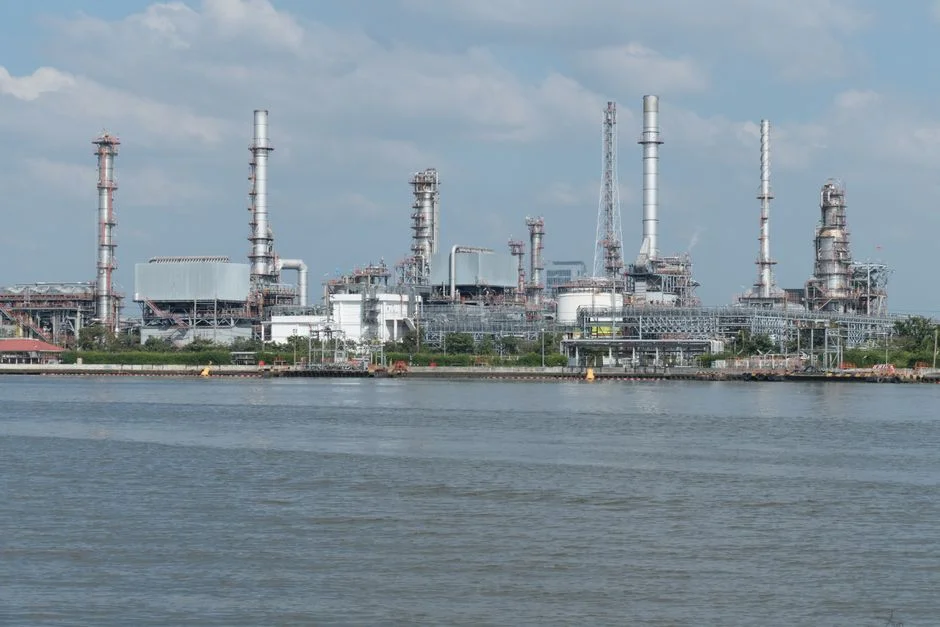
A 2026 process train for a casting plant runs in eight sequential unit operations. Each step addresses one contaminant class, and missing any one step typically shows up as a discharge failure downstream.
- Coarse screening. A rotary bar screen with 1–5 mm bar spacing removes rags, plastics, wood chips, and large foundry debris before they enter the equalization tank.
- Grit removal and equalization. A grit chamber and equalization basin normalize pH (typically dosing NaOH or H₂SO₄), temperature (quench water can exceed 60 °C), and flow spikes from intermittent die release events.
- Free oil recovery. A corrugated plate interceptor (CPI) or API separator skims 60–80% of free oil before the water reaches flotation. Skimmed oil is routed to a holding tank for re-sale or fuel-blending.
- Dissolved air flotation (DAF) with coagulant/polymer dosing. The dissolved air flotation system targets emulsified oil, colloidal metals, and remaining TSS. Micro-bubbles (20–80 µm) attach to oil droplets and float them to the surface for skimming. The DAF line covers 4–300 m³/h in 13 standard models, which fits the flow range of most mid-size foundries.
- Heavy metal precipitation and lamella clarification. Hydroxide or sulfide precipitation at controlled pH (8.5–9.5 for Zn/Pb) is followed by a HydropureWater lamella clarifier operating at 20–40 m/h surface loading, dropping TSS and metal-hydroxide floc to settle in a small footprint.
- Multimedia filtration polishing. Sand/anthracite filters drop TSS to <10 mg/L to protect downstream membranes and reduce fouling frequency.
- Optional MBR or RO for water reuse. An industrial RO system achieves up to 95% recovery and produces reuse-quality water for cooling tower make-up, quench water, or die release agent dilution.
- Sludge handling. A plate and frame filter press (1–500 m² filtration area) dewaters combined DAF float and lamella sludge to below 70% moisture, producing a disposable cake and a filtrate that returns to the head of the plant.
On greenfield designs, engineers often combine equalization, CPI, and DAF in a single packaged skid. On retrofits of older foundries, the most common gap is missing the multimedia filter ahead of RO — a costly omission, because unfiltered TSS clogs RO membranes within weeks rather than years.
Choosing the Right Oil Removal Technology: DAF vs CPI vs Hydrocyclone vs Membrane
Oil-removal unit selection is driven by droplet size, flow stability, and whether the water is destined for discharge or reuse. The four options engineers typically evaluate are not interchangeable.
| Technology | Target Oil Droplet Size | Removal Efficiency | Best Use Case | Limitations |
|---|---|---|---|---|
| CPI / API separator | >100 µm (free oil) | 60–80% free oil | Pre-treatment ahead of DAF; low CAPEX | Large footprint; residual oil 50–100 mg/L |
| DAF | 5–50 µm (emulsified) | 90–95% | Primary oil & TSS removal; 4–300 m³/h | Requires coagulant/polymer dosing; air compressor energy |
| Hydrocyclone | 10–100 µm | 70–90% | High-pressure coolant streams with stable emulsions | Sensitive to flow variation; not for batch discharges |
| Rotary membrane (active-surface) | <5 µm (dissolved/emulsified) | >99% on polished feed | Tight space, reuse-grade polishing | High CAPEX; membrane fouling on high-oil feeds — requires DAF/CPI upstream |
The Idaho National Lab field demonstration at Lester Precision Die-Casting showed that rotary membrane systems deliver reuse-grade water on a casting stream — but only after CPI and DAF have already dropped the bulk of the free and emulsified oil. For most mid-size casting plants, the baseline train is CPI followed by a dissolved air flotation system; membranes are added only when reuse targets demand it.
Heavy Metal Removal: Hydroxide vs Sulfide Precipitation vs Ion Exchange
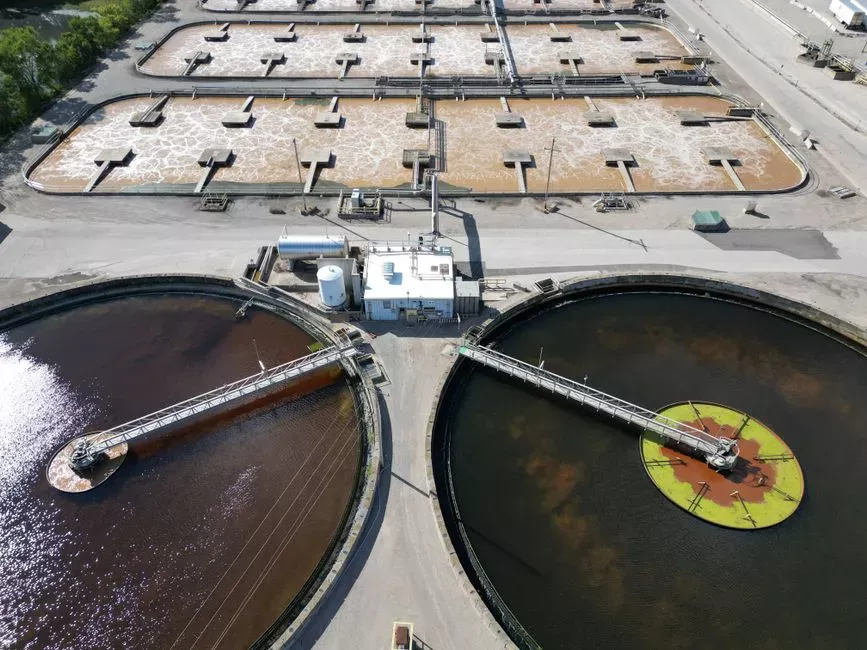
Heavy metal removal chemistry drives both discharge compliance and downstream sludge volume. Three options dominate the 2026 selection matrix for casting wastewater.
Hydroxide precipitation with NaOH or Ca(OH)₂ at pH 8.5–10 is the lowest-cost baseline and works for Zn, Pb, Fe, and most Cu streams. Nickel and cadmium require tighter pH control (10–11) and risk amphoteric re-dissolution if pH drifts above that band — a common failure mode in plants that skip automatic pH control. Calcium-based dosing (lime) generates roughly 2–3× more sludge than NaOH and complicates downstream dewatering.
Sulfide precipitation with Na₂S or FeS delivers tighter residuals (<0.5 mg/L for Hg, Cu, Cd) across a wider pH window, making it the right choice for a Cu/Ni polishing stage. The trade-off is H₂S safety: sulfide reactors must be sealed, and off-gas requires alkaline scrubbing with continuous H₂S monitoring (typically <10 ppm at the operator station per OSHA 29 CFR 1910.1000).
Ion exchange / chelating resin is justified only for trace polishing of Cu or Ni to <0.1 mg/L ahead of RO, or for closed-loop reuse where the discharge target is sub-ppm. Capital and resin replacement cost (Na-form or H-form cation resin at USD 2,000–6,000/m³) put resin outside the baseline design.
The standard 2026 train is hydroxide precipitation with a HydropureWater lamella clarifier as the primary metal-removal step, sulfide precipitation for Cu/Ni polishing when discharge limits are tight, and ion exchange only in reuse loops. The metal hydroxide sludge leaving the clarifier feeds directly into a plate and frame filter press for dewatering, and the dewatering cost is one of the dominant OPEX lines — see our sludge thickening cost guide for benchmarks. For nickel-specific targeting, the chemistry is detailed in our nickel removal technology guide.
2026 CAPEX and OPEX Snapshot for a Mid-Size Casting Plant
The benchmark below is sized for a 100 m³/h flow, 24/7 operation, and a 60%+ reuse target — typical of a mid-size die casting plant producing 2,000–5,000 tonnes of castings per year.
| Cost Line | 2026 Range (USD) | Notes |
|---|---|---|
| DAF + lamella + filter press train (CAPEX) | 280,000–520,000 | Includes chemical dosing skids and controls |
| MBR polishing add-on (CAPEX) | 120,000–200,000 | Optional; justified at >50% reuse targets |
| RO reuse loop (CAPEX) | 180,000–350,000 | Two-pass RO for reuse-grade water |
| NaOH / Na₂S chemicals (OPEX) | 15–25% of OPEX | |
| Sludge hauling / disposal (OPEX) | 20–30% of OPEX | Reduced by filter press dewatering |
| Energy (OPEX) | 25–35% of OPEX | DAF air compressors, RO high-pressure pumps |
Closing the loop with 70%+ reuse can cut freshwater intake cost by 40–60% for a mid-size die casting plant (HydropureWater field data, 2026). The two CAPEX items that move the most are the dissolved air flotation system (sized to flow and oil loading) and the industrial RO system (sized to reuse volume). The plate and frame filter press line is the single largest lever for OPEX reduction because every point of moisture removed in the cake cuts hauling tonnage and cost.
These figures vary widely by region, influent loading, and stainless-vs-carbon steel construction. Confirm with vendor-specific engineering before procurement.
Frequently Asked Questions
What influent and effluent parameters define a casting wastewater design in 2026?
Design against COD 800–5,000 mg/L influent to <150 mg/L effluent, TSS 500–5,000 mg/L to <50 mg/L, oil & grease 200–2,000 mg/L to <10 mg/L, and total heavy metals (Zn+Pb+Cu+Ni+Cr) to <5 mg/L with Zn <2 mg/L. Anchor numbers to GB 8978-1996 Class I, EU IED BAT-AEL, and EPA 40 CFR 433.
Which oil removal technology should I choose for a die casting wastewater line — DAF, CPI, hydrocyclone, or membrane?
CPI handles free oil >100 µm at 60–80% removal, DAF handles 5–50 µm emulsified oil at 90–95% removal, hydrocyclone suits stable high-pressure coolant emulsions, and rotary membrane is reserved for reuse-grade polishing after DAF/CPI. Most mid-size plants standardize on CPI followed by DAF.
How do I precipitate heavy metals — hydroxide, sulfide, or ion exchange?
Hydroxide precipitation with NaOH at pH 8.5–10 is the baseline for Zn, Pb, Fe, and most Cu streams; sulfide precipitation with Na₂S or FeS is added as a Cu/Ni polishing step to reach <0.5 mg/L; ion exchange is used only for trace polishing to <0.1 mg/L ahead of RO.
What is the 2026 CAPEX and OPEX range for a 100 m³/h casting wastewater line?
A DAF + lamella + filter press train runs USD 280,000–520,000; an MBR polishing add-on adds USD 120,000–200,000; an RO reuse loop adds USD 180,000–350,000. OPEX is dominated by chemicals (15–25%), sludge hauling (20–30%), and energy (25–35%).
Is closed-loop water reuse or zero liquid discharge (ZLD) feasible for a mid-size casting plant in 2026?
Yes — 70%+ reuse is achievable with DAF + lamella + multimedia filter + RO, cutting freshwater intake cost by 40–60% (HydropureWater field data, 2026). Full ZLD adds a brine concentrator and crystallizer and is justified only above ~200 m³/h or where discharge permits are constrained; for electronics-grade benchmarks, see our electronics wastewater ZLD systems reference.