What Wastewater a Muntinlupa Data Center Must Treat
A data center in Muntinlupa needs a segregated treatment plan for cooling-tower blowdown, reverse-osmosis reject, generator or maintenance wastewater, and seasonal stormwater or habagat runoff. Blowdown is normally the largest stream and may contain 1,200–6,000 mg/L TDS, 10–50 mg/L suspended solids, biocides, inhibitors, and corrosion products, according to HydropureWater’s 2026 Manila analysis. A practical train often starts with 10–25 micron side-stream filtration, followed by UF and brackish-water RO; a DAF unit can pretreat oily generator or maintenance flows. High-reuse sites may add NF, while restricted discharge or zero-liquid-discharge requirements may justify MVC evaporation. Final design depends on actual makeup-water chemistry, cooling cycles, discharge route, Muntinlupa permit conditions, and LLDA or DENR requirements.
The scope should be established stream by stream rather than around one generic “industrial effluent” system. HydropureWater’s 2026 Manila guide identifies four distinct waste streams: cooling-tower blowdown, reverse-osmosis reject, diesel-generator cooling water or floor-wash wastewater, and seasonal stormwater or habagat runoff. The distinction matters because the streams differ in flow, chemistry, variability, treatment objectives, and likely discharge route.
| Stream | Scope and source characteristics | Dedicated testing | Likely initial route |
|---|---|---|---|
| Cooling-tower blowdown | Largest process stream; at 4 cycles of concentration, HydropureWater’s 2026 benchmark is 25–30% of makeup water. | TDS, chlorides, sulfates, phosphates, suspended solids, pH, residual biocide, corrosion inhibitors, antiscalants, oil and grease, temperature, and relevant metals. | Equalization, cooling, filtration, membrane treatment, then reuse or permitted discharge. |
| RO reject | Concentrated dissolved solids; not usable permeate. | TDS, conductivity, hardness, sulfate, chloride, silica, temperature, flow, and residual chemical levels. | Separate treatment or controlled evaluation for return to the recovery train. |
| Generator or maintenance wastewater | Intermittent and potentially oily. | Oil and grease, suspended solids, pH, temperature, metals where relevant, and chemical residues. | Oil-and-solids removal before any membrane application. |
| Stormwater or habagat runoff | Seasonal and potentially contaminated where it contacts equipment or process areas. | Suspended solids, oil and grease, pH, metals, temperature, and site-specific contaminants. | Segregated drainage and treatment pending runoff assessment. |
RSP Engineers distinguishes process wastewater from sanitary sewage. Waste from offices, restrooms, and kitchens requires a separate management pathway and should not be mixed into the industrial treatment train during early planning. Similarly, runoff that contacts outdoor equipment or contaminated process areas cannot be assumed to have the same quality or route as clean site runoff. Further treatment examples are available in HydropureWater’s guide to tropical data-center wastewater treatment and its review of data-center blowdown treatment in a water-stressed city.
How Tropical Conditions Change the Treatment Design
Warm, humid conditions increase biological growth and membrane-fouling risk; HydropureWater’s 2026 Manila analysis reports that warm loop water at 28–32°C can support colloidal solids and biofilm fragments. These values are a source-specific engineering analysis, not verified measurements for a Muntinlupa site.
Source-water uncertainty is equally important. HydropureWater’s 2026 Manila analysis gives regional blowdown benchmarks of 1,200–6,000 mg/L TDS and 10–50 mg/L suspended solids, but requires confirmation through site sampling. The same analysis reports that surface-intake TDS can reach 300–600 mg/L during the dry-season salinity period, while Laguna Lake sources vary through the habagat. Neither condition should be presumed at the actual Muntinlupa intake.
Cooling-tower cycles of concentration create the central trade-off. Operating at 4–6 cycles reduces blowdown volume, but it also increases scaling risk and concentrates residual biocides, inhibitors, silica, and other dissolved constituents. Raising cycles of concentration is therefore a water-saving decision that must remain compatible with makeup chemistry, treatment chemicals, and membrane limits.
| Parameter | Cooling-tower makeup target identified by HydropureWater’s 2026 guide | Design implication |
|---|---|---|
| TDS | 500–1,500 mg/L | Confirm source-water baseline and concentrate cycle selection. |
| Suspended solids | 10–25 mg/L | Define pretreatment and side-stream filtration duty. |
| pH | 6.5–8.5 | Coordinate with chemical compatibility and discharge criteria. |
| Silica | Below 150 mg/L | Check concentration and antiscalant limits before recovery is fixed. |
Before sizing equipment, test the actual source for salinity, hardness, silica, calcium sulfate risk, chloride, sulfate, turbidity, organics, and biocide chemistry. The multi-media filtration equipment described for pretreatment and the industrial softening train should be selected only after those results define the required duty, not merely because they appear in a reference design.
Segregate Streams Before Choosing Unit Operations
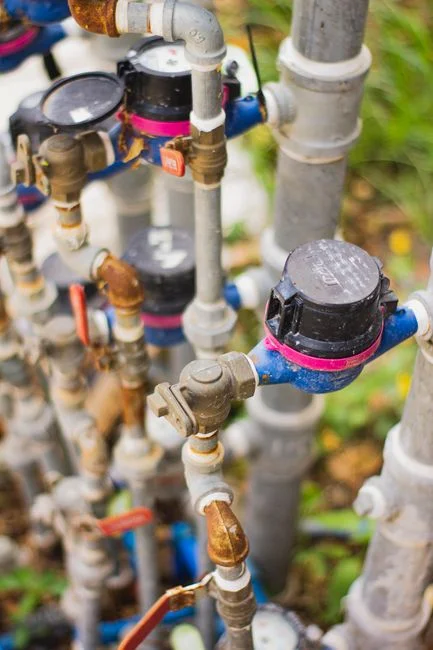
The process-flow logic is to segregate streams, equalize and cool where required, remove oil and suspended solids, balance pH, protect membranes, remove dissolved salts, disinfect or polish as required, monitor, and then reuse or discharge. Each arrow needs a design input: flow, temperature, chemistry, residual hold-up, destination, and failure response.
| Sequence | Engineering function | Required input |
|---|---|---|
| Segregate | Prevent process, oily, sanitary, and runoff streams from destabilizing one another. | Origin, discharge point, peak flow, and chemical inventory. |
| Equalize and cool | Reduce flow and temperature peaks before sensitive unit operations. | Flow duration, temperature, heat balance, and storage volume. |
| Remove oil and solids | Protect membranes, pumps, and downstream treatment. | Oil and grease, suspended solids, and variability. |
| Balance pH and condition feed | Protect RO membranes and meet treatment requirements. | Alkalinity, chemical demand, temperature, and residual chemistry. |
| Remove dissolved salts | Produce reusable permeate or compliant discharge. | TDS, hardness, sulfate, chloride, silica, and recovery target. |
| Disinfect, polish, monitor, and route | Protect reuse, satisfy permit duties, and preserve operating margin. | Reuse point, permit conditions, sampling plan, and residual route. |
Generator cooling water and oily floor wash should pass through DAF or equivalent oil-and-solids pretreatment before membrane treatment. The DAF equipment specified for oily wastewater pretreatment addresses that separation step, but performance still depends on the incoming oil and solids characteristics. RSP Engineers identifies chemical precipitation and specialized filtration for relevant pollutants, while also warning that hot blowdown and treatment chemicals may affect downstream infrastructure and biological treatment.
RO reject needs a deliberate decision: treat it separately or evaluate its controlled return to the selected recovery train. Its concentrated dissolved solids mean it cannot be counted as usable permeate. Keep episodic stormwater outside the cooling-tower balance tank unless the design basis demonstrates that intermittent chemistry will not upset the process.
Chemical dosing should be repeatable rather than manually adjusted. The automatic chemical dosing system can serve as the control point for pH and other treatment chemicals after compatibility review. Any downstream disinfection route must also account for residual chemistry; the UV treatment approach described for microbial control is relevant only after its residual and byproduct implications are evaluated.
Compare Four Blowdown Treatment Trains
Side-stream filtration alone controls suspended solids but does not remove dissolved salts, so it cannot by itself resolve a TDS exceedance. UF with brackish-water RO is the more complete recovery train, while NF polish and MVC brine concentration address more demanding reuse or disposal conditions.
| Option | Recovery | Treatment objective | Principal risks | Residual stream | Best-fit condition |
|---|---|---|---|---|---|
| 1. Side-stream filtration | No volume reduction; enables higher cycles of concentration. | A 10–25 micron self-cleaning filter on 1–5% of circulation flow; HydropureWater’s 2026 guide describes suspended solids below 15 mg/L. | TDS remains unresolved; filter fouling requires effective pretreatment. | Concentrated blowdown remains. | Residual solids control is needed, but dissolved-salt limits are not the binding issue. |
| 2. UF + BWRO | 50–85% in HydropureWater’s 2026 benchmark. | UF pretreatment followed by brackish-water RO; permeate TDS of 10–50 mg/L in the same benchmark. | Biofouling, scaling, antiscalant mismatch, membrane cleaning. | RO reject requires a controlled route. | Cooling-water recovery is required and discharge chemistry can accept concentrated reject. |
| 3. UF + RO + NF polish | 70–85% for the NF stage in HydropureWater’s 2026 benchmark. | Use NF where hardness, rather than total TDS, is the binding constraint; NF permeate blends with RO permeate. | Additional energy, controls, capital, and concentrate handling. | NF concentrate requires management. | Reuse quality is constrained by hardness or residual mineral content. |
| 4. UF + RO + MVC brine concentration | 95–98% in HydropureWater’s 2026 benchmark. | Concentrate reject and recover distillate below 10 mg/L TDS; benchmark energy is 15–25 kWh per 1,000 gallons. | High electrical demand, fouling, scaling, maintenance, and solids handling. | Concentrated salts remain for disposal. | Restricted discharge or a tenant zero-liquid-discharge requirement justifies the added complexity. |
For Option 2, evaluate UF pretreatment for cooling blowdown ahead of an industrial RO system for blowdown recovery. HydropureWater’s 2026 benchmark puts operating cost at $1.50–$3.00 per 1,000 gallons for this train. That is a published regional benchmark, not a Muntinlupa quotation.
No option should be called compliant until the applicable permit, receiving-water classification, source chemistry, and residual route are confirmed. For example, MVC vaporization reduces liquid volume but does not eliminate the need to manage solid salts.
Specify Pretreatment, Controls, and Monitoring
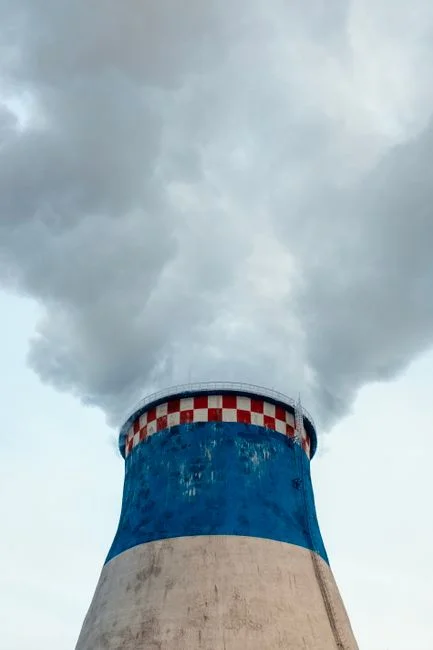
A reliable treatment train requires protected membranes, controlled chemistry, and operating trends that show when performance is drifting. HydropureWater’s 2026 Manila analysis recommends a multi-media pre-filter before UF, and its equipment application describes multi-media filtration for suspended solids, turbidity, colloids, and RO protection.
| Function | Specified equipment or measurement | Operating record |
|---|---|---|
| Solid removal | Multi-media pre-filter before UF; confirmed pore or filtration basis. | Differential pressure, backwash or cleaning frequency, and effluent solids verification. |
| Chemical conditioning | Automatic dosing for pH adjustment and, where justified, coagulant, flocculant, antiscalant, and biocide control. | Chemical demand, dose rate, tank level, and residual concentration. |
| Membrane protection | UF and RO pressure and recovery tracking using the membrane elements and filter elements appropriate to the design basis. | Feed and permeate pressure, normalized permeate conductivity, recovery, and cleaning events. |
| Process monitoring | Conductivity and flow measurement for permeate and reject; pH and temperature monitoring; laboratory sample ports. | Continuous trend plus periodic laboratory verification. |
| Microbial control | UV or another selected method after residual and byproduct implications are assessed. | UV intensity or dose where applicable, operating status, and downstream verification. |
The chemical package should be reviewed against membrane compatibility, downstream discharge or reuse requirements, and operator safety before the multi-media pretreatment section is frozen. Spare RO and UF membrane elements, compatible treatment valves and media, and critical instrumentation should be included in the maintainability plan.
Operator set points should address differential pressure, normalized permeate conductivity, recovery, and alarm response. A single turbidity reading is not proof that the membranes are protected: conductivity, pressure, flow, temperature, pH, and laboratory results must be interpreted together. HydropureWater’s 2026 analysis identifies chemical-free UV as a control for planktonic bacteria and biofilm precursors in warm loop water without adding residuals that accumulate at high cycles, but that basis still requires site validation.
Plan Permits, Footprint, and Residual Disposal
Permit and footprint decisions belong in concept design because late changes can force major redesign. DENR DAO 2021-19 is a potential industrial-effluent instrument, but its exact application and numerical limits must be verified for the site’s permit and receiving-water classification. HydropureWater’s 2026 Manila analysis identifies DENR, LLDA, and PEOS/EIS as project considerations, not automatic approvals.
| Checkpoint | Evidence or decision required | Why it affects design |
|---|---|---|
| Industrial effluent route | Confirm DENR DAO 2021-19 applicability, permit conditions, and receiving-water classification. | Sets discharge targets and may require more advanced treatment. |
| Laguna Lake watershed | Confirm whether discharge affects the watershed and whether LLDA clearance is required; HydropureWater’s 2026 Manila analysis identifies this issue for Cavite, Laguna, and portions of Rizal. | May restrict discharge and support higher recovery or ZLD. |
| PEOS/EIS | Assess applicability for the hyperscale development with responsible authorities. | May add environmental studies and schedule dependencies. |
| Receiving sewer authority | Obtain industrial pretreatment and connection requirements before detailed design. | Late-discovered limits can force treatment changes, as RSP Engineers warns. |
| Residual disposal | Assign a permitted route for RO reject, NF concentrate, MVC salts, sludge, or oil-contaminated solids. | Determines storage, collection, transport, and treatment modules. |
Allocate space for tanks, pumps, chemical storage, membrane skids, sludge or brine handling, drainage, spill containment, maintenance access, and chemical delivery. RSP Engineers describes a possible footprint from a few hundred square feet for simple pH neutralization to several thousand square feet for filtration and chemical precipitation; those figures are conceptual guidance, not a Muntinlupa area estimate.
Early coordination is particularly important for Muntinlupa. The broader treatment logic in a Mediterranean data-center blowdown treatment guide illustrates how discharge restrictions can change recovery objectives, but the Philippine permit path must be checked independently.
Build the Budget from Water and Energy Inputs
A defensible budget starts with published regional benchmarks and then replaces them with verified site and supplier inputs. HydropureWater’s 2026 Metro Manila analysis gives CapEx of $250,000–$500,000 for a 50,000 GPD RO train and OpEx of $1.50–$3.00 per 1,000 gallons. These are published regional benchmarks requiring vendor and site validation, not Muntinlupa prices.
The same 2026 analysis estimates that a ZLD overlay adds $3–8 million and $5–$15 per 1,000 gallons, while increasing electrical demand and maintenance complexity. HydropureWater also reports an RO-only payback of roughly 3–5 years under its stated assumptions. Recalculate that result using local water tariffs, discharge fees, achieved recovery, energy prices, membrane replacement, chemical cost, and uptime.
| Budget module | Inputs to request | Commercial treatment |
|---|---|---|
| Pretreatment and storage | Source analysis, design flow, filtration basis, tank volume, and site utilities. | Equipment, vessels, pumps, installation, and civil works. |
| UF, RO, or NF | Feed chemistry, recovery target, permeate quality, and redundancy concept. | Membrane skids, controls, guarantees, and commissioning. |
| Dosing and disinfection | Chemical inventory, consumption, compatibility, and residual-disinfection basis. | Skids, tanks, sensors, safety provisions, and consumables. |
| Residual treatment | Reject volume and chemistry, NF concentrate, MVC salts, sludge, or oily waste. | Concentration, storage, collection, disposal, and transport. |
| Civil and site works | Confirmed footprint, drainage, containment, access, power, and hazardous-area requirements. | Foundations, buildings, piping, electrical, drainage, and spill control. |
| Operations | Energy price, membrane life, cleaning frequency, chemicals, labor, monitoring, and service support. | Annual OpEx, maintenance, training, and consumables. |
Request a life-cycle comparison based on feed-water analysis and design flow rather than nominal capacity alone. The industrial RO system for blowdown recovery should be compared with pretreatment and residual treatment, not quoted as a stand-alone line item. Where solids dewatering is part of the scope, define the interface with a plate-and-frame filter press rather than assuming the selected RO supplier will provide that package.
Turn the Design Basis into an RFQ
A useful RFQ asks bidders to close the same engineering gaps and demonstrate performance under verified feed conditions. Start with a stream-by-stream mass balance covering makeup water, evaporation, blowdown, recovery, reuse, discharge, and residual concentrate.
| RFQ package | Mandatory bidder response | Evaluation evidence |
|---|---|---|
| Design basis | Source-water analysis, cooling-water chemistry, chemical program, peak and average flow, temperature, reuse targets, discharge route, and permit assumptions. | Named inputs, sampling basis, exclusions, and stated uncertainty. |
| Process design | Stream-by-stream mass balance, equipment schedule, control philosophy, and residual-management route. | Calculation notes showing recovery, peak demand, and chemical consumption. |
| Performance guarantees | Guarantees tied to feed conditions, permeate quality, recovery, energy consumption, availability, cleaning frequency, chemical consumption, and residual treatment. | Defined test protocol, correction curves, exclusions, and remedy. |
| Commercial schedule | Separated equipment, civil works, installation, commissioning, training, first-year consumables, and annual service costs. | Lump-sum or unit-price basis with optional items clearly identified. |
| Service and maintainability | Local service capability, critical spare parts, operator training, remote diagnostics, hazardous-area and electrical requirements, commissioning support, and maintenance access. | Named resources, response arrangements, documentation, and support model. |
Valicor’s 2026 data-center service overview provides a procurement benchmark: operators value compliant treatment and transport, scheduled support, rapid-response coverage, high-capacity service, and operational continuity during emergencies. Muntinlupa bidders should provide local evidence for each claim, including response coverage, emergency hauling or treatment, and continuity arrangements.
Require the bidder to price both base and alternate outcomes. The base case should reflect the confirmed discharge route and permit assumptions; alternatives should show the incremental cost and site impact of additional recovery, NF polish, or MVC treatment. HydropureWater’s separate Sarajevo data-center treatment guide can support comparison of operating models, while a campus wastewater treatment review should not substitute for project-specific guarantees.
Frequently Asked Questions
How much should a Muntinlupa data center budget for cooling-blowdown recovery?
Use HydropureWater’s 2026 Metro Manila benchmark of $250,000–$500,000 for a 50,000 GPD RO train only as a regional planning allowance, not a site price. Request a module-by-module quotation covering pretreatment, UF, RO, storage, controls, civil works, commissioning, residual treatment, and annual consumables. Separately request operating-cost sensitivity for the published $1.50–$3.00 per 1,000 gallons benchmark. Obtain a site-specific price after the source analysis, flow profile, reuse target, permit route, and electrical requirements are fixed.
How should the UF and RO train be sized?
Size the train from peak and average blowdown flow, cycles of concentration, source-water chemistry, required recovery, and reuse or discharge quality—not from a headline permeate rate. HydropureWater’s 2026 analysis gives 50–85% recovery for UF plus BWRO, but the feasible operating point depends on silica, hardness, sulfate, temperature, and antiscalant compatibility. Request feed-specific calculations, membrane sizing, minimum and maximum turndown, redundancy, normalized conductivity, cleaning triggers, and the proposed residual route.
What evidence should I request when selecting a wastewater-treatment supplier?
Request guaranteed permeate quality, system recovery, specific energy consumption, availability, membrane-cleaning frequency, chemical consumption, and residual-treatment performance under stated feed conditions. Also request local service coverage, critical spare parts, operator training, commissioning support, remote diagnostics, and an emergency-response plan. Valicor’s 2026 service overview identifies compliant handling and transport, scheduled and rapid-response support, high-capacity service, and emergency continuity as relevant procurement benchmarks.
Which Muntinlupa permit issues could affect equipment selection or lead time?
Confirm whether DENR DAO 2021-19 applies, whether the discharge affects the Laguna Lake watershed and requires LLDA clearance, whether PEOS/EIS applies to the development, and what pretreatment the receiving sewer authority requires. HydropureWater’s 2026 Manila analysis identifies these instruments as potential requirements, not approvals. Request written pre-application feedback from the responsible authorities and do not freeze the recovery train until the discharge route and residual disposal method are confirmed.
Why must oily generator or maintenance wastewater be separated?
Generator cooling water and floor wash can contain oil that fouls membranes and upset the biological or chemical balance of downstream treatment. Route it through DAF or equivalent oil-and-solids pretreatment before considering reuse or membrane treatment. Verify the actual oil and grease load, suspended solids, pH, temperature, flow variability, and chemical residuals before sizing the separator. Keep this intermittent stream separate from routine cooling blowdown unless the combined flow and chemistry can be demonstrated as compatible.