
Start with every wastewater stream at the Albuquerque site
An Albuquerque data center needs a source-specific treatment train for cooling blowdown and other wastewater—not a generic wastewater plant. Segregate cooling-tower blowdown, cooling-tower drain, process or equipment wastewater, sanitary sewage and stormwater, then characterize pH, temperature, total dissolved solids, hardness, silica, metals, suspended solids, oil and grease, biocides and anti-scalants. Cooling blowdown usually requires concentration control, pretreatment, disinfection or biocide control and a defined discharge or reuse route. Equipment selection depends on source-water chemistry, blowdown volume, cycles of concentration, reuse demand and the receiving sewer’s requirements.
Combining these streams before defining their destinations creates an avoidable treatment problem. Blowdown may carry elevated salts, residual biocide, anti-scalant and heat, while sanitary sewage, cleaning wastewater and stormwater have different contaminants, flow patterns and discharge requirements. Build a register that assigns a meter, flow estimate, sampling point, chemistry record and proposed destination to every source. This data-center cooling blowdown treatment framework is useful for structuring that register, but the project team must replace generic assumptions with site data.
Identify whether the facility uses open-loop evaporative, closed-loop, hybrid or dry-cooled equipment. The North Carolina State University source, America’s Data Center Boom Puts New Pressure on Local Water Resources, reported in 2026, states that open-loop evaporative systems extract and evaporate water every day of the year, while closed-loop and dry-cooling alternatives can reduce direct water consumption. That comparison must still be connected to the facility’s heat load and operating plan.
| Wastewater source | Characterization focus | Design decision before treatment |
|---|---|---|
| Cooling-tower blowdown | pH, temperature, TDS, hardness, silica, metals, biocides, anti-scalants and corrosion inhibitors | Define the permitted discharge or reuse route and establish concentration control |
| Cooling-tower basin or loop drain | Suspended solids, corrosion products and treatment chemicals | Determine whether it can join the blowdown stream or requires removal during shutdown |
| Equipment or membrane cleaning wastewater | pH, TDS, metals, cleaning chemicals and suspended solids | Segregate by cleaning product and collection period |
| Process wastewater | Source-specific pH, organics, salts, oil and grease and metals | Identify whether treatment, reuse or disposal is appropriate |
| Sanitary sewage | Conventional sanitary wastewater characteristics | Keep separate from cooling chemistry wherever practical |
| Stormwater | Runoff source, rainfall exposure and site pollutants | Determine the applicable stormwater route rather than treating it as process wastewater |
The site water balance should link makeup water, evaporation, blowdown, cooling demand, cleaning losses and reuse demand. Do not adopt a web-based blowdown flow without reconciling it with the installed cooling configuration and operating schedule.
Characterize the source water before selecting equipment
Representative source-water characterization determines which contaminants control treatment, chemical demand and discharge risk. Request samples of makeup water, any proposed reclaimed-water supply, concentrated cooling water and each separate wastewater source. Testing only incoming potable water misses the concentration and chemical changes that develop inside the cooling loop.
The sampling program should cover pH, temperature, conductivity or TDS, total hardness, calcium, magnesium, alkalinity, silica, chloride, sulfate, iron, manganese, suspended solids, oil and grease, TOC or chemical oxygen demand, residual biocide, anti-scalant and corrosion inhibitor as applicable. The Water Utility Report article, last updated 2026-04-14, identifies elevated salts, metals, biocides, corrosion inhibitors and altered pH as possible blowdown constituents. Those constituents determine whether the project needs solids removal, scale control, biological control, membrane pretreatment or a different disposal route.
Use the operating cycles of concentration, calculated blowdown volume and makeup-water chemistry to estimate expected blowdown salinity. If reclaimed water is proposed, sample that supply as delivered. The Water Utility Report explains that recycled water changes the chemistry challenge and may increase pretreatment, corrosion-control, scaling-control or monitoring needs; it does not remove the need for source-water characterization.
| Input to obtain | Why it controls design | Minimum project record |
|---|---|---|
| Makeup-water analysis | Establishes the baseline for salinity, hardness, silica and scale potential | Source, date, sampling method and laboratory results |
| Proposed reclaimed-water analysis | Tests whether reuse changes pretreatment or cooling-water control requirements | Representative samples across expected supply conditions |
| Concentrated cooling-water analysis | Represents the chemistry entering treatment | Samples across representative heat and operating conditions |
| Cooling chemical inventory | Identifies treatment and materials-compatibility risks | Product, purpose, addition method and anticipated residual concentration |
| Receiving-sewer criteria | Defines the required treatment endpoint | Current local limits, authorization process and monitoring obligations |
Do not treat a commissioning-day sample as representative. Warmer makeup water, changing heat loads, variable cycles of concentration and chemical additions can change stream chemistry and flow. Establish operating scenarios and sample across them before equipment selection.
Request current discharge criteria from the receiving sewer authority before finalizing the treatment concept. The supplied research does not establish Albuquerque-specific numerical permit limits, so no concentration or discharge threshold should be inferred from this article. For a local frame of reference, see the site-specific cooling blowdown sizing guide, then replace its jurisdiction-specific assumptions with requirements obtained from the applicable authorities.
Choose a treatment train by contaminant and disposal route
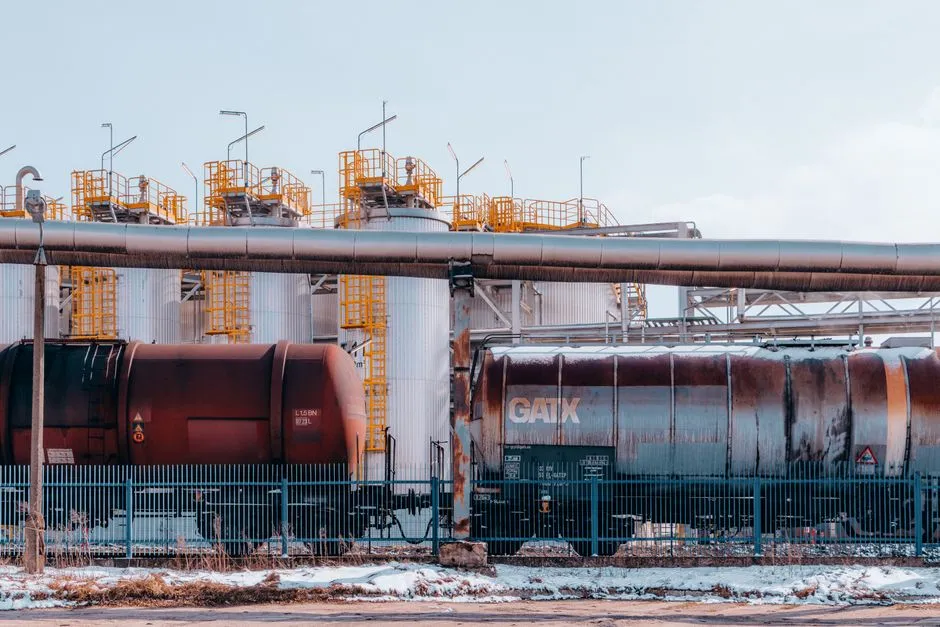
The correct treatment train follows the destination: reuse, permitted discharge, managed residual handling or a combination. Define the flow diagram as source segregation, equalization and cooling, chemistry correction, solids or organics removal, membrane separation where required, disinfection or biocide control, and final reuse or disposal. A process that works for low-TDS reuse water may be unnecessary for sewer disposal and may create a concentrate stream with no practical outlet.
Use filtration or clarification when suspended solids, colloids or oil and grease threaten downstream equipment, equalization or membranes. The referenced DAF system is specified for suspended solids, FOG and colloidal matter at 4–300 m³/h across 13 standard models. That is a catalog range, not a recommendation for an Albuquerque flow; actual sizing requires the site water balance and characterization results.
UF is a low-chemical pretreatment option when bacteria, colloids and suspended solids must be removed before RO or another sensitive process. The referenced UF system uses 0.03 micron PVDF membranes, accepts feed turbidity up to 300 ppm and covers 2,000–40,000 L/h. These specifications should be checked against the actual feed and selected recovery objective.
| Treatment objective | Potential unit process | Selection condition | Residual or design risk to resolve |
|---|---|---|---|
| Remove suspended solids, colloids or FOG | Filtration, clarification or dissolved-air flotation | Use when solids or FOG threaten downstream equipment | Sludge characterization and handling route |
| Protect downstream membranes | UF pretreatment for data-center wastewater | Use when colloids, suspended solids or organisms interfere with the next process | Feed turbidity, membrane compatibility and cleaning demand |
| Control hardness and scale risk | Softening followed by an appropriate polishing step | Use when hardness or scaling constituents constrain reuse or membrane operation | Chemical use and sludge or precipitate handling |
| Remove organics | Activated-carbon filtration where required | Use when organics interfere with reuse or sensitive downstream equipment | Media replacement and spent-carbon handling |
| Produce low-TDS reuse water | RO, with appropriate pretreatment | Use only when the reuse specification and concentrate route support it | industrial reverse osmosis system energy, scaling and reject management |
| Control organisms | Disinfection or validated biocide control | Match the method to the organism-control objective and downstream compatibility | Residual chemistry, material compatibility and discharge implications |
The West Virginia University study of produced-water and blowdown co-treatment, published in 2022, reported more than 99% divalent-metal removal after alkaline softening, more than 90% TOC removal after activated-carbon filtration and 97–99% TDS rejection with RO after softening. Those results came from the study’s specific water chemistry and treatment train; they are not a blanket performance guarantee for an Albuquerque project.
The same study achieved 40–95% RO water recovery in different experiments and used downstream thermal desalination for the concentrate. It demonstrates that recovery and residual management must be solved together. For a data center, the concentration reject must have a permitted sewer route, a reuse application, a controlled collection route or another approved destination before RO enters the design basis.
If the objective is sewer disposal rather than reuse, do not automatically specify RO. Compare simpler pretreatment, chemical control and disposal against permit criteria, flow, chemistry, life-cycle cost and the risk of creating unusable concentrate. Coordinate biocide, corrosion-inhibitor and anti-scalant selection with the treatment vendor because the Water Utility Report, updated 2026-04-14, identifies these additives as possible blowdown constituents.
Protect equipment, workers and the receiving environment
Cooling wastewater can present chemical, thermal and biological hazards that no single unit process resolves. Evaluate compatibility across cooling equipment, membranes, piping, tanks, seals and metering pumps. Biocides, corrosion inhibitors and anti-scalants may affect materials and downstream biological treatment, so chemical controls must be included in the treatment train rather than added after equipment selection.
Control temperature before discharge. The North Carolina State University source, America’s Data Center Boom Puts New Pressure on Local Water Resources, reported in 2026, warns that warm discharge can cause thermal pollution, disrupt aquatic organisms and lower oxygen levels in receiving waters. Where the route is a sanitary sewer, obtain the receiving authority’s temperature and discharge criteria rather than assuming that cooling is sufficient.
Use chemical dosing only where pH correction or precipitation is justified. The referenced PLC-controlled automatic dosing system handles coagulants, flocculants, pH adjusters and specialty chemicals, but the selected chemical and dose must follow jar testing and, where scale or variability warrants it, pilot testing. Add chemical interlocks, high/low-level alarms, confirmation sampling and automatic bypass protection so an off-specification stream cannot reach the sewer or reuse system.
Assess disinfection against the actual organism-control objective, residual requirements and downstream compatibility. The referenced chlorine dioxide generator is marketed for industrial cooling loops and process wastewater, but product marketing does not establish site suitability. The design should identify the target organisms, contact conditions, residual monitoring, material compatibility and consequences of overdosing. Provide a controlled startup, shutdown and off-specification containment response.
Build the budget and supplier selection around performance risk

Compare bids against final treated-water criteria and residual-management risk, not purchase price or nominal throughput. Request performance guarantees tied to the project’s selected analytes, continuous operating conditions and defined test methods. If the supplier cannot demonstrate performance with representative feed chemistry, the guarantee provides little procurement value.
Price the complete train: equalization, pretreatment, membranes or media, pumps, tanks, controls, chemical storage, sampling, pretreatment cartridge replacement, membranes, sludge or concentrate handling, operator labor, energy and maintenance. Membrane replacement, media, chemicals, power, controls, downtime and residual disposal can change the economics of otherwise similar bids.
| Bid item to request | Procurement check | Pricing risk if omitted |
|---|---|---|
| Process flow and P&ID | Every stream has a measured destination and treatment step | Hidden equalization, pumping or residual-handling costs |
| Equipment list and materials | Capacity is tied to the site water balance and chemistry | Oversizing, incompatible materials or unsuitable process selection |
| Control philosophy | Critical controls, interlocks, alarms and off-specification response are defined | Manual intervention and accidental discharge |
| Commissioning and pilot plan | Representative feed, acceptance tests and startup criteria are identified | Performance uncertainty during commissioning |
| O&M and spare parts | Consumables, cleaning, labor and downtime are quantified | Unexpected operating cost and availability loss |
| Residual-management plan | Sludge, concentrate or spent media has a documented route | A treatment train with no practical residual outlet |
Require each proposal to include the proposed process flow, P&ID, equipment list, materials of construction, control philosophy, utility requirements, commissioning plan, O&M plan and spare-parts list. Use source-water characterization and the permitted discharge or reuse specification as the basis for pilot testing. Do not award based on recovered flow or throughput alone.
The referenced industrial RO system is specified at recovery rates up to 95%. That value must be checked against feed salinity, product-water targets, membrane limitations, pretreatment and concentrate-management requirements. For membrane replacement planning, request the appropriate RO and UF replacement elements and supporting compatibility information rather than treating membrane selection as a generic accessory decision.
Confirm permits, reuse and residual-management pathways
Permitting and receiving-system capacity are design gates, not post-design approvals. Coordinate with the City of Albuquerque, the receiving wastewater authority and the New Mexico environmental authority to determine which requirements apply to the proposed treatment and discharge path.
Ask the receiving utility for current discharge limits, surcharge or toxicity criteria, constituent-monitoring requirements, discharge authorization requirements and capacity confirmation for the proposed flow and chemistry. Confirm whether cooling blowdown can enter the sewer directly, must pass pretreatment, or requires a separate disposal route.
Discuss industrial wastewater reuse with the relevant water or utility authority. For cooling makeup, establish whether reclaimed water is acceptable and what monitoring, reporting and cross-connection controls apply. Reclaimed water can reduce drinking-water demand but changes the chemistry challenge; the Water Utility Report, updated 2026-04-14, notes that it can increase pretreatment, corrosion-control, scaling-control or monitoring needs.
Evaluate cumulative municipal loading, not only the project’s individual flow. The Water Utility Report identifies cumulative loading on municipal wastewater systems as a distinct concern from one facility’s water use. Obtain the receiving system’s documented basis for accepting the proposed load.
The supplied research does not establish Albuquerque-specific discharge limits, reuse approvals or sewer capacity. Document those items with the authorities using project-specific flow and chemistry data. The site-specific cooling blowdown sizing guide provides a framework for checking that the discharge route remains part of the treatment decision.
Implement in measurable stages before the full buildout
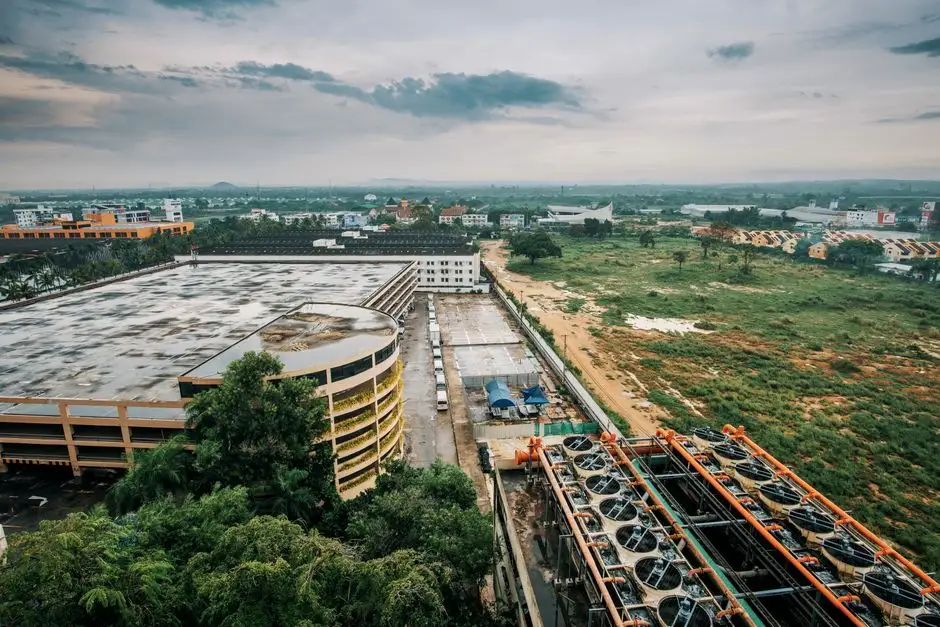
A staged implementation prevents the project from designing around unrepresentative chemistry or discovering discharge constraints after design freeze.
- Complete the desktop mass balance, source-segregation register and representative sampling plan.
- Obtain current sewer discharge criteria, reuse requirements and residual-management constraints.
- Perform bench or pilot testing on representative blowdown, focusing on the contaminants and downstream process identified by characterization.
- Document treatment acceptance criteria, chemical demand, membrane or media behavior, recovered-water quality and the residual-management route.
- Design for turndown, startup, shutdown, chemical cleaning, equipment redundancy and off-specification containment.
- Implement online monitoring at critical control points and establish a sampling schedule aligned with permit, reuse-agreement and operating-risk requirements.
Include future water demand in the evaluation. The North Carolina State University source reported in 2026 that AI workloads require more energy than traditional data storage and can create rapid, highly localized increases in water demand. Tie the treatment train and disposal route to the project’s compute-growth plan, but do not size equipment from an unverified future load.
Use the PLC control guidance for data-center wastewater controls and operating safeguards as a reference for alarms, interlocks and monitoring architecture. The final design should make treatment performance, flow, chemistry and containment status visible to operators.
Frequently Asked Questions
What treatment system does an Albuquerque data center need for cooling blowdown?
It needs a source-specific train selected after separating blowdown from other wastewater. The minimum basis is representative chemistry, calculated blowdown flow, operating cycles of concentration, intended reuse or sewer-discharge route, and the receiving authority’s current requirements. Equalization, chemistry control, solids removal where needed, disinfection or biocide control, and residual management may all enter that train, but the supplied sources do not justify a single universal configuration for Albuquerque.
How do we size a blowdown treatment train for a data center?
Start with the site water balance: makeup water, evaporation, blowdown, cleaning losses and reuse demand. Then pair that flow with source-water chemistry, cycles of concentration, temperature variation, cooling-water chemistry, reuse targets and disposal constraints. Require the supplier to state which design flow and water-quality condition its equipment or performance guarantee covers. Do not substitute a catalog capacity for a site-specific calculation.
Is reverse osmosis necessary for cooling-tower blowdown?
Not automatically. RO is relevant when the project requires low-TDS reuse and the feed chemistry, pretreatment, recovery and concentrate route can support it. For sewer disposal, simpler treatment may be sufficient. The West Virginia University study reported 97–99% TDS rejection and 40–95% recovery in its tests, but those results do not establish the performance of an Albuquerque installation.
What data should a wastewater-treatment supplier request before pricing?
Request the source-by-source water balance, representative makeup and blowdown analyses, cooling-system configuration, chemical inventory, reuse demand, sewer discharge criteria, residual-handling assumptions, site utilities and required operating availability. Require the proposal to identify its pricing assumptions and exclusions. For cost comparison, request separate lifecycle pricing for equipment, media, membranes, chemicals, energy, labor, downtime and residual disposal; the supplied research provides no defensible project price.
How can a data center reduce the risk of violating sewer or reuse requirements?
Obtain the applicable requirements before design freeze, characterize wastewater under representative operating conditions, pilot the selected process, and include confirmation sampling, interlocks, alarms and off-specification containment. Keep cooling streams segregated where practical, manage temperature and chemicals, and document a lawful route for every residual. The Water Utility Report, updated 2026-04-14, emphasizes discharge chemistry, pretreatment requirements and cumulative loading as the questions a receiving community needs answered.