Map Every Wastewater Stream Before Choosing Equipment
Cooling-tower blowdown is normally the largest process-wastewater stream at a data center, while sanitary wastewater is usually smaller but still requires its own treatment route (RSP Engineers, undated). A Calamba project should therefore separate streams by volume, chemistry and disposal method rather than send them through one common plant. This mapping should also inform the site plan before equipment is ordered, consistent with the 2026 data center wastewater treatment guide and guidance on sizing wastewater and cooling blowdown treatment.
| Stream | Classification and design issue | Initial route to confirm |
|---|---|---|
| Cooling-tower blowdown | Usually dominant by volume; contains concentrated minerals, suspended solids, biocides, corrosion inhibitors and antiscalants | Cooling-tower reuse, pretreatment and controlled sewer discharge |
| Sanitary sewage | Smaller flow with domestic organic and solids load | Separate packaged biological treatment, subject to Calamba concessionaire requirements |
| Humidification bleed-off and air-handling condensate | Hydraulically separate; chemistry depends on upstream treatment | Characterize before combining with blowdown |
| RO or UF reject, backwash and cleaning solutions | Concentrated salts, treatment chemicals or cleaning residues | Separate equalization, treatment or authorized disposal |
| Floor and equipment drains | May contain wash chemicals, oil or corrosion products | Segregate according to contamination |
| Generator coolant, battery-room wash water, solvent wipes and UPS electrolyte residues | Potentially hazardous or regulated | Collection and licensed hauler; no unauthorized treatment or sewer discharge |
Request a drain register showing each line’s flow, temperature, chemical composition, sampling point, containment, inspection frequency and final destination. Include isolation valves and clear segregation so an operator cannot accidentally route a hazardous drain into the biological plant. The detailed flow for Calamba remains a site input; published treatment descriptions identify the need for stream separation but do not establish Calamba flows (RSP Engineers, undated).
Calculate Calamba’s Blowdown and Equalization Demand
The blowdown calculation must start with measured tower make-up water, not the site’s nameplate IT load. Genesis Water Tech gives the relationship as 1 / (cycles of concentration − 1): at four cycles, approximately 25% of make-up leaves as blowdown; at six cycles, approximately 20% (HydropureWater’s Caloocan guide, 2026). That change is about five percentage points, or a 20% relative reduction, rather than a halving of blowdown.
| Input or case | Evidence-based basis | Engineering use |
|---|---|---|
| Four cycles of concentration | Roughly 25% blowdown as a percentage of make-up (Genesis Water Tech, as cited by HydropureWater, 2026) | Baseline sensitivity case |
| Six cycles of concentration | Roughly 20% blowdown as a percentage of make-up (Genesis Water Tech, as cited by HydropureWater, 2026) | Water-efficiency sensitivity case, subject to chemistry and biology limits |
| 10 MW worked example | 15 million US gallons per month intake at four cycles and about 3.75 million gallons per month blowdown (Genesis Water Tech, as cited by HydropureWater, 2026) | Reusable arithmetic example only; it is not a Calamba flow |
| Calamba design flow | Measured make-up, evaporation and operating data required | Vendor sizing basis |
Calculate daily and hourly blowdown from meter data across normal and peak cooling operation. Equalization should then cover measured diurnal variation and monsoon-related changes in inflow, temperature and turbidity; the Caloocan guidance specifically identifies monsoon variability as a reason to include adequate equalization volume (HydropureWater, 2026). Do not rely only on an average daily flow, because undersized storage can cause short cycling, treatment upset and premature membrane wear.
Increasing cycles is not a stand-alone answer. Genesis Water Tech reports that biological and scaling risks rise above five to six cycles, and aggressive chemical dosing may erase water savings through higher chemical costs and dirtier blowdown (as cited by HydropureWater, 2026). For Calamba, evaluate cooling-loop optimization, leak control, side-stream filtration and chemistry together. Further sizing lessons appear in the Kingston data-center treatment framework and the Pokhara water-balance approach, but neither supplies Calamba site data.
Characterize the Influent Before Designing the Treatment Train
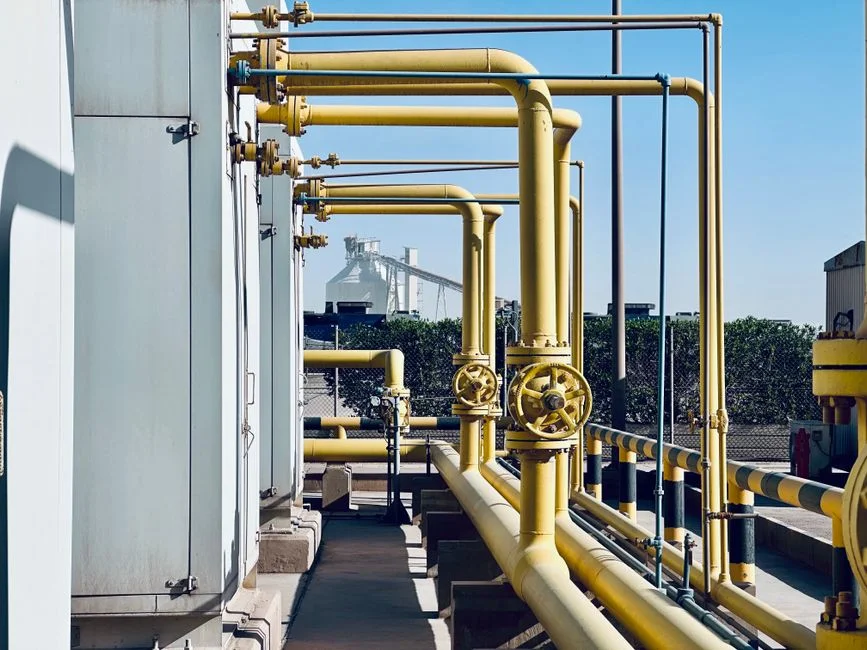
Cooling-blowdown pretreatment must be designed from representative chemistry, not from municipal supply-water data alone. The key contaminants are dissolved salts and mineral scale, suspended material, treatment chemicals and corrosion-inhibitor metals (RSP Engineers, undated; Genesis Water Tech, as cited by HydropureWater, 2026).
| Measurement | Design relevance | Minimum sampling approach |
|---|---|---|
| pH and temperature | Corrosion, sewer compatibility and biological effects | Across normal and peak operating conditions |
| Conductivity and TDS | Concentration control and salt-removal demand | Source water and blowdown |
| TSS, turbidity and oil and grease | Filtration, clarification and membrane protection | Representative tower and drain samples |
| BOD and COD | Organic load and biological treatment assessment | Separate sanitary and process samples |
| Residual chlorine or chlorine dioxide | Disinfection control and discharge treatment | At sampling points after chemical dosing |
| Calcium carbonate, calcium sulfate, silica, chlorides, sulfates and phosphates | Scaling, fouling, corrosion and permit assessment | Multiple operating seasons if possible |
| Corrosion-inhibitor metals | Discharge limits and possible precipitation or polishing requirements | Based on the selected chemical package |
Obtain the complete cooling chemical package: biocide, corrosion inhibitor, antiscalant, dispersant and dosing ranges. RSP Engineers states that this package directly defines pretreatment needs and permit parameters (undated). A buyer should therefore ask each chemical supplier for composition, active ingredients, maximum residual concentrations, safety data and compatibility with membranes and sewer infrastructure.
Measure alkalinity and use the Langelier Saturation Index to balance corrosion and scale control when raising cycles; the research identifies LSI monitoring as necessary for Philippine operation (HydropureWater, 2026). The chemical dosing system selection guide provides a useful framework, but the Calamba dosing scheme still needs influent results, chemical data and utility limits.
Build a Modular Calamba Treatment Process
A defensible Calamba process begins with loss control and cooling optimization, then adds modular treatment only as the measured chemistry requires. For the research’s five-to-ten-megawatt reference case, the proposed sequence is DAF, multi-media filtration, UF, chlorine dioxide and 15–25% blowdown reuse (Genesis Water Tech, as cited by HydropureWater, 2026). This is a planning architecture, not a standard Calamba skid.
| Process function | Equipment | Selection trigger |
|---|---|---|
| Leak control and operating optimization | Make-up meters, drift and loss controls, chemical and temperature monitoring, side-stream filtration | Always, before calculating equipment capacity |
| Clarification | DAF | Suspended solids, oil and grease, colloids or flocculable material justify clarification |
| Suspended-solids removal | Multi-media filter | The reference five-megawatt architecture starts with 5–10-micron filtration (Genesis Water Tech, as cited by HydropureWater, 2026) |
| Colloidal removal | ultrafiltration pretreatment for cooling blowdown | Required before RO or where colloidal fouling is demonstrated |
| Chemical control | PLC-controlled chemical dosing skid | pH adjustment, antiscalant and coagulant control |
| Microbial control | Chlorine dioxide generation where selected | Chemical program and permit requirements support its use |
| Salt removal | RO | Only where reuse quality, discharge reduction and whole-life economics justify it |
Multi-media filtration removes suspended material and protects downstream membranes. DAF is appropriate where floatable or flocculable solids justify clarification, while UF provides a stronger barrier against colloids before RO (HydropureWater, 2026). A dedicated multi-media filtration arrangement can be reviewed alongside the multi-media filtration equipment during vendor selection.
If RO is selected, route permeate to make-up storage and isolate the concentrate for neutralization, monitoring and its authorized destination. Include UF backwash, RO reject and membrane-cleaning solutions as separate water-balance streams. A full industrial RO train should not be purchased simply because the site wants “reuse”; the evidence describes 15–25% reuse as the initial modular objective for the five-to-ten-megawatt reference case (Genesis Water Tech, as cited by HydropureWater, 2026).
Advanced recovery belongs after baseline controls and monitoring are reliable. IDE reports that conventional brackish-water RO commonly reaches 75–80% recovery before scaling constrains performance (IDE, 2026). Salt precipitation, high-recovery systems or evaporator crystallizers may then be evaluated, but only with an authorized brine or solid-waste route and a clear operating objective.
Decide What to Discharge, Reuse or License Out
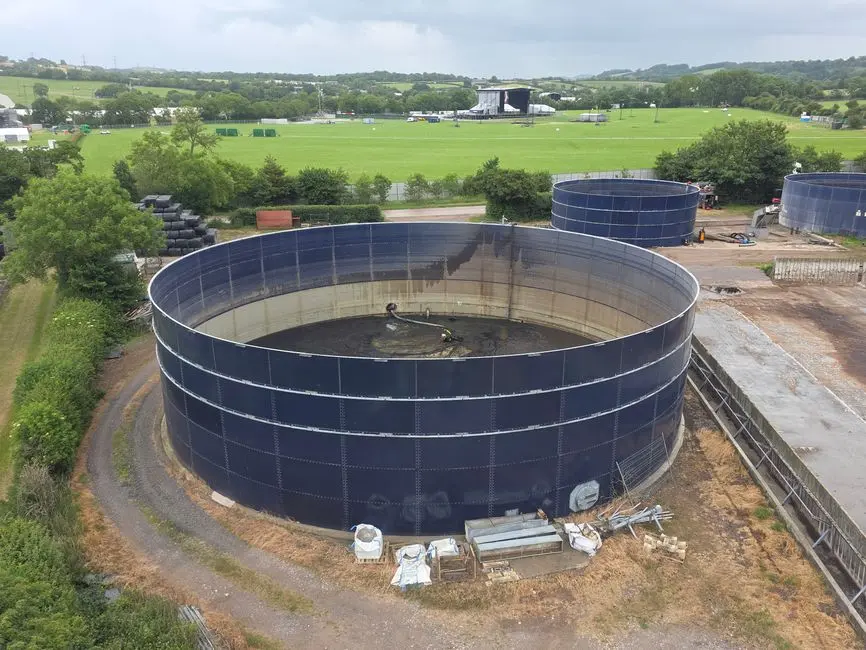
Partial reuse is usually the first modular objective because it reduces freshwater demand and discharge without committing the site to a full high-recovery plant. The five-to-ten-megawatt reference case uses 15–25% blowdown reuse, while a full industrial RO design may be oversized and uneconomic for a smaller colocation facility (Genesis Water Tech, as cited by HydropureWater, 2026).
| Route | Advantages | Main constraints | Decision basis |
|---|---|---|---|
| Controlled discharge after pretreatment | Lowest process complexity; maintains a disposal route | Discharge limits, temperature, chemical residuals and sewer capacity | Applicable Calamba concessionaire and DENR limits in writing |
| Partial blowdown reuse | Reduces make-up and discharge with modular equipment | Cooling chemistry, biological control and variable blowdown quality | Initial five-to-ten-megawatt planning case |
| Higher-recovery RO reuse | Greater freshwater savings and lower discharge volume | Energy, scaling, membrane maintenance and concentrate disposal | Measured TDS, silica, alkalinity, recovery target and life-cycle cost |
| Advanced recovery or crystallization | Can pursue minimal liquid discharge | Complexity, energy, solids handling and operator capability | Permitted route and minimum-discharge objective justify the burden |
| Licensed disposal | Handles hazardous or small regulated streams | Transport, manifest and disposal cost | Waste classification and licensed hauler availability |
Energy materially affects route selection. The Open Engineering life-cycle assessment cited by HydropureWater found that UF-plus-RO reuse uses over five times the energy of a fresh-water system, with treatment energy responsible for about 80% of the reuse-versus-fresh-water global-warming-potential gap (2026). At the same time, Genesis Water Tech reports that a five-megawatt colocation site can face three to four times higher capital cost per gallon than a hyperscaler using the same technology (as cited by HydropureWater, 2026). This makes right-sizing and operator capability more important for Calamba.
Before reusing treated blowdown for toilet flushing, irrigation or cooling make-up, check Department of Health and local building-code requirements, as identified by HydropureWater (2026). Conventional RO and chlorine dioxide systems can be considered in the option review through the reverse-osmosis recovery concept and chlorine-dioxide microbial-control equipment. Evaporator crystallization is a final option, not a default substitute for a manageable discharge route.
Set Compliance, Procurement and Delivery Milestones
Calamba discharge approval depends on two documents that should be attached to the tender: the concessionaire’s sewer acceptance limits and the applicable DENR requirements. HydropureWater identifies these as overlapping compliance gates for Philippine data-center wastewater (2026), while the research gives specific limits for Caloocan—not Calamba. Do not transfer a Caloocan dechlorination or sub-45-degree-Celsius criterion to the Calamba project without confirmation from the responsible authority.
| Milestone | Required deliverable | Procurement relevance |
|---|---|---|
| Regulatory basis | Calamba concessionaire acceptance limits and applicable DENR requirements in writing | Defines the treatment and monitoring scope |
| Design basis | Measured flow, chemistry, operating envelope and water balance | Prevents standard-skid pricing |
| Vendor offer | Process sequence, equipment duty, utilities, controls, monitoring, commissioning, training and maintenance | Creates comparable bids |
| Cost basis | PHP capital schedule and annual OPEX assumptions | Supports budgeting and lifecycle comparison |
| Delivery | Vendor-specific manufacturing, FAT, delivery, installation and commissioning dates | Aligns procurement with site readiness |
| Site readiness | Tanks, pumps, chemical delivery, containment, drainage, access and monitoring locations | Protects the site plan and commissioning schedule |
The reference delivery window is 16–24 weeks after purchase order, followed by three to five weeks for on-site installation and commissioning (HydropureWater, 2026). Require each bidder to confirm its own manufacturing, shipping, FAT, installation and commissioning schedule because the reference is not a binding quotation.
The research gives a PHP 8,000,000–15,000,000 range for a five-megawatt modular packaged system and annual OPEX of 5–8% of initial capital cost (HydropureWater, 2026). Use those figures only as budgeting benchmarks. Obtain a PHP quotation based on measured flows, chemistry, recovery target, utilities and disposal routes. Include automatic dosing and DAF in the price basis where applicable, but require transparent line items so alternatives remain comparable.
Issue a Site-Specific Treatment Request for Quotation
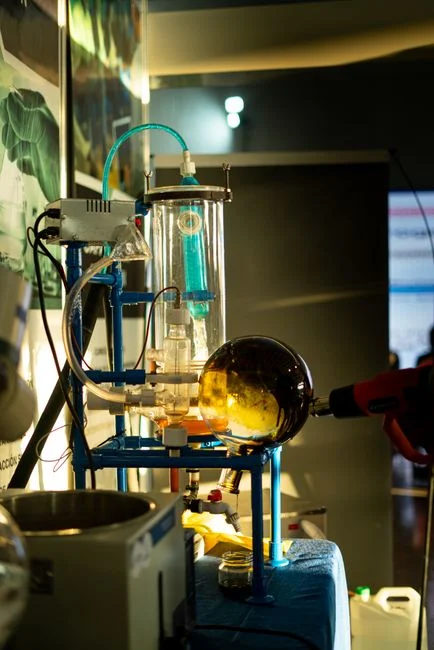
Issue one common information request to every bidder so quotations answer the same engineering questions. The related sewer-limit tender checklist and industrial trade-waste treatment approach reinforce the need for site-specific chemistry and destination data.
- Provide daily average, peak and minimum flows for every wastewater stream, operating days, storage duration and planned cooling expansion.
- Provide source-water and blowdown analyses covering pH, temperature, conductivity, TDS, alkalinity, TSS, BOD, COD, oil and grease, residual chlorine or chlorine dioxide, silica, calcium carbonate, calcium sulfate, chlorides, sulfates, phosphates and corrosion-inhibitor metals.
- Provide the cooling-water chemical package, safety data, dosing ranges and operational limits.
- Require a mass balance covering make-up, evaporation, blowdown, treatment losses, recovered water, sludge, backwash and concentrate.
- Require the treatment objective, selected process, equipment duty, utilities, footprint, controls, monitoring, performance guarantees, commissioning plan and exclusions.
- Request a PHP capital-cost schedule, annual OPEX assumptions, membrane and chemical replacement costs, and a comparison of partial reuse with higher recovery.
Reject bids based only on data-center megawatts or a generic daily flow. A compliant offer should identify the measured Calamba design basis, permit assumptions, equipment sizing, water balance and every destination for liquid and solid residuals.
Frequently Asked Questions
Can treatment equipment be sized from the data center’s IT load alone?
No. IT load is useful for sensitivity analysis, but equipment must be sized from measured cooling make-up, blowdown, sanitary flow, drain flows and influent chemistry. The research’s 10 MW example is an arithmetic anchor, not a design flow; replace its intake and blowdown with Calamba meter data before calculating tank and treatment capacity.
What cost and lead-time assumptions should a Calamba buyer use?
Use PHP 8,000,000–15,000,000 for a five-megawatt modular packaged system and 5–8% of initial capital cost annually for OPEX only as preliminary benchmarks (HydropureWater, 2026). For procurement, require a vendor-specific PHP offer broken into equipment, civil works, chemicals, commissioning and replacement costs. The reference schedule of 16–24 weeks after purchase order plus three to five weeks for installation and commissioning is also a planning benchmark, not a guaranteed delivery date.
Why is partial blowdown reuse usually the first modular objective?
It reduces make-up and discharge while allowing the operator to establish chemical control, monitoring and operating routines before adding RO complexity. The five-to-ten-megawatt reference architecture uses 15–25% reuse (Genesis Water Tech, as cited by HydropureWater, 2026). Higher-recovery RO becomes more attractive when measured blowdown quality, freshwater value, discharge constraints and lifecycle economics support the added energy and maintenance.
Which documents should be obtained before ordering equipment?
Obtain the Calamba concessionaire’s sewer acceptance limits, applicable DENR requirements, chemical package information, representative analyses and the planned reuse or disposal destinations. Confirm any reuse for toilet flushing, irrigation or cooling make-up against Department of Health and local building-code requirements, as HydropureWater notes (2026). Attach the accepted documents to the tender and require the supplier’s guarantee to identify the limits it has used.