What treatment does a Pelentong data center actually need?
A Pelentong data center needs three linked treatment decisions: make incoming effluent or reclaimed water suitable for cooling, control the concentrated cooling-tower blowdown, and manage solids generated during treatment. The final train depends on source-water chemistry, cooling design, blowdown destination and acceptance criteria. Johor precedent supports the reuse concept: Data Center Dynamics reported on 2025-08-06 that Bridge Data Centres collaborated with Johor Special Water, Indah Water Konsortium and Permodalan Darul Ta’zim on treated-effluent reuse for cooling. Reuse does not automatically reduce impact: Open Engineering’s 2026 study found the wastewater scenario had about twice the freshwater case’s global warming potential, with treatment energy responsible for roughly 80% of that difference.
The engineering boundary must include three distinct streams. Incoming effluent requires pretreatment and disinfection sufficient to protect heat-transfer and cooling equipment. Cooling-loop blowdown requires a permitted discharge, recovery route or additional treatment because evaporation concentrates dissolved solids and treatment chemicals. Treatment residuals require controlled dewatering and disposal rather than being returned to the cooling system.
| Stream | Engineering objective | Information required before selection |
|---|---|---|
| Incoming effluent or reclaimed water | Protect cooling equipment and control scaling, corrosion and microbiological risk | Source-water analysis, cooling specification and desired cycles of concentration |
| Cooling-tower blowdown | Provide an authorized and technically controlled destination | Approved water balance, chemical program, discharge criteria and receiving-system capacity |
| Treatment residuals | Remove, dewater and dispose of sludge within permitted waste routes | Solids generation, dewatering performance and authority requirements |
Neither a data center wastewater and cooling blowdown treatment guide nor a 2026 data center wastewater treatment guide substitutes for a Pelentong design basis. The applicable source, outlet and permit conditions must be confirmed directly.
Build the Pelentong design basis before selecting equipment
A comparable vendor quotation cannot be produced until source water, cooling operation and receiving-system requirements are defined in the same data set. The request to the utility, cooling designer and authorities should separate each stream and specify who owns the final outlet.
For incoming effluent or reclaimed water, request laboratory data covering suspended solids, turbidity, biodegradable organics, nutrients where relevant, salinity or total dissolved solids, hardness, pH, relevant metals, residual chlorine and microbiological indicators. The final parameter list should reflect the proposed treatment train rather than include every analytical method indiscriminately.
For the cooling system, obtain design and peak circulating flow, evaporation rate, make-up-water source, cooling-tower configuration, proposed cycles of concentration, chemical dosing program, control limits, metallurgy requirements and the minimum inlet-water quality required by the cooling equipment supplier. No Pelentong flow or chemistry value should be inferred from comparable projects.
Define the outlet options separately: reuse within the data center, transfer to another approved user, discharge to a sewer or another route accepted by the relevant utility and authorities. Obtain written acceptance criteria, sewer conditions, sampling points, monitoring frequency, pretreatment requirements and residual-disposal rules.
| Information package | Minimum request | Why it changes the decision |
|---|---|---|
| Source-water characterization | Representative analytical results and variability | Determines biological, membrane, filtration and disinfection requirements |
| Cooling design | Water balance, evaporation, make-up, blowdown, cycles of concentration and chemical controls | Establishes inlet quality and the quantity and chemistry of residual streams |
| Outlet requirements | Written utility and authority criteria | Defines the discharge route and required pretreatment |
| Residual handling | Sludge classification, dewatering and disposal requirements | Adds solids treatment and operating cost to the selected route |
The engineering blueprint for data center blowdown treatment provides a transferable method, but its project-specific values do not apply to Pelentong without local confirmation.
Treat incoming wastewater for safe cooling reuse
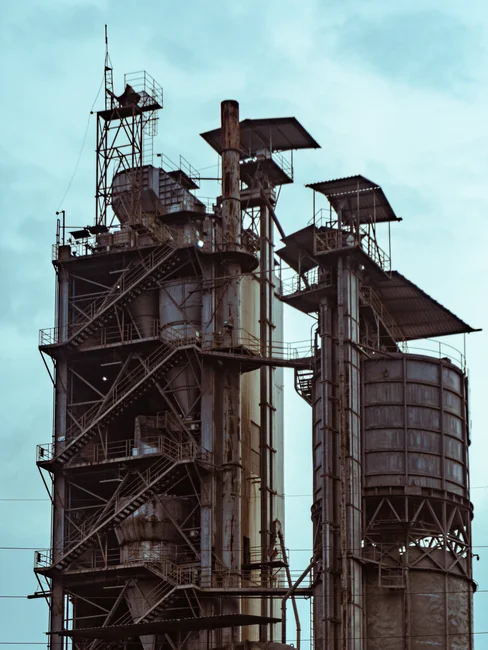
Incoming wastewater should advance through treatment stages only when the source analysis and cooling specification justify them. Each stage should have a defined contaminant-removal purpose, measurable outlet criteria and a consequence for membrane or heat-transfer equipment if it fails.
- Provide preliminary screening or solids removal where rags, plastics and fibrous debris could obstruct pumps or downstream equipment. Sewage treatment should not be assumed to remove all such material.
- Apply biological treatment where biodegradable organics must be reduced before reuse. The documented integrated MBR wastewater treatment system is configured for municipal sewage, industrial process water and water-reuse projects at 10–2,000 m³/day, with filtration below 1 μm.
- Add ultrafiltration where suspended solids, colloids or microorganisms could interfere with downstream membranes. The documented UF pretreatment for reclaimed cooling water uses 0.03 μm PVDF membranes, accepts turbidity up to 300 ppm and includes automatic backwash and air scour.
- Apply RO only if dissolved-solids control is required by the cooling specification or the site has evaluated its energy burden. The documented industrial RO product has recovery rates up to 95%.
- Use controlled disinfection where the validated reuse specification requires microbial control. The cited route is an on-site chlorine dioxide generator for industrial cooling loops and process wastewater.
Open Engineering’s 2026 comparative study evaluated depth filtration, granular activated carbon and chlorination, plus a UF+RO scenario. These are comparison cases, not proof that either train fits Pelentong. The UF+RO scenario used over five times the energy of the freshwater case, although improved cycles of concentration reduced blowdown and chemical consumption. Equipment selection must therefore balance water quality, energy and operating complexity.
| Treatment gate | Use when | Required verification |
|---|---|---|
| Screening and solids removal | Visible debris or solids are present | Screen performance and downstream pump protection |
| Biological treatment | Biodegradable organics require reduction | Organics removal and process stability under variable feed |
| UF | Colloids or microorganisms threaten downstream membranes | Turbidity acceptance, flux behavior, cleaning and backwash |
| RO | Cooling specification requires further dissolved-solids control | Permeate quality, recovery, energy and membrane cleaning |
| Disinfection | Validated reuse specification requires microbial control | Residual control, contact performance and safety interlocks |
Control the chemistry of the cooling loop
Cycles of concentration must be treated as a controlled design variable because evaporated water leaves dissolved solids and treatment chemicals behind. A higher concentration can reduce blowdown volume but increases scale, corrosion and biological-growth risk unless the loop chemistry remains within the equipment supplier’s limits.
Set those limits from the actual source-water chemistry and cooling-system requirements. The supplied research contains no Pelentong-specific limits, so numerical control points must come from the project team and cooling designer.
Conductivity is the primary practical indicator of concentration, but it does not replace the wider chemistry program. Pair it with pH, residual biocide, corrosion-inhibitor residual and relevant metals according to the source-water and equipment risks. This distinction matters where reclaimed water has a different ionic balance or residual disinfectant from the potable-water baseline.
Use automatic dosing where the operating strategy requires controlled addition of pH adjusters, biocides, inhibitors or other specialty chemicals. The PLC-controlled chemical dosing system covers coagulants, flocculants, pH adjusters and specialty chemicals, but its configuration must follow a site-specific chemical-control philosophy.
Consider softeners only where hardness-based scale risk justifies them. Include regeneration frequency, brine production, residual handling and alternative makeup strategies in the whole-site assessment. A softener does not remove all dissolved solids and does not replace broader monitoring.
The acceptance test should demonstrate stable control over the intended cycles of concentration, including chemical residuals, conductivity, pH, corrosion indicators and makeup and blowdown operation. No vendor should guarantee a Pelentong performance value before those conditions are defined.
Manage cooling blowdown without shifting the problem downstream
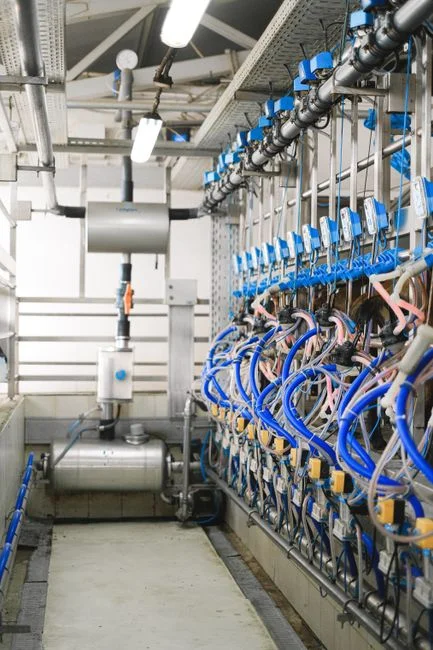
Cooling-tower blowdown is the concentrated residual remaining after evaporation. It may contain elevated salts, metals, biocides, corrosion inhibitors and altered pH, as identified by Water Utility Report on 2026-04-14. Its quantity must be calculated from the selected cooling design’s make-up water, evaporation, drift and blowdown data rather than from an unverified generic percentage.
Compare three routes for the resulting stream:
- Controlled reuse after treatment where the receiving process has an approved quality specification.
- Pretreated discharge to an authorized receiving system.
- Recovery for another approved use that does not transfer contaminants into a second uncontrolled stream.
For sewer discharge, provide the receiving utility with expected volume, chemistry, pretreatment requirements and the cumulative effect of nearby facilities. Water Utility Report identifies discharge volume, chemistry, pretreatment and cumulative receiving-system load as critical questions; the reuse of reclaimed water does not remove the receiving utility from the approval process.
DAF becomes relevant when the blowdown contains suspended solids, oil and grease, or colloidal matter requiring flotation before filtration or biological treatment. The documented DAF pretreatment for cooling blowdown covers a 4–300 m³/h range. Solids removed from DAF or another separation stage still require dewatering. The documented plate-and-frame filter press offers filtration areas from 1 m² to 500 m², subject to pilot confirmation of cake formation, solids capture and cycle time.
| Route | Decision gate | Residual issue to resolve |
|---|---|---|
| Treated reuse | Approved receiving specification and verified water quality | Concentrate from any further purification |
| Sewer discharge | Utility acceptance, pretreatment and capacity confirmation | Sludge and chemically affected solids |
| Approved recovery | Defined end use and compatible quality requirements | Residual stream from recovery treatment |
Open Engineering’s 2026 finding of an approximately 0.93 L/m³ indirect water penalty is a life-cycle prompt, not a Pelentong water-balance result. It represented less than 0.1% of the direct displacement benefit in that study.
Compare treatment routes on whole-life performance
Whole-life comparison must include water quantity and quality, energy, chemicals, residuals, receiving-system acceptance, land and operating complexity. Purchase price alone can favour a route that creates greater disposal, energy or maintenance exposure.
Open Engineering’s 2026 wastewater scenario had about twice the GWP of the freshwater case, with treatment energy accounting for roughly 80% of the difference. Its UF+RO scenario used over five times the freshwater case’s energy, but higher cycles of concentration reduced blowdown and chemical consumption. These results establish a comparison method; they do not constitute a Pelentong business case because local source water, tariffs, grid conditions and utility acceptance remain unknown.
| Comparison field | Freshwater route | Reclaimed-water treatment route | Higher-grade reuse route |
|---|---|---|---|
| Feed-water quality | Characterize the potable source | Characterize effluent variability and pretreatment load | Characterize dissolved-solids removal and membrane risks |
| Treatment | Cooling-loop chemical control | Filtration, biological treatment and disinfection as justified | Additional membrane treatment with associated energy |
| Operating burden | Freshwater supply and loop chemistry | Process operation, cleaning and residuals | Higher energy and membrane-maintenance requirements |
| Acceptance risk | Water availability and source specification | Utility acceptance and cooling compatibility | More demanding quality claims requiring pilot evidence |
Evaluate resilience as well as average performance: membrane cleaning, chemical supply, operator competence, redundancy, bypass arrangements and response to variable wastewater quality. A comparison of MBR and conventional activated-sludge treatment for chemical wastewater can inform biological-train evaluation, but it should be adapted to the actual Pelentong feed and reuse objective.
Make procurement conditional on a representative pilot and written acceptance criteria. Do not award a guaranteed permeate or discharge value unsupported by site data.
Commission the plant through measurable acceptance gates
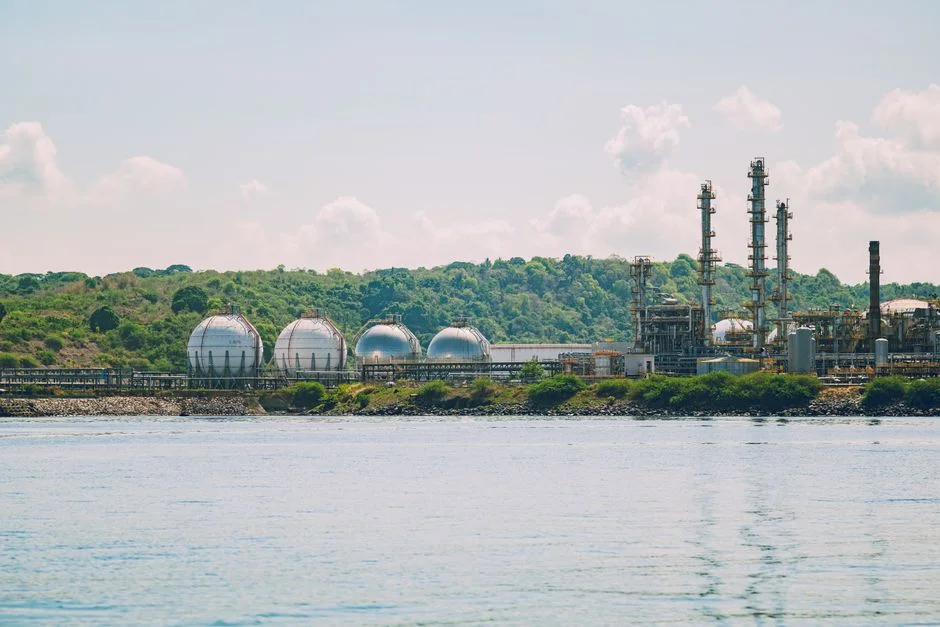
Commissioning should verify that the source-water characterization, treatment process, cooling acceptance criteria and residual route remain aligned throughout startup. Numerical acceptance values must be approved by the project team and receiving utility rather than copied from another jurisdiction.
- Confirm representative source-water characterization and process stability before finalizing membrane or biological design parameters.
- Run a representative pilot across expected wastewater variability and measure pretreatment, membrane performance, chemical demand, disinfection and controls.
- Set acceptance gates for treated-water quality, energy, chemical consumption, blowdown volume and residual handling.
- Verify metering, online conductivity and other required instrumentation, alarm response, chemical interlocks, redundancy and operator competence.
- Reconcile the approved water balance and discharge permit with operating procedures, then schedule chemistry reviews when source water or cooling operations change.
The treatment parts, valves and filter media range supports maintenance planning, but critical spares should be selected from demonstrated failure modes and pilot results. Any bypass must preserve the cooling system and receiving-system safeguards rather than provide an uncontrolled discharge path.
Completion evidence should include calibrated instruments, chemical safety arrangements, operating procedures, training records, calibrated monitoring results, residual-handling records and a signed reconciliation of the approved water balance.
Frequently Asked Questions
How much wastewater testing is needed before sizing treatment equipment for a Pelentong data center?
Request representative laboratory analysis before selecting capacity, including suspended solids, turbidity, organics, pH, salinity or total dissolved solids, hardness, relevant metals, residual chlorine and microbiological indicators as applicable. Require data across normal operating variability rather than relying on one grab sample. The team must then reconcile those results with the cooling-system specification and treatment pilot.
Should a Pelentong data center use MBR, UF, RO or automatic chemical dosing?
These products address different parts of the system. The documented integrated MBR wastewater treatment system is relevant where biological treatment and fine solids separation are required; UF pretreatment for reclaimed cooling water provides a membrane-protection barrier; and the PLC-controlled chemical dosing system manages the cooling-loop chemical program. RO should be added only when dissolved-solids control requires it. The selection must follow source-water analysis and validated cooling requirements.
How should the project compare equipment cost and budget for reclaimed-water treatment?
Compare complete life-cycle scenarios rather than request a unit price from an incomplete flow and water-quality basis. Ask vendors to price capacity, pretreatment, membranes or biological systems, disinfection, chemical dosing, blowdown treatment, solids dewatering, energy, replacement media, maintenance and residual disposal. Obtain written assumptions and exclusions. No supported Pelentong quotation or price range is available in the supplied research, so the buyer should request site-specific budgetary pricing after pilot results are available.
What should the procurement team verify before selecting a supplier for a data center in Pelentong, Johor?
Verify demonstrated experience with the proposed source water and cooling application, pilot evidence under representative variability, guaranteed acceptance criteria, utility or authority interface experience, operator training, spare-parts support and clear responsibility for each treatment stage. Ask the supplier to identify failure modes, bypass arrangements, membrane-cleaning requirements and residual-handling responsibilities. Confirm capacity, delivery schedule and compliance positions in writing; none can be inferred from product specifications alone.