Start With the Cooling and Wastewater Mass Balance
A Samarkand data center needs two wastewater systems: a biological train for sanitary sewage and a mineral-treatment train for cooling-tower blowdown. The blowdown train normally requires solids removal, chemical control, disinfection or biocide management, and often softening or reverse osmosis if treated water is reused as cooling makeup. Its size must be calculated from cooling configuration, evaporation, cycles of concentration, makeup losses and peak operating conditions—not IT load alone. Data-center guidance from UGA Extension also warns that blowdown can contain antiscalants, corrosion inhibitors and biocides. For Samarkand, source-water chemistry, permitted discharge route, reuse goals and current Uzbek requirements must be verified before selecting equipment.
Cooling-tower blowdown, or CTBD, is the portion removed to prevent the buildup of minerals, scale and other contaminants in a cooling system, according to UGA Extension’s Understanding How Data Centers Impact Surface and Ground Waters bulletin, published 2026. The site water balance is:
Makeup water = evaporation + drift + blowdown + other measured and unmeasured losses
Drift, leakage, overflows, intermittent dumps and other losses must be measured or bounded rather than assumed to be zero. The cooling model should identify the wet-bulb and dry-bulb design conditions, cooling-system type, circulation rate, evaporation model, target cycles of concentration (CoC), makeup source, drift rate, leakage allowance, operating mode and peak-day profile. IT load is an input to the cooling model; it is not a direct blowdown-flow calculation.
For the benchmark relationship reported by HydropureWater in its 2026 Tashkent article, 4 CoC produces blowdown equal to 25% of makeup, while 6 CoC produces 20%. The change is five percentage points of makeup, not a 50% reduction in the blowdown requirement.
HydropureWater’s 2026 Tashkent article also gives CTBD scenarios of 1,800–2,100 m³/month for a 5 MW facility at 4 CoC and 3,800–4,200 m³/month for a 10 MW facility. These are Tashkent benchmark scenarios, not Samarkand design values. The same source reports an average of 60–140 m³/day and a peak allowance of 200 m³/day for a 10 MW campus; those figures apply to a Samarkand design only if its operating profile matches the underlying scenario. The broader data-center cooling blowdown treatment methodology should be adapted to Samarkand’s verified water balance rather than copied.
Separate the Four Site Waste Streams
The four site streams have different chemistry, flow patterns and treatment objectives, so one combined treatment train should not be used as the default design. Cooling makeup and CTBD form the cooling-water system; sanitary sewage requires biological treatment; boiler or humidification bleed requires its own source and compatibility review.
| Stream | Design information to obtain | Treatment objective |
|---|---|---|
| Cooling makeup | TDS, hardness as CaCO₃, silica, TSS, turbidity, SDI and seasonal variability | Protect the cooling system and downstream pretreatment from scaling and fouling |
| Cooling-tower blowdown | Flow profile, temperature, TDS, conductivity, suspended solids, chemical inventory and microbiological control requirements | Remove or manage solids, residual treatment chemicals, minerals and biocide-related risk before discharge or reuse |
| Sanitary sewage | Flow, BOD₅, COD, TSS, turbidity, fecal coliform, nutrients and occupancy-related loading | Remove organic matter and pathogens in a dedicated biological process |
| Boiler or humidification bleed | Conductivity, silica, hardness, pH, temperature, flow and chemical composition | Determine whether the stream can enter cooling makeup or requires separate treatment |
Cooling makeup must be sampled from the actual Samarkand source. The Chirchiq–Bozsu chemistry presented in HydropureWater’s 2026 Tashkent article—TDS of 350–700 mg/L, hardness of 180–300 mg/L as CaCO₃ and silica of 8–20 mg/L—is a Tashkent source envelope, not Samarkand evidence. Spring snowmelt values and filtration assumptions also require local replacement.
CTBD is typically warm and mineralised. It can contain suspended solids, antiscalants, corrosion inhibitors, dispersants and biocides; confirm each item through sampling and the site chemical inventory. UGA Extension’s 2026 bulletin states that cooling-system blowdown may contain chemicals and can require treatment or discharge permits. It also notes that warm discharge water can affect receiving waters, making the legal outlet and temperature constraints relevant design inputs.
Sanitary sewage contains organic matter and pathogens. Its objective is biological treatment, not mineral removal, so an A/O or MBR train is the appropriate starting point. Boiler or humidification bleed may be reusable as cooling makeup only after its silica, hardness, conductivity and temperature have been checked against the tower operating envelope. Equipment selection should keep the biological and mineral-treatment boundaries explicit.
Protect Makeup Water and Membrane Systems
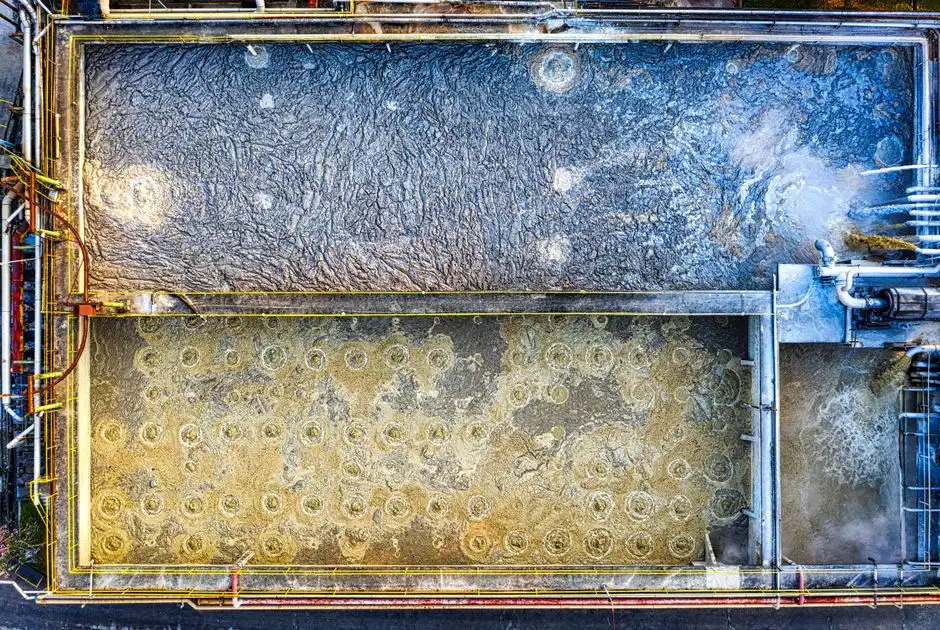
Makeup-water pretreatment should be fixed from seasonal Samarkand samples, not from the Tashkent source envelope. The supplied research does not establish Samarkand’s source-water chemistry or seasonal variability. The sampling plan should cover the hot and cold operating periods and test TDS, hardness, silica, alkalinity, TSS, turbidity, SDI and relevant scaling indices.
Those results determine whether pretreatment should comprise filtration, softening, antiscalant control, pH adjustment or a combination. Higher CoC can reduce blowdown, but it also concentrates scale-forming constituents, increases corrosion risk and can intensify microbiological and biofilm risks. UGA Extension’s 2026 bulletin describes the broader tradeoff between water and energy use in evaporative and closed-loop cooling: reducing water consumption can increase electricity demand.
Where suspended solids or colloids threaten downstream membranes, a multi-media pretreatment filter is one candidate train. HydropureWater states that its multi-media filters can produce SDI values suitable for downstream RO protection, but the required value must be set against the selected membrane and the confirmed makeup chemistry.
If a duplex industrial water softener is considered, size it against confirmed makeup flow and hardness—not total data-center water demand or CTBD flow. Neither the Tashkent benchmark of filtering 1–5% of tower circulation nor its SDI-below-3 criterion should be applied to Samarkand without a site-specific calculation and the selected membrane’s requirements.
Choose a Blowdown Treatment Train
The appropriate CTBD train depends on the confirmed outlet, reuse target and source chemistry. Discharge-only, reuse and zero-liquid-discharge (ZLD) routes create different residual streams and cannot be compared on equipment purchase price alone.
| Route | Principal unit operations | Intended outcome | Main buyer checks |
|---|---|---|---|
| Discharge-focused | DAF plus PLC-controlled chemical dosing | Remove suspended solids, colloids and floatables where present, and control chemical residuals | Legal outlet, sewer limits, temperature, sludge route, chemical compatibility |
| RO reuse | DAF, softening and BWRO | Produce water suitable for cooling makeup reuse | Recovery, antiscalant demand, concentrate fate, pretreatment, redundancy |
| Broader partial reuse | Side-stream softening, lamella clarification, chlorine dioxide and partial RO | Reduce raw-water use and support controlled reuse with biocide management | Application rate, residual, membrane recovery, chemical regeneration, downstream reuse criteria |
| ZLD | RO preconcentration, MVC and crystallisation | Eliminate liquid discharge where required | Thermal energy, crystalliser solids, high-grade waste routing, lifecycle cost |
For solids removal, an industrial DAF system for cooling blowdown pretreatment is relevant where suspended solids, colloids, free oil or other floatables are present. UGA Extension’s 2026 bulletin supports the need to control blowdown solids and chemical residues. Chemical conditioning can then be handled through a PLC-controlled chemical dosing skid, with the selected reagent tied to actual water chemistry and the chemical inventory.
HydropureWater’s 2026 Tashkent article provides Central-Asia installed-cost benchmarks: $35K–$60K for DAF plus PLC dosing, $220K–$480K for DAF, softening and BWRO at 5–10 MW, and $1.2M–$3.5M for ZLD. These are regional analogues, not Samarkand quotations. The same source reports BWRO recovery of 75–80%, partial-RO recovery of 50–85%, and ZLD MVC energy of 15–25 kWh per 1,000 US gallons.
RO recovery creates a smaller, concentrated residual stream; it does not remove the residual-management obligation. The 2026 Tashkent article prices sludge disposal at $0.30–$0.80 per kg dry solids. A plate-and-frame filter press can dewater suitable sludge, but collection, transport and receiving approval remain separate requirements. Chlorine dioxide should be considered only where a defined microbial-control need exists; final residual and application rate must be engineered for the installation and approved for the discharge or reuse route.
Select the route only after confirming the receiving sewer or waterbody, legal discharge point, reuse destination and any contractual zero-liquid-discharge obligation. A regional data-center treatment comparison can support the decision structure, but not Samarkand’s chemistry or permit status.
Treat Sanitary Sewage Separately
Sanitary sewage should remain on a parallel biological train because its organic load and pathogen content differ fundamentally from mineralised CTBD. Flow should be built from occupancy, shift pattern, visitor numbers and contributions from catering, laundry and other domestic activities rather than from a generic per-employee factor.
An A/O process or MBR is a reasonable starting point for organic and pathogen removal. Equalisation, solids separation, disinfection and reuse criteria must then be defined through site design. The integrated MBR wastewater treatment system is relevant where compact, automated treatment and near-reuse-quality effluent are required, but capacity and train selection still depend on confirmed flows, loadings and outlet criteria.
Keep sewage effluent separate from the CTBD train until each stream independently satisfies its intended discharge or reuse requirements and a compatibility assessment supports final mixing. CTBD chemistry can interfere with biological treatment, while untreated or insufficiently treated sewage can compromise reuse water.
The sampling plan should include BOD₅, COD, TSS, turbidity and fecal coliform. Any reuse threshold must be checked against the current SamPiN or receiving-authority requirement applicable to the Samarkand project. UGA Extension’s 2026 bulletin discusses U.S. regulatory examples, including the Clean Water Act and NPDES; those are risk principles, not Uzbek legal requirements.
For sites without adequate sewer access or with a defined collection requirement, an integrated underground sewage treatment option can be evaluated. The procurement package should still define flow, treatment objectives, effluent monitoring, sludge handling, commissioning and the responsible operation and maintenance model.
Build the Permit and Discharge Case
The permit application should begin with a traceable design dossier rather than a generic treatment description. At minimum, it should contain the site water balance, source and effluent sampling, process description, chemical inventory and dosing controls, sludge and concentrate routing, reuse destination, monitoring plan and receiving-capacity assessment.
HydropureWater’s Uzbekistan location article, updated 2026-10-31, reports a Samarkand industrial screening benchmark of COD below 150 mg/L and TSS below 50 mg/L for 2025. Use those values only to screen preliminary concepts. The applicable 2026 standard, sector-specific limits and any reuse criteria must be confirmed for the actual outlet.
The same article reports sanction exposure of fines up to 5% of annual revenue. That appears in a commercial Samarkand industrial-wastewater summary, not a primary statement of current law; the responsible authority must confirm the legal basis, offence, calculation method and actual exposure.
Do not use the Tashkent references to UzNature and the Goswatercadastre as proof of Samarkand jurisdiction. Identify the responsible environmental and water authorities during project development, including who grants water use, sewer entry, discharge consent and any reuse approval. A broader data-center wastewater and cooling-blowdown reference can help organise the submission, but it cannot establish local jurisdiction.
HydropureWater’s 2026 Tashkent article gives a permit-planning analogue of 60–120 days for an EIA submission and 6–10 months across two filings. It is not a guaranteed Samarkand schedule. Include downstream authorities early because sewer-entry limits, receiving-water temperature, reuse restrictions and residual-disposal rules can eliminate an otherwise attractive treatment route.
Build a Vendor-Ready Equipment Package
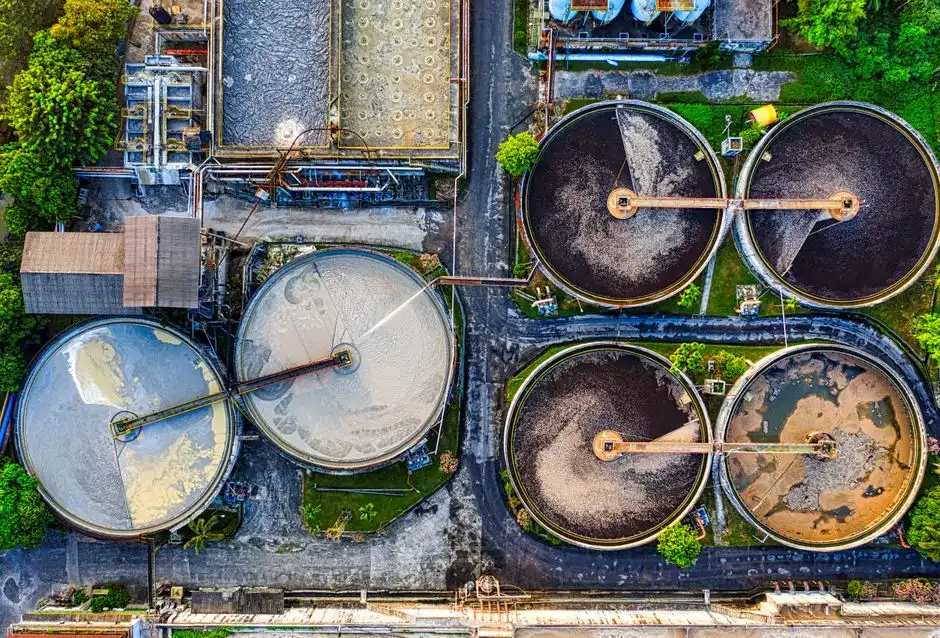
A comparable bid requires one design basis defining confirmed peak and average CTBD, sanitary sewage flow, source chemistry, treatment objectives, legal outlet, reuse target, plot area and utility interfaces. Without that package, nominal treatment capacity is not a procurement criterion.
| Bid item | Information required from every bidder |
|---|---|
| Design envelope | Guaranteed flows and treated-water results at the specified average and peak operating conditions |
| Process performance | Pretreatment requirements, recovery, concentrate fate, sludge volume, chemical consumption and membrane replacement interval |
| Operations | Controls, monitoring, redundancy, cleaning requirements and commissioning approach |
| Interfaces | Electrical, drainage, utilities, civil works, sludge collection and Uzbek commissioning requirements |
| Exclusions | Explicit statement of inlet-water assumptions, disposal, civil and electrical works, and other omissions |
| Commercial | Separated capital and operating costs, including residual-management sensitivity |
HydropureWater’s 2026 Tashkent article gives $4K–$10K in one-time permit costs, sludge disposal at $0.30–$0.80 per kg dry solids and RO membrane replacement every 3–5 years. Treat these as budget sensitivities, not fixed Samarkand prices. They should be tested against local quotations, the selected outlet and the actual residual volume.
Do not compare bids on total price alone. Compare life-cycle cost and residual risk against contracted discharge, water-scarcity or reuse obligations. A regional cooling-blowdown sizing and treatment guide can support the bid checklist, but it must not replace Samarkand operating data.
Require guaranteed flows and water-quality results at the defined operating envelope. A bidder should explain how performance changes with source-water chemistry, temperature and peak blowdown, and identify all assumptions needed to keep that guarantee valid.
Verification Checklist Before Design Freeze
The design should not freeze until the following evidence replaces regional assumptions:
- Obtain written confirmation of Samarkand source-water chemistry and seasonal variability from the actual supply.
- Require an IT-load-based cooling model and monthly data-center water balance covering evaporation, CoC, drift, unmeasured losses, peak hours and planned expansion.
- Confirm the legal discharge point, sewer or receiving-water limits, temperature constraints, reuse rules and authority ownership in writing.
- Complete an inventory of cooling chemicals, boiler chemicals and humidification additives, including maximum expected residual concentrations.
- Obtain laboratory jar tests, pilot data or vendor guarantees for the selected DAF, membrane, softening and biocide-control chemistry.
- Require a signed mass and energy balance for every train, including concentrate, sludge, chemicals and site utilities.
- Evaluate hybrid dry or adiabatic cooling only after confirming Samarkand’s actual climate design basis and operating profile.
This gate distinguishes usable evidence from Tashkent-only benchmarks. It also ensures that equipment sizing, permit arguments and budget estimates rest on Samarkand data rather than an imported template. The accompanying data-center cooling-blowdown treatment reference can support verification questions, but it cannot fill missing local inputs.
Frequently Asked Questions
How much should a Samarkand data center budget for wastewater and cooling blowdown treatment?
Use the supplied Central-Asia benchmarks only for initial planning: $35K–$60K for DAF plus dosing, $220K–$480K for DAF, softening and BWRO at 5–10 MW, and $1.2M–$3.5M for ZLD, according to HydropureWater’s 2026 Tashkent article. A firm Samarkand quotation requires confirmed average and peak CTBD, makeup chemistry, treatment objectives, residual route, utilities and civil scope. Request separate equipment, installation, commissioning and residual-disposal prices.
What treatment does a 5–10 MW data center in Samarkand need?
It needs confirmed source-water pretreatment, a CTBD train sized from the facility’s actual water balance, and a separate sanitary sewage train. The deciding inputs are the cooling model, evaporation, CoC, drift, unmeasured losses and peak-day profile—not IT load or a generic MW multiplier. Disposal, reuse or ZLD then determines the equipment scope.
Should cooling-tower blowdown and sanitary sewage be treated together?
Not as the default. CTBD contains concentrated minerals, suspended solids and treatment chemicals; sanitary sewage contains organic matter and pathogens and needs biological treatment. Keep the trains separate until each independently meets its discharge or reuse criteria. Blending at a final outlet should follow a documented compatibility and compliance assessment.
Which treatment train should a supplier quote first?
Request comparable bids for the route that matches the confirmed constraint: DAF plus dosing for solids and chemical control; DAF, softening and BWRO for cooling-makeup reuse; partial RO for broader reuse; and ZLD where liquid discharge is prohibited or contractually constrained. Require each bidder to state recovery, concentrate fate, sludge volume, chemical consumption, redundancy and exclusions. Compare life-cycle cost and residual risk, not just equipment price.
How long will Samarkand environmental approval take?
No supplied source establishes a Samarkand approval timetable. The 60–120 day EIA-submission and 6–10 month two-filing schedule comes from HydropureWater’s 2026 Tashkent article and must not be promised for Samarkand. Ask the responsible environmental and water authorities for current submission requirements, sequencing, review stages and required discharge, reuse and residual-management approvals. Include these dependencies in the project schedule before equipment orders are placed.