Start with the cooling architecture, not a generic wastewater plant
A Bhavnagar data center needs treatment based on its installed cooling architecture, measured water balance and approved discharge or reuse route—not a generic ETP specification. An evaporative or hybrid system creates concentrated cooling blowdown that must be characterized for salts, solids and treatment chemicals; a closed-loop system may mainly generate leakage and maintenance drainage; direct-liquid and immersion systems require coolant-specific assessment. Sanitary sewage remains a separate biological stream unless deliberately evaluated alongside process wastewater. Equipment should therefore be selected only after each stream, its peak flow, chemistry and destination are defined.
UGA Extension’s May 2026 report states that closed-loop water cooling can reduce water consumption by up to 70% compared with traditional open evaporative cooling. That makes cooling classification the first design decision: a system without cooling-tower blowdown does not need a blowdown treatment train merely because it occupies a data-center site.
| Installed architecture or stream | Wastewater likely to exist | Design question |
|---|---|---|
| Open evaporative cooling | Concentrated cooling-tower blowdown; leakage and maintenance drainage may also occur | What are the measured blowdown flow, cycles of concentration and cooling-chemical inventory? |
| Closed-loop cooling | Leakage and maintenance drainage | What coolant and additives can enter the leakage stream? |
| Hybrid cooling | Evaporative blowdown plus closed-loop drainage | Which streams can be segregated before treatment? |
| Direct-liquid or immersion cooling | Coolant leakage and maintenance drainage | Could refrigerants or PFAS-containing fluids be present? |
| Supporting plant | Equipment backwash or reject, air-handling condensate and sanitary sewage | Which streams have separate receiving routes or biological treatment requirements? |
RSP Engineers’ 2026 guidance treats process wastewater and sanitary sewage as separate streams with different characteristics and permitting pathways. Do not blend sanitary sewage into the cooling-water basis without evaluating biological load, flow variability and downstream treatment capacity. For direct-liquid and immersion systems, document the coolant and additives before assuming leakage can be diluted, mechanically recovered or returned to cooling.
Confirm whether the project is new-build or retrofit and whether planned IT-load changes will alter the cooling configuration or wastewater profile. The regional data center blowdown treatment framework provides a useful decision structure, while the data center wastewater treatment planning guide supports stream-specific due diligence.
Build a measured water balance for peak-flow sizing
Equipment capacity must be based on the maximum measured wastewater flow, not average daily water use. Average consumption can conceal short-duration emergency dumps, maintenance drainage and treatment-system upsets that determine tank, pump, pretreatment and membrane capacity.
Install or verify metering for makeup water, evaporation, blowdown, closed-loop leakage, maintenance drainage, RO permeate, RO concentrate, reclaimed-water demand and final discharge. Reconcile these flows over representative operating periods and reconcile the result against the facility’s cooling-water chemistry. A water-treatment plant engineering basis can help structure operating assumptions, but site measurements remain the sizing source.
Genesis Water Technologies’ 2026 analysis gives the theoretical relationship as blowdown ratio = 1 ÷ (cycles of concentration − 1). At 4 CoC, theoretical blowdown is 25% of makeup; at 6 CoC, it is 20%. The same source states that actual blowdown can exceed theoretical calculations by 15–30% because of unmeasured losses and emergency dumps.
| Water-balance quantity | Measurement required | Use in engineering design |
|---|---|---|
| Cooling makeup and evaporation | Independent metering and reconciled volume balance | Confirms consumption and identifies the water fraction leaving through evaporation |
| Tower blowdown | Continuous flow measurement with representative chemistry | Establishes pretreatment, storage, pumping and treatment demand |
| Leakage and maintenance drainage | Event flow and discharge-duration records | Sets peak wastewater and equalization requirements |
| RO permeate and concentrate | Separate flow metering | Closes the treatment water balance and quantifies reuse and residue |
| Reclaimed-water demand and final discharge | Consumption and destination metering | Confirms whether treated water is actually used and what remains to dispose |
Use representative cooling modes and IT loads. Repeat measurements during treatment and reuse operation so that startup, shutdown, peak-load and maintenance conditions enter the design basis. Size pretreatment, tanks, pumps and membranes from maximum design blowdown or wastewater flow plus the operating margin required by the project. Do not convert average daily use directly into equipment capacity, and do not use a generic blowdown percentage when the site has not yet established measured cycles of concentration.
Characterize each stream before selecting a process
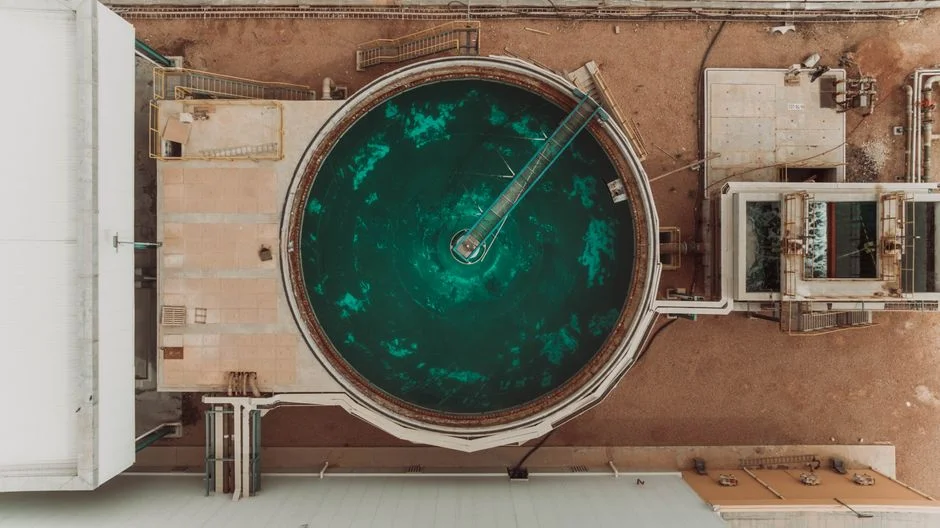
Representative sampling must distinguish cooling chemistry, coolant contamination, suspended solids and sanitary treatment requirements. One blended sample can conceal the constraint that determines the correct treatment train.
For evaporative cooling blowdown, sample conductivity and TDS, pH, total and calcium hardness, silica, TSS, chlorides, sulfate, alkalinity, temperature and residual cooling chemicals. Record every biocide, corrosion-inhibitor and antiscalant product used in the cooling program. RSP Engineers’ 2026 guide identifies these constituents as central to treatment and discharge strategy because cooling chemistry can affect pH, biological treatment, corrosion and receiving-system compatibility.
Characterize closed-loop leakage and maintenance drainage separately. Document the coolant identity, additives and any possible refrigerant or PFAS contamination. Analyze sanitary wastewater independently for COD, BOD, TSS, ammonia, pH and pathogens; mixing it with blowdown can obscure both the biological load and the concentrate-management requirement.
Profile RO reject separately for conductivity, hardness, silica, chloride and sulfate. High conductivity alone does not establish hardness, silica scaling or blending compatibility. Genesis Water Technologies’ 2026 guide gives 500–1,500 mg/L TDS and 10–25 mg/L suspended solids as general cooling-water screening targets; these are not Bhavnagar discharge limits and cannot replace local acceptance criteria or the project’s makeup-water specification.
| Stream | Minimum source-labelled parameters | Treatment implication |
|---|---|---|
| Evaporative cooling blowdown | Conductivity, TDS, pH, total and calcium hardness, silica, TSS, chloride, sulfate, alkalinity, temperature, biocide and inhibitor residuals | Defines solids removal, chemical adjustment, RO feasibility and concentrate chemistry |
| Closed-loop leakage | Coolant identity, additives, conductivity, pH, TSS and contaminant screening for refrigerants or PFAS where relevant | Determines whether recovery is technically and environmentally appropriate |
| Maintenance drainage and equipment reject | Flow profile, pH, conductivity, TDS, TSS and treatment-chemical residues | Identifies episodic load and pretreatment needs |
| Sanitary sewage | COD, BOD, TSS, ammonia, pH and pathogens | Supports a separate biological treatment and disposal basis |
| RO concentrate | Conductivity, hardness, silica, chloride and sulfate | Establishes scaling risk and the required residue route |
Collect samples across cooling modes and representative loads, and repeat them while treatment and reuse systems are operating. A laboratory analysis without a recorded operating condition cannot support equipment selection or recovery claims.
Choose the discharge or reuse route before finalizing equipment
The receiving route determines the treatment specification. A stream that can be reused as cooling makeup has different chemistry, storage, distribution and microbial-control requirements from water intended for controlled discharge or washdown.
Compare controlled discharge after treatment, reuse for washdown or another non-contact service, reuse as cooling makeup, and recovery through an advanced high-recovery train. Obtain written acceptance criteria from the relevant Maharashtra or local receiving authority for pH, TDS, temperature, suspended solids, treatment additives and other applicable parameters. The United States sewer and NPDES examples in RSP Engineers’ 2026 guidance explain the information a buyer should request, but they do not establish Indian limits.
| Route | Treatment basis | Buyer check before equipment selection |
|---|---|---|
| Controlled discharge | Treatment needed to meet the written receiving-authority criteria | Obtain applicable limits, connection conditions and monitoring obligations |
| Washdown or non-contact reuse | Filtration, chemistry control and disinfection as required by the application | Confirm storage, distribution and application compatibility |
| Cooling makeup reuse | Solids removal and dissolved-solids control sufficient for the cooling specification | Define TDS, suspended solids, scaling, microbiology and control limits |
| Advanced high recovery | Specialist chemistry design with managed residue handling | Require pilot evidence, recovery projections and a contracted residue route |
Confirm the sewer, surface-water or reuse route early because permit conditions determine whether discharge, dilution, additional treatment or reuse is feasible. Seek written acceptance criteria for concentrate or sludge as well as the main effluent; a reusable permeate does not solve the commercial problem of an unaccepted residue route.
Do not transfer a hyperscale design automatically to a smaller Bhavnagar facility. Genesis Water Technologies’ 2026 analysis states that capital cost per gallon treated can be 3–4 times higher at smaller scales and that operating complexity can exceed available staff expertise. The ETP technology and sizing buyer’s guide provides a route-comparison framework, but the final decision must use Bhavnagar flows, chemistry, receiving constraints and operating resources.
Match UF, RO, dosing and disinfection to the treatment objective
UF, RO, chemical dosing and disinfection perform different functions; none should be added without a verified design condition. The correct sequence normally starts with removing solids and colloids that could foul membranes, instruments or cooling distribution systems.
Evaluate UF where reliable solids removal is required. The 0.03-micron UF pretreatment for cooling blowdown uses catalog-listed 0.03-micron PVDF membranes, accepts feed turbidity up to 300 ppm and includes automatic backwash and air scour. Its listed capacities run from 2,000 to 40,000 L/h. These are catalog parameters, not guaranteed Bhavnagar duty; feed chemistry, peak flow and fouling potential still require verification.
Use industrial RO when dissolved-solids removal is needed for the selected reuse specification. The industrial RO system for cooling-water reuse lists recovery up to 95%, while IDE’s 2026 article reports conventional brackish-water RO commonly reaches 75–80% before scaling limits become controlling. Project site recovery from feed TDS, calcium hardness, silica, temperature, antiscalant strategy and the proposed recovery; do not use a catalog maximum as an operating guarantee.
| Treatment stage | Function | Design condition that must be confirmed |
|---|---|---|
| Filtration or UF | Remove suspended solids, colloids and particulates | Required before RO or where the reuse specification limits TSS; confirm feed turbidity, peak flow and fouling |
| Industrial RO | Remove dissolved salts and produce lower-TDS permeate | Approved permeate specification and feed-specific scaling envelope |
| Automatic chemical dosing | Adjust pH, residual or treatment chemistry | Target chemistry, residual requirement, chemical inventory and downstream material compatibility |
| Disinfection | Control microbial risk for the selected reuse application | Risk assessment after filtration and before reuse; filtration alone does not establish reuse suitability |
| Advanced high recovery or crystallization | Increase recovery while controlling mineral scale | Specialist chemistry design, pilot evidence and a managed residue route |
Specify an automatic chemical dosing system only after confirming the target pH, residual, chemical inventory and downstream compatibility. Otherwise, dosing can merely transfer contaminants into the concentrate. Assess disinfection separately after filtration and before reuse where microbial control is necessary. Advanced high-recovery and crystallization should not be treated as the default packaged configuration: they require chemistry design, representative pilot evidence and a confirmed residue destination.
Validate performance through a representative pilot
A pilot should demonstrate recovery, fouling, controls and residue handling under representative Bhavnagar conditions before the buyer accepts a high-cost equipment commitment. Genesis Water Technologies’ 2026 guidance proposes a trial lasting 3–6 months, or the longest practical operating window.
Test membrane recovery, scaling tendency, chemical demand, permeate quality, concentrate handling, cleaning frequency and operation across representative loads. During the trial, examine automatic controls and test whether the treatment train becomes a bottleneck when cooling demand rises. Measure peak flow, operating margin and the complete water balance; use the pilot chemistry to support quality, recovery and concentrate projections.
Specify the trial and commercial offer together. For each treatment stage, require suppliers to define duty, materials, controls, redundancy, cleaning, maintenance, chemical consumption, monitoring and operator training through measurable acceptance criteria. A supplier should also identify its design assumptions and show how proposed recovery changes when feed chemistry changes.
The RO and UF membrane element schedule should follow the validated duty rather than precede it. Acceptance should cover permeate quality, concentrate quality, measured recovery, cleaning frequency, chemical consumption, controls response and the condition of residue handling. If the longest practical pilot window is shorter than the proposed trial, document why and provide operating evidence covering seasonal and load variability.
Compare bids on total cost and operating risk
Compare complete operating outcomes, not headline recovery or avoided-water claims. The available research contains no Bhavnagar tariff, treatment quotation or disposal price, so the procurement team must obtain current site-based inputs before approving a budget.
| Bid component | Information the buyer should require |
|---|---|
| Capital scope | Equipment, installation, tanks, pumps, membranes, controls, chemical storage, redundancy and site works |
| Operating resources | Energy, chemicals, testing, monitoring, operator time, cleaning, maintenance and replacement parts |
| Water and discharge | Projected freshwater avoided, discharge avoided, chemical savings and exposure to water-service disruption |
| Residue route | Projected concentrate quality, handling method, transport or disposal assumptions and responsible party |
| Performance evidence | Site-specific pilot results, design assumptions, projected recovery and measurable acceptance criteria |
| Support | Warranty scope, spares availability, operator training, controls documentation and technical support |
Evaluate projected recovery, concentrate quality, residue route, controls, monitoring, cleaning frequency, operator training and warranty support. Pilot evidence and stated assumptions should carry more weight than a catalog maximum. The treatment valves, filters and media schedule should identify maintenance items and compatibility requirements without obscuring the full operating cost.
Install online or frequent laboratory monitoring for flow, conductivity, pH, hardness, silica, TSS, the selected biocide residual and differential pressure across membrane or filter stages. Trend actual recovery, cycles of concentration, cleaning frequency, chemical consumption and reuse performance. These records should support commissioning adjustments and post-handover operating control.
Frequently Asked Questions
What peak flow should treatment equipment be sized for in Bhavnagar?
Size the system from the maximum measured stream flow plus the project’s operating margin and peak discharge events, not average daily water use. For evaporative cooling, Genesis Water Technologies’ 2026 analysis states that actual blowdown can exceed theoretical values by 15–30% because of unmeasured losses and emergency dumps. The final design flow should come from the reconciled, metered water balance under representative cooling modes and loads.
When should a data center use UF versus RO?
Use UF where reliable solids removal is needed, especially before RO or where the reuse specification limits suspended solids. Use RO when the approved reuse route requires dissolved-solids removal. Neither technology should be selected from feed flow alone: UF requires verified feed turbidity and fouling data, while RO requires feed-specific hardness, silica, temperature, antiscalant strategy and recovery projections. The UF pretreatment system and industrial RO system therefore remain alternatives within a verified treatment train, not default capacities for the site.
What should be checked before selecting a treatment supplier?
Require site-specific pilot evidence, a feed-chemistry-based recovery projection, measurable acceptance criteria and details of concentrate handling. Also require the supplier to define controls, redundancy, cleaning frequency, chemical consumption, monitoring, operator training and warranty support. A catalog recovery rate without the underlying design chemistry does not demonstrate suitability for Bhavnagar.
How should the budget for wastewater and cooling blowdown treatment be assessed?
Compare total cost of ownership, including equipment, installation, membranes, energy, chemicals, testing, operator time, monitoring, cleaning, replacement parts, redundancy, concentrate handling and disposal. No Bhavnagar-specific cost figure is supported by the supplied research, so request current freshwater, electricity, chemical, disposal and supplier quotations before approving the budget. Also quantify avoided freshwater and discharge, but do not treat those benefits as substitutes for a firm residue route and support plan.
What local compliance information is needed before finalizing the treatment train?
Obtain written acceptance criteria from the relevant Maharashtra or local receiving authority for the main effluent and for the concentrate or sludge route. Confirm whether discharge will enter a sewer or surface water, or whether reuse is intended, and request applicable limits for pH, TDS, temperature, suspended solids, treatment additives and other relevant parameters. United States examples in the supplied research do not establish Indian requirements, so the project must obtain local confirmation rather than importing foreign limits.