Separate Every Data Center Wastewater Stream
A Villa Nueva data center needs a separate management plan for each wastewater source because the flow profile, chemistry and receiving route are different. Cooling-tower blowdown, construction fill-and-flush water, sanitary sewage, equipment washing, process wastewater, stormwater and commissioning drains should be recorded independently. The project cannot establish a defensible treatment train until each stream has an identified destination and its discharge authority has confirmed how it must be managed.
E&E News reports that closed-loop coolant can circulate for months or years before disposal or replacement, so closed-loop operation does not eliminate wastewater planning. Fill-and-flush water is a separate construction discharge that may contain corrosion-control chemicals unsuitable for a municipal wastewater system. Loudoun Water requires developers to test this stream before discharge and independently verifies the results, according to E&E News. That U.S. practice is not evidence of a Villa Nueva rule, but it demonstrates why construction water should not be folded into an operational permit without characterization.
Sanitary sewage should also remain separate from process wastewater. RSP Engineers identifies blowdown as an industrial stream containing concentrated minerals and cooling-treatment chemicals, while sanitary sewage follows a domestic collection and acceptance pathway. Stormwater is not a substitute disposal route for process wastewater. The design team must confirm the lawful destination for every stream before fixing the site plan.
| Stream | Primary distinction | Design decision required |
|---|---|---|
| Cooling-tower blowdown | Concentrated water with cooling-treatment chemicals | Reuse or permitted discharge route; chemistry-based treatment |
| Construction fill-and-flush | One-time construction water that may contain treatment chemicals | Separate sampling, destination and acceptance decision |
| Sanitary sewage | Domestic wastewater with a different flow profile | Separate collection and authority coordination |
| Equipment washing and process wastewater | Variable composition and possible oil, detergent or metals | Source characterization and appropriate pretreatment |
| Stormwater | Not a treatment substitute for process water | Establish the approved drainage destination |
| Commissioning drains | May occur before normal operation | Document chemical use, sample and obtain discharge approval |
The broader source-separation method is discussed in the data center wastewater treatment in Peru reference, which addresses why operational, construction and sanitary flows should not be combined automatically.
Measure the Water Balance Before Selecting Equipment
The site water balance, not server capacity or cooling-system nameplate data, must establish treatment flow. Reconcile makeup, circulating flow, evaporation, blowdown, product water, internal reuse, final discharge, construction flushing and emergency disposal. Missing flows can produce either an undersized treatment train or an unjustified reserve of installed capacity.
HydropureWater’s Guatemala City guide, citing Genesis Water Technologies (2026), gives theoretical blowdown ratios of 25% at 4 cycles of concentration and 20% at 6 cycles of concentration. These are theoretical reference values, not Villa Nueva design values. The same guide reports that actual blowdown can exceed theoretical calculations by 15–30% because of unmeasured losses and emergency dumps. Consequently, the project should increase the planning allowance for unmeasured losses and emergency disposal while retaining measured flows as the primary sizing basis.
Request laboratory analysis of both source makeup and blowdown. The analytical suite should cover flow, pH, conductivity or TDS, suspended solids, hardness, alkalinity, silica, metals and residual treatment chemicals. It should also identify the cooling-water chemical program, including biocides, corrosion inhibitors and antiscalants. These inputs determine the achievable cycles of concentration, reuse quality and pretreatment needs.
- Collect makeup and blowdown flow from calibrated meters under normal operating conditions.
- Reconcile evaporation and blowdown with the cooling supplier’s calculation.
- Add construction flushing, washwater and emergency-dump scenarios separately.
- Reconcile reuse and final discharge so every water input has a documented destination.
- Size treatment equipment from the governing measured case and the required operating margin.
| Water-balance input | Evidence required | Why it affects equipment |
|---|---|---|
| Cooling makeup | Continuous flow plus source-water analysis | Establishes baseline contaminant loading |
| Evaporation | Operating measurement and water-balance calculation | Separates water loss from purge |
| Blowdown | Continuous flow and periodic chemistry | Sets treatment capacity and solids loading |
| Cycles of concentration | Cooling-system operating range and measured minerals | Controls scaling, fouling and biological-control demand |
| Construction flushing | Volume record and chemical inventory | Prevents temporary flows from distorting equipment sizing |
| Emergency disposal | Approved route and maximum event volume | Defines containment and off-spec treatment needs |
The data center cooling blowdown treatment methodology provides a useful structure for reconciling measured operation with theoretical blowdown calculations.
Match Treatment to the Discharge Route
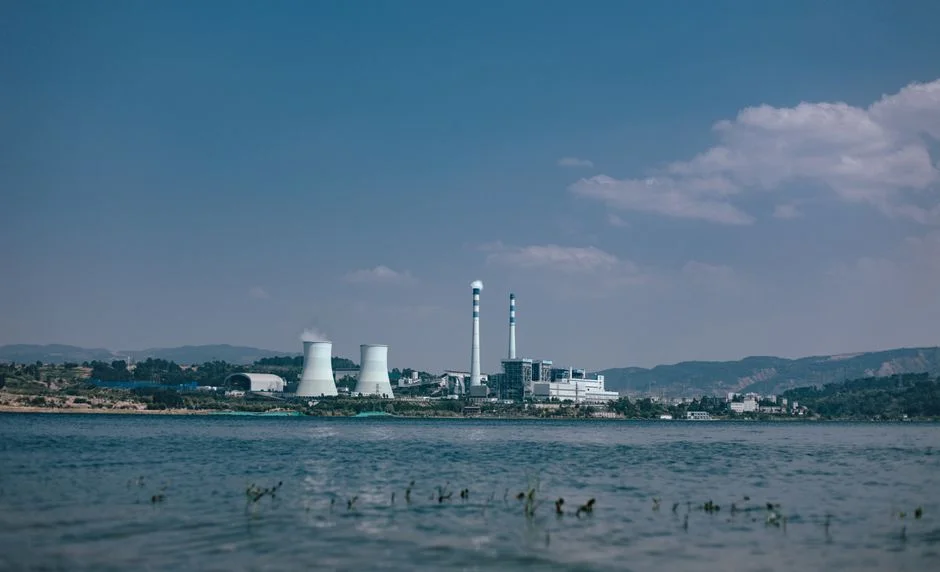
The treatment objective follows the receiving route: reuse the water as cooling makeup, discharge it through a permitted route after appropriate pretreatment, or evaluate partial or full zero-liquid-discharge (ZLD) where local rules, site utilities and residual-disposal arrangements support that route. These branches should be compared before equipment is specified.
For sewer or receiving-authority approval, characterize pH, temperature, dissolved solids, treatment-chemical residues, metals and nutrients. Dilution should not be assumed to make an off-spec stream acceptable. RSP Engineers identifies a commonly required pH range of 6.0–9.0 and gives 150°F as an example maximum temperature limit. Both are U.S.-oriented examples in RSP’s guidance and are not established Villa Nueva limits.
Construction fill-and-flush water must remain separate from operational blowdown. E&E News reports that Loudoun Water requires testing before construction discharge and independently verifies results. The research does not establish the Villa Nueva sewer authority’s local limits, permit procedure, connection conditions or direct-discharge rules. Those are design hold points, not items to fill with assumed values.
| Decision branch | Trigger | Treatment implications | Information required before approval |
|---|---|---|---|
| Cooling-makeup reuse | Measured chemistry supports the required makeup quality | Solids removal, hardness and scale control, membrane protection where justified, and residual-chemical management | Makeup specification, cycles of concentration, pH, hardness, alkalinity, silica, TDS and treatment residuals |
| Pretreatment for permitted discharge | Receiving authority confirms a connection route and acceptance criteria | Targeted pH correction, filtration or other unit operations determined by noncompliance parameters | Applicable limits, permit conditions, monitoring, sampling and connection requirements |
| Partial or full ZLD | Reuse and disposal constraints justify the added complexity | Concentrate minimization and controlled handling of salts and other residual solids | Residual-disposal route, brine chemistry, available utilities, site footprint and operating resources |
Industrial wastewater pretreatment for sewer acceptance should be treated as an authority-defined design basis. The local written criteria, not an equipment catalogue or U.S. example, determine whether a proposed train is acceptable.
Build the Cooling Blowdown Treatment Train
Equalization and characterization must precede final treatment design because cooling blowdown flow, temperature and chemical dose can vary with operating conditions. The train should solve measured contaminants in sequence rather than default to RO, DAF or reuse equipment. A treatment train that adds no verified contaminant removal is equipment without a design basis.
Consider solids and colloidal removal before membrane or reuse equipment when suspended-solids data supports it. HydropureWater’s UF system uses 0.03-micron PVDF membranes, accepts up to 300 ppm turbidity and covers 2,000–40,000 L/h. These are stated equipment limits; the applicable treatment flow and feed water still require Villa Nueva site data.
Consider DAF when the stream contains the oil, grease, colloids or suspended solids for which flotation is justified. HydropureWater’s DAF range is 4–300 m³/h across 13 standard models. Its inclusion should follow analysis of the actual contaminants, not the label “cooling blowdown.” Equipment options are available through DAF systems for oil and solids removal and UF pretreatment for cooling-water reuse, but neither establishes a site selection without a matching water analysis.
For cooling-makeup reuse, control hardness and other scaling constituents before RO. IDE reports that conventional brackish-water RO commonly encounters scaling constraints at 75–80% recovery and identifies silica, calcium carbonate and calcium sulfate as important scale-forming species. IDE also reports an industrial application operating at around 95% recovery with permeate silica reduced to about 1 mg/L. That application demonstrates a chemistry-dependent high-recovery option; it does not establish the Villa Nueva design or guarantee the same result.
Chemical dosing should follow identification of the required pH correction or treatment program. Acid, caustic, coagulant, flocculant or specialty-chemical injection should be included only where the confirmed operating envelope and compliance strategy require it.
| Design condition | Potential unit operation | Required basis |
|---|---|---|
| Variable flow or discharge | Equalization and pumping | Measured flow range and destination requirements |
| Elevated suspended solids or colloids | Filtration, clarification or DAF | Particle characterization and treatment objectives |
| pH outside the confirmed acceptance range | Controlled acid or caustic dosing | Cooling chemical program and receiving criteria |
| Hardness, silica and scale-forming salts | Hardness control or precipitation before membranes | Complete ionic analysis and recovery target |
| Cooling-makeup reuse | UF, RO and post-treatment as chemistry requires | Makeup quality, fouling risk and system recovery |
| Residual salinity | Brine concentration or ZLD evaluation | Residual-disposal route and site utilities |
Design the Site, Controls and Compliance System
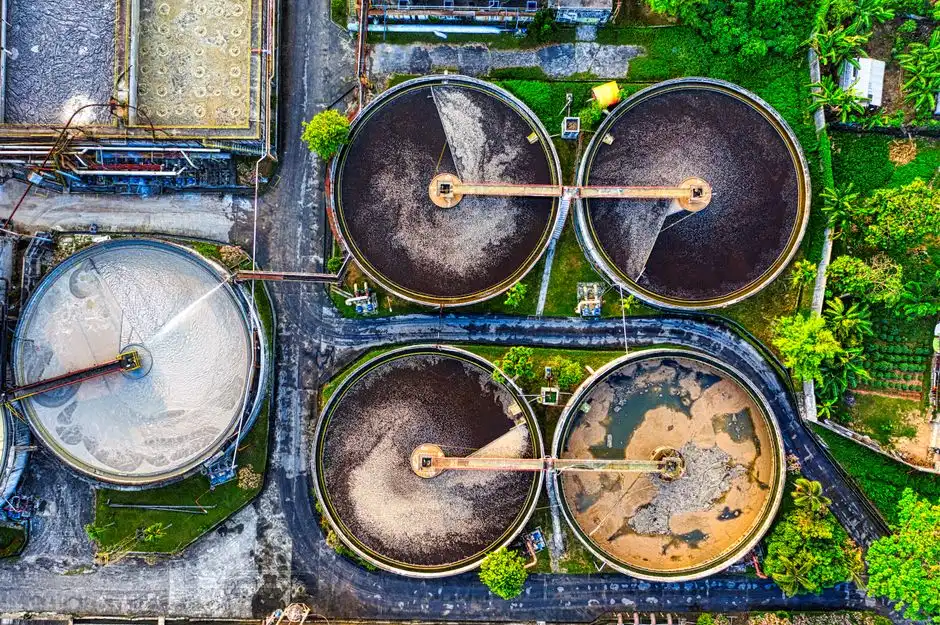
The treatment system must be included in site planning because tanks, pumps, chemical storage, pretreatment skids, sampling points and maintenance access determine the usable layout. RSP Engineers reports that pretreatment systems can require a dedicated footprint containing treatment equipment, tanks, chemical storage and controls. Reserving space only after civil design has advanced creates avoidable redesign and access conflicts.
Provide secondary containment, safe chemical handling, isolated drainage and an emergency disposal route for upset or off-spec water. Emergency capacity should follow the governing disposal event defined in the water balance; the supplied research does not establish a Villa Nueva requirement for that volume.
The monitoring design should combine continuous flow and pH measurement with scheduled laboratory sampling for the parameters required by the receiving authority and the selected treatment train. Alarms, interlocks, bypass controls and documented response procedures are necessary because an off-spec stream must not reach an unapproved destination. A bypass is not an automatic disposal route; its physical arrangement should prevent untreated discharge.
Keep separate sample points and records for operational blowdown, fill-and-flush water, sanitary sewage and other process streams. Each result should be traceable to its source, chemical package, construction phase or operating condition. Commission every treatment unit against documented acceptance criteria before connecting it to a reuse or discharge route.
The industrial wastewater pretreatment for sewer acceptance reference reinforces the need to coordinate treatment footprint, utilities, monitoring and commissioning with the site-development package rather than append them after design.
A Practical Approval and Procurement Sequence
Early authority coordination prevents the project from buying equipment for a route that the receiving authority will not accept. The sequence below separates confirmed requirements from design assumptions.
- Identify each receiving authority. Ask for applicable discharge criteria, permit requirements, monitoring rules, sample methods, connection procedures and stormwater restrictions.
- Complete the source register, water balance and laboratory characterization. Do not finalize equipment capacity before measured flows and chemistry are available.
- Compare reuse, pretreatment-for-discharge and partial or full ZLD. Use measured chemistry, site constraints, monitoring burden, utilities and residual-disposal requirements—not treatment labels alone.
- Issue a vendor data request. Require stream analyses, design flow, operating envelope, controls, chemical consumption, footprint, utility demand, maintenance requirements and spare parts.
- Verify performance. Use pilot testing or a commissioning program with documented acceptance criteria before connecting the treatment train to its intended destination.
Request a complete commercial proposal based on the same technical basis for every bidder. A comparison framework for pretreatment selection is available in the DAF and clarifier selection guide, but Villa Nueva chemistry, authority conditions and cost inputs still need to be established locally.
Frequently Asked Questions
What treatment capacity does a Villa Nueva data center need?
Capacity must come from measured cooling blowdown, construction flushing, washwater, process-wastewater and sanitary flows—not server count or facility rating alone. Ask the design team for the reconciled water balance, peak and operating flows, variability, chemistry and emergency-disposal scenario; no supported Villa Nueva capacity figure is available in the supplied research.
Can cooling-tower blowdown be reused as cooling makeup?
Yes, but only if measured chemistry and the cooling makeup specification support it. Test hardness, alkalinity, silica, TDS, suspended solids, pH and treatment-chemical residues, then confirm that the proposed train controls scaling, fouling, microbiology and chemical carryover.
Should fill-and-flush water be discharged with operational cooling blowdown?
No. Keep it as a separate source until its chemistry and destination are confirmed. E&E News reports that Loudoun Water requires testing and independently verifies construction fill-and-flush results, illustrating the separate acceptance decision even though it does not establish a Villa Nueva rule.
How should industrial wastewater equipment be selected for this application?
Send suppliers the stream analysis, design flow, variability, destination, reuse target, available utilities, footprint constraints and monitoring requirements. Require a performance guarantee and chemical-consumption basis; do not select equipment from “cooling blowdown” alone. Obtain quotations only after the authority route and design basis are documented.
What is the main compliance risk in Villa Nueva?
The main risk is treating the sewer as an unlimited disposal route. The supplied research does not establish Villa Nueva-specific limits, permit procedures, connection conditions or costs. Obtain written confirmation from each relevant receiving authority before finalizing the treatment train or committing to a reuse, discharge or ZLD route.