Start with the water balance, not the equipment list
A data center in Piura generally needs a source-specific treatment train rather than one system for all wastewater. Cooling tower blowdown requires flow and water-quality monitoring, solids separation and targeted treatment for the contaminants and discharge destination. Sanitary wastewater may need biological treatment and disinfection, while process wastewater and direct-liquid cooling streams must be assessed separately. The correct capacity depends on cooling technology, cycles of concentration, makeup-water chemistry, blowdown volume and reuse goals. DAF can remove suspended solids, oil and colloidal matter, while UF can remove bacteria, colloids and suspended solids without chemicals.
Separate cooling tower blowdown, sanitary wastewater, process wastewater and direct-liquid or immersion-cooling effluent before preparing a supplier brief. Their contaminant profiles and receiving destinations differ, so combining them can obscure the treatment requirement. Confirm whether the cooling system is open-loop, closed-loop, hybrid, evaporative or direct-liquid; establish the measured or design blowdown flow, operating schedule, seasonal variation, emergency dumps and intended reuse destination.
Install monitoring at makeup and blowdown points for flow, evaporation, conductivity, pH and suspended solids. This supports the water balance and distinguishes water consumed from water that could be discharged or reused. Genesis Water Technologies, in its 2026 article Why Cooling Tower Blowdown Is Your Hidden Opportunity, reports that actual blowdown may exceed theoretical calculations by 15–30% because of unmeasured losses and emergency dumps.
The blowdown relationship is blowdown ratio = 1/(CoC−1). At 4 CoC, blowdown is 25% of makeup water; at 6 CoC, it is 20%, according to Genesis Water Technologies (2026). Commercial Water Lab, in its June 2026 article What’s Actually in Data Center Water Discharge—and Who Regulates It, notes that public facility-level water-use and discharge data are often limited. Establish an internal baseline instead of relying on generic efficiency claims. See also this regional data-center blowdown treatment framework and data-center wastewater planning and reuse guide.
| Water-balance item | Minimum confirmation | Why it matters |
|---|---|---|
| Makeup water | Source, flow and operating condition | Establishes consumption and potential blowdown volume |
| Evaporation | Measured estimate and seasonal variation | Separates consumption from recoverable discharge |
| Blowdown | Measured flow and theoretical CoC calculation | Sets treatment capacity |
| Water quality | Conductivity, pH and suspended solids, plus source-specific parameters | Defines treatment and reuse limits |
| Non-cooling streams | Separate flow and quality by sanitary, process and direct-liquid streams | Prevents incompatible flows from being treated together |
Translate Piura conditions into treatment constraints
Piura source-water chemistry and the receiving destination must set the treatment limits; the supplied research provides no site-specific Piura water-quality profile. Request a current analysis covering conductivity, hardness, alkalinity, calcium, silica, chloride, sulfate, pH, turbidity and suspended solids. Do not assume a local limit or suitability for reuse until the operating source and seasonal variation are documented.
Determine whether makeup water comes from the municipal network, a well or another source, and whether non-potable or reclaimed supply is available for cooling. For each stream, identify whether its destination is the municipal sewer, surface water, irrigation, toilet flushing, equipment washing, a process use or cooling makeup. Each route requires its own quality, public-health and operational assessment.
For Piura, confirm current Peruvian environmental authorization, water-use conditions, municipal sewer pretreatment requirements and any basin- or sector-specific restrictions with the competent authority and receiving utility. The domestic sewage treatment options in Peru provides context for sanitary treatment, but it does not replace site-specific authorization or discharge approval.
Commercial Water Lab (June 2026) describes U.S. NPDES permits for direct surface-water discharge and industrial pretreatment requirements for municipal sewer discharge. Those mechanisms are useful engineering comparisons, not Peruvian legal requirements. Avoid importing U.S. limits into a Piura equipment specification.
The economic comparison should include water supply, wastewater or disposal charges, chemical control, labor, monitoring, energy and avoided freshwater demand. Piura-specific tariffs, disposal fees and water-stress data were not supplied, so the project model must obtain them rather than substitute generic assumptions. Source-water chemistry also affects scaling, chemical demand, membrane performance and the viability of cooling blowdown reuse.
Match every wastewater stream to its treatment train
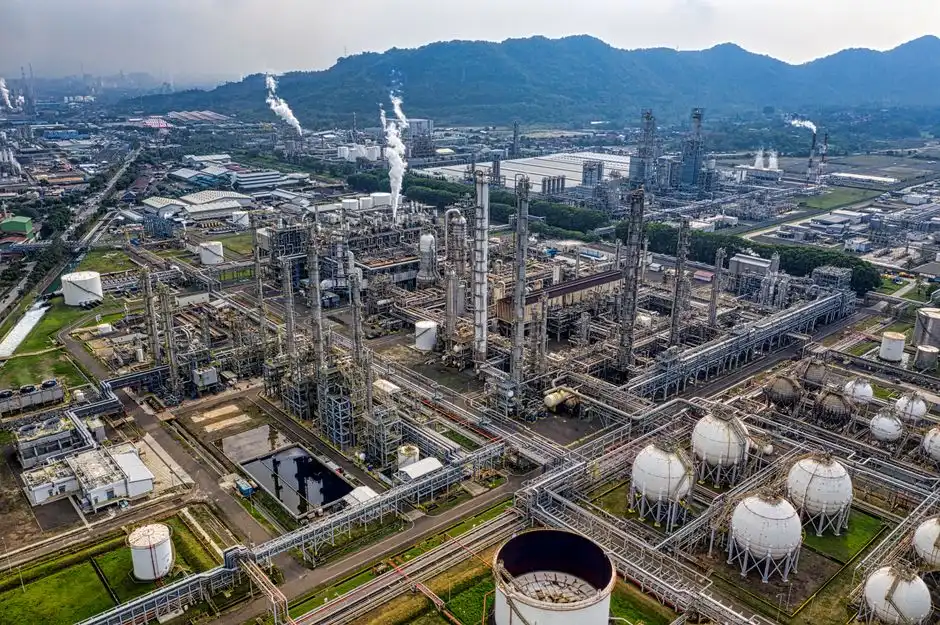
Cooling tower blowdown should begin with physical separation followed by treatment matched to its final destination. Blowdown contains concentrated dissolved solids, suspended matter and residual cooling chemicals, as Genesis Water Technologies (2026) and Commercial Water Lab (June 2026) both describe. A DAF system for cooling blowdown solids separation is appropriate where suspended solids, FOG, oil and grease or colloidal matter must be removed before further polishing.
Sanitary wastewater belongs in a segregated biological train. The WSZ package combines A/O biological contact oxidation, sedimentation and disinfection for flows from 1–80 m³/h, according to the supplied product research. Its suitability must be checked against the actual sanitary flow, wastewater characteristics, receiving requirements and the available footprint.
Process wastewater requires characterization before equipment selection. Suspended solids, oil and grease, colloids and biodegradable organics may justify physical separation, biological treatment or a combined process. A physical separator should not be expected to remove dissolved contaminants, while biological treatment is inappropriate where the stream is non-biodegradable or contaminated with substances that inhibit the process.
Treat direct-liquid and immersion-cooling effluent as a separate, high-priority stream. Commercial Water Lab (June 2026) states that coolant wastewater may contain refrigerants or PFAS compounds and may require specialized handling. Its presence, concentration and legal destination must be confirmed before combining it with cooling tower blowdown.
An ultrafiltration system for clarified blowdown is relevant where bacteria, colloids and suspended solids must be removed without chemical addition. The supplied UF specifications give a flow range of 2,000–40,000 L/h and 0.03-micron PVDF membranes. Disinfection is an additional requirement determined by reuse and health-risk assessment; it does not replace source separation or contaminant removal.
| Stream | Primary treatment logic | Decision before ordering |
|---|---|---|
| Cooling tower blowdown | Physical separation, then targeted dissolved-solids or polishing treatment | Measure CoC, conductivity, suspended solids, chemicals and reuse quality |
| Sanitary wastewater | Biological treatment, clarification and disinfection | Confirm flow, load, sewer conditions and receiving requirements |
| Process wastewater | Physical, biological or combined treatment according to contaminants | Complete oil-and-grease, colloid and biodegradability assessment |
| Direct-liquid or immersion effluent | Specialized coolant-specific handling | Identify refrigerants, PFAS and other coolant constituents |
Size the blowdown system from measured operating data
Size the blowdown treatment system from the governing operating flow, not from the nominal capacity of a treatment unit. Calculate the theoretical blowdown ratio as 1/(CoC−1), then convert the selected makeup condition into daily and hourly flow. At 4 CoC, the calculated ratio is 25%; at 6 CoC, it is 20%. The difference is five percentage points and a 20% reduction in blowdown volume, according to Genesis Water Technologies (2026).
Apply the governing flow to the selected process. The supplied DAF catalog covers 4–300 m³/h, while the UF catalog covers 2,000–40,000 L/h. Neither range establishes the final capacity: actual flow, contaminant loading, operating hours and required redundancy remain decisive.
Use measured blowdown rather than relying solely on the theoretical calculation. Genesis Water Technologies (2026) reports that actual blowdown can exceed theoretical values by 15–30% because of unmeasured losses and emergency dumps. Reconcile flow-meter data with the cooling control system and include emergency events in the operating scenario.
Check peak-hour demand, emergency bypasses, future cooling load, backwash or cleaning outages and redundancy before freezing the design. Also define how the facility will manage treatment downtime without compromising cooling control or sending an untested stream to the sewer.
Genesis Water Technologies (2026) presents a modular 100–300 GPM blowdown treatment system as a scale reference. It is not a universal Piura sizing recommendation. Translate the selected operating flow into the units used by each proposed process and ask each supplier to show the calculation, assumptions and contingency margin.
| Sizing step | Input required | Output |
|---|---|---|
| Theoretical balance | Makeup flow and selected CoC | Blowdown ratio from 1/(CoC−1) |
| Operating reconciliation | Measured blowdown, losses and emergency dumps | Governing continuous and peak flows |
| Process conversion | Design flow, treatment hours and redundancy | Required equipment capacity |
| Contaminant check | Loading and recovery or removal requirements | Clarifier or membrane sizing basis |
Compare treatment options by contaminant, reuse and operating risk
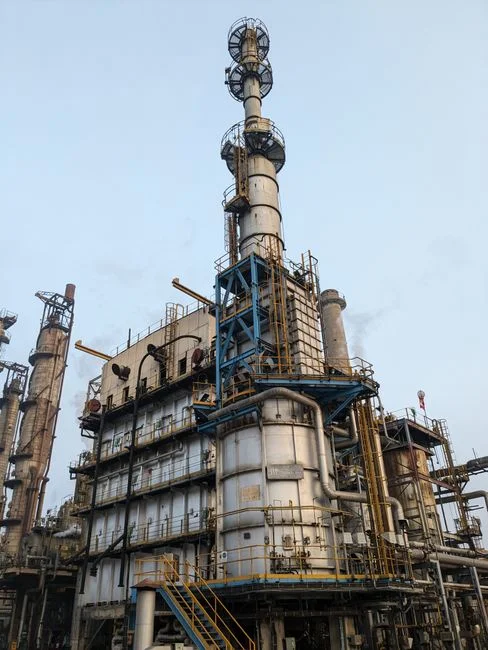
DAF, UF and reverse osmosis solve different contaminant problems, so comparison must begin with the required outlet quality. The supplied product research describes DAF as a physical separation process with automatic skimming and a catalog range of 4–300 m³/h. It is suited to suspended solids, FOG, oil and grease and colloidal matter; it does not by itself provide dissolved-solids removal.
UF provides a finer membrane barrier. The supplied specification identifies 0.03-micron PVDF membranes, automatic backwash and air scour, acceptance of up to 300 ppm turbidity, and removal of bacteria, colloids and suspended solids without chemicals. This makes it a possible polishing stage after clarification when the required outcome is biological control or solids control rather than complete desalination.
An industrial RO system is the higher-complexity polishing option. The supplied product research states that permeate can be generated at recovery rates up to 95%, but that figure is a product capability, not an expected site recovery. Feed chemistry, pretreatment, concentrate disposal, energy demand and operating skill must justify RO for the selected reuse route.
Automatic chemical dosing should be specified only where contaminant removal or discharge control supports it. The supplied research describes PLC-controlled injection of coagulants, flocculants, pH adjusters and specialty chemicals. Include reagent consumption, storage, operator training and residual effects on downstream reuse in the comparison.
| Option | Primary function | Main procurement question |
|---|---|---|
| DAF | Physical removal of suspended solids, FOG, oil and grease and colloids | Does feed variability and loading require clarification before polishing? |
| UF | Fine separation of bacteria, colloids and suspended solids without chemicals | Is the feed sufficiently clarified for membrane operation? |
| RO | Dissolved-solids separation and higher-quality polishing | Is the reuse value sufficient to cover pretreatment, energy and concentrate handling? |
| Chemical dosing | Targeted contaminant adjustment | Which chemical is necessary, and what residual enters reuse or discharge? |
Evaluate life-cycle risk: operator capability, reagents, membrane cleaning, sludge or concentrate handling, energy, availability, local service support and replacement-part compatibility. Request a pilot or side-stream trial when source chemistry varies, the discharge route is sensitive or reuse requires near-reuse-quality effluent. Pilot acceptance criteria should be agreed before comparing commercial proposals.
Build the reuse and financial case with conservative assumptions
The reuse case must distinguish recoverable discharge from permanent water consumption. Genesis Water Technologies (2026) reports that physical separation followed by targeted treatment can reduce makeup-water demand by 15–25%. Treat this as a reported range, not a guaranteed saving for a Piura facility. The result depends on measured blowdown, treatment recovery, operational losses and the destination of the recovered water.
Treated blowdown may support toilet flushing, outdoor equipment washing, appropriate irrigation, process use or advanced cooling-makeup reuse. Each pathway needs a separate quality and public-health assessment. A stream acceptable for equipment washing may not be acceptable for cooling makeup because dissolved solids, treatment chemicals, scaling tendency and biological control remain relevant.
Genesis Water Technologies (2026) provides a 15 MW calculation model: 60% recovery equals 3 million gallons per year; at a $200,000 capital cost, simple payback is 6.7 years before omitted avoided costs. This is an example calculation, not a Piura estimate. No Piura tariff, disposal fee, capital cost or financing rate was supplied, so a local payback cannot be stated responsibly.
Build the project case on total cost of water and avoided disposal rather than utility savings alone. Include supply, wastewater, disposal, chemicals, labor, monitoring, energy, maintenance and recovered-water value. Also test the downside case: lower recovery, unavailable reuse demand, chemical costs, membrane cleaning and treatment outages.
Do not treat a higher cycles of concentration as an automatic efficiency gain. Genesis Water Technologies (2026) reports that biological and scaling risks rise above 5–6 CoC without advanced treatment. Higher CoC may also increase chemical demand and downstream treatment load, so any change should be evaluated through the full water and energy balance.
Issue a treatment supplier a complete design brief
A comparable proposal starts with a verified water balance, not a unit price. Require makeup, evaporation, blowdown, product water and wastewater flow by stream and operating condition. Include source-water and blowdown analyses, cooling chemistry, CoC, anticipated chemical additions, reuse targets and applicable permit or sewer conditions.
Ask each supplier to state design flow, process stages, removal targets, recovered-water quality, sludge or concentrate disposition, utilities, controls, footprint, redundancy and commissioning acceptance criteria. The quote must clearly state whether it covers cooling blowdown, sanitary wastewater, process wastewater or several streams. Segregated flows usually require separate treatment trains.
Require local regulatory confirmation before ordering. The supplied research describes U.S. NPDES and pretreatment mechanisms and general environmental risks, but it does not provide Piura-specific limits or permits. Obtain written confirmation of the applicable Peruvian environmental authorization, water-use conditions and municipal pretreatment requirements.
For pilot planning, define the feed source, operating period, analytical program, acceptance limits, operator involvement and consequences for failure. The data-center wastewater treatment framework provides a useful planning structure, while the Piura-specific checks remain tied to local water analysis, discharge destination and current authorization.
Frequently Asked Questions
How much does a data-center wastewater and cooling blowdown treatment system cost in Piura?
Cost must be calculated from measured stream flows, contaminants, treatment targets, equipment capacity, civil work, controls, utilities and local disposal or reuse charges. The supplied research provides no Piura price range. Request a capital estimate and operating-cost schedule after the water balance and pilot criteria are defined.
Should a Piura data center use DAF or UF for cooling blowdown?
DAF is primarily a physical separator for suspended solids, FOG, oil and grease and colloids, while UF is a finer membrane barrier for bacteria, colloids and suspended solids. Choose based on the contaminants that must be removed, feed quality, recovery target and reuse route; DAF may also precede UF when clarification is needed.
How should a supplier size treatment capacity?
Use measured peak blowdown and wastewater flows, reconcile them with theoretical CoC calculations, and include unmeasured losses and emergency dumps. Genesis Water Technologies (2026) reports actual blowdown can exceed theoretical calculations by 15–30%. Then apply the governing flow to each process and state the required redundancy explicitly.
Can cooling blowdown be reused as cooling tower makeup?
Potentially, but only after a source-specific assessment of dissolved solids, treatment chemicals, scaling tendency, biological control and the reuse destination. Ordinary process reuse may require less treatment than advanced cooling-makeup reuse, and sewer or irrigation discharge cannot be assumed acceptable without local requirements.
What permits and standards apply to data-center wastewater in Piura?
Confirm current Peruvian environmental authorization, basin conditions, discharge destination, water-use conditions and municipal pretreatment requirements with the competent authorities and receiving utility. The supplied U.S. NPDES and industrial-pretreatment examples do not establish Peruvian legal limits. For sanitary treatment context, see domestic sewage treatment options in Peru.