Why Domestic Sewage Treatment Matters in Peru
Domestic sewage treatment in Peru requires a site-specific solution because the country generates approximately 2,217,946 m³/day of wastewater, while only 32% receives treatment, according to the Journal of Nanotechnology. For hotels, housing developments, factories, hospitals and remote facilities, the main options are packaged anoxic/aerobic plants, MBR systems and decentralized alternatives such as vermifiltration. A Carhuaz study measured total coliforms of 240,000 CFU/100 mL and thermotolerant coliforms of 130,000 CFU/100 mL at pH 7. The correct choice depends on flow and quality, land availability, effluent objectives, sludge handling, remote operation and local approval requirements.
The Journal of Nanotechnology reports that Peru generates approximately 2,217,946 m³/day of wastewater discharged to the sewage system, with only 32% receiving treatment. The remaining water is discharged to rivers where fecal coliforms are present. These national figures describe the scale of the service gap; they do not establish the condition of the wastewater entering any particular building or determine the treatment required at a specific site.
The Carhuaz district study provides a concrete microbiological snapshot of untreated domestic wastewater. Preliminary analysis found total coliforms at 35°C of 240,000 CFU/100 mL and thermotolerant coliforms at 44.5°C of 130,000 CFU/100 mL at pH 7, which the authors described as exceeding environmental standard values. This evidence shows why disinfection cannot be separated from the biological and solids-removal treatment train.
Decentralized sewage treatment can provide a practical response where a municipal connection is unavailable, delayed or impractical. Candidate sites include remote hospitality facilities, housing developments without sewer access, hospitals requiring controlled wastewater treatment, factories with segregated flows and rural communities. This does not mean decentralized treatment is automatically preferable. Where a compliant sewer connection exists and offers lower lifecycle burden, connection may remain the better option.
For projects considering an underground packaged A/O sewage treatment plant or an MBR membrane bioreactor for domestic sewage, the next decision is the design basis, not the product name.
The supplied research does not establish current nationwide discharge limits. Buyers must obtain the requirements from the applicable Peruvian authority and receiving-water conditions for their project rather than relying on the national treatment statistic or the Carhuaz pilot as compliance criteria.
Define the Wastewater Design Basis Before Choosing Equipment
Equipment selection should begin with documented flow, load and site conditions, not average occupancy or available land alone. A defensible design basis distinguishes daily volume from peak-hour loading, seasonal variation, groundwater and stormwater entry, wastewater contaminants, effluent objectives and future expansion.
Request the daily wastewater flow and peak-hour flow rather than deriving them only from occupancy. The analysis should identify whether the plant will serve a residence, hotel, hospital, factory or rural community, and whether flows will change materially during events, tourist seasons or phased construction. For industrial or mixed-use sites, separate the domestic flow from industrial streams before selecting biological capacity.
Characterize incoming wastewater for suspended solids, biodegradable organics, nutrients, fats and oils, pH and industrial contaminants. The Carhuaz study establishes fecal and total coliform concentrations at one location, but it does not provide a complete influent specification for every project. A site-specific wastewater characterization is therefore required to define the biological load and identify contaminants that need removal before biological treatment.
Review the collection system for stormwater, groundwater infiltration and inflow/inflow. The US EPA explains that large infiltration and inflow volumes can cause sanitary sewer overflows and create peak-flow and treatment-reliability problems. Significant wet-weather flow increases can also affect treatment efficiency, reliability and control of unit operations.
- Establish flow: record average daily flow, peak-hour flow, seasonal variation and planned expansion.
- Characterize the load: test suspended solids, biodegradable organics, nutrients, fats and oils, pH and relevant industrial contaminants.
- Inspect collection risks: identify stormwater entry, groundwater infiltration, rags, plastics, fibrous debris, grit and blockages.
- Define the destination: specify the sewer connection, receiving point, intended reuse, discharge conditions and regulatory pathway.
- Define operations: assess power reliability, operator availability, remote connectivity, maintenance access and sludge-disposal arrangements.
Obtain the characterization and conduct permit pre-consultation before purchasing the biological process. Depending on the incoming wastewater, preliminary equipment may need to include a rotary mechanical bar screen for solids removal or an DAF machine where the characterization supports its use.
| Design input | Information required | Decision affected |
|---|---|---|
| Flow | Average daily flow, peak-hour flow, seasonal variation and expansion plan | Hydraulic and biological capacity |
| Wastewater quality | Suspended solids, biodegradable organics, nutrients, fats and oils, pH and contaminants | Process selection and pretreatment |
| Collection system | Stormwater entry, infiltration/inflow, debris and industrial inputs | Equalization, screening and resilience |
| Site and destination | Receiving point, reuse objective, construction constraints and approval pathway | Installation method, disinfection and discharge design |
| Operations | Power reliability, monitoring, operator support, maintenance access and sludge route | Automation and service scope |
Packaged A/O, MBR and Decentralized Treatment Compared
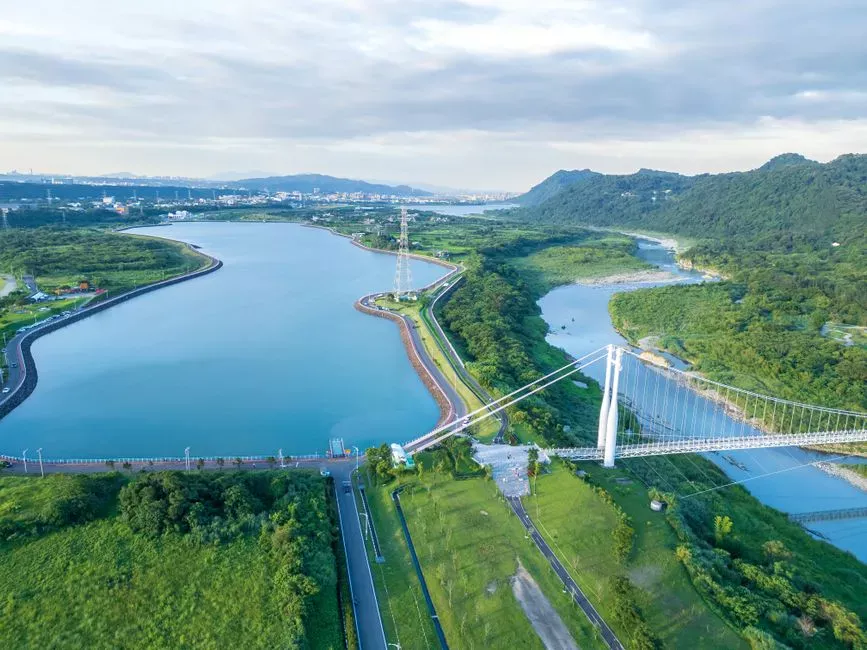
The strongest equipment choice depends on process architecture, hydraulic duty, available area, effluent objectives and operating support. Packaged A/O systems provide an integrated biological route, MBR adds membrane-based solids separation, and decentralized alternatives require their own site-specific assessment.
The HydropureWater WSZ Series combines anoxic/aerobic biological contact oxidation, sedimentation and disinfection in a single buried package unit. The verified product catalog lists capacities from 1–80 m³/h and describes fully automated operation with no operator required. It can be installed below grade with landscaping above or mounted on a trailer for mobile deployment.
The HydropureWater MBR combines activated sludge treatment with submerged PVDF membrane filtration. Its listed filtration performance is less than 1 micrometre, its capacity is 10–2,000 m³/day, and the manufacturer states that it occupies a 60% smaller footprint than conventional systems. Those are manufacturer-stated specifications, not an independent comparison of installed cost or lifecycle performance.
IntechOpen describes vermifiltration as an efficient, viable process requiring less expertise and capable of decentralized operation. That makes it a candidate for appropriate small or resource-constrained deployments, but it is not a universal substitute for packaged treatment. Site suitability, local acceptance, operator capability and discharge requirements must be evaluated separately.
| Decision factor | Packaged A/O | MBR | Decentralized alternative |
|---|---|---|---|
| Process architecture | Anoxic/aerobic contact oxidation, sedimentation and disinfection in one package | Activated sludge with submerged PVDF membrane filtration | Technology-specific; vermifiltration is one documented option |
| Listed capacity | 1–80 m³/h | 10–2,000 m³/day | Must be established from the proposed design |
| Installation | Buried package or trailer-mounted deployment | Site integration requires a supplier-specific arrangement | Depends on land, climate, access and local acceptance |
| Principal strength | Compact, integrated conventional treatment train | Membrane solids separation; manufacturer states 60% smaller footprint than conventional systems | Potentially decentralized operation with lower expertise requirements, according to IntechOpen |
| Principal question | Can flow, load and pretreatment remain within the package duty? | Are membrane maintenance and reuse objectives justified? | Is the process accepted and maintainable at this site? |
| Do not assume | That low automation removes maintenance obligations | That manufacturer figures establish project performance or lifecycle cost | That pilot performance transfers directly to a full-scale installation |
Use a conditional decision rule. If the wastewater is predominantly domestic, the package can meet the required treatment train and surface area is constrained, a packaged A/O route may reduce integration work. If membrane solids separation and reuse quality are central to the project, investigate MBR. If the application is small or resource-constrained, assess decentralized alternatives through the same wastewater and approval checks.
The DF MBR membrane bioreactor module may also require evaluation where modular integration or replacement of a membrane stage is part of the procurement strategy. Do not convert manufacturer capacities into final sizing until the hydraulic and organic duty basis is agreed.
Match the Treatment Train to the Wastewater
A defensible treatment train begins with characterization and ends with the required effluent or reuse outcome. Screening, equalization, biological treatment, solids separation, disinfection and polishing each address different risks; no single unit should be credited with responsibilities assigned elsewhere.
Start with the wastewater characterization. The Carhuaz study identifies fecal coliforms as a concern in untreated domestic wastewater, but the supplied research does not provide a complete current influent specification for each project. Use local sampling to determine whether incoming solids, organics, fats, oils or industrial contaminants require dedicated pretreatment.
- Protect the biological process: provide screening and equalization where the collection system can deliver rags, plastics, fibrous debris, grit, peak flows or industrial contaminants.
- Apply biological treatment: select an anoxic/aerobic or membrane bioreactor arrangement according to the documented load and treatment objectives.
- Remove solids: provide the clarification or membrane-separation stage required by the selected architecture.
- Disinfect and polish: apply the final process required for the receiving point or intended reuse.
- Verify the complete train: test the installed system under defined acceptance conditions rather than relying on separate unit claims.
Where screening is required, evaluate the rotary mechanical bar screen against the expected debris type and collection arrangement. Equipment selection must not assume that a package will tolerate persistent solids or industrial inputs.
The Carhuaz air-ozone micro-nanobubble work offers pilot evidence, not a transferable full-scale design guarantee. Under the reported conditions—a water flow rate of 4.67 L/min and an air-ozone mixture pressure of 90 PSI—total coliforms were reduced to 100 CFU/100 mL and fecal coliforms to 100 CFU/100 mL. The authors reported reductions of 99.96% and 99.92%, respectively. Those figures apply to the tested pilot conditions and cannot be transferred to a full-scale installation without design verification.
For projects involving wastewater reuse, place the selected biological and solids-separation process before final disinfection and polishing. Depending on the reuse objective and available treatment train, evaluate a UV sterilizer or an ozone generator. The receiving requirements and reuse application—not the Carhuaz pilot—must define the necessary performance.
Plan Installation, Automation and Maintenance for Peruvian Sites
Unattended operation does not remove installation, maintenance or sludge-management obligations. The equipment arrangement should be compatible with excavation conditions, groundwater, access, power reliability, operator coverage and the owner’s ability to respond to alarms.
Use the WSZ buried configuration when surface area is limited and landscape restoration is required. Before approving that method, evaluate excavation, lifting access, groundwater, structural requirements, vent arrangements and the consequences of maintenance access below grade. The site design must not assume that a buried package can be serviced like a surface-installed unit.
For temporary works or remote projects, evaluate the WSZ trailer-mounted configuration as a deployment option. Confirm how wastewater will be collected and conveyed to the unit, how the treated flow will leave the site, where sludge will be removed and what services are available during the operating period.
The WSZ is described as fully automated and requiring no operator, but monitoring and alarm escalation still need a named response chain. Specify which events require local inspection, which can be handled remotely and who is authorized to start the plant, divert flow or arrange corrective work. Include power-failure, high-level and equipment-failure responses in the control philosophy.
Define preventive maintenance, spare-parts availability, sludge removal, disposal route and emergency bypass responsibilities during procurement. Sludge handling is not an incidental service item: the contract should establish withdrawal frequency, containment, transport, disposal documentation and the operator responsible for each step. If sludge dewatering is required, evaluate the process and access constraints before selecting equipment such as a plate-frame filter press.
- Before contract: fix the duty basis, installation boundary, general arrangement, power supply and commissioning acceptance criteria.
- Before commissioning: complete site tests, verify alarms, inspect process connections and document operator training.
- During operation: maintain a preventive schedule, retain critical spares and record alarms, sludge movements and operating checks.
- For remote sites: confirm response time, travel access, communications and an emergency operating plan.
A Procurement Checklist for a Compliant Domestic Sewage Project
A compliant procurement follows an evidence sequence: define the wastewater, establish the treatment objective, compare process options, verify installation and operating requirements, then confirm approval conditions. National statistics and pilot results can inform questions, but neither substitutes for site-specific engineering or a discharge permit.
- Define the project: obtain flow and quality data, the delivery timetable, expansion plan, receiving point and reuse objective.
- Identify constraints: document site access, excavation or surface installation, power, operator support, sludge removal and emergency bypass needs.
- Request supplier proposals: require a proposed process flow, duty basis, general arrangement, installation requirements, control philosophy, commissioning protocol, maintenance scope and verifiable guarantees.
- Confirm compliance: ask the relevant Peruvian authority or local permitting adviser to confirm discharge requirements, sewer-connection requirements, construction approvals and site-specific pretreatment obligations.
- Compare installed requirements: include collection works, pretreatment, power, installation, commissioning, chemicals or UV consumption, sludge handling, monitoring and service support rather than comparing equipment price alone.
| Supplier document or response | Information to verify |
|---|---|
| Duty basis | Flow and load conditions, peak and seasonal basis, pretreatment assumptions and expansion provisions |
| Process and general arrangement | Treatment stages, solids and sludge route, disinfection, discharge or reuse connection, installation boundaries |
| Controls and service | Alarm list, monitoring responsibility, operator support, maintenance schedule, spares and response commitments |
| Commissioning | Acceptance tests, test media, sampling method, proving period, training and handover documentation |
| Compliance | Applicable discharge and reuse requirements confirmed through the responsible authority or permitting adviser |
| Commercial comparison | All installed and operating requirements, including power, consumables, sludge handling, monitoring and service support |
Some projects may require treatment beyond the normal domestic package, including more demanding healthcare flows or regulated industrial characteristics. For those applications, obtain a dedicated design review; the medical wastewater treatment equipment route and any automatic chemical dosing system must be assessed against the actual wastewater and permit conditions rather than added automatically to a standard package.
Frequently Asked Questions
How much does a domestic sewage treatment plant cost in Peru?
The supplied research does not provide a defensible equipment price for Peru. Request a site-specific quotation covering design flow and load, wastewater characterization, pretreatment, installation conditions, discharge or reuse objectives, controls, commissioning, maintenance, consumables, sludge handling and service scope. Compare the total installed requirement rather than accepting a unit price without those boundaries.
Should a packaged A/O plant or an MBR system be selected for a hotel or housing development in Peru?
Choose packaged A/O when the documented wastewater is compatible with the biological duty and the objective is a compact, integrated treatment train. Investigate MBR when membrane solids separation, a smaller installation footprint or reuse quality is central to the design. In both cases, verify pretreatment, peak flow, operator capability, maintenance access and permit conditions. The WSZ packaged A/O route and MBR route should be compared on the same project basis.
How do I size domestic sewage treatment equipment for a project in Peru?
Base sizing on documented average and peak flows, seasonal variation, wastewater load, collection-system risks, expansion plans and applicable pretreatment requirements. Obtain wastewater characterization and peak-flow information instead of sizing from occupancy alone. Confirm the selected duty with the supplier in writing.
Can a sewage treatment system be installed at a remote site without a full-time operator?
Yes, if the selected system is designed for unattended operation and the owner establishes remote alarms, maintenance access, critical spares and sludge management. The WSZ is described as fully automated and requiring no operator, but that does not remove site inspections, corrective response or waste-handling obligations.
What information is needed to confirm compliance with Peruvian discharge requirements?
Confirm the responsible authority, receiving point, reuse destination, sewer connection and wastewater characteristics with the relevant Peruvian authority or local permitting adviser. The supplied research does not provide a current national limit table. The Carhuaz pilot and Peru’s treatment statistics are context, not substitute project approvals.