
Why Rural Sewage Treatment Matters in Qatar's 2026 Reuse Push
Qatar produces approximately 0.75 million m³/d of treated sewage effluent, but only about 27% is currently reused — 25 million m³/y for fodder irrigation and 1 million m³/y for landscape irrigation — while the remaining ~70 million m³/y is lost to septic lagoons, groundwater percolation, and roughly 0.5 million m³/y as runoff, according to a Qatar review on sciencedirect.com. That gap is the strategic context every 2026 rural project sits inside: every cubic metre of reuse-quality effluent produced on a remote site substitutes for fresh groundwater draw. Decentralized treatment at un-sewered sites is the most direct lever Qatar has for closing the ~73% discharge envelope documented in the same review.
For this article, "rural sewage treatment" means decentralized treatment for un-sewered farms, rural communities, worker camps, small hotels, and remote industrial facilities — not a scaled-down Doha central plant. The technology mix, the operator model, and the effluent target all change once the trunk sewer is removed from the picture.
How Rural Sewage Treatment Differs from Central Doha Networks
Rural Qatari sites typically lack a trunk sewer, see intermittent power, and produce wide diurnal flow swings because worker camps and farms concentrate demand in the morning and evening. Ambient desert temperatures and sand-laden air push conventional central-plant designs outside their comfort zone. Historically, the rural default has been septic tanks and lagoons — the very systems that feed the ~70 million m³/y of uncontrolled discharge identified in the sciencedirect.com Qatar review.
For 2026, that translates into concrete design choices: a containerized or buried form factor; fully automated control with no full-time operator; a biological stage tolerant of variable BOD loading; pre-filtration and screening to protect any downstream membrane; and disinfection sized for reuse rather than just disposal. US sanitary sewer systems collectively treat on the order of 62.5 billion gallons (~235 million tonnes) of sewer water per day from 16,000 publicly owned WWTPs, per the International Plasma Technology Center. This centralized scale differs from rural Qatari requirements, but the biosolids and energy-recovery framing underlines why decentralized plants should still be specified for effluent reuse, not just discharge.
Two further rural-specific inputs the buyer should pin down before sizing: peak-to-average flow ratio (rural Qatari communities tend to run higher than dense Doha networks), and available plot footprint, because buried or trailer-mounted installation changes civil works and permitting.
Technology Options for Rural Sites in 2026: Package A/O, MBR, and Septic Replacement
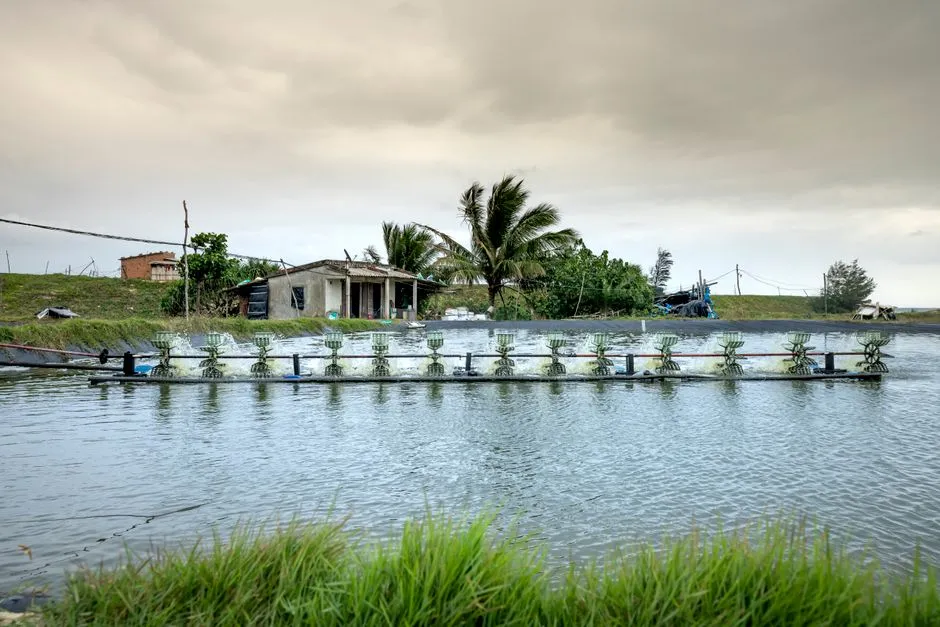
Three options are realistic for a 2026 rural Qatari tender. The first is a buried A/O package plant such as the WSZ underground A/O package sewage plant, which combines anoxic/aerobic biological contact oxidation with sedimentation and disinfection in a single buried unit, rated 1–80 m³/h, fully automated with no operator required, and installable below grade with landscaping above or on a trailer for mobile deployment, per the HydropureWater product catalog. The second is an integrated MBR membrane bioreactor system, which pairs activated sludge with submerged PVDF membrane filtration, targets near-reuse-quality effluent at under 1 μm, runs in the 10–2,000 m³/day envelope, and occupies roughly 60% of the footprint of a conventional activated sludge plant, per the same catalog. The third option is septic-tank replacement or upgrade — the rural baseline in Qatar today, but one that cannot deliver reuse-quality effluent and therefore perpetuates the 70 million m³/y lagoon discharge documented in the sciencedirect.com review.
Engineers can defend the following selection rule in a tender: choose the buried A/O package unit for small communities, hotels, hospitals, and worker camps where flow stays under ~80 m³/h and reuse-quality effluent is not mandatory; choose MBR when the site must meet tight discharge limits, intends to reuse effluent for irrigation, or has severe footprint constraints; choose septic-tank replacement only when both budget and reuse targets allow it.
Rural Sewage Treatment Comparison: WSZ vs MBR vs Septic Replacement
The table below consolidates the trade-offs a procurement or engineering reader can lift directly into a tender. Flow ranges and form factors are taken from the HydropureWater product catalog; the national discharge figure is attributed to the sciencedirect.com Qatar review.
| Parameter | WSZ underground A/O package | MBR membrane bioreactor | Septic-tank replacement |
|---|---|---|---|
| Typical flow range | 1–80 m³/h | 10–2,000 m³/day | Site-specific, typically sub-10 m³/day per tank |
| Footprint and installation form factor | Buried below grade with landscaping above, or trailer-mounted for mobile deployment | Containerized skid; about 60% smaller footprint than conventional activated sludge | Buried tank, minimal surface footprint |
| Effluent quality vs reuse / discharge target | A/O + sedimentation + disinfection; suitable for discharge and many reuse envelopes | Submerged PVDF membrane at <1 μm; near-reuse-quality effluent | Primary treatment only; does not meet reuse-quality envelope |
| Automation and operator requirement | Fully automated, no operator required (HydropureWater catalog) | Automated with membrane cleaning cycle; remote monitoring typical | No automation; periodic desludging only |
| Alignment with national reuse gap (sciencedirect.com Qatar review) | Captures a meaningful share of the ~70 million m³/y lost to lagoons when sized for reuse end-use | Best fit where the 25 + 1 million m³/y fodder/landscape reuse envelope is the design target | Perpetuates the ~70 million m³/y lagoon discharge envelope |
The septic-tank row is included as the "do-minimum" comparator that explains why the 70 million m³/y lagoon discharge documented in the sciencedirect.com Qatar review persists.
Sizing a Rural Sewage Plant for Qatari Conditions: Flow, Load, and Reuse Targets
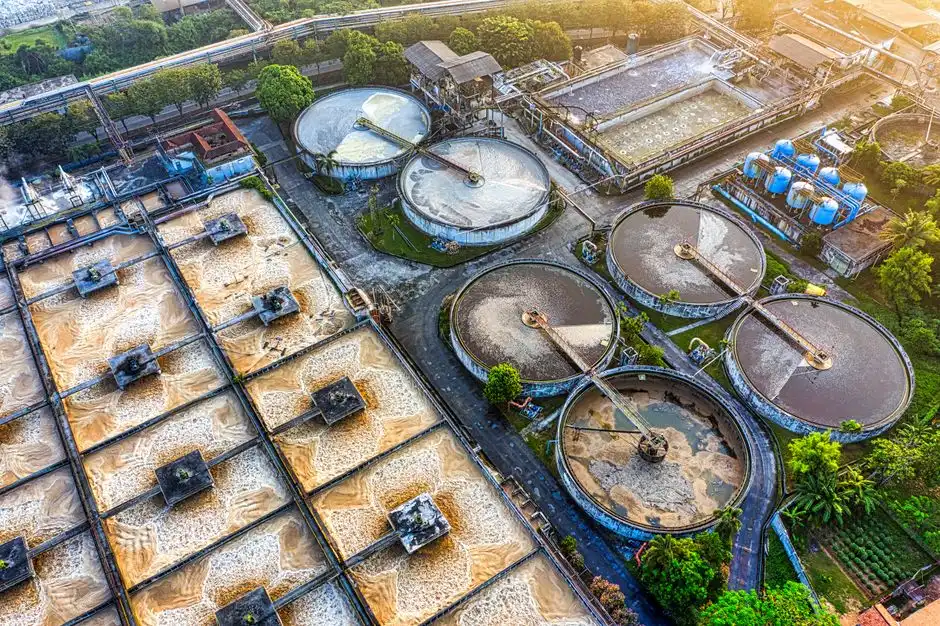
Size on peak daily flow plus a safety factor. For rural Qatari communities the diurnal peak-to-average ratio is typically higher than in dense urban Doha networks because worker camps and farms generate concentrated morning and evening peaks. Ambient desert temperature and airborne sand drive two non-negotiable design choices: buried or shaded installation for biological stability, and pre-filtration or screening ahead of any membrane stage. A rotary mechanical bar screen at the head of the works is the standard protection for both A/O and MBR trains in sandy conditions.
Effluent target matters more than influent numbers in 2026: if the treated water is destined for fodder or landscape irrigation — the 25 + 1 million m³/y reuse envelope documented in the sciencedirect.com Qatar review — the plant must be specified to the reuse-quality envelope, not the basic disposal envelope. Under-specifying the effluent class is the most common way a rural project ends up feeding the same lagoon discharge the national policy is trying to eliminate.
Buyers must pin down the following inputs before talking to any supplier: design population, peak daily flow (m³/d), influent BOD/COD/TSS/ammonia, required effluent class, target reuse end-use, available plot footprint, power availability, and whether the unit must be trailer-mounted or buried. If any of these is left as a range, the vendor quotation will also be a range.
2026 Buyer's Checklist for Rural Sewage Treatment in Qatar
Compliance. Confirm the design effluent class against the local discharge and reuse requirements in Qatar and against the intended end-use under the fodder and landscape irrigation reuse envelope documented in the sciencedirect.com Qatar review. A plant that only meets disposal standards perpetuates the 70 million m³/y lagoon discharge that the same review identifies.
Sizing. Request vendor confirmation of design population, peak flow, and load basis — do not accept a generic "1–80 m³/h" range without the design point being pinned to your site, per the HydropureWater WSZ product catalog.
Automation and O&M. Require fully automated control with remote alarming; rural sites in Qatar do not support a full-time operator, which is the design assumption built into the WSZ underground package unit.
Footprint and installation. Decide between buried below grade (landscaping above) and trailer-mounted mobile deployment up front, because this choice drives civil works, permitting, and future relocation.
Aftermarket. Confirm membrane, media, and consumable supply, and confirm the supplier can deliver spare parts and service to a remote Qatari site — anchor this to consumables such as RO and UF membrane replacement elements.
Cost inputs to request. Do not accept a single lump-sum number. Ask each shortlisted vendor for line-item CAPEX (equipment, civil works, containerization, instrumentation) and OPEX (power, membrane replacement cycle, chemical or media consumption, sludge handling, service visits). Without those line items, a 2026 tender cannot compare vendors on equal terms. For adjacent technology context, the domestic sewage treatment in Al Ain 2026 engineering guide and the effluent treatment plant in Al Ain 2026 buyer's guide use the same line-item approach, and the residential wastewater treatment in Uzbekistan 2026 engineering guide shows the same pattern in a different arid climate.
Frequently Asked Questions
How much does a rural sewage treatment plant cost in Qatar in 2026?
There is no single published price for a 2026 rural sewage treatment plant in Qatar, and a responsible quotation depends on site-specific inputs. The CAPEX drivers the buyer should request from each vendor are design flow, effluent class, buried versus skid installation, civil works, and containerization. The OPEX drivers are power, membrane or media replacement cycle, chemical or disinfectant consumption, sludge handling, and service visits to a remote Qatari site. Without those line items, two quotations on the same flow range are not comparable.
Which technology is best for a remote Qatari site with no sewer network?
For sites with flows up to about 80 m³/h and no mandatory reuse-quality target, a buried A/O package unit such as the WSZ series is the practical 2026 solution because it is fully automated, needs no on-site operator, and can be installed below grade or on a trailer. For sites that must meet tight discharge limits, intend to reuse effluent for irrigation, or have severe footprint constraints, an MBR membrane bioreactor in the 10–2,000 m³/day range is the better fit because submerged PVDF membrane filtration delivers near-reuse-quality effluent at a fraction of the conventional activated sludge footprint.
Can treated sewage from a rural plant be reused for irrigation in Qatar?
Yes, provided the plant is specified to the reuse-quality envelope rather than the basic disposal envelope. Qatar's current reuse split, per the sciencedirect.com Qatar review, is 25 million m³/y for fodder irrigation and 1 million m³/y for landscape irrigation. Reuse at a rural site is conditional on meeting the effluent class required for the specific end-use, which usually means tighter BOD, TSS, and disinfection targets than a disposal-only design.
What is the typical lead time for a package sewage plant delivered to Qatar?
Lead time in 2026 is driven by equipment fabrication, containerization, sea freight to a Qatari port, site civil works, commissioning, and Qatari approvals. The variables that move the schedule are whether the unit is built to stock or engineered to order, whether the civil works package is included, and how long the approval cycle for the chosen effluent class takes. The buyer should ask each vendor for a schedule broken into those milestones rather than a single calendar number.