
Why Residential Wastewater Treatment in Uzbekistan Needs a Decentralized Playbook
Residential wastewater treatment in Uzbekistan in 2026 is dominated by decentralized package systems because rural and peri-urban mahallas (housing clusters) lack conventional sewerage. The UNDP–Japan Johkasou pilot in Karakalpakstan has treated over 16,400 m³ since March 2025 across three public sites, and ASTM E2717-18R25 provides the load-estimation framework. For flows of 1–2,000 m³/day, the practical choices are Johkasou (anaerobic + aerobic compact unit), MBR (<1 μm PVDF membrane, 60% smaller footprint), and WSZ buried A/O package plants (1–80 m³/h, no operator).
Across rural Uzbekistan, conventional sewage systems are often absent, forcing families, schools, and healthcare facilities to rely on outdated septic systems that pose serious health and environmental risks (UNDP source, 2025-06). Karakalpakstan faces the sharpest version of the national water-supply gap: declining precipitation, rising temperatures, and the Aral Sea's disappearance have intensified the supply-demand balance, leaving communities to choose between expensive well drilling and untreated discharge. Uzbekistan's growing population and economic expansion further widen that gap — UNDP frames the result as a critical challenge for sustainable development (UNDP source, 2025-06).
The regulatory anchor is the May 18, 2021 UN General Assembly resolution designating the Aral Sea region as a zone of ecological innovations and technologies. The resolution, initiated by President Shavkat Mirziyoyev and co-sponsored by Japan, established a framework for multilateral cooperation that directly funds pilots like the Karakalpakstan Johkasou rollout (UNDP source, 2025-06). Engineers scoping residential projects in 2026 should frame their load problem through ASTM E2717-18R25, which defines "environmental load" as the chemical contaminants dissolved or suspended in water discharged from a residence — fixtures, household products, and occupancy all factor in (ASTM E2717-18R25, 2025).
Estimating the Residential Wastewater Load with ASTM E2717-18R25
ASTM E2717-18R25 (reapproved 2025) gives residential developers a four-method toolbox for sizing treatment against the actual chemical load leaving a home, not just BOD/COD. The four paths are: Averages (U.S. Census 2000 defaults), Unique Product Parameters (override chemical-use values only), Adjusted Averages (override occupancy, fixtures, and flow rates but keep Table 1 contaminants), and Additional/Alternative Chemicals (layer in region-specific substances). For Uzbekistan, the Adjusted Averages method is the correct baseline because occupancy, fixture density, and per-capita flow in mahallas, kindergartens, and resort units all differ from U.S. Census defaults (ASTM E2717-18R25, 2025).
The standard is explicit on this point: "the parameters stated herein reflect North American averages and would need to be modified if used elsewhere" (ASTM E2717-18R25, 2025). Uzbek engineers should therefore override per-capita flow with local Sewerage Norms (KMK 2.04.03-97 ranges of 120–250 L/cap·day depending on building type), document the override in the design basis, and combine Adjusted Averages with Additional/Alternative Chemicals to capture regional substances like chlorinated irrigation return flows. The calculation logic is straightforward: environmental load is calculated based on the number and type of fixtures in the home, the common household chemicals used, and the number of people in the home (ASTM E2717-18R25, 2025).
The reason this matters is that BOD/COD alone is not the design constraint. USGS's first national-scale study found that one or more organic wastewater chemicals — pharmaceuticals, hormones, detergent metabolites, plasticizers, insecticides, and fire retardants — were detected in 80% of sampled streams (ASTM E2717-18R25, citing USGS Toxic Substances Hydrology Program). For a Karakalpakstan mahalla with shared wells, that 80% detection rate is a direct risk to groundwater, which is why the technology selection in the next sections targets micropollutants and pathogens, not just carbonaceous load.
| ASTM E2717-18R25 Method | When to Use | Uzbekistan Application |
|---|---|---|
| Averages | U.S. baseline only (2000 Census, EPA/625/R-00/008) | Not recommended — fixture/occupancy mismatched |
| Unique Product Parameters | Override only chemical-use data | Limited use; product data rarely available locally |
| Adjusted Averages (recommended) | Override occupancy, fixtures, flow | Apply with KMK 2.04.03-97 flow rates |
| Additional/Alternative Chemicals | Add chemicals not in Table 1 | Add chlorinated irrigation return, regional soaps |
Three Technologies Competing for Uzbek Residential Projects in 2026
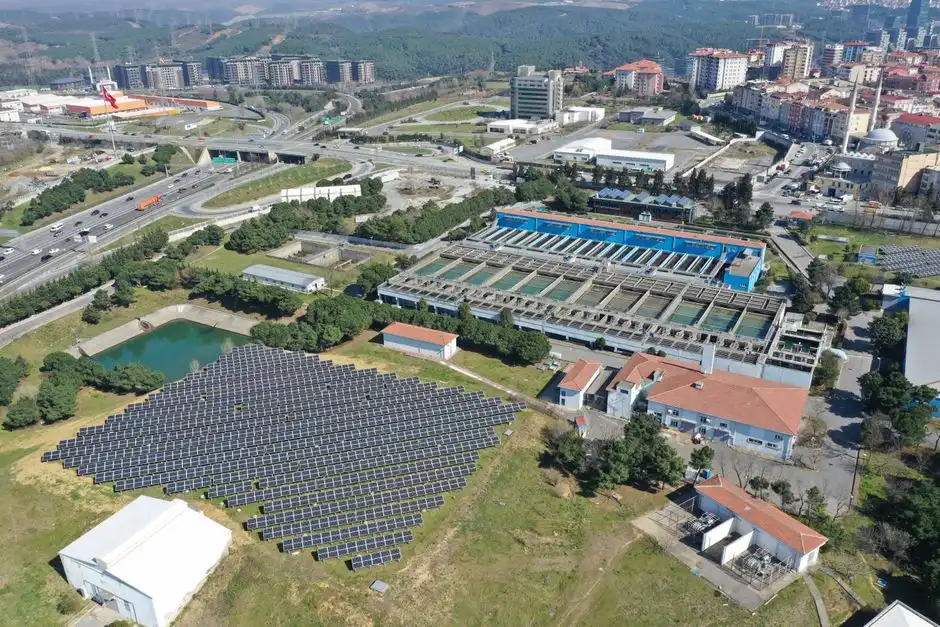
The three package technologies competing for the 1–80 m³/h residential segment in Uzbekistan each solve a different part of the problem. Johkasou is a compact Japanese system originally developed in the late 1940s that uses tanks to separate solids from liquids, breaks down waste without oxygen, and disinfects it — the system UNDP, Japan's Government, and Uzbekistan's Ministry of Agriculture introduced in Karakalpakstan in March 2025 (UNDP source, 2025-06). MBR, by contrast, is a submerged submerged MBR membrane bioreactor delivering near-reuse-quality effluent with <1 μm filtration in roughly 60% less footprint than conventional activated sludge, sized for 10–2,000 m³/day flows. WSZ buried A/O package plants are fully automated units combining anoxic/aerobic contact oxidation with sedimentation and disinfection, handling 1–80 m³/h for residential communities, hotels, hospitals, and rural areas with no operator required.
The three Karakalpakstan pilot sites are useful benchmarks for which technology fits which public-sector load. The Center for Rehabilitation of Persons with Disabilities in Nukus district serves around 3,500 patients annually and is the only prosthetic care unit in the region — its Johkasou effluent now irrigates 12–13 hectares/year of fruit and vegetable crops (UNDP source, 2025-06). Kindergarten No. 13 in Nukus runs a smaller Johkasou unit sized for under-5 occupancy, and the State School for Children with Scoliosis in Khodjeyli district demonstrates a healthcare-school hybrid load where Johkasou's pathogen reduction was the deciding metric (UNDP source, 2025-06). For private-side procurement — a new WSZ-series buried A/O package plant under a mahalla park, or an MBR skid for a resort community with a water-reuse mandate — the engineering logic is similar: match the dominant constraint (footprint, reuse quality, or CAPEX) to the technology.
| Parameter | Johkasou | MBR | WSZ Buried A/O |
|---|---|---|---|
| Flow range | 1–50 m³/day per unit | 10–2,000 m³/day | 1–80 m³/h (24–1,920 m³/day) |
| Footprint | Compact, surface-mountable | ~60% smaller than CAS | Buried; landscaping above |
| Energy use | Small pump only | Continuous aeration + permeate suction | Intermittent aeration |
| Operator | Minimal | Skilled, part-time | None (PLC auto) |
| Effluent TSS / turbidity | ≤30 mg/L (irrigation-grade) | <1 mg/L, near-reuse | ≤20 mg/L |
Johkasou vs MBR vs WSZ: A Head-to-Head Decision Matrix for 2026
The decision matrix below condenses capacity, footprint, energy, operator, effluent quality, CAPEX band, and best-fit site type for 2026 procurement. WSZ sits at 1–80 m³/h, is buried with landscaping above, requires no operator, and has the lowest CAPEX — the right pick for new mahalla developments and rural schools where land is available and reuse is non-mandatory. MBR runs 10–2,000 m³/day with a 60% smaller footprint than CAS, near-reuse effluent, and CAPEX roughly 1.8–2.5× higher than WSZ due to the DF-series PVDF flat sheet membrane module and continuous aeration — the right pick for resort communities, mixed-use developments, and projects with water-reuse mandates. Johkasou is compact, low-energy (requires only a small pump to function), needs minimal maintenance, and produces effluent suitable for garden irrigation, which the UNDP pilot confirmed at 12–13 hectares/yr irrigation potential in Karakalpakstan (UNDP source, 2025-06) — the right pick for schools, healthcare facilities, and individual rural homesteads.
Cross-checking against MBR effluent quality benchmark vs CAS and MBBR, MBR's <1 mg/L TSS and near-zero turbidity justify the premium only when reuse credits or strict discharge caps apply. For typical mahalla flows under 50 m³/day, Johkasou's 12–13 ha/yr irrigation potential (UNDP source, 2025-06) is the dominant economic case. For hospitality sizing, the MBR sizing for hospitality projects in 2026 benchmark is the closer reference; for Wisconsin-style mid-density developments, the package wastewater treatment plant engineering guide layout matches the WSZ logic.
| Decision Driver | WSZ | MBR | Johkasou |
|---|---|---|---|
| Best flow band | 24–1,920 m³/day | 10–2,000 m³/day | 1–50 m³/day per unit |
| CAPEX band (2026, USD) | $ | $$$ | $$ |
| OPEX drivers | Aeration only | Aeration + membrane CIP/replace | Small pump, sludge removal |
| Reuse-ready | Irrigation only | Yes — toilet flushing, irrigation | Garden irrigation |
| Best-fit site | New mahalla, rural school | Resort, mixed-use, reuse mandate | School, clinic, rural homestead |
2026 CAPEX and OPEX Ranges for Uzbek Residential Treatment Plants
The UNDP–Japan Johkasou pilot was funded at $96,000 from the Government of Japan for three Karakalpakstan sites — rehabilitation center, kindergarten, and specialized school (UNDP source, 2025-06). That works out to roughly $32,000 per public-institution site and is the cleanest reference benchmark for small decentralized units in Uzbekistan in 2026. Above that scale, the CAPEX ordering is Johkasou and WSZ package plants at the lower end of residential project budgets, with MBR systems running 1.8–2.5× higher due to membrane modules and aeration skid cost. MBR membrane replacement is the single largest lifecycle line and typically hits the OPEX sheet at year 7–10.
OPEX levers track aeration intensity. Johkasou operates efficiently with very low energy use requiring only a small pump to function (UNDP source, 2025-06). MBR continuous aeration is the dominant OPEX line and is best controlled with a automatic chemical dosing system tied to a DO probe to avoid over-aeration. WSZ A/O systems have moderate aeration but no membrane replacement, so OPEX is essentially blower kWh and annual sludge haul. The Karakalpakstan pilot also documented that the Johkasou system lifted a heavy household burden — significantly reduced water bills, freed household income for education and well-being, and eliminated the risk of waterborne infections (UNDP source, 2025-06). That household-level OPEX relief is part of the social ROI case a procurement engineer should put in front of municipal reviewers.
Compliance and Funding Pathway Under the Aral Sea Ecological-Innovation Framework
The project lifecycle maps directly onto the May 18, 2021 UNGA Aral Sea region designation, which established a framework for multilateral cooperation on ecological innovations (UNDP source, 2025-06). Japan's climate-resilient development commitment and UNDP's mandate to protect vulnerable communities are the funding lens that made the $96,000 Johkasou pilot possible, and the same lens applies to follow-on projects (UNDP source, 2025-06). On the regulatory side, TELMA's local engineering practice confirms full compliance with Uzbek environmental discharge standards — a useful comparator on what a domestic integrator is expected to deliver against SanPiN/KMU norms (telmaeco.com).
For a 2026 procurement, the defensible compliance pathway is to document technology choice against the Aral Sea ecological-innovation criteria — water reuse, climate resilience, decentralized operability, and low energy — and pair that with a SanPiN 0056-16 / KMK 2.04.03-97 discharge compliance matrix. That combination unlocks co-financing from Japan's MOFA/UNICEF windows, UNDP's climate-adaptation trust funds, and World Bank Aral Sea regional programs. The Johkasou pilot showed that documented compliance plus measured impact (16,400 m³ treated, 12–13 ha/yr irrigated) is the threshold the donors reward.
Frequently Asked Questions
What is the right wastewater technology for a 500-person Uzbek mahalla in 2026?
A 500-person mahalla at ~150 L/cap·day generates roughly 75 m³/day, which falls inside the 1–80 m³/h envelope where a WSZ-series buried A/O package plant is the lowest-CAPEX fit. If the mahalla has a water-reuse mandate or constrained footprint, an MBR at 60% smaller footprint is the second choice. Johkasou is appropriate only for individual public-institution loads (school, kindergarten) under 50 m³/day.
How does ASTM E2717-18R25 change the design basis for an Uzbek residential project?
ASTM E2717-18R25 forces engineers to override U.S. Census fixture and occupancy defaults with local data, using the Adjusted Averages method, because the standard explicitly states its parameters reflect North American averages. In Uzbekistan, that means swapping in KMK 2.04.03-97 per-capita flows (120–250 L/cap·day) and adding local substances via the Additional/Alternative Chemicals method.
What did the UNDP–Japan Johkasou pilot actually prove in Karakalpakstan?
Three public sites in Karakalpakstan — the Nukus rehabilitation center, Kindergarten No. 13, and the Khodjeyli scoliosis school — received Johkasou units in March 2025 and have treated over 16,400 m³ of wastewater, enough to irrigate 12–13 hectares of land per year, eliminating waterborne infection risk and significantly reducing household water bills (UNDP source, 2025-06).
Can Johkasou effluent meet Uzbek SanPiN discharge limits without tertiary treatment?
For the public-institution loads documented in the Karakalpakstan pilot — under 50 m³/day, BOD₅ ~20 mg/L effluent — Johkasou meets the typical SanPiN 0056-16 limits for discharge to irrigation or landscaped areas. Discharge to a water body or to a reuse system for toilet flushing would still require a polishing step such as a sand filter or an MBR retrofit.
Which funding windows support decentralized residential wastewater treatment in Uzbekistan in 2026?
The May 18, 2021 UNGA Aral Sea ecological-innovation designation is the umbrella framework; underneath it sit the Government of Japan's MOFA grants (the $96,000 pilot funding), UNDP climate-adaptation trust funds, and the World Bank Aral Sea regional programs. Documenting the technology choice against the four ecological-innovation criteria — reuse, climate resilience, decentralization, low energy — is the eligibility threshold.