What Counts as Domestic Sewage in Al Ain
Domestic sewage in Al Ain is the wastewater stream discharged from residences together with commercial, institutional, and public facilities in the same community, distinct from industrial wastewater. The Wikipedia entry on sewage defines the term as "wastewater discharged from residences and from commercial, institutional and public facilities that exist in the locality" (en.wikipedia.org, Sewage). Engineers in the UAE usually split the stream into greywater from sinks, showers, and laundry, and blackwater from toilet flushing, which carries the human waste load and the higher pathogen count. That split matters in a residential compound or school because kitchen and ablution flows in UAE households carry a significant organic load even though they appear to be "clean" greywater.
Sewage is roughly 99.9% water by mass, with the remaining 0.1% made up of dissolved and suspended solids, a ratio treated as an order-of-magnitude estimate rather than a fixed value (en.wikipedia.org, Sewage). The organic fraction of those solids is around 40% protein, 25–50% carbohydrates, and about 10% oils and grease, with urea, surfactants, phenols, and pesticides making up the balance; this is the baseline that the biological stage in any package STP or MBR is sized against (en.wikipedia.org, Sewage). "Sewage" and "municipal wastewater" are used interchangeably in policy and literature, but "wastewater" is the broader umbrella that also covers industrial and agricultural streams, and that distinction must be clear in any plant scope.
Typical Influent Characteristics Used for Al Ain STP Design
Designers of a domestic STP in Al Ain calculate per-capita load multiplied by population to lock in per-person and per-litre reference values before sizing equipment. The central values published for raw sewage in developing countries are 180 g/person/d total solids (≈1,100 mg/L), 50 g/person/d BOD (300 mg/L), 100 g/person/d COD (600 mg/L), 8 g/person/d total nitrogen (45 mg/L), 4.5 g/person/d ammonia-N (25 mg/L), and 1.0 g/person/d total phosphorus (7 mg/L) (en.wikipedia.org, Sewage). The typical design ranges the same source publishes, and the band most engineers size around, are 120–220 g/person/d TS (700–1,350 mg/L), 40–60 g/person/d BOD (250–400 mg/L), 80–120 g/person/d COD (450–800 mg/L), 6–10 g/person/d total nitrogen (35–60 mg/L), 3.5–6 g/person/d ammonia-N (20–35 mg/L), and 0.7–2.5 g/person/d total phosphorus (4–15 mg/L) (en.wikipedia.org, Sewage). For comparison, US households that include kitchen food-waste grinders run higher: about 85 g/person/d BOD (450 mg/L) and 198 g/person/d COD (1,050 mg/L), which is a useful upper-bound reference for compounds with grinder-equipped villas (en.wikipedia.org, Sewage).
On an Al Ain site, the central value is rarely enough on its own. Compounds with on-site kitchens, staff accommodation, or laundry can push BOD well above the 300 mg/L midpoint, and summer water-conservation behaviors reduce dilution, which concentrates the same per-person load into less volume. The table below represents the parameter set to plug into BOD, COD, and nutrient load calculations before sizing either a package STP or an MBR.
| Parameter | Per-capita load | Concentration — central value | Concentration — typical range |
|---|---|---|---|
| Total solids | 180 g/person/d | ≈1,100 mg/L | 700–1,350 mg/L |
| BOD | 50 g/person/d | 300 mg/L | 250–400 mg/L |
| COD | 100 g/person/d | 600 mg/L | 450–800 mg/L |
| Total nitrogen | 8 g/person/d | 45 mg/L | 35–60 mg/L |
| Ammonia-N | 4.5 g/person/d | 25 mg/L | 20–35 mg/L |
| Total phosphorus | 1.0 g/person/d | 7 mg/L | 4–15 mg/L |
Source for all rows: en.wikipedia.org, Sewage, citing standard developing-country reference values for raw sewage.
Al Ain Design Constraints: Climate, Reuse and Compliance
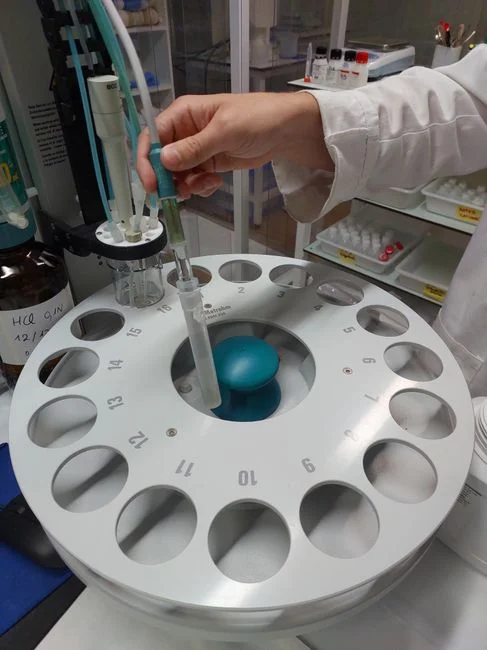
Al Ain's hot, semi-arid climate is the primary design driver. Biological reaction rates in an A/O contact-oxidation stage rise with mixed-liquor temperature, but the same heat drives evapoconcentration in any open tank or lagoon; therefore, covered or fully buried process tanks are the local norm and lagoon-based designs are difficult to justify. Summer also brings peak water demand and, in compounds and schools, a summer-resident population that can exceed the winter baseline, which produces sharp diurnal loading swings that an equalization basin upstream of the biological stage must absorb.
The second driver is the discharge or reuse target. The US EPA notes that "the collection and treatment of domestic sewage and wastewater is vital to public health and clean water" and that sewer systems exist specifically to deliver sewage to treatment before discharge or reuse (epa.gov, Municipal Wastewater, NPDES). In Al Ain, the practical target is increasingly effluent suitable for landscape irrigation within the development, which raises the bar on TSS, faecal indicators, and nutrient control compared with a simple sea- or sabkha-discharge case. Designers should expect the specifier to ask for reuse-quality effluent even when the regulatory minimum would allow a lower bar.
Global context reinforces the stakes: a 2021 study cited in the Wikipedia entry estimated that only about 52% of sewage worldwide is treated, with developing countries averaging just 4.2% — a benchmark UAE projects are expected to exceed by a wide margin (en.wikipedia.org, Sewage). Anything less than near-full treatment is not a defensible design position for a residential, school, or hotel STP in the emirate in 2026.
Two Dominant Configurations: Buried Package STP vs MBR
For low-to-mid flow domestic duty in Al Ain, two configurations appear on almost every shortlist. The first is the WSZ underground package sewage treatment plant, which combines anoxic/aerobic (A/O) biological contact oxidation with sedimentation and disinfection in a single buried unit, is fully automated, and is rated from 1–80 m³/h for residential communities, hotels, hospitals, factories, and rural sites (hydropurewater.com, WSZ product specification). The second is the MBR membrane bioreactor wastewater treatment system, which integrates activated sludge with submerged PVDF membrane filtration to produce a <1 μm effluent, is roughly 60% smaller than a conventional plant of the same capacity, and scales from 10–2,000 m³/day, with near-reuse quality water as the output (hydropurewater.com, MBR product specification).
Both systems run on the same biological backbone — anoxic + aerobic contact oxidation for carbon and partial nitrogen removal — so the influent numbers in the previous section apply to both. The membrane in an MBR is a physical polish on that biology, not a substitute for it, and the same operator must manage sludge age, DO, and MLSS in either case. The choice between them is driven by the discharge target, footprint, and operator-attendance constraints. The decision framework below summarizes the head-to-head.
| Criterion | WSZ underground package STP | MBR membrane bioreactor |
|---|---|---|
| Flow range | 1–80 m³/h | 10–2,000 m³/day |
| Biological stage | A/O contact oxidation + sedimentation + disinfection in one buried unit | Activated sludge + submerged PVDF membrane (<1 μm) |
| Footprint | Buried, landscaping or traffic above tank | ≈60% smaller than conventional at the same capacity |
| Effluent quality | Suitable for irrigation or sewer discharge | Near-reuse quality |
| Operator attendance | Fully automated, no operator required | Requires membrane care and periodic chemical cleaning |
| Best fit | Tight plots, irrigation or sewer discharge, minimal staffing | Near-reuse targets, tight TSS or faecal limits, larger flows |
Source for both columns: hydropurewater.com product specifications for the WSZ and MBR product pages. Match the technology to the discharge target: WSZ is the cost-effective pick where treated effluent goes to irrigation or municipal sewer, while MBR is the right pick where near-reuse quality, tight footprint, or low TSS discharge limits apply. For Abu Dhabi and Dubai projects at the upper end of the MBR range, the containerized MBR STP sizing guide for Abu Dhabi and the containerized MBR STP sizing guide for Dubai provide the same decision framework applied to neighboring emirates.
Treatment Train You Can Expect in 2026

The P&ID for a 2026 Al Ain domestic STP follows a consistent train. It starts with headworks — coarse and fine screening to remove rags, plastics, and grit that would otherwise damage pumps and clog aerators, typically a rotary mechanical bar screen. That is followed by primary treatment and equalization, where grit is removed and the strong diurnal peaks common in residential and school flows are smoothed before the biological stage. The biological stage itself is anoxic plus aerobic (A/O) contact oxidation for carbon and partial nitrogen removal, which is the same backbone used in the WSZ underground package sewage treatment plant.
Solid–liquid separation comes next. In a WSZ configuration it is a high-efficiency sedimentation tank, typically a lamella design, that does the bulk of the solids drop-out before disinfection. In an MBR configuration the submerged membrane module replaces the clarifier and pushes TSS down to the <1 μm range, with the MBR membrane bioreactor wastewater treatment system delivering near-reuse quality as a result. The train closes with disinfection — usually chlorine dioxide generated on-site or a UV sterilizer — sized to the reuse or discharge target.
Sizing Checklist Before You Request a Quote
Before a supplier can quote either a WSZ underground package sewage treatment plant or an MBR membrane bioreactor wastewater treatment system, the engineer must lock down five inputs. First, the design flow in m³/day, the peak factor, and the population equivalent, cross-checked against the per-capita BOD, COD, and nitrogen loads in the table above. Second, site-specific influent characterization, because food-service, laundry, or staff accommodation in a compound can push BOD well above the 300 mg/L central value. Third, the discharge or reuse target — sewer, landscape irrigation, cooling makeup, or near-potable reuse — because this drives the WSZ-vs-MBR choice more than flow alone.
Fourth, plot and burial constraints, including setbacks, the landscaping or traffic loading above any buried tank, and access for desludging. Fifth, the operator-attendance tolerance: the WSZ is sold as a no-operator unit, whereas an MBR plant needs periodic membrane care and chemical cleaning, and that labor cost must be priced in. A useful cross-check is the sewage treatment equipment supplier buyer's guide, which walks through the same shortlist of inputs a supplier will ask for on any comparable domestic-duty project.
Frequently Asked Questions
How much does a domestic sewage treatment plant cost in Al Ain in 2026?
Capex for an Al Ain domestic STP scales with design flow, reuse target
Frequently Asked Questions
What is the typical BOD and COD of domestic sewage in Al Ain for STP design?
For residential developments in Al Ain, the typical influent Biological Oxygen Demand (BOD5) is designed within the range of 250 mg/L to 350 mg/L. The Chemical Oxygen Demand (COD) is generally specified between 500 mg/L and 700 mg/L, reflecting a COD:BOD ratio of approximately 2:1, which is standard for municipal domestic wastewater in the region.
Should I choose a buried package STP or an MBR system for a residential community in Al Ain?
For residential communities where effluent reuse is prioritized, an MBR (Membrane Bioreactor) system is recommended due to its ability to consistently produce high-quality permeate with turbidity <0.2 NTU and near-zero fecal coliforms. Buried package STPs using conventional Extended Aeration may be suitable for smaller, lower-density sites, but they require larger footprints and additional tertiary filtration stages to meet the strict EAD (Environment Agency – Abu Dhabi) standards for unrestricted irrigation.
What flow range does a WSZ underground package sewage treatment plant cover?
WSZ-series underground package plants are typically modular units designed for small-to-medium developments. These systems generally cover flow ranges from 0.5 m³/day up to 50 m³/day per single unit. For residential communities exceeding these volumes, multiple units are often operated in parallel to handle peak flow variations and provide redundancy during maintenance.
Can the effluent from a domestic sewage treatment plant in Al Ain be used for landscape irrigation?
Yes, treated sewage effluent (TSE) can be used for landscape irrigation provided it complies with the Abu Dhabi Quality and Conformity Council (QCC) and EAD standards. To be utilized for unrestricted landscape irrigation, the treatment process must achieve a BOD of <10 mg/L, Total Suspended Solids (TSS) <5 mg/L, and effective disinfection to ensure fecal coliform levels are non-detectable per 100 ml.
How do I size a domestic sewage treatment plant in Al Ain before requesting a supplier quote?
To size an STP, calculate the Average Daily Flow (ADF) by multiplying the number of residential units by the occupancy rate and the estimated per capita water consumption, typically ranging from 200 to 250 liters per person per day in Al Ain. Apply a Peak Factor (PF) of 2.5 to 3.0 to account for diurnal flow variations, and ensure the hydraulic capacity of the plant accommodates this peak flow while maintaining the required hydraulic retention time (HRT) for biological processes.