What a Lisbon Sewage Treatment Equipment Supplier Must Deliver in 2026
A sewage treatment equipment supplier working the Lisbon market in 2026 has to ship more than a tank and a pump: the package has to clear Portugal's Decreto-Lei 152/97, which transposes the EU Urban Waste Water Directive 91/271/EEC into national law and sets the typical Lisbon discharge ceilings at BOD5 ≤25 mg/L, COD ≤125 mg/L, and TSS ≤35 mg/L. For plants serving more than 2,000 population equivalents, or those discharging into the Tejo estuary or the Alentejo coast — both classified as sensitive areas under 91/271/EEC — APA (Agência Portuguesa do Ambiente) routinely tightens the limit to total phosphorus ≤2 mg/L and total nitrogen ≤15 mg/L (Decreto-Lei 152/97, Anexo I).
The deliverable scope that closes a Lisbon project therefore includes process design to those site-specific ceilings, CE-marked equipment tested to EN 12255 (the European standard for wastewater treatment plants), a factory acceptance test witnessed by the buyer's engineer, shipping CIF Lisboa or Setúbal, commissioning supervision on Portuguese soil, and a 12-24 month performance guarantee backed by bank warranty rather than a verbal promise. Equipment documentation should reference EN 12255-3 for biological treatment performance and the EU Machinery Directive 2006/42/EC for the mechanical package.
That scope is precisely what the top three Google results for this query do not address. The Made-in-China catalog pages dominating positions 1-3 list slurry pumps at US$50-158/piece and screw press dewatering units at US$3,100-3,800 per set with no reference to Decreto-Lei 152/97, APA site-specific limits, CE conformity, or Iberian commissioning. A Lisbon EPC contractor evaluating those quotes has no compliance narrative to attach to the bid, no FAT protocol, and no Portuguese-speaking service engineer to call when APA inspectors visit the site. Closing that documentation and service gap is the first job of any credible supplier.
Three Equipment Categories That Dominate Lisbon Sewage Projects
Three packaged technologies cover roughly 90% of Lisbon municipal, residential, and light-industrial bids in the 10-500 m³/day range. Each is built around a different combination of flow capacity, effluent quality, and site footprint, and each maps to a different point in the Decreto-Lei 152/97 compliance chain.
| Parameter | WSZ underground package plant | MBR membrane bioreactor | DAF pre-treatment |
|---|---|---|---|
| Flow range | 1-80 m³/h | 10-2,000 m³/day | 4-300 m³/h |
| Core process | A/O contact oxidation + sedimentation + disinfection in one buried unit | Activated sludge + submerged PVDF membrane module (0.1 μm pore) | Micro-bubble flotation for FOG, oil, colloids |
| Typical effluent BOD5 | ≤20-25 mg/L | ≤5 mg/L | Pre-treatment only — no standalone effluent |
| Typical effluent TSS | ≤30-35 mg/L | ≤1 mg/L (membrane reject) | Reduces influent TSS by 60-85% |
| Footprint vs. conventional activated sludge | Buried, zero surface footprint | ~40% smaller (60% reduction vs. CAS) | Compact skidded unit |
| Operator requirement | None (fully automated, PLC) | Part-time (membrane CIP every 1-3 months) | Daily check, sludge draw-off |
| Decreto-Lei 152/97 compliance basis | Direct discharge compliance for ≤2,000 p.e. | Direct discharge + reuse for irrigation/toilet flush | Pre-treatment stage — must feed WSZ or MBR downstream |
The WSZ underground package sewage treatment plant is the default spec for new residential developments, hotels, hospitals, and small factories on constrained lots inside the Lisbon municipality — the buried configuration eliminates the need for a process building, which is decisive on the city's small, expensive plots. The MBR membrane bioreactor system takes over when the buyer needs reuse-grade effluent (irrigation, cooling-tower makeup, toilet flush) or has a tight surface footprint — its <1 μm effluent also satisfies stricter site-specific APA limits that some Tejo-side discharges face. DAF units are pre-treatment only and are typically specified upstream of biological treatment for food-processing, metalworking, or petrochemical effluents in the Setúbal peninsula and the Alverca industrial belt, where FOG and emulsified oil would otherwise shock the downstream biology. A useful reference for the upstream mechanical stage is the DAF dissolved air flotation machine, which is normally quoted as part of a multi-stage train rather than a stand-alone compliance solution.
CAPEX and OPEX Benchmarks for a Lisbon Sewage Treatment Project
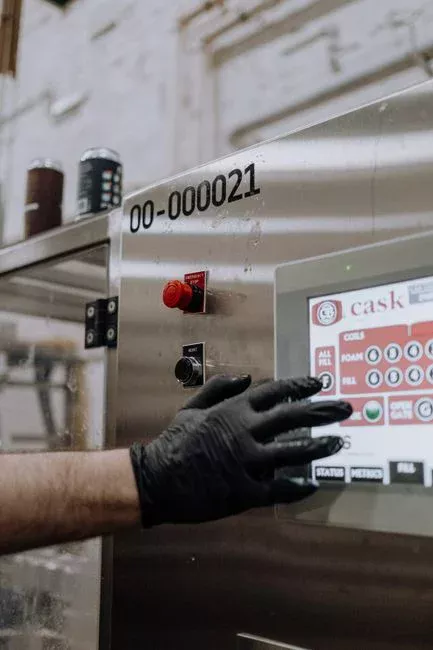
For a 2026 Lisbon project, the realistic CAPEX range — ex-works plus Lisbon delivery, civil works, electrical hookup, and commissioning supervision — sits well above the bare-equipment FOB figures indexed on Made-in-China. A WSZ underground package plant in the 10-50 m³/day band runs €45,000-€180,000 turnkey; add €18,000-€40,000 for Lisbon delivery, foundation works, and the electrical panel termination to land at an installed cost closer to €63,000-€220,000. An MBR system in the 50-200 m³/day band lands at €120,000-€380,000 inclusive of membrane modules, blower house, and PLC panel, with a membrane replacement reserve of €8,000-€22,000 due every 7-10 years (HydropureWater field data, 2026).
| Cost line | WSZ package plant (10-50 m³/day) | MBR system (50-200 m³/day) | DAF pre-treatment (4-50 m³/h) |
|---|---|---|---|
| Equipment ex-works | €45,000-€180,000 | €120,000-€380,000 | €18,000-€75,000 |
| Lisbon delivery + civil + electrical | €18,000-€40,000 | €35,000-€90,000 | €8,000-€25,000 |
| Commissioning + first-year spares | €6,000-€12,000 | €15,000-€30,000 | €3,000-€8,000 |
| Total installed CAPEX | €69,000-€232,000 | €170,000-€500,000 | €29,000-€108,000 |
| Annual OPEX (energy + chemicals + sludge) | €0.11-€0.40 per m³ treated | €0.18-€0.55 per m³ treated | €0.04-€0.10 per m³ treated |
| Membrane replacement (MBR only) | n/a | €8,000-€22,000 every 7-10 years | n/a |
OPEX is dominated by aeration energy, which on fine-bubble diffuser systems runs €0.08-€0.32 per m³ treated at 2026 Iberian industrial electricity tariffs of approximately €0.11-€0.18/kWh. Chemical dosing (coagulant, CIP chemicals for MBR, disinfectant) adds €0.02-€0.05/m³, and sludge hauling to a licensed receiver typically lands at €0.01-€0.03/m³ for a 20-25% dry-solids cake. A useful worked example for a refinery-strength influent is in the 2026 oil refinery wastewater treatment cost breakdown, which applies the same energy and chemical ratios to a higher-strength stream. The contrast with the Made-in-China SERP is sharp: a US$3,100-3,800 screw press is a component, not a treatment plant, and a Lisbon buyer still must add CE marking, EN 12255-3 testing, 40HC container shipping, and on-site commissioning supervision to convert that FOB number into an installed, compliant asset.
How to Qualify a Sewage Treatment Equipment Supplier in Lisbon
Four documentary and service gates separate a Lisbon-capable supplier from a catalog-only exporter. First, the documentary pack: a valid CE Declaration of Conformity referencing EN 12255 (the umbrella standard for wastewater treatment plants), with EN 12255-3 covering preliminary treatment and EN 12255-9 covering odour control where relevant; an ISO 9001:2015 quality system certificate; ISO 14001:2015 environmental management; and a model-specific EN 12255 performance test report from a European or accredited third-party lab dated within the last 24 months (per EU Machinery Directive 2006/42/EC documentation expectations).
Second, reference projects. A credible Iberian supplier will hand over at least three installations that have been operating for three or more years in southern Europe — Portugal, Spain, Italy, or Greece — with effluent test data the buyer can verify against the Decreto-Lei 152/97 ceilings. Lisbon's summer profile (peak ambient 30°C+, water temperature 22-26°C in shallow plants) rules out vendors whose only references are Northern European municipal sites that have never operated above 18°C. Third, service footprint: confirm a Portuguese or Spanish-speaking commissioning engineer can be on site within 48 hours of a request, and that the 12-24 month performance guarantee is backed by a bank warranty or parent-company guarantee, not just a manufacturer's letter. Fourth, logistics: confirm CIF Lisboa or Setúbal via 40HC container with a 6-8 week ex-works lead time and the supplier's typical on-site supervisor mobilization window — typically 7-10 days from container arrival. The same qualification logic is applied in different regulatory environments, for example in the sewage treatment equipment supplier buyer's guide framework for Uttar Pradesh, where the documentary pack changes to Indian standards but the four-gate structure (documents, references, service, logistics) is identical.
Matching the Right Technology to Your Lisbon Project Profile
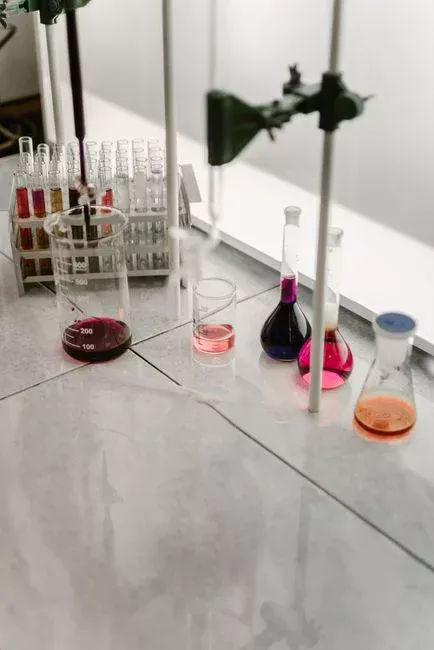
The shortest path from flow rate and effluent target to equipment selection is a five-step decision framework that an EPC estimator can run in under a minute. Step one is flow rate: under 80 m³/h, no reuse, and buried installation preferred → the WSZ underground package sewage treatment plant is the lowest-CAPEX option and needs no surface building. Step two: 10-2,000 m³/day with a reuse target or a tight surface footprint → the MBR membrane bioreactor system, whose <1 μm effluent and 60% footprint reduction justify the higher OPEX. Step three: industrial influent with high FOG, free oil, or colloidal load upstream of a biological step → a DAF pre-treatment stage feeding either MBR or WSZ downstream, never standalone. Step four: cross-check against any site-specific APA limit tighter than Decreto-Lei 152/97 — for sensitive Tejo and Alentejo discharges, this often forces the choice from WSZ to MBR. Step five: confirm PLC and telemetry scope against the PLC control architecture for industrial wastewater plants so the SCADA tag list matches what APA inspectors will want to see during the first compliance audit.
| Project profile | Recommended primary technology | Compliance basis |
|---|---|---|
| ≤80 m³/h, residential/hotel/hospital, buried installation, no reuse | WSZ underground package plant | Decreto-Lei 152/97 direct discharge |
| 10-2,000 m³/day, reuse mandate or footprint constraint | MBR membrane bioreactor | Decreto-Lei 152/97 + reuse (irrigation, cooling, toilet) |
| Industrial influent with FOG/oil/colloids (food, metalworking, petrochemical) | DAF pre-treatment + downstream MBR or WSZ | Pre-treatment — does not by itself meet Decreto-Lei 152/97 |
| Discharge to Tejo estuary or Alentejo coast, >2,000 p.e. | MBR (preferred) or WSZ + tertiary P/N removal | APA site-specific limit, often ≤2 mg/L total P, ≤15 mg/L total N |
Frequently Asked Questions
What discharge limits does a Lisbon sewage treatment plant have to meet in 2026?
A Lisbon plant discharging to the Tejo basin must meet Decreto-Lei 152/97 ceilings of BOD5 ≤25 mg/L, COD ≤125 mg/L, and TSS ≤35 mg/L; for plants above 2,000 p.e. or discharging to sensitive areas, APA commonly tightens total phosphorus to ≤2 mg/L and total nitrogen to ≤15 mg/L.
What is the typical CAPEX for a packaged sewage treatment plant in Lisbon?
For 10-50 m³/day, expect €69,000-€232,000 turnkey installed; for 50-200 m³/day MBR systems, expect €170,000-€500,000 inclusive of membranes, blowers, and PLC panel (HydropureWater field data, 2026).
How long does commissioning take after the equipment arrives in Lisbon?
A typical WSZ or MBR package plant takes 2-4 weeks on site from container arrival to biological seeding and performance test, with the supplier's commissioning engineer on site for 7-10 days of that window.
Which European standard governs Lisbon wastewater treatment plant conformity?
EN 12255 is the umbrella European standard for wastewater treatment plants, with EN 12255-3 covering preliminary treatment and supporting CE marking under the EU Machinery Directive 2006/42/EC.
Can a Lisbon plant reuse treated effluent for irrigation?
Yes — an MBR membrane bioreactor with submerged 0.1 μm PVDF modules produces <1 μm effluent that meets Decreto-Lei 152/97 and is typically approved for landscape irrigation, cooling-tower makeup, and toilet flush under APA site-specific reuse permits.