What a containerized MBR STP actually is, and why it fits Dubai residential and camp work
A membrane bioreactor (MBR) is a wastewater treatment process that combines biological treatment with membrane filtration, replacing the secondary clarifier of a conventional activated-sludge plant with a submerged or external ultrafiltration membrane module (S1, S2). A containerized MBR STP takes that process and packages the bioreactors, membrane cassettes, blowers, pumps, piping and PLC inside a 20-foot or 40-foot high-cube (HC) ISO shipping container, factory-tested and shipped as a Plug & Play unit that is set on a plot, connected to a feed and a discharge, and commissioned in days rather than months (S1, S2, S5). For Dubai residential compounds, labor camps and construction camps, the format solves three problems at once: small plot footprint, short installation window, and the ability to relocate the unit if the camp is decommissioned (S1, S2).
Capacity for a single 40-foot ISO unit is the first spec to fix. MENA-Water's stated product range is 25 to 1,000 m³/day per single 40-foot ISO unit, with the same product page marketing up to 1,200 m³/day in a 40-foot ISO for higher-capacity builds via modular arrangement (S1, S3). The conservative single-unit envelope to use in a Dubai basis of design is therefore 25 to 1,000 m³/day per 40-foot ISO module. Below that band the engineer should ask the supplier for a 20-foot HC option; Pure Aqua's containerized MBR-C is offered in 20-foot or 40-foot HC depending on capacity (S5). For Dubai projects, the relevant peer-reviewed technology reference is the containerized MBR wastewater treatment system class that this article walks through.
Step 1 — Establish the design population and per-capita load
The sizing workflow starts with a single project input: a stated design population, or a stated number of bedrooms or villas. The per-capita wastewater allowance is then applied to convert that number into an average dry-weather flow (ADWF). Pure Aqua's containerized MBR-C uses 50 gallons per day per capita (≈190 Lpcd) as its published population basis (S5). That is a working number for labor-camp and high-density residential work, but the engineer should not adopt it without checking the developer's brief and the local authority's typical design guidelines, because Dubai residential projects are usually described by villa or bedroom count, not head-count.
For a residential compound the defensible basis is villas or bedrooms, with a stated occupancy per unit and a per-bedroom wastewater allowance confirmed from the developer's brief rather than back-calculated from a head-count. For a labor camp the basis is usually a stated bed count with an occupancy ratio; the engineer should record the assumed occupancy so the design can be re-rated if the camp is later re-tenanted. The per-capita figure should not be picked lower than what the local authority's typical design guidelines require, because the ADWF produced by this step is the multiplier that every later step applies peaking and equalization to.
| Project type | Design basis | Per-unit wastewater allowance | Source |
|---|---|---|---|
| Labor camp | Stated bed count × occupancy ratio | 50 gpd per capita (≈190 Lpcd) as a working figure, confirm with brief | Pure Aqua MBR-C, S5 |
| Residential compound (villas) | Villa count × stated occupancy per villa | Per-villa allowance from developer brief; do not back-calculate from head-count | Engineer to confirm |
| Residential compound (apartments) | Bedroom count × occupancy ratio | Per-bedroom allowance from developer brief | Engineer to confirm |
Step 2 — Apply a peaking factor for the worst-case hour
A containerized MBR is normally rated on average daily flow, but peak hourly flow in a residential cluster or a camp with synchronized shift change runs well above the average. The peaking factor should be derived from the occupancy pattern, not from a generic textbook number. A labor camp with simultaneous shift wash-down produces a higher peak than a residential compound with staggered household use, and that pattern is what dictates how much equalization and buffer volume the container must carry inside the same 20- or 40-foot HC ISO envelope. The research does not state a specific peak factor for Dubai projects, so the engineer should record the assumed peak factor in the basis of design and ask the supplier to confirm the hydraulic grade inside the chosen envelope.
Peaking is applied after the per-capita load, not before, because the per-capita figure is what produces the average; the peak factor is then what multiplies that average to size the equalization and the instantaneous hydraulic load on the membrane cassette. If this step is skipped, the most common failure mode is a unit that meets ADWF on paper but loses transmittance or overflows during the morning peak — the kind of complaint that ends up in a vendor's punch list rather than the design report.
Step 3 — Match the design flow to a modular unit count
With the peak flow fixed, the design flow is matched to a modular unit count using the conservative single-unit envelope of 25 to 1,000 m³/day per 40-foot ISO module from MENA-Water's stated product range (S3). Above 1,000 m³/day the design should specify parallel modules rather than a single oversized container; MENA-Water describes the same product line as a "modular arrangement" for higher capacities, and S1 markets up to 1,200 m³/day in the same 40-foot ISO form factor (S1, S3). For sub-25 m³/day projects the engineer should ask whether the same vendor offers a smaller skid or a 20-foot HC envelope; Pure Aqua's MBR-C is described as 20-foot or 40-foot HC depending on capacity (S5).
At this stage the membrane spec itself should be sanity-checked against the published envelope. Pure Aqua's MBR-C uses 0.04 µm hollow-fiber PVDF on submerged modules with a thermally induced phase separation (TIPS) membrane (S5). The MENA-Water / HUBER MBR uses ultrafiltration membranes in the 2–100 nm pore range, arranged on stainless steel frames with continuous aeration through bubble diffusers (S2). MENA-Water's brochure copy describes polypropylene plates with a polymeric membrane on each side (S3). Both are sub-0.1 µm and produce a near-reuse effluent, so the engineer's basis-of-design should lock the pore size and the membrane format, not just the flow, before a vendor is invited to quote.
| Parameter | Pure Aqua MBR-C (S5) | MENA-Water MBR (S1, S2, S3) |
|---|---|---|
| Container envelope | 20-foot or 40-foot HC depending on capacity | 40-foot ISO, modular arrangement for higher capacities |
| Single-unit capacity | Per project sizing | 25 to 1,000 m³/day per 40-foot ISO (S3); up to 1,200 m³/day in 40-foot ISO (S1) |
| Membrane format | Submerged hollow-fiber (HF) | Polypropylene plates with polymeric membrane (S3); stainless steel frame (S2) |
| Membrane material | PVDF (TIPS) | Polymeric UF membrane |
| Pore size | 0.04 µm nominal | 2–100 nm (UF range) |
Step 4 — Confirm the site and utility envelope in Dubai
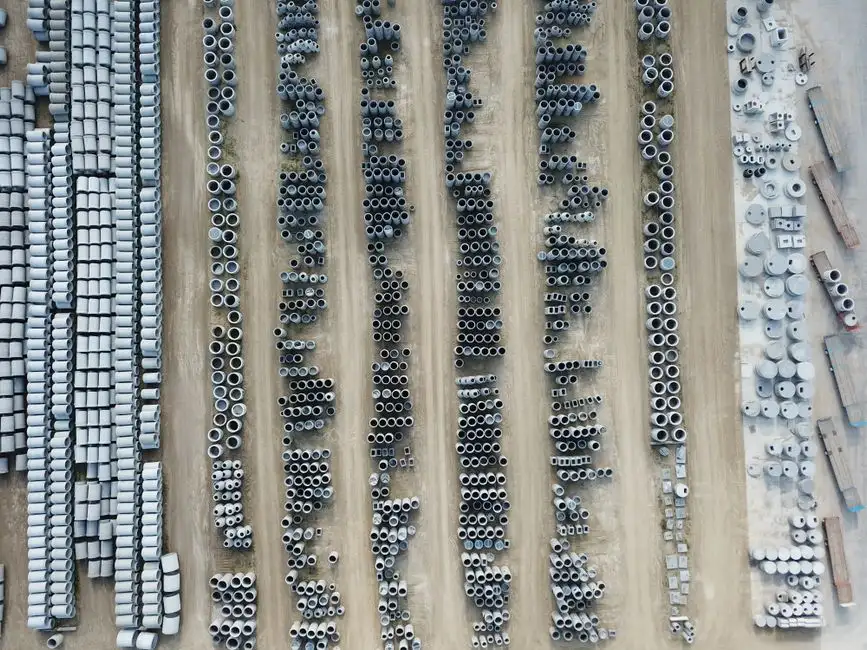
Once the unit count is fixed, the next failure mode is the plot, the power, the ambient, and the pre-treatment feed. Plot footprint is the first check: a 40-foot HC ISO container is approximately 12.2 m × 2.44 m × 2.9 m high, and Pure Aqua's MBR-C is offered in both 20-foot and 40-foot HC containers depending on capacity (S5). The engineer should confirm the plot can take the chosen envelope plus truck access for installation and periodic membrane maintenance, and should ask the supplier for the as-built general arrangement drawing before signing off the plot.
Power supply is the second check. Pure Aqua's MBR-C is specified at 460V/3Ph/60Hz (S5); for a Dubai site the engineer should confirm the available electrical supply matches the container's plug-and-play panel and the local DEWA / FEWA / SEWA requirements depending on the emirate. Ambient temperature is the third: Pure Aqua states an operating temperature range of 20–30 °C with a design temperature of 20 °C (S5). Dubai ambient sits within that band for most of the year, but the engineer should check summer extremes at the specific site and any container cooling required to keep the membrane tank within the operating window. Pre-treatment is the fourth: a 1.5 mm drum screen is built into Pure Aqua's MBR-C (S5) and an equivalent pre-screen is part of every containerized MBR in this class (S1, S3); site civil works still need to deliver a pumped, screened feed, and a rotary mechanical bar screen for MBR feed protection on the upstream civil works is worth specifying where the feed is a long rising main.
Step 5 — Set the reuse or discharge envelope
Effluent quality is driven by the membrane, not the container. Pure Aqua's MBR-C is described as achieving complete retention of bacterial flocs, suspended solids, small colloids and viruses (S5). MENA-Water's MBR is stated to reduce virus and bacteria by 99.9999% on the product page (S1), with the brochure copy citing 99.999% (S3); both figures exist in the source and should be carried through as separate statements, with the spec sheet quoted as the controlling number. For Dubai residential and camp projects the typical end uses are landscape irrigation and toilet flushing, and the engineer should confirm the treated-effluent parameter set required by the relevant UAE authority before fixing the membrane specification.
UAE policy context is the headline driver for treated-effluent reuse. The UAE Water Security Strategy 2036 is cited by Emvees as the framework that pushes STPs toward reuse rather than sea-or-sabkha discharge (S4), and a containerized MBR is one route to compliance for decentralized sites. If the end use requires a salt-reduced or potable-grade water, the membrane step alone is not enough — MENA-Water explicitly notes that pure water, salt reduced, requires an industrial RO system downstream of the MBR (S1). For pathogen polishing where RO is not justified, a UV sterilizer for the treated-effluent polishing step is the usual add-on.
Sanity-check matrix: how the major containerized MBR claims compare
The fastest way to pressure-test a vendor's quote is to lay the spec sheet next to the published envelope from competing suppliers in the same product class. The matrix below pulls the four claims a Dubai engineer should see on every datasheet: capacity per 40-foot ISO, membrane format, pre-treatment, and power and ambient envelope. If any of these is missing or weaker than the reference, that is the line to question in the pre-award meeting.
| Spec line | Pure Aqua MBR-C (S5) | MENA-Water MBR (S1, S2, S3) | What to ask the vendor |
|---|---|---|---|
| Capacity per 40-foot ISO | 20-foot or 40-foot HC depending on capacity | 25–1,000 m³/day per single unit (S3); up to 1,200 m³/day in 40-foot ISO (S1) | Confirm capacity per module and number of modules in parallel for your peak flow |
| Membrane format | Submerged hollow-fiber PVDF, 0.04 µm | Polypropylene plates with polymeric membrane (S3); UF pore range 2–100 nm (S2) | Confirm pore size in µm, not just "UF" |
| Pre-treatment | 1.5 mm drum screen built in | Comparable pre-screen standard across the class (S1, S3) | Confirm screen perforation in mm and that civil works deliver a screened feed |
| Power and ambient | 460V/3Ph/60Hz; 20–30 °C operating; design 20 °C | Confirm against vendor datasheet | Confirm Dubai supply match (DEWA/FEWA/SEWA) and summer ambient margin |
Frequently Asked Questions
How many 40-foot ISO modules do I need for a 300-person labor camp in Dubai?
Apply the Pure Aqua MBR-C population basis of 50 gpd per capita (≈190 Lpcd) (S5) to 300 persons to get an average daily flow, then apply a peak factor appropriate to a synchronized-shift camp and compare the peak to the conservative 25–1,000 m³/day per 40-foot ISO envelope (S3). The Dubai-specific inputs the engineer must request from the camp operator are the peak-shift occupancy, the assumed peak factor, and confirmation of the supply voltage at the plot.
What should I look for in a containerized MBR supplier before awarding in Dubai?
Compare the vendor's datasheet against the published reference: 25–1,000 m³/day per 40-foot ISO envelope (S3), 0.04 µm PVDF hollow-fiber (S5), UF pore range 2–100 nm (S2), 1.5 mm drum screen pre-treatment (S5), 460V/3Ph/60Hz supply (S5), and a stated compliance position against UAE Water Security Strategy 2036 reuse requirements (S4). The engineer should also ask for the as-built general arrangement, the membrane replacement interval, and a remote-monitoring option before signing.
Can a containerized MBR in Dubai meet landscape irrigation reuse without RO?
For typical Dubai residential landscape and toilet-flushing reuse, the MBR membrane alone is generally the controlling barrier, with Pure Aqua's MBR-C described as retaining bacterial flocs, suspended solids, small colloids and viruses (S5) and MENA-Water citing 99.9999% virus and bacteria reduction on its product page (S1). A UV polishing step is the usual add-on where the authority requires a defined log-reduction. If the end use needs salt-reduced or potable-grade water, MENA-Water explicitly requires RO downstream of the MBR (S1).
What is the realistic lead time and commissioning window for a containerized MBR in Dubai?
The research does not state a specific lead time for Dubai projects. The engineer should request from each vendor the factory-build slot, the sea-freight transit time into Jebel Ali, the site civils duration before the container is set, and the commissioning duration from power-on to compliance sampling. Pure Aqua describes its containerized systems as pre-engineered in CAD and built in-house for quick turnaround (S5), and MENA-Water describes its containerized plants as factory-tested for Plug & Play site start-up (S1); both claims should be substantiated with a project-specific schedule before award.
Related Equipment
- PVDF flat-sheet MBR membrane module — specifications, capacity range, and technical data