Why Sizing Starts With Flow, Not Container Size
Every containerized MBR is a pre-engineered package built around a discrete flow band; you cannot "size up" a 20' high-cube unit into a 40' high-cube duty by ordering a longer tank. The variable that drives every downstream decision — tank volume, membrane surface area, blower and pump selection, container dimensions, and freight class — is the average dry-weather flow (ADWF) in m³/day, with the peak wet-weather flow (PWWF) used only to check hydraulic capacity and emergency storage.
The IDA Water Security Handbook 2019 confirms that the cubic metre per day is the industry-standard capacity unit for water and wastewater plant design, with 1 m³ = 264.2 US gallons or 1,000 litres (S2). Holding that unit convention from the first sketch lets a Colombo engineer compare quotes from any supplier on a like-for-like basis. The HydroPure integrated MBR membrane bioreactor platform is then selected against the calculated m³/day, not the other way round.
Step 1: Estimate the Design Flow for a Colombo Residential or Camp Project
Pure Aqua's published MBR-C sizing reference uses 50 US gallons per capita per day (gpd) as its design basis (S1). Converting that figure against the IDA Handbook 2019 factor of 1 m³ = 264.2 US gallons gives 50 ÷ 264.2 = 0.189 m³/person/day, or roughly 190 litres per capita per day (Lpcd) (S1, S2). This is a US reference value, not an SLSI-issued figure; cross-check it against the project's local design brief and developer-supplied loading data before freezing the specification.
Population × per-capita flow gives the ADWF. For a 200-unit Colombo apartment block at 3.5 persons per unit, the dry-weather load is 700 × 190 L = 133 m³/day before peaking. Apply a peaking factor of 1.2–1.5 for residential flow, and 1.5–2.0 for a worker camp where shift-change showers, laundry, and mess-hall discharge all hit the drain at the same hour. Inputs a Sri Lankan designer should verify locally include occupancy rate, camp shift handover times, food-service waste strength, on-site laundry volume, and any commercial tenants in a mixed-use building — none of which are captured in the 50 gpd reference figure.
Step 2: Match Design Flow to a 20' or 40' High-Cube Container
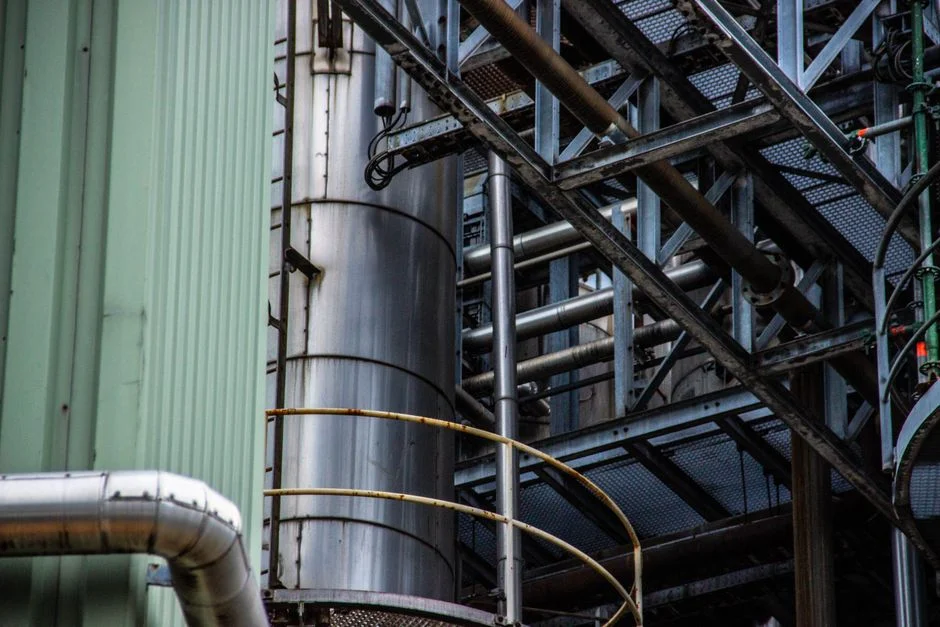
Pure Aqua states the MBR-C is offered in 20' and 40' high-cube (HC) ISO containers depending on capacity (S1). MENA-Water states that more than 1,200 m³/day can be filtered in one 40-foot ISO container for municipal sewage duty (S3) — that figure is the published upper bound of the format, not a guaranteed rating for every configuration. The inside tanks are made of stainless-steel sheets and the standardized ISO container design enables factory quality testing and plug-and-play site installation (S3).
For Colombo residential and camp projects in the 20–500 m³/day band, a 20' HC unit typically covers the lower end of that range, while a 40' HC covers mid-range flows up to a few hundred m³/day. The HydroPure PVDF submerged flat-sheet MBR module range should be matched to the calculated m³/day at this stage, not to a preferred container footprint.
| Project type (Colombo) | Population (illustrative) | ADWF @ 190 Lpcd | Peaked flow (×1.3) | Likely container format |
|---|---|---|---|---|
| Small apartment block (~60 units) | ~210 | ~40 m³/day | ~52 m³/day | 20' HC ISO |
| Mid-size gated community (~200 units) | ~700 | ~133 m³/day | ~173 m³/day | 40' HC ISO |
| Worker camp, single shift (~400 beds) | ~400 | ~76 m³/day | ~114 m³/day (×1.5) | 40' HC ISO |
| Resort, 120 keys + staff | ~320 | ~61 m³/day | ~79 m³/day | 20'–40' HC ISO |
These figures are illustrative conversions of 50 US gpd per capita (S1) using the IDA Handbook 2019 conversion factor (S2), and the peaking factor band stated in the design notes; final sizing must be confirmed against the supplier's rated m³/day at the project's design temperature.
Step 3: Lock the Process Configuration — Membrane, Pre-Treatment, and Anoxic Zone
Flow alone does not deliver reuse-grade effluent; the process configuration does. Pure Aqua's published MBR-C core specification is a submerged PVDF hollow-fiber ultrafiltration membrane at 0.04 µm nominal pore size, fed by a 1.5 mm perforation drum screen that protects the membrane surface from suspended solids (S1). That drum screen is required, as hair, fibre, and grit from a Colombo apartment block will blind the UF modules within weeks.
If the reuse duty is toilet flushing, landscape irrigation, or any pathway where nitrate is a parameter, add an anoxic zone upstream of the aerobic chamber for denitrification. Pure Aqua lists anoxic-zone denitrification as an available add-on (S1). Confirm factory-installed membrane cleaning with coarse-bubble air scoring, with the supplier's published maintenance regime of one to two chemical cleanings per year (S1, S3). The HydroPure PVDF submerged flat-sheet MBR module range is the equivalent local-build alternative for the same duty.
Step 4: Confirm Utilities, Climate Fit, and Electrical Supply
The single most common procurement oversight on Sri Lankan projects is leaving the US default electrical specification on the purchase order. Pure Aqua's published standard supply is 460V/3Ph/60Hz (S1), a US grid specification. The Ceylon Electricity Board supplies 400V/3Ph/50Hz, so the motor control centre, blower, and feed pump must be re-specified at the quotation stage, not retrofitted on site.
Operating temperature range is 20–30°C with a design point of 20°C (S1), which is well-matched to Colombo's ambient conditions and removes the need for enclosure heating. Add a standby feed pump and a standby blower if continuous discharge is a permit condition (S1). For sites without a dedicated operator, specify remote monitoring as a factory option rather than a site retrofit (S1). A chemical dosing skid, such as the HydroPure automatic chemical dosing system, should be sized to the membrane-cleaning CIP volume stated by the membrane supplier.
Step 5: Decide the Effluent Target and Reuse Pathway
Containerized MBRs deliver near-reuse-quality effluent through sub-1 µm membrane filtration, with MENA-Water reporting 99.9999% reduction of virus and bacteria at the UF stage (S3). Whether that effluent is reusable depends on the duty. For toilet flushing or landscape irrigation, MBR plus a pipeline UV-C sterilizer, or MBR plus an on-site chlorine dioxide generator, is usually sufficient. For RO feed or boiler make-up water, an additional polish stage (typically cartridge filtration plus RO) is required to bring down residual organics and total dissolved solids.
Before the unit is ordered, lock the receiving environment with the regulator: SLSI tolerance limits for the discharge path, CEA/WD consent for the receiving water body, and any local-authority sewer-connection conditions. Request effluent parameter certificates — BOD, COD, TSS, NH3-N, NO3, and total coliforms — from the supplier at the enquiry stage so the quoted MBR is matched to the actual compliance numbers. The HydroPure pipeline UV-C sterilizer and on-site chlorine dioxide generator cover the two most common reuse-side polish steps.
Sizing Summary: Colombo Residential and Camp Projects at a Glance
The defensible sizing path is population → per-capita flow (50 US gpd ≈ 190 Lpcd via Pure Aqua S1 and the IDA Handbook 2019 conversion S2) → peaking factor → m³/day → 20' or 40' HC ISO container (S1) → process configuration → effluent target. The published container envelope is a 20' or 40' HC ISO format (S1) with up to 1,200 m³/day stated for a 40' HC unit on municipal sewage duty (S3) — the residential and camp projects this article covers sit well below that upper bound.
| Step | Input or output | Source |
|---|---|---|
| Per-capita flow | 50 US gpd = ~190 Lpcd | Pure Aqua MBR-C (S1); IDA Handbook 2019 (S2) |
| Peaking factor | 1.2–1.5 residential; 1.5–2.0 worker camp | Design note (this article) |
| Container envelope | 20' or 40' HC ISO; up to 1,200 m³/day in one 40' HC | Pure Aqua (S1); MENA-Water (S3) |
| Membrane | Submerged PVDF HF UF, 0.04 µm | Pure Aqua MBR-C (S1) |
| Pre-treatment | 1.5 mm drum screen | Pure Aqua MBR-C (S1) |
| Electrical supply | Re-spec 460V/3Ph/60Hz → 400V/3Ph/50Hz | Pure Aqua (S1) vs CEB grid |
| Temperature | Operating 20–30°C; design 20°C | Pure Aqua MBR-C (S1) |
For a parallel reference on a tropical-residential project of similar scale and climate band, the HydroPure guide on sizing a containerized MBR STP in Manila uses the same calculation path; the Manila guide and the Cebu counterpart cover climate, voltage, and container-format decisions in more depth for those specific markets.
Frequently Asked Questions
What is the typical cost of a containerized MBR STP for a Colombo apartment block or worker camp?
The research data does not include a published price for containerized MBR plants in Sri Lanka. Buyers should request a quotation that itemizes the container, membrane modules, blowers, pumps, control panel, dosing skid, and freight to Colombo Port, then compare on a landed-cost basis with the supplier's stated m³/day rating at the project's design temperature.
How do I choose between a 20' HC and a 40' HC containerized MBR?
Match the container to the calculated m³/day, not the other way round. Pure Aqua offers the MBR-C in both 20' and 40' high-cube ISO containers (S1), and MENA-Water states more than 1,200 m³/day can be filtered in a single 40' HC (S3). For Colombo residential and camp projects in the 20–500 m³/day band, a 20' HC covers the lower end and a 40' HC covers mid-range flows up to a few hundred m³/day; request the supplier's rated m³/day at the project's design temperature before signing the PO.
What effluent parameters should I demand from the supplier before placing an order?
Request a certificate that lists BOD, COD, TSS, NH3-N, NO3, and total coliforms at the design flow and temperature. Cross-check those numbers against SLSI tolerance limits for the discharge path and any CEA/WD consent conditions for the receiving water body before the unit is built.