
Why Containerized MBR Is the Default for Abu Dhabi Residential and Camp Projects
A membrane bioreactor combines activated-sludge biology with ultrafiltration membranes in the 2–100 nm pore-size range, eliminating the secondary clarifier and producing clarified, low-SS effluent that suits irrigation reuse (HUBER). The containerized MBR wraps that process into a 20' or 40' high-cube ISO unit, factory pre-assembled with insulated walls, a 1.5 mm drum screen, fine-bubble aeration and coarse-bubble membrane scour (Pure Aqua). Because the process train, controls and pumps arrive pre-tested, the unit is a plug-and-play block for fast-track Abu Dhabi residential compounds and labour camps where civil STP construction is not viable inside the project window.
A single 40-foot ISO container can filter more than 1,200 m³/day in a packaged MBR (MENA-Water), which means most Abu Dhabi residential and camp projects fit in one or two 20' HC / 40' HC units rather than a purpose-built civil plant. The same product range is also available as an I-Version fully integrated layout for mobile or relocatable camps and as a U-Version where aeration and buffering are pushed to underground tanks on a permanent compound (MENA-Water, containerized MBR system). The sizing exercise reduces to a hydraulic and organic-load balance inside a small number of ISO footprints, rather than a civil design.
Abu Dhabi Sizing Inputs You Must Confirm Before Calculation
The engineer must lock down five inputs on the data sheet before performing any calculations. Every Abu Dhabi-specific figure that the supplied research does not explicitly state must be confirmed with the consultant or the authority, not assumed.
- Design population split. Separate permanent residents from shift or rotational camp occupants. A 500-person labour camp does not behave hydraulically like a 500-occupant residential block; camps produce sharper morning and evening peaks tied to shift change and bus arrivals.
- Per-capita sewage flow. Use the Abu Dhabi authority figure where one is published. The only public per-capita reference inside the supplied research is 50 gpd per capita shown on Pure Aqua's MBR-C product page, which is a useful sanity check, not a substitute for the local design number.
- Influent BOD / COD / SS / TKN. Confirm whether the catchment is domestic-only or mixed with kitchen and laundry flows (the camp case). Decide whether a grease trap is required upstream of the container; if it is, the hydraulic head loss belongs on the data sheet.
- Ambient conditions. Containerized MBRs are typically designed at 20°C with an operating envelope of 20–30°C (Pure Aqua). Abu Dhabi summer ambients sit at the top of — and often above — that envelope, so the engineer's RFQ must include a derating question against the vendor's temperature curves rather than assume the published output.
- Discharge or reuse route. TSE for landscape irrigation under the Abu Dhabi Environment Agency framework, or treated effluent for sea/trench discharge. The reuse route drives the post-treatment envelope (disinfection, residual chlorine, nutrient limits) and therefore the MBR scope. Pre-treatment screening is a sizing input in its own right, and a rotary mechanical bar screen sized to peak flow is the typical upstream stage.
The Sizing Calculation Chain, Step by Step
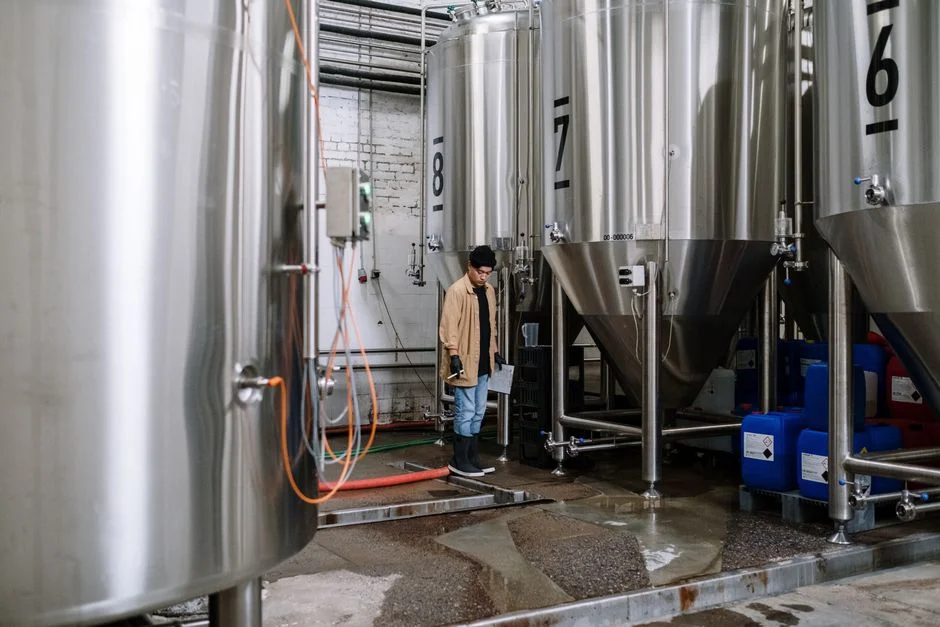
The calculation chain converts project inputs into sized equipment, with steps requiring authority data flagged accordingly.
- Step 1 — Average daily flow. Qavg (m³/day) = Population × per-capita flow. Cross-check the result against the 50 gpd per capita reference on Pure Aqua's MBR-C page; replace it with the Abu Dhabi authority's per-capita flow if one is published.
- Step 2 — Peak flow. Qpeak = Qavg × peaking factor. Camps have a sharply different diurnal profile from residential blocks, so the factor is a consultant or authority input. The engineer must request this value before sizing the hydraulic train or the membrane flux.
- Step 3 — BOD load and aeration volume. BOD load (kg/day) = Population × per-capita BOD (g/capita·day). The aeration tank volume follows from the food-to-microorganism ratio at the higher MLSS that MBR allows, which is one of the documented process advantages over conventional activated sludge (HUBER).
- Step 4 — Membrane area and module count. Size the submerged UF modules against Qpeak using the 0.04 µm PVDF specification used in containerized MBRs (Pure Aqua MBR-C). Keep the membrane flux conservative once the ambient-temperature derating is applied, and select modules such as the DF-series PVDF flat-sheet membrane module against the vendor's published flux curves rather than against a generic figure.
- Step 5 — Container count. Compare Qavg against the >1,200 m³/day per 40' ISO container benchmark (MENA-Water). For very small compounds a single 20' HC unit is sufficient; mid-sized compounds of a few hundred residents typically fit in one 40' HC; large compounds and labour camps above the 1,200 m³/day benchmark need two or more 40' HC units in parallel.
Sizing Parameters at a Glance
The table below pairs each MBR sizing variable with the figure the supplied research supports, or with a note that the figure must come from the authority or consultant.
| Parameter | Value or envelope | Source / status |
|---|---|---|
| UF membrane pore size | 2–100 nm (UF range); 0.04 µm nominal in MBR-C | HUBER; Pure Aqua MBR-C |
| Virus and bacteria reduction | 99.9999% | MENA-Water |
| Per-capita sewage flow (sanity check) | 50 gpd per capita | Pure Aqua MBR-C; replace with Abu Dhabi authority figure |
| Peaking factor (camp) | Not stated for Abu Dhabi | Request from consultant / authority |
| Peaking factor (residential block) | Not stated for Abu Dhabi | Request from consultant / authority |
| Per-capita BOD | Not stated in supplied research | Request from consultant / authority |
| Design temperature | 20°C | Pure Aqua MBR-C |
| Operating temperature range | 20–30°C (68–86°F) | Pure Aqua MBR-C; derate for Abu Dhabi summer ambients |
| Electrical supply (vendor reference) | 460V / 3Ph / 60Hz | Pure Aqua MBR-C; reconcile against UAE 380–415V / 50Hz mains |
| Throughput per 40' ISO container | More than 1,200 m³/day | MENA-Water |
| Container footprints | 20' HC, 40' HC; U-Version and I-Version layouts | Pure Aqua; MENA-Water |
| Pre-treatment | Drum screen, 1.5 mm perforation | Pure Aqua MBR-C |
| TSE reuse limits (Abu Dhabi) | Not stated in supplied research | Request from Abu Dhabi Environment Agency |
Choosing 20' HC, 40' HC, or Multi-Container Layout
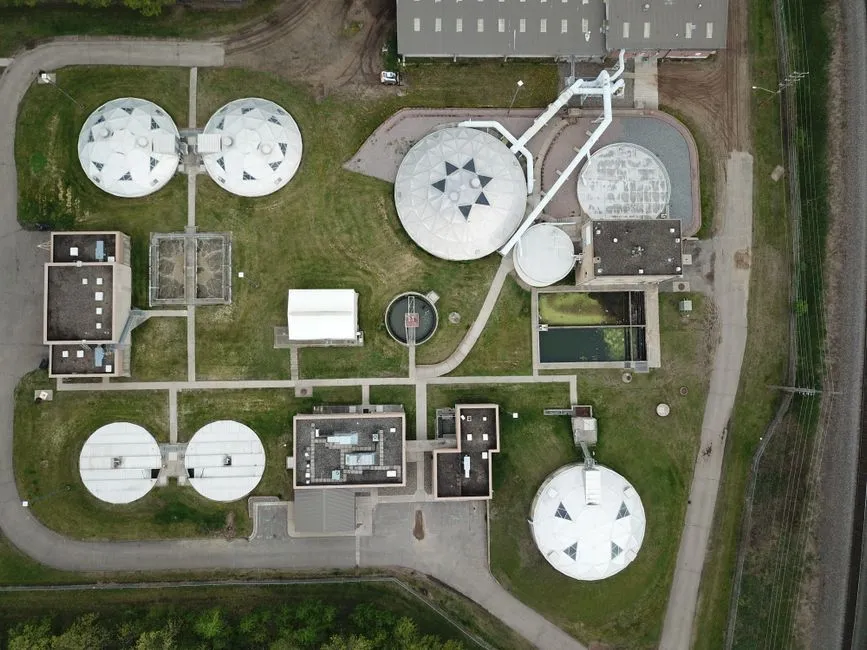
The container choice is a downstream consequence of the Qavg and Qpeak calculations. Below a few tens of m³/day a single 20' HC container is sufficient; Pure Aqua lists the MBR-C explicitly in 20' HC and 40' HC footprints, and MENA-Water offers a U-Version with underground buffer and aeration tanks as well as a fully integrated I-Version for mobile or relocatable projects.
Mid-sized residential compounds of a few hundred residents typically fit in one 40' HC unit against the >1,200 m³/day per 40' container envelope (MENA-Water). Large compounds and labour camps above that benchmark need two or more 40' HC units in parallel, with shared inlet manifolds, common blowers and a single control panel. For mobile or relocatable camp projects, the I-Version 'fully integrated' layout (MENA-Water) is the reference choice; for permanent compounds the U-Version with underground buffer tanks is the lower-footprint option and pairs naturally with an underground packaged sewage treatment plant for surge equalisation. Engineers should plan the plug-and-play installation against the published MBR-C envelope: insulated walls, zero water leakage, drum screen at 1.5 mm, fine-bubble diffusers, coarse-bubble air scour on the membrane module, and an anoxic zone for denitrification (Pure Aqua).
2026 Abu Dhabi Compliance and Reuse Considerations
Designers must meet the TSE parameter set administered by the Abu Dhabi Environment Agency if the effluent is used for irrigation. The supplied research does not state the specific numeric limits, and the engineer must request the current parameter set from the authority rather than carry an assumed figure into the design basis. MBR effluent from submerged UF at 0.04 µm (Pure Aqua) with virus and bacteria reduction of 99.9999% (MENA-Water) is the appropriate technical baseline for TSE reuse; the residual chlorine policy or alternative disinfection step is then a confirmation item with the authority, typically satisfied downstream with a pipeline UV sterilizer sized to peak flow.
For sea or trench discharge, the ADCAS / UAE Federal discharge interface applies; coordinate the building permit, the discharge permit and the TSE reuse distribution network with the MBR supplier before procurement so the engineered plant is not held up at the approvals stage. MENA-Water and HUBER both offer installation, start-up and remote monitoring support, and that scope needs to be on the purchase order from day one. For camp projects on temporary plots, plan for the I-Version mobile layout (MENA-Water) so the plant can be redeployed when the camp is demobilised.
Frequently Asked Questions
How do I size a containerized MBR STP for a residential or camp project in Abu Dhabi?
Work population × per-capita sewage flow to get Qavg in m³/day, apply a peaking factor for the duty profile (camp vs residential) to get Qpeak, convert population × per-capita BOD into kg BOD/day to size the aeration tank, and size the UF modules against Qpeak using the 0.04 µm PVDF specification (Pure Aqua). Compare Qavg against the >1,200 m³/day per 40' ISO container benchmark (MENA-Water) to set the container count. Abu Dhabi-specific inputs — per-capita flow, peaking factor, TSE limits — must come from the authority or consultant because the supplied research does not state them.
What should I put in the RFQ when comparing suppliers for an Abu Dhabi containerized MBR?
Send the same data sheet to every bidder: design population and duty profile, Qavg and Qpeak, influent BOD/COD/SS/TKN, ambient temperature range including summer peaks, discharge or TSE reuse envelope, electrical interface (UAE 380–415V / 50Hz versus the 460V / 3Ph / 60Hz reference on the MBR-C product page, Pure Aqua), container footprint (20' HC or 40' HC), and a request for a derating note against Abu Dhabi summer ambients above 30°C. Ask for delivery lead time, on-site installation and start-up scope, and remote monitoring terms; reject any quote that does not respond to each line item.
What does a containerized MBR cost for a 200–2,000-resident project in Abu Dhabi?
A defensible budget depends on the authority's per-capita flow, the peaking factor, the BOD load, the chosen container count and the post-treatment envelope. Build the budget from the data sheet, not from a published price list: a 200-resident compound typically fits a single 20' HC unit, mid-sized compounds fit one