What Domestic Sewage Treatment in Pattaya Must Solve
Domestic sewage treatment in Pattaya starts with deciding whether a property needs routine septic-tank servicing or an engineered treatment system. A study conducted from 2021 to 2023 at wastewater treatment plants serving Naklua, Pattaya City and Jomtien identified the collection system, activated-sludge process and electricity use as the main emission sources. For hotels, villas, housing developments and factories, the main options are a buried packaged A/O plant, an MBR system or a decentralized biological process. Selection should be based on daily flow, peak and monsoon loads, available land, effluent reuse plans, operating staffing and applicable discharge conditions.
Domestic sewage treatment covers wastewater from residential, hospitality, commercial and employee facilities before it is discharged to a receiving environment or prepared for an approved reuse application. Thailand Guru states that nearly all houses and condos use septic tanks, while condos may have multiple tanks and housing villages may operate a centralized facility.
The local planning context is specific: the Pattaya carbon study assessed plants serving Naklua, Pattaya City and Jomtien during 2021–2023. Before selecting equipment, obtain:
- Average daily wastewater flow and the applicable peak-hour factor;
- Evidence of stormwater entry, groundwater infiltration and wet-weather flow;
- Occupancy assumptions, including tourism-driven seasonal changes;
- Grease, solids and cleaning-chemical loading;
- Available footprint, access, groundwater conditions and excavation constraints;
- The receiving point, discharge route and intended domestic effluent reuse application.
Do not infer a universal Pattaya discharge limit or project price from the available research. Both require confirmation for the site, receiving point and authority. The same disciplined approach used in a packaged A/O and MBR sewage treatment comparison applies to procurement: define the design basis before comparing equipment.
How Septic Tanks and Engineered Treatment Differ
A septic tank separates and partially decomposes waste; an engineered treatment plant combines treatment stages with controlled biological removal, solids separation, disinfection, automation and monitoring.
In the normal septic process, solids settle at the bottom, scum floats at the top, and anaerobic bacteria break down organic material. The liquid portion leaves through a drain or seepage field. If the tank fills, the practical remedy described by Thailand Guru is septic tank pumping service. Condos may have several tanks, while a housing village may have a centralized facility, but treatment still commonly begins in tanks located under individual properties.
Operational discipline matters. Thailand Guru identifies excess cooking oil, grease, tissues, feminine products, cotton buds, food grinders and fibrous food waste as blockage risks. It also advises against chemical drain cleaners because they can kill the bacteria needed for decomposition. These risks should be controlled through kitchen grease management, drain screening, occupant procedures and a defined maintenance plan.
| Assessment point | Conventional septic arrangement | Engineered treatment plant |
|---|---|---|
| Treatment principle | Settling, scum separation and anaerobic decomposition | Controlled biological treatment with separated process stages |
| Hydraulic control | Passive tank storage, outflow and seepage | Defined duty, hydraulic retention, flow control and equalization where required |
| Solids handling | Accumulated solids require pumping and removal | Separated solids require an identified collection and disposal route |
| Disinfection and monitoring | Not normally an engineered, continuously monitored treatment train | Disinfection, instruments, alarms and control can be incorporated |
| Appropriate project condition | Manageable flows, no advanced reuse requirement and an acceptable receiving arrangement | Higher or variable flows, reuse objectives, constrained land, sensitive receiving environments or seasonal resilience needs |
An engineered plant becomes a stronger candidate where the property cannot rely safely on recurring pumping, reuse is required, land configuration limits conventional facilities or variable seasonal loading requires controlled biological treatment. The underground packaged A/O sewage treatment plant illustrates a fully automated treatment option, but it should still be selected against the site’s hydraulic and operating basis.
Compare Packaged A/O, MBR and Decentralized Biological Systems
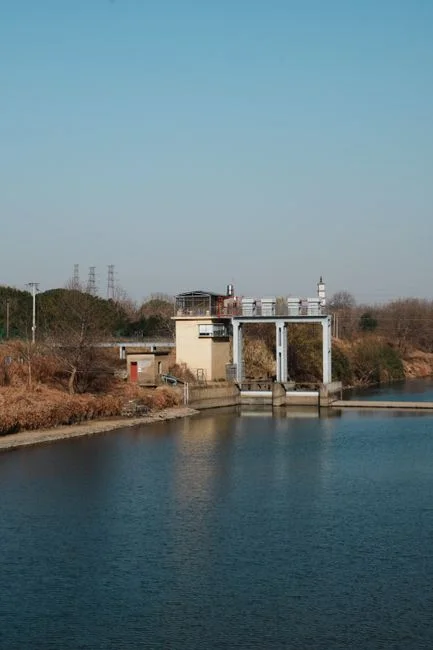
No treatment technology is universally cheapest; the supplied research provides no Pattaya equipment-price or total-cost comparison, so selection must follow the project’s treatment objective, hydraulic duty and operating constraints.
The HydropureWater verified product catalog describes the WSZ series as an anoxic/aerobic biological contact-oxidation process with sedimentation and disinfection in one buried package. It is fully automated, requires no operator, handles 1–80 m³/h and can be installed below grade with landscaping above or mounted on a trailer for mobile deployment. The catalog identifies residential communities, hotels, hospitals, factories and rural areas as applications.
The MBR membrane bioreactor combines activated sludge with submerged PVDF membrane filtration. The supplied catalog states filtration below 1 micrometre, a footprint 60% smaller than conventional systems, and an available capacity range of 10–2,000 m³/day. These figures describe the offered system; they do not establish site-specific performance, footprint or cost.
A third option is decentralized biological treatment. IntechOpen’s Application of Vermifiltration for Domestic Sewage Treatment describes a decentralizable process combining filtration with earthworms. The study characterizes vermifiltration as efficient, viable and requiring less expertise, but a buyer still needs project-specific performance, operating evidence and acceptance criteria before procurement.
| Selection factor | Packaged WSZ A/O | MBR | Decentralized biological option |
|---|---|---|---|
| Treatment train | Anoxic/aerobic contact oxidation, sedimentation and disinfection in one buried package | Activated sludge followed by submerged PVDF membrane filtration | For vermifiltration, filtration combined with earthworms |
| Available capacity stated in supplied sources | 1–80 m³/h | 10–2,000 m³/day | Not stated in the supplied research |
| Footprint | Can be installed below grade; confirm excavation and access requirements | Catalog states 60% smaller than conventional systems; confirm the comparison basis and project layout | Confirm the proposed layout and land requirements |
| Automation and staffing | Fully automated with no operator required; routine inspection and maintenance remain necessary | Confirm automatic controls, membrane cleaning and specialist maintenance requirements | IntechOpen describes lower expertise requirements; confirm local operability |
| Solids and maintenance | Confirm sludge extraction, odor control and service access | Confirm fouling control, cleaning access and module replacement strategy | Confirm solids handling, biological-media management and odor control |
| Reuse readiness | Establish the required reuse water quality before specifying final disinfection | Assess reuse suitability against project-specific water-quality and authority requirements | Request project-specific effluent and reuse evidence |
| Procurement evidence still required | Guaranteed duty, installation method, controls, civil interface and project acceptance criteria | Membrane material, pore specification, cleaning method, module life and replacement strategy | Performance under local influent, maintenance requirements and applicable acceptance data |
Use a simple decision path: if the site needs a compact, automated buried treatment train, compare packaged A/O with MBR. If the reuse objective demands high-quality separation, evaluate MBR against its pretreatment and maintenance burden. If a decentralized biological process can meet the agreed effluent and reuse requirements, request equivalent project evidence before accepting it as an alternative.
Design the Treatment Train Around Pattaya Operating Risks
A defensible treatment train begins with a measured influent basis and ends with a verified discharge or reuse route; equipment capacity alone does not establish either.
- Characterize the influent: establish flow, peak conditions, solids, grease, occupancy variation, stormwater entry and infiltration.
- Screen and control the flow: remove rags, plastics and fibrous debris before they reach pumps, valves or biological stages.
- Equalize where required: assess whether incoming variation needs buffering for stable biological operation.
- Treat biologically: select the biological process against the treatment objective and organic load.
- Separate solids: define the separation method, sludge withdrawal, storage and disposal route.
- Disinfect: select the process against the receiving point or intended reuse application.
- Discharge or prepare for reuse: confirm the authorized route and required water quality.
Upstream protection is a process requirement, not an accessory. The HydropureWater GX rotary mechanical bar screen is specified to remove suspended solids, rags, plastics and fibrous debris that could otherwise affect downstream pumps, valves and biological treatment. Each supplier should state where its proposed screening or flow-control duty begins and ends.
Grease and solids prevention should be built into hotel and food-service operating procedures. Thailand Guru specifically identifies excess oil, grease, tissues and fibrous waste as blockage risks. Kitchen traps, grease management and housekeeping controls reduce loading before the treatment plant, but the design still needs to reflect the incoming condition.
Monsoon wastewater inflow and infiltration must be added to the sizing brief. The Pattaya study identifies the collection system as a major source of environmental impacts, although it does not provide site-specific inflow factors for an individual property. Use measured or defensibly estimated wet-weather conditions and confirm how stormwater will be excluded, controlled or treated.
For MBR projects, require membrane-fouling controls, cleaning access, monitoring and replacement responsibilities in the supplier scope. Sub-micrometre filtration does not remove the need for pretreatment or maintenance. For domestic effluent reuse, define the application and required water quality before fixing the final treatment and disinfection stages.
Energy Use and Carbon Performance Should Shape the Specification
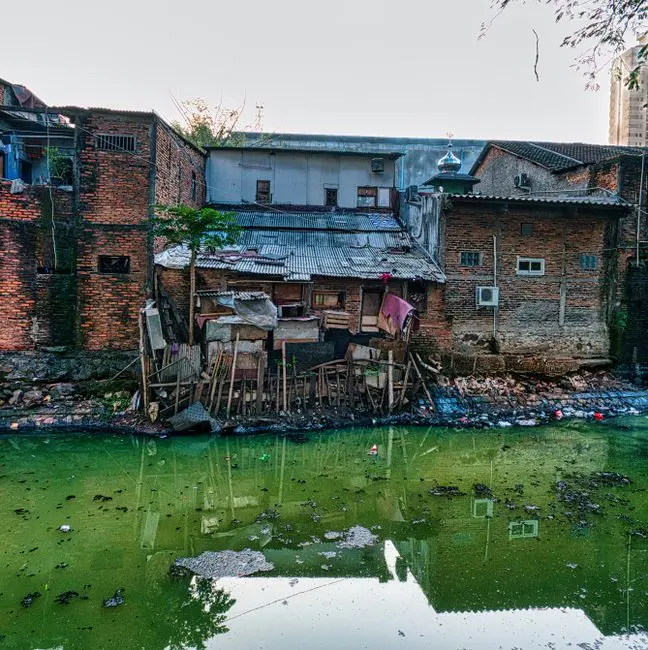
The Pattaya study found carbon intensity of 0.45–0.47 kg CO₂eq per cubic metre of treated wastewater, with the stated scope covering the studied Pattaya City and Jomtien wastewater treatment plants.
That result comes from a 2021–2023 site assessment using manager interviews, scientific questionnaires and IPCC computational methods, published in the Environment and Natural Resources Journal. The study attributes emissions principally to the collection system, activated-sludge process and electricity consumption. These are system-level findings, not a direct estimate for a small property plant.
| Pattaya study finding | Reported value and scope | Specification implication |
|---|---|---|
| Carbon intensity | 0.45–0.47 kg CO₂eq/m³ of treated wastewater across the studied Pattaya City and Jomtien WWTPs | Ask how collection pumping, biological aeration and electricity use affect the proposed system boundary |
| Collection-system contribution | 34.47–44.61% of emissions in the study | Evaluate inflow control, pumping and infiltration rather than considering only the treatment package |
| Activated-sludge contribution | 43.02–45.74% in the study | Require the aeration strategy, biological loading and connected electrical loads |
| Electricity contribution | 30.02–39.48% in the study | Compare projected operating demand and standby arrangements |
| Office-roof solar scenario | 156,780 kWh annual generation; 108.70 tCO₂eq/year reduction; US$35,658.52 savings; 2.38% WWTP GHG reduction | Treat as a study-specific scenario requiring a property-level solar and load assessment |
| Plant-level solar scenario | 823,680 kWh annual generation; 571.06 tCO₂eq/year reduction; US$187,304.58 savings; 12.50% reduction | Consider renewable generation only after establishing the plant’s actual electrical profile |
These solar cases are not guaranteed savings for a prospective Pattaya property. They relate to the studied plants and should not be transferred directly to a hotel, condominium or housing development. Require each supplier to state connected loads, aeration strategy, duty cycles, standby power and a site-specific energy model. For chlorine-based disinfection arrangements, equipment and chemical demand should also be included in the operating boundary.
Build a Supplier Request and Procurement Checklist
Comparable proposals require the same design basis and scope boundary; a headline flow rate and equipment price are not a procurement comparison.
Issue one common information request and require each bidder to return responses against it. Include average and peak flow, design influent, treatment objective, guaranteed duty, footprint, civil works, utilities, installation boundaries and commissioning criteria. The broader domestic sewage technology, compliance and cost guide provides a useful structure for organizing technical and commercial information, but all project assumptions must be Pattaya-specific.
| Procurement package | Information required from every supplier |
|---|---|
| Design basis | Average daily flow, peak-hour flow, seasonal occupancy, monsoon and infiltration assumptions, influent characteristics, required effluent quality and reuse objective |
| Process scope | Screening, equalization, biological retention, solids separation, disinfection, sludge removal, odor control, standby provisions and authorized outlet |
| Technology evidence | For WSZ, automation and buried-installation details; for MBR, membrane material, pore specification, fouling control, cleaning method and module replacement strategy |
| Operating resources | Connected electrical load, aeration duty cycle, chemical use, sludge handling, inspections, operator training, spares and maintenance response |
| Performance and handover | Commissioning tests, monitoring instruments, alarm handling, operating manual, training records and remote or on-site support |
| Commercial cost breakdown | Equipment, civil work, pumping, power upgrades, chemicals, sludge disposal, commissioning and lifecycle operating costs under the same scope definition |
Do not accept generic consumption figures without their design assumptions. A credible energy estimate should state the selected equipment, connected load, operating hours, control strategy and whether standby operation is included. The same discipline applies to chemicals and sludge disposal: state quantities or assumptions and identify who owns the resulting operating responsibility.
Before accepting a guarantee, confirm that it is tied to the agreed design basis, selected treatment train, receiving point and reuse application. Identify which party supplies equipment, performs civil works, installs power, commissions the plant, trains operators, removes sludge and provides maintenance. Where needed, use the MBR sewage maintenance protocol as a reference for defining handover and maintenance obligations rather than leaving them in general wording.
Frequently Asked Questions
How much does domestic sewage treatment cost in Pattaya?
The supplied research does not provide current Pattaya equipment prices or local operating tariffs, so a defensible budget cannot be inferred without a quotation. Request a site-specific breakdown separating equipment, civil work, pumping, power upgrades, chemicals, sludge disposal, commissioning and lifecycle operating costs. Ensure every bidder uses the same flow basis, treatment scope and installation boundary.
How should a wastewater plant be sized for a hotel or housing development?
Use average daily flow to establish the base duty, then test the selected system against peak-hour flow, monsoon inflow, infiltration and seasonal occupancy using project-specific data. Equipment capacity does not resolve the site’s hydraulic profile. Require the supplier to state which flow condition governs each major unit and whether equalization or flow control is included.
Which supplier offers the most reliable treatment system?
Select against guarantees tied to the agreed design basis, not the broadest product description. Require the complete treatment train, commissioning evidence, monitoring and alarm scope, operator training, maintenance responsibilities and technology-specific evidence—for MBR, that includes membrane material, fouling controls and cleaning methodology. Local support and a clearly allocated installation boundary are also contractual requirements.
What should be checked before treating or reusing wastewater in Pattaya?
Confirm the receiving point, responsible authority, permit conditions and any reuse standard for the specific project. The supplied sources do not establish a universal Pattaya effluent limit, so do not select a final disinfection stage from generic marketing claims. Define the intended reuse application and required water quality, then obtain project-specific acceptance criteria in writing.