Which wastewater streams need a Guatemala City treatment plan?
A Guatemala City data center needs a treatment plan that separately addresses cooling-tower blowdown, construction fill-and-flush water, domestic wastewater and other commissioning discharges. Blowdown should be characterized for flow, pH, conductivity/TDS, suspended solids, hardness, alkalinity, silica, metals and residual treatment chemicals. It normally requires filtration, hardness control and membrane protection before RO when the goal is cooling-makeup reuse. The final train depends on the discharge route, sewer acceptance, local permit conditions and measured source-water chemistry; no supplied source establishes Guatemala City-specific limits or a site design.
Cooling-tower blowdown is the concentrated water intentionally removed to control dissolved solids, scale, corrosion and biological growth. It should not be combined automatically with construction wastewater or sanitary sewage because the chemistry, flow profile and acceptance route differ. A complete data center wastewater treatment planning guide can help structure that separation, but the project water balance must reflect the Guatemala City site.
E&E News reports that data center construction fill-and-flush water may contain chemicals unsuitable for municipal wastewater treatment. Loudoun Water therefore requires developers to test that water before discharge and independently verifies results; in some cases, it has directed developers to an appropriate off-site disposal facility. The same source reports that closed-loop liquid cooling does not eliminate water management because the coolant remains in service for extended periods before disposal or replacement, while fill-and-flush still creates a separate wastewater stream.
Build the source register around cooling blowdown, fill-and-flush water, domestic sewage, equipment washing, process wastewater, stormwater and commissioning drains. For each, record source, chemistry, flow, timing, treatment chemicals, intended disposal route and responsible approval. The site water balance should then reconcile makeup, evaporation, blowdown, product water, reuse, discharge, construction flushing and emergency dumps.
| Wastewater stream | Defining characteristics | Design implication |
|---|---|---|
| Cooling-tower blowdown | Concentrated salts, suspended matter, treatment chemicals and altered pH | Calculate from operating data; characterize before selecting reuse or discharge equipment |
| Construction fill-and-flush | May contain construction chemicals and commissioning residues | Keep under a separate approval and sampling workstream |
| Domestic wastewater | Sanitary sewage and associated cleaning flows | Route through the applicable sanitary treatment system |
| Equipment washing and process wastewater | May contain oil, FOG, colloids, detergents or cleaning chemicals | Segregate before any cooling-water reuse train |
| Stormwater and emergency dumps | Variable quality and intermittent flows | Provide isolation, inspection and an authorized disposal route |
Measure the source water and blowdown before selecting equipment
Actual blowdown can exceed theoretical calculations by 15–30% because of unmeasured losses and emergency dumps, according to Genesis Water Technologies (2026). Instrumented flow and water-quality data are therefore prerequisites for equipment sizing; a nameplate cooling-system calculation alone is not a design basis.
Start with the measured data center water balance: makeup flow, circulating flow, evaporation, blowdown and total consumption. Use cycles of concentration, CoC, to relate the dissolved-solids concentration in circulating water to that in makeup water. The blowdown-to-makeup ratio is:
Blowdown ratio = 1 / (CoC − 1)
At 4 CoC, the theoretical blowdown ratio is 25%; at 6 CoC, it is 20%, using Genesis Water Technologies’ 2026 calculation. The reduction is therefore 5 percentage points, or 20%, not 50%. Increasing CoC also raises scaling, fouling and biological-control demands, so a higher concentration ratio cannot be selected independently of the cooling-water chemistry and treatment program.
Request laboratory analysis of source makeup and blowdown. The minimum analytical scope is conductivity or TDS, pH, suspended solids, hardness, alkalinity, silica, chloride, sulfate, relevant metals and residual biocides, corrosion inhibitors, scale inhibitors and dispersants. Water Utility Report, updated 2026-04-14, notes that blowdown can contain elevated salts, heavy metals, biocides, corrosion inhibitors and altered pH, depending on the source water and chemical program.
The supplied research contains no Guatemala City tap-water baseline, sewer acceptance analysis or site-specific discharge limit. Those gaps must be closed with a current source-water analysis and written utility correspondence before final equipment selection. A vendor should not be permitted to substitute generic water chemistry for the measured design envelope.
| Design input | Minimum information | Why it matters |
|---|---|---|
| Hydraulic balance | Measured makeup, circulation, evaporation, blowdown and consumption flows | Accounts for operating losses and emergency discharges omitted from theoretical balance |
| Concentration control | Makeup and circulating-water dissolved solids | Defines CoC and theoretical blowdown ratio |
| Scale chemistry | Calcium, magnesium, alkalinity, silica and relevant metals | Controls softener demand, antiscalant selection and membrane recovery |
| Chemical program | Biocides, corrosion inhibitors, scale inhibitors and dispersants | Determines membrane compatibility, reuse suitability and discharge characterization |
| Solids and biology | Suspended solids and relevant biological indicators | Defines physical separation, UF and disinfection requirements |
Equipment concepts for water-treatment media, valves and pretreatment components can be compared after this analytical package is complete.
Choose the required treatment train by discharge route
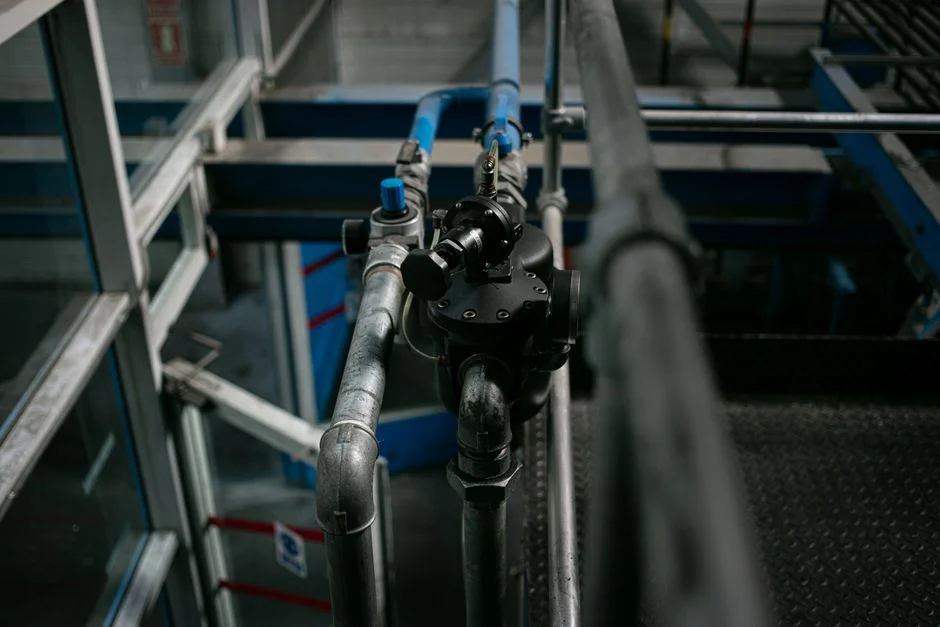
The first design decision is the destination of the water, not the name of the equipment. A reuse train, a sewer-compliant discharge train and a zero-liquid-discharge train have different quality targets, concentrate routes and permit dependencies.
Use physical separation where suspended solids, colloids, FOG or oil-bearing material could interfere with reuse or sewer discharge. A DAF unit is appropriate for some mixed or oil-bearing streams, but not every cooling blowdown stream requires it. For cooling-makeup reuse, evaluate side-stream filtration, industrial softening, UF and RO in process order. This sequence is presented as non-negotiable for the Zapopan design context in HydropureWater’s Zapopan guide (2026), where it serves as a transferable process benchmark rather than a Guatemala City requirement.
UF is appropriate where biological control and particulate removal are needed. HydropureWater’s Zapopan guide (2026) gives a transferable benchmark of 0.01–0.1 μm pore range, 10–30 psi operating pressure and 90–95% recovery. Available equipment can be screened through ultrafiltration systems for blowdown pretreatment and RO protection.
RO is justified where dissolved solids must be reduced to a controlled cooling-makeup envelope. HydropureWater’s Zapopan guide (2026) reports 95–99% dissolved-solids removal, 150–400 psi operating pressure and 50–85% recovery. The same source defines four strategic buckets: cooling-makeup reuse, reuse plus partial ZLD, full ZLD, and substitution of treated municipal or industrial wastewater for makeup. For a local screening process, industrial RO systems for cooling-water reuse belong in the first or second bucket only after the concentrate route and reuse target are established.
Disinfection is a separate decision. It does not replace solids removal, hardness control or desalination, and its need depends on the reuse application and the condition of the incoming water.
| Decision condition | Indicative process route | Critical unresolved input |
|---|---|---|
| Makeup reuse with controlled dissolved-solids envelope | Side-stream filtration, softening, UF, then RO where required | Measured hardness, silica, alkalinity and target cycles |
| Lower-grade process or washing reuse | Physical separation followed by application-specific treatment | Recipient-water quality and treatment compatibility |
| Permitted sewer or receiving-water discharge | Filtration and chemistry control sized to written acceptance conditions | Authority limits, sewer capacity and cumulative load |
| No liquid discharge or no alternative supply | RO with partial or full concentrate management | Residual fate, utilities, haulage and zero-discharge feasibility |
| Treated municipal or industrial wastewater available | Makeup substitution with source-specific pretreatment | Supply contract, chemistry and continuity |
Design for pretreatment, scale control and membrane protection
RO feed should be filtered below 10–15 μm, according to HydropureWater’s Zapopan guide (2026), because particulate carryover can damage membranes and make the recovery guarantee unreliable. Side-stream filtration or another suitable solids-removal step should therefore precede the membrane train.
Use softening to reduce calcium and magnesium where hardness forms the controlling scale risk, and pair it with antiscalant dosing adjusted to the measured silica and alkalinity profile. Confirm concentrate disposal before accepting a quoted recovery rate: membrane scaling, pretreatment performance and the selected residual-management route determine feasible recovery.
Add pH correction, chemical dosing and control instrumentation only after characterization establishes the required chemistry. Equipment such as a automatic chemical-dosing system should be specified around the measured feed condition, the target recovery and the reuse-water envelope.
For mixed wastewater or streams containing FOG, oil, colloids or emulsions, evaluate DAF as pretreatment. HydropureWater’s DAF system spans 4–300 m³/h and is designed for suspended solids, FOG, oil and colloidal matter, according to the company’s 2026 product information. Its suitability for a particular dissolved-air-flotation pretreatment machine depends on the actual stream, not simply the presence of cooling blowdown.
Keep every chemical addition visible in the permit and safety review. Water Utility Report, updated 2026-04-14, states that recycled water does not eliminate water-quality management; it changes the chemistry challenge. Reuse therefore requires control of residual biocides, corrosion inhibitors, scale inhibitors and dispersants alongside the physical treatment train.
| Protection layer | Design function | Acceptance evidence |
|---|---|---|
| Filtration | Remove suspended solids and protect downstream equipment | Guaranteed feed turbidity or solids envelope and pressure-drop basis |
| Softening | Reduce calcium and magnesium hardness | Feed and treated-water hardness, capacity and regeneration scope |
| Antiscalant and pH control | Limit precipitation at the selected recovery | Dosing logic based on measured silica, alkalinity and hardness |
| UF | Remove particles, microorganisms and high-molecular-weight organics | Recovery, flux, backwash and feed envelope |
| RO | Reduce dissolved solids to the reuse specification | Permeate quality, recovery and concentrate chemistry at design feed |
Set the discharge and construction-water compliance route
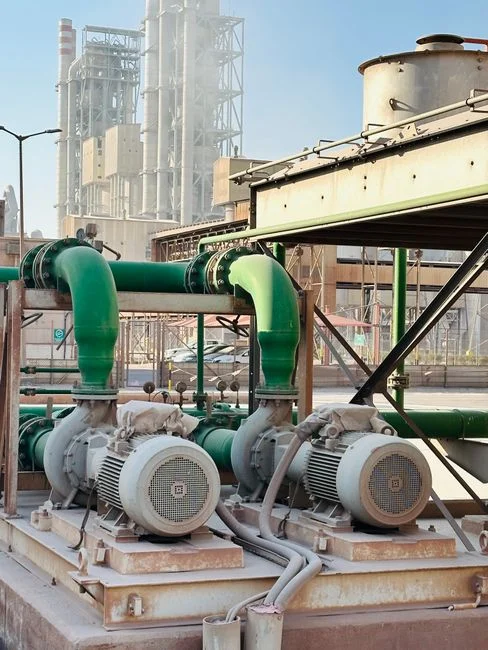
The receiving route must be identified before the discharge-treatment train is sized: municipal sewer, permitted direct discharge, another authorized treatment facility or on-site reuse. Obtain current written requirements from the relevant Guatemalan authority and receiving utility. The supplied research provides no Guatemala City numeric permit table, sewer rate, permit fee or discharge limit, so those values must not be assumed.
Characterize discharge volume, pH, TDS or conductivity, suspended solids, metals, treatment chemicals, temperature and any locally regulated parameters. Apply the checklist from Water Utility Report, updated 2026-04-14: determine discharge volumes, expected chemistry, pretreatment requirements and whether the local wastewater system has assessed cumulative load.
Construction fill-and-flush water remains a separate approval workstream. E&E News reports that Loudoun Water requires testing before this water enters the treatment plant, independently verifies the results and has sometimes required disposal at an appropriate facility. That U.S. practice does not establish a Guatemala City rule, but it demonstrates why construction discharge should not be folded into the operational blowdown permit.
For a surface-water route, include thermal discharge in the review because cooling-loop temperature can add a separate compliance concern. The pretreatment-compliance comparison for industrial facilities near Solon is a transferable reference for separating chemistry, pretreatment and receiving-capacity questions, not a source of Guatemalan limits.
The approval sequence should be: identify the receiving route; obtain written criteria; sample each discharge stream; determine whether pretreatment and cumulative-load review are required; and only then freeze the discharge design basis. If no acceptable route exists, return to reuse or concentrate-management alternatives before procurement.
Compare treatment options and budget benchmarks
Modular filtration plus reuse equipment is the baseline candidate for smaller and mid-sized systems when sewer acceptance and water quality permit reuse. Genesis Water Technologies (2026) describes modular 100–300 GPM blowdown treatment systems as suitable for many enterprise and colocation facilities. This is a transferable sizing reference, not a Guatemala City flow requirement.
HydropureWater’s Zapopan guide (2026) gives order-of-magnitude benchmarks of $50,000–$200,000 for typical side-stream filtration and $250,000–$500,000 installed for a 50,000 GPD RO skid. The same source gives RO operating cost of $1.50–$3.00 per 1,000 gallons. These are not Guatemala City quotations. They exclude site-specific engineering, energy, labor, chemicals and disposal costs unless explicitly included by the source scope.
Partial or full ZLD should be escalated only when discharge is prohibited, alternative supply is unavailable, or the concentrate-management comparison supports it. The supplied research establishes no Guatemala City discharge restriction, so ZLD should not be assumed at preliminary design. Conversely, an RO skid should not be assumed either: the end use, stream chemistry, flow and discharge route determine the minimum defensible treatment scope.
The business case should compare total avoided cost across water, wastewater, disposal, chemical and operating consequences. Review the industrial wastewater treatment cost guide for benchmark structure, then obtain a local landed and operating cost for each shortlisted route.
| Option | Transferable benchmark | Budget treatment for Guatemala City |
|---|---|---|
| Side-stream filtration | $50,000–$200,000 for typical installation, HydropureWater Zapopan guide, 2026 | Request local equipment, civil, installation and operating quotation |
| RO skid | $250,000–$500,000 installed for 50,000 GPD; $1.50–$3.00 per 1,000 gallons operating cost, HydropureWater Zapopan guide, 2026 | Do not treat as a site estimate; price site feed, recovery, energy and concentrate handling |
| Modular blowdown treatment | 100–300 GPM system range, Genesis Water Technologies, 2026 | Size from measured Guatemala City blowdown, not facility rating alone |
| Partial or full ZLD | Escalation depends on discharge and residual-management constraints | Obtain utility, hauling, evaporation and disposal inputs before budget approval |
Issue a site-specific procurement package
Issue the water balance, source-water analysis, blowdown analysis, chemical inventory, discharge route, utility correspondence and intended reuse-water envelope as bidder attachments. A supplier should not begin with a predetermined skid and then fit the design around it.
Require guarantees for flow, feed-water envelope, recovery, permeate or treated-water quality, availability, utility consumption, membrane or media life and control-system scope. Ask for comparable operating references and documentation of recovery at the site’s actual CoC target, as recommended for membrane-based packages in HydropureWater’s Zapopan guide (2026). Membrane and filter elements can be compared separately through RO and UF membrane and filter-element options.
Require a performance guarantee based on the measured Guatemala City source-water profile rather than a generic recovered-water claim. Reserve final sizing until the authority and receiving utility have confirmed the discharge or sewer-acceptance route.
For supplier review, check the proposed mass balance, chemical list, pretreatment sequence, control narrative, membrane warranty conditions, concentrate route, utility requirements, commissioning acceptance tests and excluded site costs. A compliant bid should explain why every treatment step is necessary for the intended discharge or reuse envelope.
Frequently Asked Questions
What wastewater and cooling blowdown treatment does a data center in Guatemala City, Guatemala need?
It needs a stream-specific treatment plan covering cooling-tower blowdown, construction fill-and-flush water, domestic sewage and other commissioning or process discharges. The final train depends on measured chemistry, intended reuse, receiving route and written sewer or permit conditions. The supplied research does not establish a Guatemala City design or numeric discharge limits, so equipment selection requires local analysis and authority confirmation.
Does every Guatemala City data center need an RO system?
No. RO is relevant when dissolved solids must be reduced for a controlled cooling-makeup envelope. Filtration, softening, UF, disinfection or physical separation may be sufficient for other routes, subject to measured chemistry. A buyer should request the proposed mass balance, reuse specification and discharge criteria rather than accept a standard skid package by default.
How much should wastewater and cooling blowdown treatment cost?
The available benchmarks are not local quotations. HydropureWater’s Zapopan guide (2026) gives $50,000–$200,000 for typical side-stream filtration, $250,000–$500,000 installed for a 50,000 GPD RO skid and $1.50–$3.00 per 1,000 gallons for RO operating cost. A Guatemala City buyer should request an installed quotation and operating estimate based on measured flow, source-water chemistry, recovery, energy, chemicals, labor and concentrate disposal.
What should be checked before selecting a treatment supplier?
Check operating references, guaranteed recovery at the site’s CoC target, feed and treated-water envelopes, membrane warranty conditions, control scope, utility demand, availability and concentrate management. The buyer should also obtain written confirmation from the relevant authority and receiving utility before final sizing. Further process context is available in the comparison of cooling blowdown treatment process options for a Volgograd data center, but that guide does not supply Guatemala City requirements.