Start with the cooling configuration and water balance
An Amravati data center needs treatment designed around its actual cooling configuration, water balance and discharge route—not a generic data center ETP. Closed-loop systems may mainly produce leakage, maintenance and sanitary wastewater, while evaporative towers produce concentrated blowdown containing dissolved salts, suspended solids, biocides and corrosion inhibitors. Treatment should first remove site-specific contaminants and protect cooling equipment, then route recovered water to an approved use such as cooling makeup or another process demand. Because conventional RO commonly reaches 75–80% recovery before scaling limits, silica, hardness and concentrate disposal must be evaluated during pilot testing.
The first engineering question is therefore not “Which unit process is best?” It is “Which streams does this facility actually produce?” A closed-loop liquid system may have small leakage and maintenance flows, while an evaporative or hybrid system adds concentrated blowdown. Domestic sewage remains a separate stream and should not be blended into a cooling-water treatment basis without deliberate design. RO reject also needs its own destination because it concentrates the dissolved fraction removed by the membranes.
The Indian industry source by Sharad Agarwal, posted in 2025 on LinkedIn, states that closed-loop systems require an initial 3,000–10,000 litres per MW for pipe filling, followed by 100–1,000 litres per MW per year for leakage and maintenance. Those values describe closed-loop service, not an Amravati design allowance. The same source reports that closed-loop approaches remained a minority of installed capacity but were becoming the fastest-growing segment in new AI blocks. Confirm whether the project is new-build or retrofit, which cooling system is actually installed, and whether future IT loads will change the thermal architecture or flow profile.
Build a metered water balance around makeup, evaporation, blowdown, leakage, maintenance drainage, RO permeate, RO concentrate, reclaimed-water demand and final discharge. IDE’s 2026 industry article uses a 100 MW facility with up to 2 million litres of daily water use only as an illustration; it is not an Amravati sizing input. The data center water recycling for cooling guide provides the wider design context.
| Stream | First question for the Amravati project | Treatment implication |
|---|---|---|
| Closed-loop cooling leakage and maintenance drainage | Which coolant and additives are present? | Leak recovery or controlled disposal; specialist handling may be required. |
| Evaporative cooling blowdown | What are the measured flow, cycles of concentration and salt profile? | Potential pretreatment, RO and reuse after end-use qualification. |
| Sanitary wastewater | Is there a separate sewer route? | Separate biological and solids treatment basis. |
| RO reject | Where can the concentrate go? | Blend, further treatment or controlled disposal assessment. |
Characterize each stream before selecting treatment
Evaporative cooling blowdown must be characterized as a concentrated, chemically treated cooling-water stream rather than as generic wastewater. The June 2026 Commercial Water Lab review, which cites Saha’s 2026 University of Georgia Extension report, identifies dissolved minerals and salts, biocides, corrosion inhibitors and suspended matter among possible constituents. Sampling should therefore cover conductivity and TDS, pH, total and calcium hardness, silica, TSS, chlorides, sulfate, alkalinity, temperature, and residual cooling chemicals.
For closed-loop liquid cooling, record the coolant chemistry and whether refrigerant or PFAS-containing fluids could be present. Commercial Water Lab’s 2026 review warns that direct-liquid and immersion coolants may require specialized handling. This check should occur before a leakage stream is assumed suitable for mechanical recovery, dilution or cooling reuse.
RO reject needs a separate profile of conductivity, hardness, silica, chloride and sulfate. A high-conductivity reject may be unsuitable for blending, but conductivity alone does not resolve hardness or scaling risk. Sanitary wastewater should be characterized independently for COD, BOD, TSS, ammonia, pH and pathogens; combining it with cooling blowdown can obscure both the biological load and the concentrate-management problem.
The design basis must cover variability rather than one convenient sample. Test across operating seasons, cooling modes and representative IT loads, then repeat sampling while treatment and reuse systems are operating. Establish the receiving stream’s limits first. Genesis Water Technologies’ 2026 guide gives a general cooling-water target of 500–1,500 mg/L TDS and a suspended-solids limit of 10–25 mg/L for most cooling towers. These are initial screening targets, not substitutes for the project’s own makeup-water specification or the chemistry approved for Amravati.
Use the regional data center blowdown treatment planning guide to structure the sampling brief, while keeping its climate-specific conclusions separate from Amravati’s source water and discharge conditions.
| Parameter | Why it controls the decision | Required project evidence |
|---|---|---|
| Flow and cycles of concentration | Defines hydraulic load and concentration severity. | Metered blowdown, makeup and measured CoC. |
| TDS, hardness, silica, chloride and sulfate | Controls RO recovery, scaling and concentrate chemistry. | Representative laboratory analyses across operating modes. |
| TSS and turbidity | Determines pretreatment and membrane-fouling risk. | Filterable and non-filterable solids results. |
| Coolant, biocide and inhibitor residuals | Controls reuse compatibility and chemical treatment. | Chemical inventory and residual measurements. |
| COD, BOD, ammonia and pathogens | Separates sanitary treatment requirements from cooling streams. | Site-specific sanitary wastewater analysis. |
Match the contaminant to the treatment step
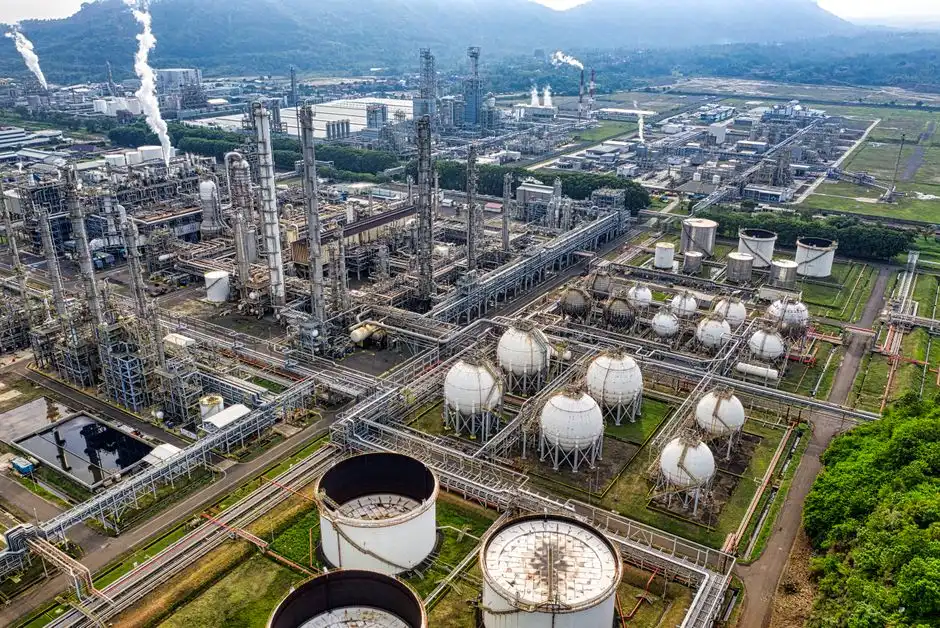
Cooling-water treatment should remove contaminants in the order that protects downstream equipment. Suspended solids, colloids and particles come first because they can foul membranes, instruments and cooling distribution systems. Chemical residuals and hardness or silica treatment follow only where the feed analysis and selected recovery justify them.
Ultrafiltration is appropriate where reliable solids removal is a priority. HydropureWater’s ultrafiltration pretreatment for data center wastewater uses 0.03-micron PVDF membranes, accepts feed turbidity up to 300 ppm, and provides automatic backwash and air scour without chemical cleaning. Those are catalog parameters, not a guarantee of the Amravati duty: fouling potential, peak flow and feed chemistry still require verification.
Industrial RO is appropriate when dissolved-solids removal is needed to meet the selected reuse specification. HydropureWater’s industrial RO system for cooling blowdown reuse is rated for recovery rates up to 95%, but the achievable site recovery must be projected from TDS, calcium hardness, silica, temperature, antiscalant strategy and recovery assumptions. IDE’s 2026 article reports that conventional brackish-water RO is often limited to 75–80% recovery before scaling becomes unmanageable. A catalog maximum is therefore not an operating guarantee.
Disinfection is a separate, risk-based decision after the required filtration and before reuse where microbial control is necessary. Filtration alone does not establish complete reuse suitability. Similarly, automatic chemical dosing should follow confirmation of the target chemistry, residual requirement and downstream compatibility; dosing without an end-use specification can simply transfer contaminants into the concentrate.
| Treatment step | Primary function | Design condition |
|---|---|---|
| Filtration or UF | Remove solids, colloids and particulates. | Required before RO or where the reuse specification limits TSS. |
| RO | Remove dissolved salts and produce lower-TDS permeate. | Projected recovery is below site-specific scaling limits. |
| Disinfection | Control microbiological risk. | Defined by the reuse destination and cooling-system control plan. |
| Chemical dosing | Adjust pH, residual or treatment chemistry. | Feed chemistry, residual target and material compatibility confirmed. |
For high-salinity reuse, the advanced alternative described by IDE in 2026 combines conservative local RO, controlled precipitation of silica and calcium salts in a fluidized-bed reactor, and brine returned to a primarily sodium-chloride loop. The resulting pellets require a managed solid-residue route. This is specialist chemistry design with project-specific validation, not a default packaged train. The relevant modular equipment is reviewed in the cooling blowdown characterization and pretreatment guide.
Choose the reuse route by value and discharge risk
Four routes provide a practical progression: controlled discharge after treatment; reuse for washdown or another non-contact service; reuse as cooling makeup; and recovery through an advanced high-recovery train. The correct route depends on the stream’s chemistry, the receiving process, concentrate disposal, plant scale and available operating expertise.
Do not transfer a hyperscale treatment design automatically to a smaller Amravati facility. Genesis Water Technologies’ 2026 article states that capital cost per gallon treated can be 3–4 times higher at smaller scales and that operating complexity can exceed available staff expertise. Its modular reference for immediate deployment is a 100–300 GPM blowdown-treatment system; this is a planning reference from the cited research, not a recommended capacity for the Amravati site.
The investment case should include freshwater avoided, discharge avoided, chemical savings, equipment reliability and exposure to water-service disruption. Genesis Water Technologies’ 2026 analysis argues that utility savings alone understate the value of avoided discharge and operating costs. In parallel, the water-risk value should reflect the facility’s actual supply and discharge constraints rather than generic scarcity claims.
| Route | Treatment intent | Procurement check |
|---|---|---|
| Controlled discharge | Meet the receiving authority’s acceptance criteria. | Obtain written discharge limits and confirm concentrate route. |
| Non-contact reuse | Recover water for washdown or similar service. | Verify chemistry, storage, distribution and application suitability. |
| Cooling makeup | Recover water to reduce freshwater demand and blowdown. | Define TDS, suspended solids, scaling, microbiology and control limits. |
| Advanced high recovery | Increase recovery while controlling scale and concentrate. | Require specialist chemistry design, pilot evidence and residue handling. |
IDE’s 2026 example of approximately 95% recovery and about 1 mg/L permeate silica is a proof-of-concept reference from an industrial installation that blended blowdown from 20 hybrid cooling towers with RO brine and manufacturing wastewater. It is not guaranteed performance for a data center. Amravati procurement should require validation against the actual mixed-stream chemistry.
Size the system from measured flows, not rule-of-thumb demand
Size pretreatment and treatment from the maximum design blowdown or wastewater flow plus the required operating margin, not from average daily water use. Average demand can conceal short-duration discharge events, emergency dumps and maintenance drains that determine vessel, pump and membrane capacity.
Calculate blowdown from measured cycles of concentration. Genesis Water Technologies’ 2026 article gives the blowdown ratio as 1 divided by CoC minus 1: at 4 CoC, blowdown equals 25% of makeup; at 6 CoC, it equals 20%. Actual blowdown can exceed theoretical calculations by 15–30% because of unmeasured losses and emergency dumps, according to the same 2026 source. A measured water balance is therefore more defensible than importing a generic blowdown percentage.
Require membrane projections using feed TDS, hardness, silica, temperature and the proposed recovery. IDE’s 2026 article reports that conventional brackish-water RO commonly reaches 75–80% recovery before scaling limits become controlling. The project should not promise a higher site recovery until feed-specific testing establishes the scaling envelope.
Use a representative trial lasting 3–6 months, or the longest practical operating window, as proposed in Genesis Water Technologies’ 2026 guidance. Test membrane recovery, scaling tendency, chemical demand, permeate quality, concentrate handling and operation across representative loads. The trial should also examine automatic controls and whether the treatment train creates a bottleneck when cooling demand rises.
| Procurement parameter | Required submission |
|---|---|
| Design flow | Measured peak flow, operating margin and complete water balance. |
| Recovery | Site-specific projection supported by feed chemistry and pilot results. |
| Permeate and concentrate | Quality projections, chemical use and confirmed handling route. |
| Equipment performance | Duty, materials, controls, redundancy, cleaning and maintenance requirements. |
| Acceptance test | Flow, quality, recovery, energy, chemicals, cleaning frequency and residue handling. |
Technical schedules can then be developed around the appropriate RO and UF membrane elements and the required treatment valves, filters and media, without preselecting a configuration before the pilot results are available.
Plan compliance, monitoring and operations
The discharge route must be fixed before the effluent specification is finalized. Commercial Water Lab’s June 2026 review describes direct environmental discharge and municipal sewer routes under United States NPDES and pretreatment frameworks. Those examples explain the type of acceptance criteria to request, but their numerical limits or legal frameworks do not apply to Amravati. The project must instead confirm the applicable Maharashtra and local-authority requirements with the relevant authorities.
Obtain written acceptance criteria from the receiving authority or sewer operator. Local requirements for pretreatment, pH, TDS, temperature and chemical additives may determine whether discharge, dilution, reuse or further treatment is feasible. Seek confirmation for both the main effluent and the concentrate or sludge route; a technically reusable stream can still fail commercially if its residue has no accepted destination.
Install online or frequent laboratory monitoring for flow, conductivity, pH, hardness, silica, TSS, the selected biocide residual and differential pressure across membrane or filter stages. Microbial control may require UV treatment or an ozone-based disinfection system, selected against the actual reuse risk rather than added as an unspecified safety measure.
Control logic should follow cooling demand, permeate quality and concentrate-handling capacity. Trend cycles of concentration, actual recovery, membrane cleaning frequency, chemical consumption and reuse performance. This operating data becomes the basis for adjusting pretreatment, dosing and recovery during commissioning and after handover.
Frequently Asked Questions
What treatment does a data center in Amravati need for closed-loop cooling wastewater?
It needs a source-specific treatment train based on the actual coolant chemistry, leakage and maintenance flows, sanitary wastewater, and intended reuse route. A closed-loop system may not generate concentrated cooling-tower blowdown at all. The supplier should first receive the cooling configuration, coolant inventory, measured flows, representative analyses and written end-use or discharge criteria before selecting UF, RO, disinfection or dosing.
How should capital cost be compared with operating savings?
Compare the complete cost of ownership, not the utility-saving claim alone. Ask each bidder to price equipment, installation, membranes, chemicals, energy, testing, operator time, cleaning, redundancy, replacement parts, concentrate handling and disposal. The available research does not provide an Amravati-specific tariff or quotation, so the buyer must obtain site-based utility prices and current local supplier quotations before approving a budget.
What should be measured before sizing the treatment system?
Measure makeup, evaporation, blowdown, leakage, maintenance drainage and RO flows; record cycles of concentration; and sample TDS, hardness, silica, chlorides, sulfate, TSS, pH, temperature and treatment-chemical residuals across operating modes. The sizing basis should be the maximum design flow plus the required operating margin, with membrane recovery supported by feed chemistry and pilot data rather than a catalog maximum.
How should a supplier be selected for pilot testing and compliance risk?
Select a supplier that can demonstrate relevant pilot data, identify its design assumptions, provide recovery and concentrate projections, and accept measurable acceptance criteria. The supplier should also define automatic controls, redundancy, cleaning frequency, chemical consumption, monitoring and operator training. Amravati-specific capacity and regulatory limits are absent from the source research; require them through local quotation, representative testing and written consultation with the receiving authority.
For a comparable regional planning workflow, see the data center wastewater treatment procurement guide, while treating its location-specific assumptions as separate from Amravati.