What treatment does a Frankfurt data center actually need?
A Frankfurt data center generally needs to treat cooling-tower blowdown as a concentrated wastewater stream containing dissolved salts, suspended solids, residual biocides, corrosion inhibitors and antiscalants before sewer discharge, surface-water discharge or reuse. The required train depends on actual water chemistry, discharge destination and reuse target. A practical starting point is solids removal by DAF or multimedia filtration, followed by UF where membrane protection is needed and RO where high-quality cooling makeup is required. Blowdown commonly represents 20–40% of intake, so a measured water balance and local permit review should precede equipment sizing.
The treatment scope should be separated into five streams: cooling-tower blowdown, other industrial process wastewater, domestic sewage, firewater or test water, and wastewater associated with direct liquid or immersion cooling. A combined plant can obscure the contaminant profile and compliance route of each stream. The data-center cooling blowdown treatment guide provides a useful reference for that separation, while the cooling-blowdown treatment methodology supports the broader engineering workflow.
The central design question is not whether a Frankfurt site uses evaporative cooling. It is what contaminants are present, where the water will go and what quality is required at the point of reuse. Blowdown is concentrated by evaporation and may carry dissolved minerals, suspended matter and residual cooling chemicals. The Germany-focused high-tech industrial wastewater guide is relevant when comparing site-specific pretreatment with a generic treatment train.
Facility size alone cannot select the system. The design brief needs measured flow, temperature, conductivity, pH, suspended solids, hardness, silica and the inventory of cooling chemicals. It also needs the proposed reuse endpoint and the legally applicable discharge route. The Frankfurt objective is to reduce freshwater demand and discharge risk without compromising cooling-loop control or transferring the pollution into a new concentrated residual stream.
Build the Frankfurt cooling-water balance before selecting equipment
Water consumption is the water permanently removed through evaporation or incorporation into products; water usage is broader because it includes water withdrawn, used and returned after treatment. Genesis Water Technologies defines WUE as annual site water usage divided by IT equipment energy. It cites 0.47 gallons, or 1.8 litres, per kWh as an example and 0.47–0.65 gallons, or 1.8–2.5 litres, per kWh as industry averages, while warning that WUE does not expose discharge quality or reuse potential.
Cycles of concentration determine the theoretical purge from a recirculating cooling system. Using the source relationship blowdown ratio = 1 ÷ (CoC − 1), 4 CoC gives a calculated blowdown ratio of 25%, while 6 CoC gives 20%. The reduction is therefore 5 percentage points, or 20% of blowdown volume—not 50%. Genesis Water Technologies also reports that blowdown commonly leaves as 20–40% of intake and that actual blowdown can exceed theoretical calculations by 15–30% because of unmeasured losses and emergency dumps.
These figures are engineering benchmarks, not Frankfurt site facts. The site calculation should begin with measured makeup, evaporation and blowdown flows:
Measured evaporation = measured makeup + measured blowdown − measured discharge
Any imbalance identifies unmeasured or unmetered water movements before a vendor sizes the treatment plant. Reconciliation must also distinguish once-through cooling, process losses, sampling, laboratory use, cleaning and emergency dumps. It is not defensible to label returned water as consumption or assume that a calculated concentration cycle describes actual operations.
| Engineering input | Why it matters | Measurement or record required |
|---|---|---|
| Makeup water | Defines purchased-water volume and the reference concentration for cycles of concentration. | Site meter and makeup-water quality record |
| Blowdown | Sets the hydraulic duty and the potentially recoverable reuse stream. | Continuous flow meter, including emergency-dump periods |
| Evaporation | Separates true consumption from water returned to the site or environment. | Calculated through the reconciled water balance and reviewed against operating data |
| Conductivity, pH and suspended solids | Provides the baseline indicators for concentration, chemical condition and solids loading. | Representative sampling and online conductivity at minimum |
| Cycles of concentration | Supports operating control and makes theoretical and measured blowdown comparable. | Makeup and circulating-water conductivity under defined steady conditions |
Instrumentation should reconcile the balance seasonally and during peak cooling operation. The site should also log cooling load, outdoor conditions, control setpoints, chemical dosing and blowdown triggers. Metering components and valves should then be specified around the verified duty, as discussed in the reference to water-treatment parts, valves and filter media.
Characterize blowdown against the Frankfurt discharge route
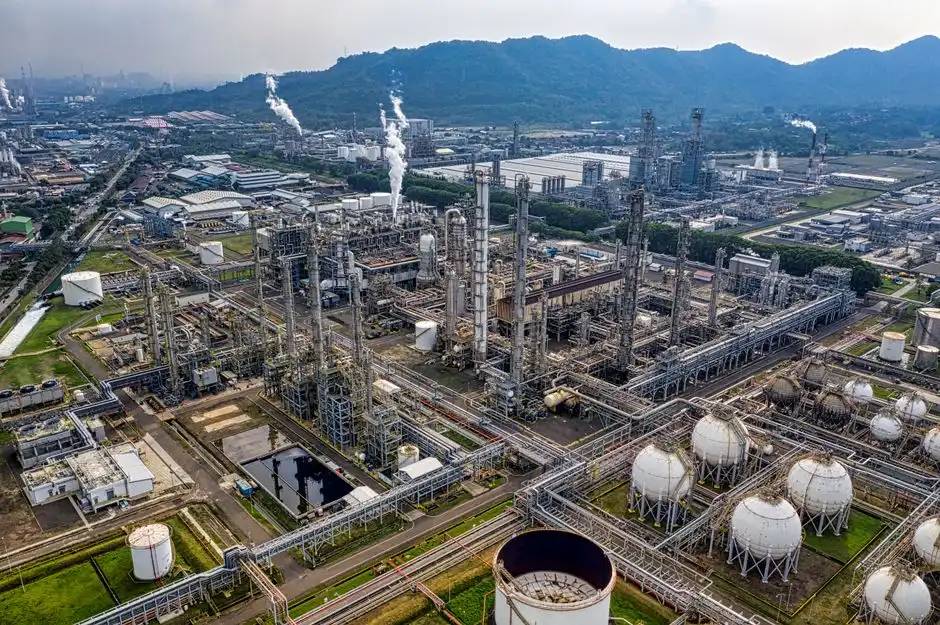
The discharge route sets the design basis before equipment selection. Direct discharge to receiving water, municipal sewer discharge and on-site reuse create different concentration, temperature and monitoring obligations. The supplied research does not establish Frankfurt-specific limits, so no numerical discharge limit should be inserted into the design basis without confirmation from the competent authorities and the relevant sewer operator.
| Route | Primary design questions | Information to obtain before equipment selection |
|---|---|---|
| Direct discharge to receiving water | Are temperature, salinity, biocides, antiscalants and other constituents acceptable? | Applicable direct-discharge permit, receiving-water conditions, temperature limits and monitoring requirements |
| Discharge through municipal sewer pretreatment | Does the stream require site pretreatment, and does the sewer operator accept the proposed flow and chemistry? | Municipal sewer discharge conditions, pretreatment requirements, sampling protocol and residual-disposal route |
| On-site reuse | Can the treated water meet the receiving system’s chemistry, biological and temperature needs? | Reuse destination, required quality, maximum recovery, cross-connection controls and operations responsibility |
The minimum analysis request should cover conductivity and TDS, pH, temperature, suspended solids, total hardness, calcium, silica, chloride and sulfate. It should also identify residual oxidizing and non-oxidizing biocides, corrosion inhibitors and antiscalants. Where direct or immersion cooling is present, the operator must disclose any PFAS-containing fluid so that it receives a separate waste-management assessment; it should not be assumed to enter the ordinary cooling-blowdown train.
Temperature is a separate constraint where thermal discharge is possible. North Carolina State University reported in 2026 that even a slight temperature increase in river water can push aquatic organisms beyond biological limits and reduce oxygen levels. The same source states that blowdown can elevate salinity and carry biocides or antiscalants into waterways. These findings justify treating temperature and chemical content as independent design parameters, but they do not supply Frankfurt permit limits.
The procurement file should therefore request the applicable direct-discharge permit, municipal sewer conditions, local pretreatment rules and any site-development or water-use obligations. Temperature, concentration and reuse end use should be written into the permit and design basis before a unit is selected. The broader pretreatment framing in the fabricated-metals pretreatment guide illustrates why limits must be tied to an actual authority and receiving system, while the high-tech industrial wastewater guide supports a route-led specification.
Match each treatment objective to the right equipment train
DAF, multimedia filtration, UF and RO solve different problems. A DAF unit is the candidate for bulk removal of suspended solids, colloidal material, oil and grease and floatable contamination. HydropureWater states that its DAF systems cover 4–300 m³/h across 13 models; the required duty must still be confirmed against measured flow, solids loading and operating availability rather than nominal capacity alone.
Multimedia filtration is the candidate for reducing suspended solids and turbidity before sensitive downstream processes. HydropureWater states that its multimedia filters can achieve SDI values suitable for downstream RO membrane protection. UF is the stronger barrier when the objective is bacteria, colloid and suspended-solids removal before RO or another sensitive process. HydropureWater’s hollow-fiber UF systems use 0.03-micron PVDF membranes, operate from 2,000 to 40,000 L/h, accept up to 300 ppm turbidity and include automatic backwash and air scour.
RO is the candidate for low-salt permeate used as cooling makeup or another high-quality reuse. HydropureWater specifies recovery rates up to 95% for its industrial RO systems. That equipment capability is not the same as the sustainable recovery of the feed. IDE reports in 2026 that conventional brackish-water RO commonly plateaus at 75–80% recovery before scaling becomes unmanageable.
| Treatment objective | Candidate equipment | Design checks |
|---|---|---|
| Remove bulk solids, colloids and floatables | DAF system for cooling-tower blowdown pretreatment | Measured hydraulic and solids duty; chemical demand; sludge handling; availability |
| Reduce turbidity and suspended solids before sensitive treatment | Multimedia filter | SDI target; media selection; backwash demand; evidence of downstream compatibility |
| Remove bacteria, colloids and suspended solids | Hollow-fiber ultrafiltration system | Feed turbidity; transmembrane-pressure strategy; backwash and air-scour scope |
| Produce low-salt cooling makeup or other high-quality reuse | Industrial reverse-osmosis system | Recovery at actual feed chemistry; scaling; pretreatment; concentrate route; permeate quality |
Reverse-osmosis scaling must be handled from the full feed chemistry. IDE identifies silica, calcium carbonate and calcium sulfate as sparingly soluble salts that can constrain cooling-tower blowdown recovery. A conventional RO train therefore needs verified chemistry control and, where justified, dedicated antiscalant or precipitation management. IDE’s industrial brine-desalter case operated at around 95% recovery and reduced silica in the permeate to about 1 mg/L, but that result belongs to a blended industrial feed with controlled salt precipitation; it cannot be transferred to Frankfurt blowdown without matching chemistry and a designed solids route.
Residual management is part of the treatment objective, not an afterthought. Higher recovery reduces the liquid discharge volume but can concentrate the rejected stream. DAF produces sludge, media filtration produces backwash waste, UF generates backwash streams, and RO produces concentrate. Each residual needs a confirmed destination and acceptance criteria. A hollow-fiber ultrafiltration system can protect RO, but it cannot remove dissolved salinity that determines whether permeate is fit for the intended reuse.
Turn the treatment train into a phased Frankfurt implementation plan
Implementation should proceed from measurement to proven operation rather than from a nominal treatment concept to full-scale purchase.
- Phase 1 — Establish the baseline. Install metering for makeup water, blowdown and evaporation-related operating data. Monitor conductivity, pH and suspended solids, then reconcile the measured water balance across normal and peak cooling periods.
- Phase 2 — Optimize existing cooling. Repair leaks, remove unnecessary once-through cooling, review premature blowdown triggers and improve self-cleaning filtration. Genesis Water Technologies identifies these as pre-capital measures that can reduce losses and avoid treatment capacity driven by avoidable suspended solids.
- Phase 3 — Characterize the route and chemistry. Confirm the cooling chemical program, scaling risk, discharge destination, pretreatment requirements and intended reuse quality. Add automatic chemical-dosing equipment only after the required dose, control response and interaction with the treatment train have been established.
- Phase 4 — Pilot representative treatment. Trial DAF, multimedia filtration, UF or RO on the actual blowdown. Record membrane scaling, cleaning demand, control response, recovered-water quality and residual handling. A rotary mechanical bar screen may have a role in a solids-handling train, but it should not be included without a defined screen-selection and solids-duty basis.
- Phase 5 — Deploy and integrate. Right-size modular equipment, connect automatic controls and metering, and admit treated water only into applications approved after water-quality verification. Include bypass, containment, cleaning access and a route for off-spec water.
The sequence matters because higher cycles of concentration can reduce blowdown but also increase fouling, microbiologically influenced corrosion and scaling risk. Genesis Water Technologies warns that biological and scaling risks rise above 5–6 CoC without advanced treatment. For smaller facilities, the same source describes modular 100–300 GPM blowdown treatment systems as practical and notes that hyperscale RO and ion-exchange systems can impose disproportionate capital and staffing burdens.
Governance should assign one owner for the water balance, one for permit compliance and one for equipment operation. The pilot report should also identify seasonal variation, because cooling demand and makeup chemistry can change the hydraulic and scaling load. The objective is not merely a successful analytical result; it is a train that remains compliant, operable and economically justified under the site’s measured operating envelope.
Build the business case with verified Frankfurt inputs
The business case must compare total operating cost, not capital expenditure against freshwater savings alone. Avoided costs can include freshwater intake, wastewater disposal, chemical consumption, energy, labour, maintenance and residual disposal. The quantities and prices used in the model must come from Frankfurt invoices, utility tariffs, sewer charges and verified operating data.
Genesis Water Technologies provides an illustrative method: in its 15 MW example, 60% recovery, equal to 3 million gallons per year, against $200,000 of capital expenditure produces a 6.7-year simple payback. The source says this can improve to 3–5 years when broader avoided costs are included. This is not a Frankfurt estimate. It excludes site-specific capital cost, water price, sewer charge, permit constraints, recovery yield and residual handling.
| Cost or risk category | Input a bidder must state | Verification required |
|---|---|---|
| Capital and delivery | Equipment scope, foundations, utilities, installation, commissioning and schedule assumptions | Supplier quotation and site survey |
| Performance | Guaranteed treated-water quality, availability, recovery, energy use and exclusions | Defined feed envelope and acceptance test |
| Operating resources | Media or membrane life, cleaning frequency, chemicals, operator hours and control scope | Supplier support plan and lifecycle model |
| Residuals | Sludge, backwash and concentrate quantities, handling route and disposal cost | Written acceptance from the residual handler |
| Compliance and schedule | Delivery, commissioning and permit-support assumptions | Permit conditions and contractual responsibility matrix |
| Reuse value | Freshwater and wastewater savings based on measured recoverable flow | Frankfurt tariff and reconciled site water balance |
Lifecycle proposals should identify RO and UF membrane or filter-element requirements, consumables, control boundaries, redundancy, operator workload and performance exclusions. A bid that guarantees recovery without defining feed chemistry is not comparable. A bid that excludes permit support, concentrate handling or cleaning chemicals may shift risk rather than reduce it.
Supplier selection should also include compliance-risk allocation. The buyer needs a clear interface between the supplier, operator, Frankfurt permitting authority and sewer authority. Each bidder should state its delivery, commissioning and permit-support assumptions; no generic lead time should be used without a site-specific schedule.
Frequently Asked Questions
What does a Frankfurt data center need for cooling blowdown treatment?
It needs a treatment train selected from measured blowdown chemistry, flow, temperature and the chosen destination. Start with the discharge route and reuse target, then use DAF or multimedia filtration for solids, UF where a stronger barrier is required, and RO only where low-salt permeate adds value.
How should cooling blowdown treatment be sized?
Size it from measured blowdown flow, feed chemistry, required recovery and reuse quality—not IT load alone. The baseline must also account for variability, off-spec water, residual handling and the intended availability of the complete train.
How much should blowdown treatment cost?
No Frankfurt price can be inferred from the supplied research. Request a site-specific offer and total-cost model using verified make-up and disposal prices, sewer charges, energy, chemicals, labour, maintenance, recovery and residual-disposal costs. The Genesis Water Technologies payback example is a method illustration, not a local quotation.
Which discharge requirements must be checked before selecting equipment?
Obtain the applicable direct-discharge permit, municipal sewer conditions, local pretreatment requirements and any site-development or water-use obligations. The supplied research does not provide Frankfurt-specific limits, so equipment should not be finalized against assumed concentration, temperature or chemical thresholds.
How should a supplier be selected?
Compare feed-water compatibility, achievable recovery at the actual chemistry, concentrate and sludge handling, treated-water guarantees, controls, operator requirements, redundancy and permit interfaces. Also require each bidder to state its delivery, commissioning and performance-exclusion assumptions.
Related Equipment
- DAF system for cooling-tower blowdown pretreatment — specifications, capacity range, and technical data