
Joinville Regulatory Baseline: CONAMA 430, CASAN, and ANA Requirements
Compliance for a Joinville data center wastewater system is governed by a three-tiered regulatory framework that dictates discharge limits, water withdrawal rights, and environmental licensing. CONAMA Resolution 430/2011 provides the federal baseline for surface water discharge, requiring pH 5–9, BOD ≤ 60 mg/L, COD ≤ 150 mg/L, TSS ≤ 50 mg/L, oils and grease ≤ 20 mg/L, and temperature ≤ 40°C. If your facility discharges blowdown concentrate into the Rio Cubatão basin, these parameters are non-negotiable. For sewer discharge, the local ordinance from CASAN (Companhia Águas de Joinville) is typically more stringent, often requiring pH 6–10, BOD ≤ 300 mg/L, COD ≤ 600 mg/L, TSS ≤ 300 mg/L, oils and grease ≤ 100 mg/L, and sulfides ≤ 2 mg/L, alongside mandatory flow metering.
The ANA (Agência Nacional de Águas) grant for Rio Cubatão basin withdrawals mandates rigorous water balance reporting. New industrial projects exceeding 50 m³/h must demonstrate specific consumption benchmarks and proof of reuse targets. Finally, the Santa Catarina state environmental license (IMA) requires an effluent monitoring plan, a contingency strategy for power loss, and verified treatment redundancy for critical streams. Failure to align your P&ID with these specific jurisdictional limits often results in permit delays during the environmental licensing process.
| Parameter | CONAMA 430 (Surface) | CASAN (Sewer) |
|---|---|---|
| pH | 5.0 – 9.0 | 6.0 – 10.0 |
| BOD (mg/L) | ≤ 60 | ≤ 300 |
| COD (mg/L) | ≤ 150 | ≤ 600 |
| TSS (mg/L) | ≤ 50 | ≤ 300 |
| Oils & Grease (mg/L) | ≤ 20 | ≤ 100 |
Six Wastewater Streams: Flow, Chemistry, and Disposal Route in Joinville
Effective management of data center wastewater requires segregating streams at the source to prevent cross-contamination and simplify downstream treatment. Adhering to these segregation protocols ensures that each stream undergoes the appropriate treatment path before discharge or reuse.
Cooling tower blowdown, characterized by 1,200–6,000 mg/L TDS and 10–50 mg/L TSS, is the primary candidate for reuse. Humidifier bleed, while low in TDS (< 200 mg/L), contains higher temperatures (35–45°C) and is best blended into cooling makeup. Sanitary sewage, following occupancy shifts (150–250 L/person/day), requires biological treatment like MBR or WSZ to meet CASAN limits.
Glycol-loop drainage and generator coolant are hazardous streams that require segregated storage. Glycol drainage (quarterly, 20–40% propylene glycol) requires off-site disposal or specialized anaerobic pretreatment, while generator coolant (annual, heavy metals) must be routed to a licensed hazardous waste collector. Eyewash waste is sporadic and low volume, requiring pH neutralization before potential sewer discharge.
| Stream | Volume/Frequency | Primary Chemistry | Disposal Route |
|---|---|---|---|
| Cooling Blowdown | 500–600 kL/day | 1,200–6,000 TDS, 10–50 TSS | Reuse via UF/RO |
| Humidifier Bleed | 5–15% of makeup | Low TDS, 35–45°C | Blend to Makeup |
| Glycol Drainage | 10–50 kL/event | 20–40% Propylene Glycol | Off-site/Contracted |
| Sanitary Sewage | 150–250 L/person/day | 250–400 BOD, 500–800 COD | MBR to Sewer |
Treatment Train Selection by Stream: Equipment Specs for Brazilian Conditions
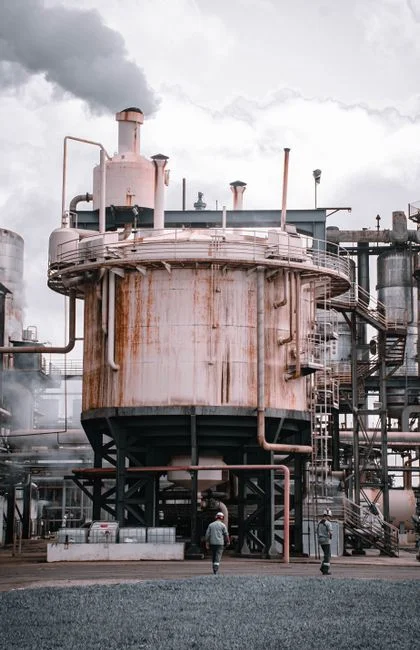
Treatment train selection must account for the specific ionic load and the need for high-quality permeate suitable for reuse. For cooling blowdown, the train consists of equalization (sized for 2× peak hour), multi-media filtration to achieve turbidity < 3 NTU, and softening to reduce hardness below 1 mg/L CaCO₃. This protects the HydropureWater hollow-fiber UF skids (0.03 µm PVDF, 2,000–40,000 L/h), which provide the necessary SDI < 3 for the HydropureWater industrial RO systems (95% recovery, PLC-controlled). Sanitary streams are managed via submerged PVDF flat-sheet MBR systems, which yield effluent quality compliant with the most stringent CASAN requirements.
Glycol drainage management utilizes DAF (Dissolved Air Flotation) systems to handle batch loads of 50 kL/event. All chemical dosing, including antiscalants for RO and pH adjustment, must be PLC-controlled to ensure consistent water quality despite grid instability. Redundant dosing configurations are required to maintain performance during power dips.
| Stream | Process Sequence | Key Equipment |
|---|---|---|
| Cooling Blowdown | EQ → Media Filter → Softener → UF → RO | UF/RO Skids, Dosing |
| Sanitary Sewage | Screening → MBR → Disinfection | PVDF MBR, Dosing |
| Glycol Drainage | EQ → DAF → Storage | Micro-bubble DAF |
Cooling Blowdown UF+RO Sizing for Joinville's Subtropical Climate
Sizing for Joinville must account for the high variability in makeup water quality driven by the subtropical climate. The blowdown ratio is calculated as 1/(CoC-1); for a 4 CoC operation, blowdown is 25% of makeup, dropping to 20% at 6 CoC. The wet season (October–March) in Santa Catarina can spike makeup turbidity to 500 NTU, necessitating multimedia filters sized for a conservative 30 m/h surface loading. Equalization tanks must be sized for 1.5–2× the peak hourly blowdown to buffer the 12–24-hour grid instability events common in this region.
RO recovery is limited by silica scaling; with Rio Cubatão makeup silica at 15–25 mg/L, standard RO systems typically plateau at 85% recovery. To exceed this, a two-pass system or a fluidized bed crystallizer is required to prevent precipitation. Permeate quality targets of < 50 µS/cm conductivity and < 1 mg/L silica are essential for reuse at 6–8 CoC, which reduces blowdown volume by approximately 14–16% compared to baseline operations.
2026 Brazilian CAPEX/OPEX Indicators for Data Center Wastewater Trains
Total installed CAPEX for a 100 MW facility's blowdown UF+RO train (30 m³/h feed) ranges from R$ 5.1M to R$ 6.5M in 2026. This includes equipment costs of R$ 3.8–4.5M plus 35–45% for installation and civil works. OPEX for this system is estimated at R$ 0.018–0.028/L, covering energy (R$ 0.008–0.012/L), chemicals, and membrane replacement. By avoiding freshwater costs (R$ 8–12/m³) and sewage tariffs (R$ 6–9/m³), the facility can achieve a simple payback of 1.5–2.8 years on the UF+RO investment.
Import duties on membrane elements (NCM 8421.21) are low at 0–2%, while skid-mounted systems (NCM 8421.29) incur 10–14%. Specifying local assembly of skids remains the most effective strategy to optimize import costs while ensuring compliance with Brazilian technical standards.
Procurement Checklist: Specifying for Brazilian Compliance and Delivery
Procurement specifications must include standardized requirements to ensure accurate vendor comparison.
- Compliance Certification: Require specific CONAMA 430 and CASAN compliance performance guarantees for each treatment train.
- Materials of Construction: Specify 316L SS for high-pressure RO piping and epoxy-coated carbon steel for EQ tanks to withstand Joinville's coastal humidity.
- Automation: Demand PLC-based controls with Modbus TCP/Profinet for BMS integration and Portuguese-language HMI.
- FAT Protocol: Request a Factory Acceptance Test (FAT) covering UF integrity testing (PDT) and RO salt passage verification at design recovery.
- Spare Parts: Include a 2-year spare parts kit (10% UF modules, 5% RO elements) priced in BRL with a 12-month validity period.
- Lead Time: Account for 16–20 weeks for UF/RO skids, plus 4–6 weeks for customs and potential INMETRO certification.
Frequently Asked Questions
What is the typical CAPEX for a cooling blowdown UF+RO system for a 100 MW data center in Joinville?
The total installed cost for a 30 m³/h feed system (22.5 m³/h permeate) is approximately R$ 5.1–6.5M in 2026. This includes equalization, multimedia filtration, softening, UF/RO skids, controls, and commissioning. Procurement teams should request line-item breakdowns for local civil works versus imported membrane skids to optimize the tax burden.
Which Brazilian regulations govern cooling tower blowdown discharge to Rio Cubatão vs. CASAN sewer?
Surface discharge to Rio Cubatão is regulated by CONAMA 430/2011, which sets strict limits on BOD (≤ 60 mg/L) and COD (≤ 150 mg/L). Sewer discharge is governed by CASAN ordinances, which allow higher organic loads (BOD ≤ 300 mg/L, COD ≤ 600 mg/L) but require mandatory flow metering and adherence to local industrial discharge permits.
How do I size equalization tanks for Joinville's seasonal rainfall and power instability?
Size tanks for 1.5–2× the peak hourly blowdown flow to account for grid instability. For a 600 kL/day average (approx. 25 m³/h), the peak is ~35 m³/h, requiring a 50–70 m³ tank. In Joinville’s wet season, where rainfall may increase makeup turbidity and blowdown frequency, a 100 m³ capacity is recommended if site footprint allows.
Can HydropureWater supply a skid-mounted UF+RO system pre-approved for CONAMA 430 compliance?
HydropureWater provides UF and RO skids designed to meet high-quality reuse standards, which inherently satisfy the baseline for CONAMA 430 discharge. Final compliance is site-specific; we provide the necessary FAT data, performance guarantees, and technical documentation required for your environmental consultant to secure the IMA/CASAN discharge license.