What a Cebu data center must treat before designing the plant
A Cebu data center needs separate treatment for cooling-tower blowdown, humidifier bleed, glycol-loop drainage, staff sewage, generator coolant and eyewash waste, because their flow, chemistry and disposal routes differ. The supplied 100 MW reference uses approximately 2,000,000 L/day of makeup water and produces 500–600 kL/day of blowdown at four cycles of concentration. Those values are a design example, not a universal plant size. The final train depends on measured source-water chemistry, sewer access, the discharge limit assigned by EMB Region 7, the intended reuse and typhoon-season power resilience.
Do not size the wastewater plant from IT megawatt capacity alone. Staff sewage follows occupancy and shift changes; glycol drainage follows drain events; generator coolant and eyewash waste are small but separately regulated streams. HydropureWater’s 2026 Cebu reference characterizes cooling blowdown at 1,200–6,000 mg/L TDS, 10–50 mg/L TSS and pH 7.5–9.0, but these values must be checked against site samples because makeup chemistry, cooling chemicals and operating cycles affect the load.
The engineer’s first deliverable should be a twelve-month water balance covering makeup, evaporation, blowdown, humidifier bleed, drains and sewage, supported by hourly flow and water-quality trends. Add peak electrical demand, planned headcount expansion, expected IT load and the MCWD supply profile. The broader 2026 industrial water reuse and ROI analysis explains why measured consumption and discharge quality should be separated from intake-based efficiency metrics.
| Stream | Reference condition | Engineering boundary |
|---|---|---|
| Cooling-tower blowdown | 500–600 kL/day at four cycles in the 100 MW reference | Separate flow, chemistry and disposal study; test TDS, TSS, pH, conductivity, hardness, silica, alkalinity, biocide and inhibitor. |
| Humidifier bleed | Warm and lower in TDS than tower blowdown | Route by measured conductivity; do not assume it can enter the RO feed. |
| Glycol-loop drainage | Event-driven flow containing glycol | Segregate, treat and meter before any authorized discharge route. |
| Staff sewage | Occupancy-driven flow with peak shift change | Design sanitation capacity for the peak, not the daily average. |
| Generator coolant and eyewash waste | Small, separately regulated volumes | Establish the licensed waste route before general plant design. |
How cycles of concentration change blowdown volume and reuse targets
Cycles of concentration are the ratio of dissolved-solids concentration in circulating water to that in makeup water, so a cooling system at four cycles concentrates dissolved minerals fourfold. Genesis Water Technologies’ 2026 data-center water-efficiency article gives the relationship as blowdown ratio = 1 ÷ (CoC − 1). That produces a 25% blowdown ratio at four CoC and 20% at six CoC: the change reduces blowdown by 20%, not 50%.
Higher cycles should therefore be treated as an operating decision, not a free conservation measure. Genesis Water Technologies identifies equipment fouling, microbiologically influenced corrosion and scaling as risks that increase above approximately five to six CoC without advanced treatment. Chemical-control optimization, side-stream filtration, physical treatment or a larger reuse train must be compared using measured site performance, reagent consumption and downstream treatment demand.
Water conservation and permit compliance are separate tests. Reducing intake does not establish that the recovered water meets cooling-tower makeup chemistry, sewer conditions or discharge requirements. The project team should compare the freshwater saved with membrane pretreatment, scaling control, energy, labor, concentrate disposal and the reliability penalty of running the cooling system at higher cycles.
| Concentration cycles | Calculated blowdown ratio | Procurement implication |
|---|---|---|
| 4 CoC | 25% | Baseline for the supplied Cebu reference; assess fouling, biocide and inhibitor load before reuse. |
| 6 CoC | 20% | 20% less blowdown than at four CoC, but Genesis Water Technologies identifies rising fouling, corrosion and scaling risk above approximately five to six CoC without advanced treatment. |
Choose the discharge route from Cebu water, sewer and permit conditions
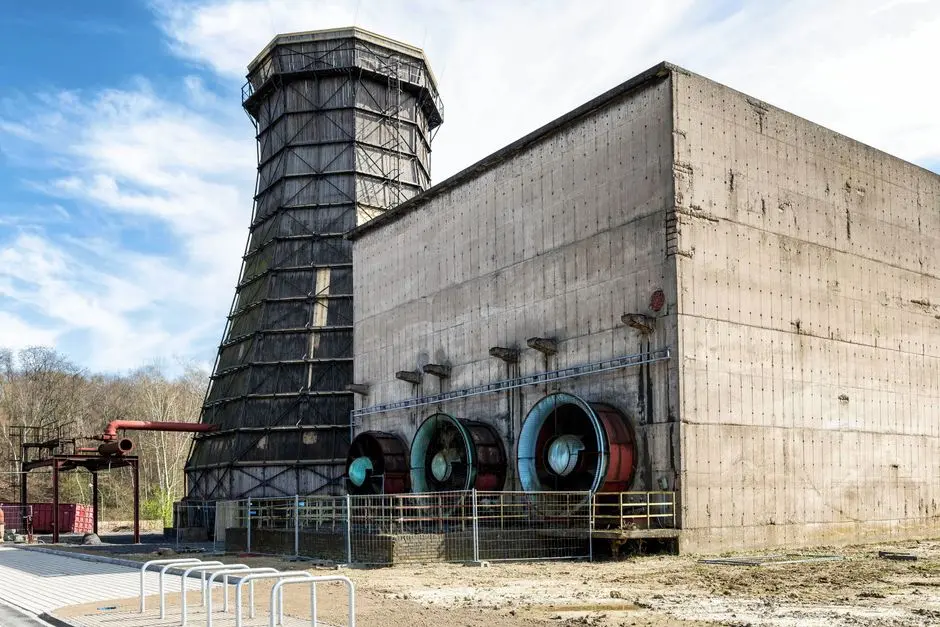
DENR DAO 2016-08 and DAO 2021-19 provide the cited framework, but EMB Region 7 must establish the applicable receiving-water classification and site-specific permit conditions. HydropureWater’s 2026 Cebu reference identifies pH 6.0–9.0 and temperature at or below 40 °C within the compliance envelope, together with BOD, TSS, TDS, oil and grease, total chromium and residual chlorine. Numerical limits depend on the receiving-water class, so a supplier’s general “compliant system” statement is not a permit basis.
For a discharge above 30 m³/day, HydropureWater’s 2026 Cebu reference states that pre-registration with EMB Region 7 and quarterly self-monitoring are required. The buyer should also obtain confirmation of MCWD sewer capacity, industrial discharge terms, the proposed receiving point and the method for handling any bypass. Sewer availability and the assigned TDS limit determine whether recovery is technically and commercially justified.
Use single-pass RO where sewer capacity and freshwater economics support reuse. Consider second-pass RO or nanofiltration when the EMB-assigned limit requires further TDS removal. Evaluate MVC-assisted recovery or zero liquid discharge where discharge is prohibited or tightly constrained. HydropureWater’s reference routes RO concentrate to sewer under the applicable route or to MVC processing, with off-site disposal or another approved alternative; it specifically excludes uncontrolled surface-drain discharge.
| Permit and site condition | Preferred route | Decision check |
|---|---|---|
| Sewer capacity available and assigned limits support the intended effluent | Single-pass RO reuse with controlled concentrate disposal | Obtain sewer confirmation, assigned limits, tariff and receiving-water classification. |
| Assigned TDS limit requires additional removal | Second-pass RO or nanofiltration | Confirm the numerical limit and residual chlorine treatment with EMB Region 7. |
| Discharge is prohibited or tightly constrained | MVC-assisted recovery or ZLD | Require a site-specific water, salt, energy and solid-waste balance before committing capital. |
Build a treatment train that protects membranes and makes reuse reliable
A defensible P&ID starts with stream segregation, equalisation and pretreatment; the cooling line then uses filtration, softening, UF and RO, while glycol and sanitary flows remain independent until their authorized destinations are defined. Equalisation must buffer changing cooling loads, control chemistry and prevent an uncontrolled discharge during the 12–24-hour typhoon-season power dips described in HydropureWater’s 2026 Cebu reference. Verify that storage against the facility’s actual 24-hour loss and co-occurring rainfall event rather than accepting the reference duration as a universal design.
- Filter approximately 1–5% of circulation flow through a 10–25 µm self-cleaning spiral screen, with the stated reference objective of reducing cooling-basin TSS below 10 mg/L. Confirm suspended-solids loading, screen extract handling and redundancy.
- Install multimedia filtration where sediment or colloidal loading requires it. Follow with a weak-acid cation softener and antiscalant dosing for the supplied MCWD hardness of 120–180 mg/L as CaCO₃. Test silica and Langelier Saturation Index behavior with site water before fixing the pretreatment train.
- Protect RO with a hollow-fiber ultrafiltration system. HydropureWater’s 2026 reference specifies PVDF membranes at 10–30 psi, 0.01–0.1 µm performance and 90–95% UF recovery with automatic backwash. The automatic chemical dosing system should coordinate antiscalant, biostat and pH control with feed and return-line measurements.
- Use an industrial reverse osmosis treatment system for blowdown-to-makeup reuse. The reference gives 150–400 psi, 10–50 mg/L TDS permeate and 50–85% recovery. Interlock on permeate conductivity and divert off-spec water before it can enter the cooling tower.
- Route humidifier bleed under conductivity control. The reference treats it as warm and biologically active, with TDS below 500 mg/L, but site testing must determine whether direct makeup or RO-feed routing is appropriate.
- Segregate at least one full glycol-drain event in a dedicated tank, use carbon adsorption and meter the effluent. HydropureWater’s reference permits sewer blending only below 50 mg/L residual glycol; otherwise it calls for licensed off-site disposal. Generator coolant and eyewash waste remain separate licensed-waste streams.
- Treat staff sewage with a packaged MBR wastewater treatment system or a buried A/O system sized for peak shift change. HydropureWater’s 2026 reference uses 50–80 L/person/day, BOD 200–400 mg/L, TSS 200–300 mg/L and NH₃-N 20–40 mg/L as its stated basis.
Compare reuse, discharge and zero-liquid-discharge economics
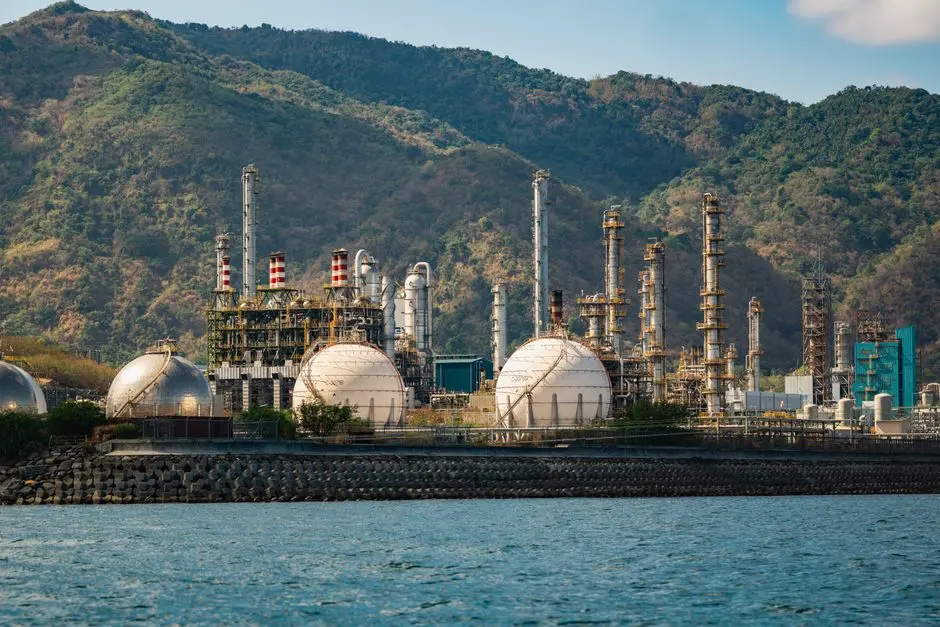
Single-pass RO is the least treatment-intensive reuse option in HydropureWater’s 2026 Cebu benchmark, but it still carries membrane replacement, energy, chemical and concentrate-handling costs. The reference case is 50,000 GPD installed for USD 250,000–500,000, with operating cost of USD 1.50–3.00 per kgal treated including energy, chemicals and membrane replacement. It also identifies USD 80,000–150,000 for incremental second-pass RO or nanofiltration where the assigned TDS limit requires further removal.
ZLD is a materially different capital and operating commitment. HydropureWater’s 2026 reference gives USD 3–8 million capital expenditure and USD 5–15 per kgal operating cost for 95–99% recovery, with crystallized solids hauled off site. Those figures should screen options, not establish a bid price. The site must support the assumed water, salt and energy balance, and the buyer must price utilities, labour, redundancy, maintenance and residual handling.
The reference’s 75% reuse scenario for 600 kL/day of blowdown leaves approximately 150 kL/day of concentrate and reduces freshwater demand by approximately 450 kL/day. Recheck that calculation against the actual cycles, operating profile and contractual definition of recovery before using it in a business case.
| Reference scenario | Capital benchmark | Operating benchmark | Residual obligation |
|---|---|---|---|
| Single-pass RO | USD 250,000–500,000 for 50,000 GPD | USD 1.50–3.00 per kgal treated, including energy, chemicals and membrane replacement | Concentrate requires the permitted sewer or another approved route. |
| Second-pass RO or NF polishing | Incremental USD 80,000–150,000 | Site-specific input required | Adds a high-salinity residual stream. |
| ZLD with MVC and crystallisation | USD 3–8 million | USD 5–15 per kgal for 95–99% recovery | Crystallized solid waste requires off-site handling. |
Specify equipment, controls and acceptance tests for a Cebu procurement package
A procurement package should define performance by flow, quality, controls and resilience rather than by a nominal recovery percentage. Each bidder should state design, operating and peak flows; bypass conditions; equalisation volume; recovery definition; permeate quality; concentrate destination; utility demand; treatment-stage redundancy; and the boundary for sludge, brine and concentrate handling. Bidders should also provide membrane-replacement assumptions, critical spares, operator training, remote monitoring and local service support.
For controls, require PLC-operated UF backwash, automatic RO sequencing, conductivity interlock, permeate diversion and chemical-dosing interlocks. Ask each supplier to state the power rating, duty/standby philosophy, generator interface and safe shutdown sequence. Facility electrical, hazardous-area and access requirements must be confirmed during engineering review rather than inferred from the process diagram.
Acceptance testing should verify measured flow, treated-water quality, automatic transitions, membrane-cleaning capability, backup-power response and documented operating procedures. For typhoon resilience, require a documented response to the 12–24-hour power dips in HydropureWater’s 2026 Cebu reference, including storage, generator power, shutdown and accidental-discharge controls. A supplier can describe its ultrafiltration backwash system, chemical-control functions and critical membrane elements, but acceptance should depend on the complete plant under agreed test conditions.
| Procurement item | Required bidder response | Acceptance evidence |
|---|---|---|
| Design basis | Operating and peak flow, storage basis, bypass and recovery definition | Approved water balance and witnessed flow test. |
| Controls | UF backwash, RO sequencing, conductivity interlock, permeate diversion and dosing interlocks | Simulated power loss, alarm and automatic-transition test. |
| Resilience | Generator interface, storage response and safe shutdown plan | Documented ride-through test or site-specific commissioning procedure. |
| Operations | Training, spares, membrane replacement, monitoring and service support | Completed training records, manuals and service documentation. |
Frequently Asked Questions
What should a Cebu buyer request before selecting a wastewater treatment price?
Request a site-specific quotation based on measured flow and water quality, the MCWD water tariff, confirmed sewer capacity, the EMB Region 7 permit basis, equalisation requirements and the selected reuse or disposal route. HydropureWater’s 2026 benchmarks are suitable for preliminary commercial screening, but they do not establish a guaranteed price or permit approval.
How should a data center size cooling blowdown treatment?
Size from measured makeup, evaporation and blowdown flows, operating peaks, contingency and the facility’s future expansion—not from IT megawatt capacity alone. Obtain twelve months of operating history, then verify the balance with site samples. This approach also prevents staff sewage or glycol drainage from being buried inside the cooling-blowdown load.
What determines the cost difference between single-pass RO, polishing, MVC and ZLD?
Compare total cost of ownership, not equipment price alone. Include concentrate disposal, energy, chemicals, labour, preventive maintenance, membrane replacement, redundancy and residual handling. A polishing stage adds treatment but also creates a more concentrated residual; ZLD reduces liquid discharge while requiring a site-supported energy, salt and solid-waste balance.
Does a treatment train guarantee an EMB Region 7 discharge permit?
No. DAO 2016-08 and DAO 2021-19 form the cited regulatory framework, while the applicable numerical limit and permit path depend on the receiving-water classification and site-specific EMB Region 7 requirements. Equipment selection does not replace the discharge permit, receiving-water assessment, self-monitoring or operator training.