Why Cebu Data Centers Need a Dedicated Liquid-Waste Strategy in 2026
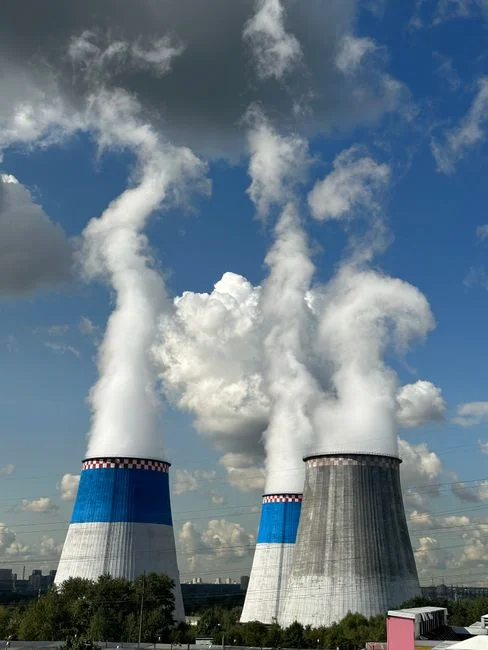
A 100 MW AI-ready facility in Cebu draws roughly 2,000,000 L/day of makeup water, of which 25–30% leaves the cooling tower as blowdown at 4 cycles of concentration — that is 500–600 kL/day of concentrated waste from a single mid-size site (per S2 and S3 field benchmarks). On Metro Cebu Water District (MCWD) supply, which runs 120–180 mg/L hardness as CaCO₃ and exhibits seasonal salinity creep in the Mactan aquifer, that blowdown carries 1,200–6,000 mg/L TDS plus residual oxidising biocide and phosphonate scale inhibitor (per S2). Typhoon-season power dips extending 12–24 hours further lengthen evaporation cycles and concentrate the basin, so storage and equalisation must be sized against a worst-case ride-through, not a normal weekday load. A February 2026 TNFD case study flagged salts, heavy metals, and biocides in mismanaged cooling-tower blowdown (CTBD) as a community-water-quality risk, which is why EMB Region 7 is tightening discharge-volume reviews for new builds above 30 m³/day. The practical scope therefore covers four liquid streams — cooling-tower blowdown, humidifier bleed, glycol-loop drainage, and staff sewage — all of which must converge on a single pretreatment line with separate polishing branches.
What Cebu Operators Must Discharge to Sewer or Reuse On-Site
The process design basis starts with a stream-by-stream inventory, because CTBD alone does not define the load on the MCWD sewer or the receiving-water classification. CTBD is the dominant stream by volume and carries the highest dissolved-solids load, while humidifier bleed is warmer and biologically active but lower in TDS. Glycol-loop drainage is small in volume but high in BOD/COD and must be segregated, and staff sewage flows follow occupancy rather than IT load. Generator coolant and eyewash waste add small, regulated hazardous volumes that are normally hauled off-site by a licensed Philippine contractor (per S5). The table below summarises the four operating streams the engineer should carry into a Cebu mass balance.
| Stream | Typical flow (Cebu 100 MW reference) | Key chemistry | Discharge pathway |
|---|---|---|---|
| Cooling-tower blowdown (CTBD) | 500–600 kL/day at 4 COC | TDS 1,200–6,000 mg/L; TSS 10–50 mg/L; Ca/Mg, silica, alkalinity; residual oxidising biocide; phosphonate inhibitor; pH 7.5–9.0 | RO permeate to cooling-tower makeup; concentrate to sewer under DAO 2016-08 or to MVC |
| Humidifier bleed-off | 20–60 kL/day | Warm (30–40 °C), low TDS (<500 mg/L), biologically active | Bypasses cooling tower, joins RO feed after UF or routes to CT makeup on conductivity interlock |
| Glycol-loop drainage | 1–5 kL/event | Ethylene or propylene glycol 20–40% v/v, elevated BOD/COD | Segregation tank → carbon adsorption → sewer if <50 mg/L glycol, otherwise haul off-site |
| Staff sewage | 50–80 L/person/day, peak shift change | BOD 200–400 mg/L, TSS 200–300 mg/L, NH₃-N 20–40 mg/L | Packaged MBR or buried A/O plant → disinfection → irrigation or sewer |
| Generator coolant / eyewass waste | 0.1–1 kL/event | Trace metals, glycol traces | Licensed Philippine hazardous-waste hauler (per S5) |
Philippine Compliance Basis: DAO 2016-08, DAO 2021-19 and EMB Region 7
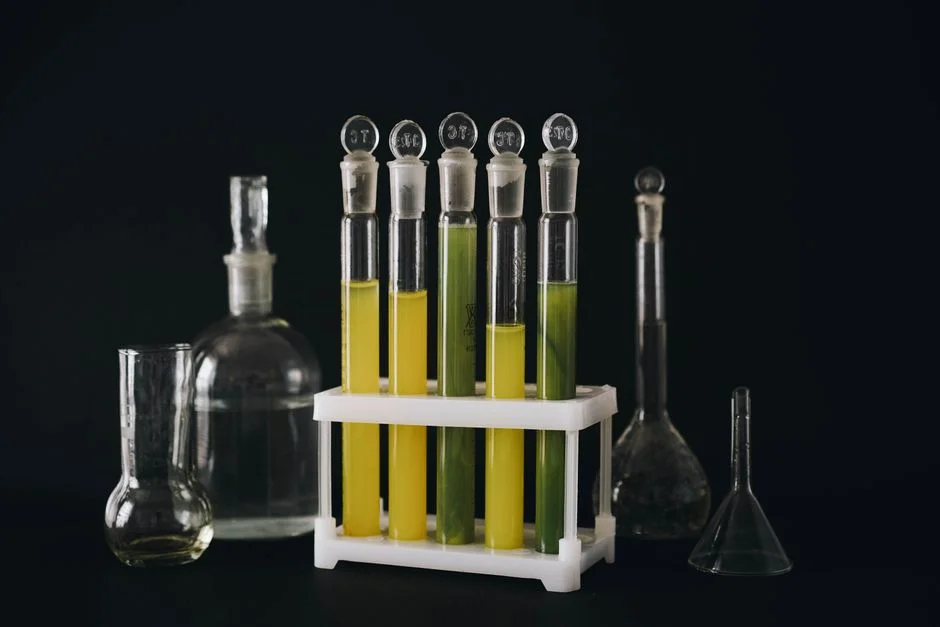
DENR DAO 2016-08 (Water Quality Guidelines and General Effluent Standards) sets the national effluent floor, and DAO 2021-19 layered in updates for new industrial sectors; together they govern every discharge to a Class C inland or Class SC marine receiving water in Central Visayas. The exact numerical limits depend on the receiving-water classification assigned by EMB Region 7, but the parameter envelope is fixed: BOD, TSS, TDS, oil and grease, total chromium, residual chlorine, pH 6.0–9.0, and temperature ≤40 °C. MCWD operates a separate industrial discharge tariff, and any site discharging more than 30 m³/day must pre-register with EMB Region 7 and submit a self-monitoring report on the standard quarterly cadence. The typhoon-season bypass risk is real — equalisation tanks and treatment ponds must be sized for a 24-hour power loss and a co-occurring rainfall event without uncontrolled discharge. The table below maps the parameters the engineer must hold on the compliance matrix.
| Parameter | DAO 2016-08 envelope (Class C inland / Class SC marine) | Design implication for Cebu |
|---|---|---|
| pH | 6.0–9.0 | Trim with NaOH/H₂SO₄ on RO reject and on CT return |
| BOD | ≤30–50 mg/L (receiving-water dependent) | Packaged MBR polishing on sanitary stream |
| TSS | ≤50–100 mg/L | Multimedia filter and UF on CTBD line |
| TDS | Site-specific; some receiving waters <1,500 mg/L | RO required; MVC if local TDS limit tight |
| Total chromium | ≤0.5–2.0 mg/L | Avoid legacy chromate inhibitors in CT chemistry |
| Residual chlorine | ≤0.5–1.0 mg/L | Sodium bisulphite quench before sewer or before RO |
| Temperature | ≤40 °C | Cooling tower return + equalisation to stay below ceiling |
| Oil & grease | ≤5–10 mg/L | Coalescer on generator-area drains |
Recommended 2026 Treatment Train for Cebu Cooling-Tower Blowdown
The treatment train is a five-step sequence that can be lifted directly into a P&ID. Step 1 is side-stream filtration on 1–5% of circulation flow through a 10–25 µm self-cleaning spiral screen, which drops suspended solids below 10 mg/L before the RO feed and protects downstream membranes (per S2). Step 2 is a weak-acid cation softener plus an antiscalant dose — Cebu's 120–180 mg/L CaCO₃ hardness and moderate silica push the design toward softening plus brackish-water RO rather than nanofiltration alone. Step 3 is a hollow-fiber ultrafiltration system with 0.01–0.1 µm PVDF membranes operating at 10–30 psi, achieving 90–95% recovery with automatic backwash (per S2). Step 4 is the main industrial reverse osmosis system at 150–400 psi, producing 10–50 mg/L TDS permeate at 50–85% recovery, which is blended back to the cooling tower as makeup (per S2 and S3). Optional Step 5 is mechanical vapor compression on the RO concentrate to push overall recovery to 95–98% with distillate below 10 mg/L TDS, the right call when the Cebu sub-basin is water-stressed or the EMB TDS limit is tight (per S2). The multi-media filter ahead of the softener protects both the cation resin and the UF rack from sediment excursions. RO concentrate plus any segregated glycol stream is hauled off-site or sent to deep-well injection under a DAO 2016-08 variance, never to a surface drain.
| Stage | Equipment | Operating envelope | Output / KPI |
|---|---|---|---|
| 1. Side-stream filtration | Self-cleaning spiral screen, 10–25 µm | 1–5% of circulation flow | TSS <10 mg/L at cooling-tower basin |
| 2. Softening + antiscalant | Weak-acid cation + chemical dosing skid | Dose tuned to Langelier Saturation Index | Ca/Mg drop; silica scaling risk controlled |
| 3. Ultrafiltration | PVDF hollow-fiber UF, 0.01–0.1 µm | 10–30 psi, 90–95% recovery | SDI<3 to RO feed |
| 4. Reverse osmosis | Brackish-water RO, 2-stage | 150–400 psi, 50–85% recovery | Permeate 10–50 mg/L TDS |
| 5. MVC (optional) | Mechanical vapor compressor | 15–25 kWh/kgal distillate | 95–98% overall recovery, distillate <10 mg/L TDS |
Domestic Sewage, Humidifier Bleed and Glycol: Parallel Treatment Lines
Sanitary flow runs through a packaged MBR system or, for sites with footprint constraints, a buried A/O integrated sewage plant sized for the peak shift change rather than the daily average, then disinfected to meet the BOD and TSS envelope above. Humidifier bleed is warm and low in TDS, so a conductivity interlock lets the operator route it either directly to cooling-tower makeup (below 500 mg/L) or back to the RO feed header through the same UF rack, avoiding a parallel membrane line. Glycol-loop drainage goes to a segregation tank sized for at least one full drain event, then through carbon adsorption; the outlet is metered and blended to sewer only if residual glycol is below 50 mg/L, otherwise it is hauled off-site as a regulated waste. A PLC-controlled chemical dosing skid tied to RO feed and cooling-tower return lines handles antiscalant, biostat, and pH trim in one place, which simplifies both operations and the EMB Region 7 self-monitoring report.
Reuse vs Discharge vs ZLD: A 2026 Decision Framework for Cebu
The right answer depends on three Cebu-specific variables: MCWD potable tariff, available MCWD or Mactan sewer capacity, and the EMB-assigned TDS limit for the receiving water. When the MCWD tariff is high but sewer capacity is available, a 50–85% RO reuse train is the lowest CapEx option — a 50,000 GPD system installs for USD 250K–500K with OPEX of USD 1.50–3.00 per kgal treated, paying back in 2–4 years on avoided MCWD charges (per S2). When the MCWD sewer is constrained or the EMB TDS limit drops below 1,500 mg/L, add a polishing stage — second-pass RO or nanofiltration — for an incremental USD 80K–150K to bring the discharge inside the limit (per S2). When freshwater cost exceeds roughly USD 4/kgal or discharge is prohibited altogether, zero liquid discharge is the only defensible path: USD 3–8M CapEx and USD 5–15/kgal OPEX for 95–99% recovery, with the crystalliser solid waste hauled off-site (per S2). The table below frames the three Cebu scenarios without picking a winner.
| Scenario | Treatment train | CapEx band (USD) | OPEX band (USD/kgal) | Overall recovery | Trigger to choose |
|---|---|---|---|---|---|
| Coastal colocation, MCWD + sewer available | Side-stream → softener → UF → single-pass RO | 250K–500K (50,000 GPD) | 1.50–3.00 | 50–85% | Lowest first cost, MCWD tariff moderate |
| Inland hyperscale, EMB TDS <1,500 mg/L | Add second-pass RO or NF polishing, NaHSO₃ quench | 330K–650K | 2.00–4.00 | 75–90% | Tight discharge limit, no MVC needed yet |
| Water-stressed edge build, discharge prohibited | RO + MVC + crystalliser (ZLD) | 3M–8M | 5–15 | 95–99% | Freshwater >USD 4/kgal or no permit pathway |
Frequently Asked Questions
What liquid-waste streams does a Cebu data center have to manage in 2026?
Four operating streams: cooling-tower blowdown (500–600 kL/day at 4 cycles for a 100 MW site), humidifier bleed, glycol-loop drainage, and staff sewage, plus small regulated volumes of generator coolant and eyewash waste (per S2 and S5). All must be inventoried separately because the receiving-water classification under DAO 2016-08 differs by stream.
What are the binding effluent limits for a Cebu data center?
DENR DAO 2016-08 sets the national floor; DAO 2021-19 layers in new-sector updates. The fixed envelope is pH 6.0–9.0, temperature ≤40 °C, plus BOD, TSS, TDS, oil and grease, total chromium, and residual chlorine, with exact values set by the EMB Region 7 receiving-water classification.
How much does a 50,000 GPD CTBD reuse train cost in the Philippines?
USD 250K–500K installed for a single-pass RO train, with OPEX of USD 1.50–3.00 per kgal treated including energy, chemicals, and membrane replacement (per S2). Add USD 80K–150K for second-pass polishing, or step up to a USD 3–8M ZLD system with MVC and crystalliser if discharge is prohibited.
Can a Cebu site reuse 75% of its cooling-tower blowdown?
Yes — a 50–85% RO recovery rate is standard, with 10–50 mg/L TDS permeate blended back as cooling-tower makeup (per S2 and S3). At 75% reuse, a 600 kL/day blowdown shrinks to roughly 150 kL/day of concentrate for sewer or MVC, cutting MCWD freshwater demand by 450 kL/day.