Industrial Wastewater Treatment in Rio de Janeiro: 2025 Engineering Guide with Costs, Compliance & Equipment Selection
Industrial wastewater treatment in Rio de Janeiro requires systems capable of 92–97% COD removal and compliance with Brazil’s CONAMA Resolution 430/2011, which sets strict limits for industrial effluent (e.g., 60 mg/L BOD, 200 mg/L TSS). The city’s $4B privatization (Agea/Igua) targets 90% sewage treatment by 2026, but industrial facilities must deploy specialized equipment—such as DAF systems for FOG removal or MBR for space-constrained sites—to meet these standards. This guide provides 2025 technical specs, cost benchmarks, and equipment selection frameworks for Rio’s industrial sector.
Why Industrial Wastewater Treatment in Rio de Janeiro is Different
CONAMA Resolution 430/2011 mandates that industrial effluent discharged into Rio de Janeiro’s water bodies must not exceed 60 mg/L BOD and 200 mg/L TSS, standards that are significantly more stringent than those applied to municipal sewage. These regulations are enforced with increasing rigor as the state attempts to remediate Guanabara Bay, which currently receives an estimated 18,000 liters of untreated industrial effluent every day, according to 2023 reports from the State Environmental Secretariat (SEMA-RJ). For facility managers, this means that simple primary treatment is no longer sufficient to avoid legal and financial exposure.
The industrial landscape of Rio de Janeiro is concentrated in high-load sectors including the REDUC refinery in Duque de Caxias (petrochemical), Ambev breweries (food processing), and the textile clusters in Nova Friburgo. Each sector presents unique chemical oxygen demand (COD) and total suspended solids (TSS) profiles. For example, textile operations often face high color and heavy metal concentrations, while the food processing sector deals with high organic loads and fats, oils, and grease (FOG) that can exceed 500 mg/L in raw influent.
Geographic and climatic factors also dictate engineering choices in the region. Urban factories in areas like Barra da Tijuca or the Port Zone face extreme space constraints, often requiring technology with a footprint less than 50% of conventional activated sludge systems. Rio’s tropical climate brings heavy rainfall—averaging 2,300 mm per year—which can lead to significant influent dilution. This requires PLC-controlled chemical dosing for pH adjustment and heavy metal precipitation to maintain stable treatment efficiency despite fluctuating hydraulic loads and chemical concentrations.
Industrial Wastewater Treatment Processes for Rio de Janeiro: Technical Specs and Selection Criteria
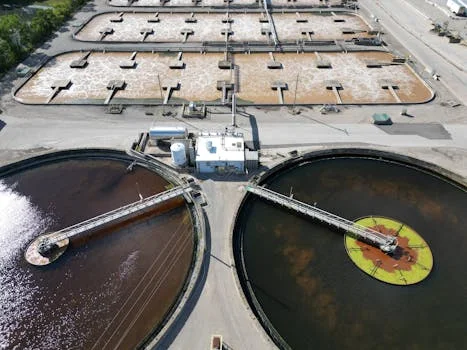
Selecting the appropriate treatment process requires an analysis of influent characteristics against the required discharge limits of SEMA-RJ and INEA. High-performance systems like the Dissolved Air Flotation (DAF) unit are the industry standard for removing non-soluble organics and solids. A DAF system for high-efficiency FOG and TSS removal typically achieves 95%+ removal of oil and grease and 85–90% removal of TSS. These systems operate at flow rates between 4 and 300 m³/h, utilizing micro-bubbles (20-40 microns) to buoy particles to the surface for mechanical skimming, making them ideal for the petrochemical and food processing sectors in Rio.
For facilities requiring high-quality permeate or those with limited real estate, the Membrane Bioreactor (MBR) is the superior choice. An Integrated MBR system for space-constrained industrial sites combines biological degradation with membrane filtration, achieving effluent levels of <10 mg/L BOD and <1 mg/L TSS. Because MBR systems eliminate the need for secondary clarifiers, they offer a 60% smaller footprint than traditional biological systems. This is particularly advantageous for pharmaceutical and textile factories located within Rio’s dense urban periphery.
Chemical pretreatment remains a cornerstone of heavy metal removal and pH stabilization. Automated dosing systems inject coagulants like Polyaluminum Chloride (PAC) at rates of 5–50 mg/L and flocculants such as polyacrylamide at 0.5–2 mg/L. This process ensures that heavy metals precipitate out of solution and that the final effluent maintains a pH between 6.5 and 8.5, as required by local law. For high-purity requirements, Reverse Osmosis (RO) systems can achieve 90–95% water recovery with a permeate conductivity of <10 µS/cm, which is essential for Rio’s growing semiconductor and high-tech manufacturing sectors.
| Technology | Target Industry | Removal Efficiency (COD/TSS) | Footprint Requirement | Key Advantage |
|---|---|---|---|---|
| DAF | Petrochemical, Food & Beverage | 85% COD / 95% TSS | Medium | Superior FOG removal; handles high solids |
| MBR (DF Series) | Textile, Urban Factories | 95% COD / 99% TSS | Low (Compact) | Highest effluent quality; no clarifier needed |
| Chemical Dosing | Metalworking, Mining | N/A (Pretreatment) | Very Low | Precise pH control & metal precipitation |
| RO (JY Series) | Pharmaceutical, Electronics | 99% Dissolved Solids | Medium | Water reuse capability; ultra-pure output |
| Anaerobic Digestion | Pulp & Paper, Breweries | 70–80% COD | High | Biogas production; handles high organic load |
For more detailed comparisons, engineers often reference an MBR vs SBR cost comparison for industrial wastewater treatment to determine if the membrane investment aligns with their long-term operational budget and site limitations.
Compliance Checklist: Meeting Brazil’s CONAMA 430 and Rio de Janeiro’s Local Standards
Compliance in Rio de Janeiro is governed by a dual-layer regulatory framework consisting of federal CONAMA 430/2011 standards and state-level enforcement by the Instituto Estadual do Ambiente (INEA). CONAMA 430 sets the baseline: BOD must be below 60 mg/L, TSS below 200 mg/L, and mineral oils below 20 mg/L (with vegetable oils capped at 50 mg/L). However, for industries discharging into sensitive basins like the Guanabara or Sepetiba bays, SEMA-RJ often mandates a 90% reduction in specific toxic pollutants such as cyanide, phenol, and heavy metals (e.g., Lead < 0.2 mg/L, Chromium < 0.5 mg/L).
To remain compliant, facilities must adhere to the following checklist:
- Monitoring Protocols: Implement continuous monitoring for pH, flow rate, and TSS as per INEA Resolution 89/2014. Periodic sampling for COD and nitrogen is typically required on a weekly or monthly basis.
- Permitting (L.O.): The Operating License (Licença de Operação) must be renewed periodically. This requires submitting detailed engineering reports to INEA that prove the system's ability to handle peak loads.
- Sludge Management: Industrial sludge must be characterized (Class I or II) and disposed of at licensed treatment facilities, with full traceability documentation.
- Emergency Response: Systems must include bypass prevention and containment areas capable of holding 110% of the largest tank's volume in case of failure.
The cost of non-compliance is severe. Under 2023 enforcement data, fines for illegal discharge can reach up to R$50 million. Beyond the financial impact, INEA has the authority to issue immediate "Stop Work" orders, effectively shutting down production lines until a compliant package wastewater treatment plant for Brazilian compliance is installed and verified.
Cost Breakdown: Industrial Wastewater Treatment in Rio de Janeiro (2025 Data)
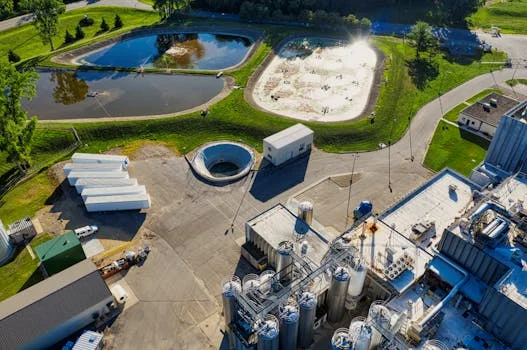
Budgeting for industrial wastewater treatment in Rio requires a clear distinction between Capital Expenditure (CAPEX) and Operational Expenditure (OPEX). For a standard DAF system with a capacity of 50 m³/h, CAPEX typically ranges from R$500,000 to R$2,000,000 depending on the level of automation and materials (e.g., 304 vs 316 stainless steel). OPEX for these systems, including power and chemical consumption, ranges from R$50 to R$150 per cubic meter of treated water.
MBR systems represent a higher initial investment, with costs for a 500 m³/day plant ranging from R$1.2 million to R$5 million. However, the OPEX (R$80–R$200/m³) is often offset by the reduction in footprint and the potential for water reuse in non-potable applications like cooling towers or floor washing. Chemical dosing costs are a variable but significant factor, with coagulants and flocculants costing between R$20 and R$50 per treated cubic meter, while pH adjusters (caustic soda or sulfuric acid) add another R$10 to R$30 per m³.
| System Type | Capacity Range | Estimated CAPEX (BRL) | Estimated OPEX (per m³) | Typical ROI (Years) |
|---|---|---|---|---|
| DAF | 4 – 300 m³/h | R$500K – R$2M | R$50 – R$150 | 3 – 5 Years |
| MBR Integrated | 10 – 2,000 m³/d | R$1.2M – R$5M | R$80 – R$200 | 5 – 7 Years |
| RO System | 2 – 100 m³/h | R$800K – R$3M | R$100 – R$250 | 4 – 6 Years |
| Auto Dosing Unit | Standard | R$150K – R$450K | Chemical Dependant | < 2 Years |
Installation costs in Rio de Janeiro typically add 20–30% to the equipment CAPEX. Factors influencing this include the complexity of retrofitting existing urban sites and the need for specialized civil works to handle Rio’s soil conditions. When calculating ROI, facility managers should factor in the 2025 water utility rates and the avoidance of "Polluter Pays" fines, which often results in a payback period of 3 to 7 years for advanced DAF or MBR installations. Engineers can find more context in a DAF system engineering guide with micro-bubble technology to understand how high-efficiency components reduce long-term OPEX.
Case Study: Petrochemical Wastewater Treatment at REDUC Refinery (Rio de Janeiro)
The REDUC refinery in Duque de Caxias faced a significant challenge in 2024 regarding its effluent discharge into the Guanabara Bay basin. The raw influent was characterized by high COD (1,200 mg/L), significant oil and grease concentrations (150 mg/L), and residual heavy metals, including Chromium at 2 mg/L. Standard gravity separation was failing to meet the 10 mg/L oil and grease limit required by CONAMA 430.
The implemented solution involved a multi-stage approach. First, a two-stage DAF-150 system was installed to handle the primary removal of emulsified oils and suspended solids. This was integrated with an automated chemical dosing unit applying PAC at 30 mg/L to facilitate flocculation. The secondary treatment phase utilized a DF-225 MBR system to polish the effluent and ensure biological oxygen demand remained consistently below 15 mg/L, well within the 60 mg/L legal limit.
The results were immediate: oil and grease removal reached 98%, and COD was reduced by 95%. The system achieved full compliance with INEA standards, with a total CAPEX of R$3.2 million and an OPEX of R$120/m³. A key lesson learned during the deployment was the necessity of adaptive chemical dosing. During Rio's heavy rain events, the influent was diluted, requiring the PLC system to automatically adjust dosing rates to prevent chemical waste and maintain the flocculation equilibrium. This case study demonstrates that even high-strength petrochemical waste can be treated effectively using a combination of flotation and membrane technologies.
Frequently Asked Questions
What are the biggest challenges for industrial wastewater treatment in Rio de Janeiro?
The primary challenges include strict CONAMA 430 compliance, limited physical space for equipment in urban industrial zones, and the impact of heavy seasonal rainfall on influent consistency, which requires adaptive treatment technologies.
How much does an industrial wastewater treatment plant cost in Rio de Janeiro?
Costs vary by technology and scale, typically ranging from R$500,000 for a DAF system to R$5,000,000 for a large-scale MBR plant. Total investment includes equipment, 20-30% installation costs, and ongoing chemical/energy OPEX.
Which industries in Rio de Janeiro have the strictest wastewater treatment requirements?
The petrochemical, food processing, textile, and metalworking industries face the most intense scrutiny from SEMA-RJ and INEA due to their potential for high organic loads, heavy metals, and toxic chemical discharge.
What is the best wastewater treatment technology for space-constrained sites in Rio?
MBR (Membrane Bioreactor) systems are the most efficient for small footprints, as they offer a 60% reduction in size compared to conventional activated sludge systems by eliminating the need for secondary clarification tanks.
How can I ensure my wastewater treatment system complies with CONAMA 430?
Compliance is ensured through the use of high-efficiency removal equipment (like DAF and MBR), continuous monitoring of pH and flow, and obtaining the necessary Operating Licenses from INEA after submitting verified engineering reports.