A DAF system in Australia removes 92-97% of total suspended solids (TSS), 90-95% of fats, oils and grease (FOG), and 60-80% of biochemical oxygen demand (BOD) from industrial wastewater, per 2024 EPA benchmarks. Micro-bubbles of 30-50 µm attach to particles and float them for skimming. Units from 4 m³/h to 300 m³/h at surface loading rates of 5-15 m/h support food processing, mining and municipal pre-treatment under NSW POEO Act (1997) and EPA Victoria Industrial Waste Resource Guidelines.
How DAF Systems Work: Micro-Bubble Flotation
Dissolved air flotation pressurizes 10-20% clarified recycle to 3-6 bar, dissolves air, then releases 30-50 µm bubbles that lift floc for skimming. Industrial TSS removal is typically 92-97% and FOG 90-95% when coagulants dose at 5-50 mg/L and surface loading stays within 5-15 m/h. Capacities commonly span 4-300 m³/h on Australian trade-waste and pre-treatment duty.
Unlike sedimentation, which settles dense grit by gravity, flotation targets low-density solids and emulsified oils that stay suspended. The train runs in three phases: pressurization, air dissolution and bubble-particle attachment. Most plants we size for food and laundry duty run recycle at the lower end of 10-20% to cut pump energy while still saturating the air vessel.
Coagulants such as Polyaluminium Chloride (PAC) or ferric chloride neutralize charge at 5-50 mg/L. Polymer flocculants then bridge particles into flocs that hold bubbles. High-efficiency Dissolved Air Flotation (DAF) System designs often use counter-current flow so influent meets the rising bubble cloud head-on, raising collision probability versus older co-current tanks (HydropureWater field data, 2025).
The float blanket is skimmed to a hopper. Clarified subnatant leaves from the tank bottom. That mechanical split keeps high-load streams inside trade-waste limits in a compact footprint.
DAF Performance Benchmarks Across Australian Industries
Australian industrial dischargers face tight sewer and environmental limits on TSS, FOG and BOD. Site data from food processing and mining show flotation outperforming grease traps and gravity clarifiers on floatable loads.
Dairy and meat plants often see influent FOG above 1,200 mg/L. A correctly sized unit can cut FOG to below 50 mg/L at 90-95% removal. TSS removal can reach 97% on vegetable processing or municipal primary duty. Flotation is not a biological process, yet stripping organic solids still cuts BOD by 60-80%, depending on dissolved versus suspended organics (per Australian Water Association 2023 data).
On mining and heavy industry streams, hydroxide precipitation at pH 8.0-9.0 converts copper, zinc and nickel to solids that float at 70-90% removal (per EPA Victoria 2024 guidelines).
| Industry | Contaminant | Influent Range (mg/L) | Effluent Target (mg/L) | Removal Efficiency (%) |
|---|---|---|---|---|
| Meat Processing | FOG | 800 - 1,500 | < 50 | 94 - 96% |
| Dairy Production | TSS | 500 - 1,200 | < 30 | 95 - 98% |
| Mining (Metals) | Cu / Zn / Ni | 10 - 50 | < 2 | 85 - 92% |
| Municipal Pre-treatment | BOD (Particulate) | 250 - 400 | 80 - 120 | 65 - 75% |
| Industrial Laundry | TSS / Surfactants | 300 - 600 | < 25 | 92 - 95% |
Which Clarifier Types Compete with DAF?
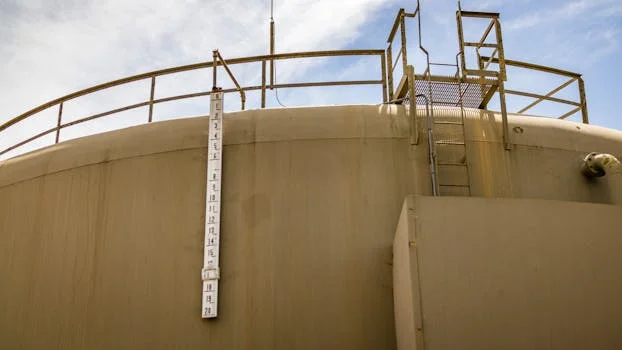
Clarifier selection for industrial wastewater hinges on solids density, free versus emulsified oil, Capex and the effluent target. Primary and secondary gravity settlers, circular or rectangular tanks, and lamella packs suit heavy settleable solids at overflow rates near 0.5-1.5 m/h. Flotation suits floatable FOG and light TSS at 5-15 m/h and often needs only 20-30% of the clarifier footprint.
Membrane bioreactors deliver TSS below 1 mg/L, yet Capex is typically 3-5 times a flotation train. Membranes also draw scour energy and need replacement every 5-7 years. For most Australian industrial projects, flotation is the pre-treatment step that protects biology or meets trade waste without membrane complexity. You can compare DAF systems to MBR for industrial wastewater treatment when dissolved BOD dominates the load.
For hydrocarbons, engineers often compare DAF systems to oil-water separators for industrial wastewater treatment. API or CPI separators cost less to run but miss emulsified oil. With demulsification and micro-bubbles, flotation can reach FOG below 10 mg/L, a common Sydney and Melbourne sewer threshold.
| Treatment Method | Primary Target | TSS Removal (%) | Capex ($/m³) | Opex ($/m³) | Footprint |
|---|---|---|---|---|---|
| DAF | FOG, TSS, BOD | 92 - 97% | Moderate | $0.50 - $2.00 | Compact |
| Sedimentation | Heavy Solids | 60 - 80% | Low | $0.10 - $0.40 | Large |
| MBR | Dissolved BOD | > 99% | Very High | $2.50 - $5.00 | Moderate |
| Oil-Water Separator | Free Oil | < 30% | Very Low | $0.05 - $0.15 | Small |
For regional context, you may also learn how DAF systems perform in New Zealand’s regulatory environment, which shares dairy and agricultural runoff challenges.
Australian Compliance: EPA and State Discharge Limits
Australian wastewater compliance mixes federal guidance with state law and local trade-waste agreements. Under the NSW Protection of the Environment Operations Act (1997), industrial releases that can harm the environment often need TSS below 30 mg/L and FOG below 10 mg/L for direct discharge. Sydney Water and other utilities may allow higher sewer concentrations but bill mass-load fees per kilogram of pollutant.
EPA Victoria Industrial Waste Resource Guidelines (2024) tightened trade-waste expectations. Food processors commonly rely on flotation to hold FOG below the 5 mg/L limit Melbourne Water applies in sensitive catchments. Corporate non-compliance fines can exceed $100,000.
| State / Authority | Regulation / Guideline | Typical TSS Limit | Typical FOG Limit | pH Range |
|---|---|---|---|---|
| NSW (Sydney Water) | POEO Act 1997 | < 30 mg/L* | < 10 mg/L | 6.5 - 8.5 |
| VIC (Melbourne Water) | IWRG 2024 | < 20 mg/L | < 5 mg/L | 6.0 - 9.0 |
| QLD (Urban Utilities) | EP Regulation 2019 | < 30 mg/L | < 20 mg/L | 6.5 - 9.0 |
| WA (DWER) | Water Services Act | < 50 mg/L | < 15 mg/L | 6.0 - 9.0 |
*Limits vary based on specific trade waste agreements and discharge location.
Western Australia’s Department of Water and Environmental Regulation (DWER) stresses reliability. Size flotation for peak hydraulic flow—often 1.5× average hourly flow—so wash-downs and storms do not force bypass. Redundant recycle pumps and automated dosing keep limits during equipment faults.
DAF System in Australia: Capex, Opex and ROI
Industrial flotation Capex in 2025 typically runs from $50,000 AUD for a 4 m³/h skid to over $500,000 AUD for 300 m³/h mining or municipal trains. Quotes usually cover the tank, recycle loop, skimmers and basic controls. Installation and civil works add another 20-40% to project cost.
Opex is driven by chemicals and sludge haulage. Power usually sits at 0.3-0.8 kWh per m³ treated. PAC and polymer often cost $0.10-$0.30 per m³. Sludge disposal in Sydney or Brisbane can reach $150-$300 per tonne (per EPA 2024 data). A screw press that cuts cake volume by about 70% shortens payback.
| Industry Application | Typical Capex (AUD) | Opex ($/m³) | Payback Period (Years) | Main ROI Driver |
|---|---|---|---|---|
| Small Food Processing | $65,000 - $120,000 | $0.75 - $1.20 | 2 - 4 Years | Avoided Trade Waste Fines |
| Large Dairy / Meat | $250,000 - $450,000 | $0.50 - $0.90 | 3 - 5 Years | Reduced Surcharges & Reuse |
| Mining / Industrial | $300,000 - $600,000 | $1.10 - $2.00 | 4 - 7 Years | Environmental Compliance |
| Municipal Pre-treatment | $500,000+ | $0.40 - $0.70 | 5 - 8 Years | Asset Protection (Downstream) |
ROI is fastest where trade-waste surcharges bite. A Queensland dairy at 200 m³/d can save about $80,000 per year on TSS and FOG mass loads, often recovering Capex in under three years.
What Selection Criteria Apply When Sizing a DAF?
DAF sizing for industrial wastewater starts with measured solids loading, peak flow, overflow or surface loading rate, and sludge character—not catalogue flow alone. Pair lab TSS, FOG, BOD and pH with a jar test before you freeze tank area or chemical pump capacity.
- Characterize the wastewater: Analyse TSS, FOG, BOD and pH, then jar-test dose rates. That result sizes the PLC-controlled chemical dosing for DAF systems.
- Size by surface loading rate: At 100 m³/h peak and 10 m/h design loading, you need at least 10 m² of flotation area.
- Evaluate automation: Australian labour cost is high. Moving from manual control to PLC with remote monitoring can cut labour from about 1.0 FTE to 0.2 FTE and trim chemical Opex 15-25% (HydropureWater field data, 2025).
- Select materials: Specify Grade 304 or 316 stainless steel for tanks and internals where chlorides or food acids attack carbon steel.
- Verify compliance fail-safes: Require high-level alarms, emergency bypass valves and redundant recycle pumps so untreated wastewater cannot leave during outages.
- Check sludge handling: Match skimmer torque and float solids percent to haulage contracts; wet float drives disposal cost more than tank steel.
- Confirm peak hydraulics: Design for at least 1.5× average hourly flow where wash-downs dominate, especially for package plants serving Western Australia sites.
| Selection Parameter | Standard Model | High-Efficiency (Counter-Current) | Impact on Performance |
|---|---|---|---|
| Surface Loading Rate | 5 - 8 m/h | 10 - 15 m/h | Smaller footprint for same flow |
| Bubble Size Control | Manual Valve | Automated Air Injection | Consistent 30-50 µm bubbles |
| Sludge Removal | Timer-based | Torque/Sensor-based | Higher sludge solids % |
| Control System | Relay Logic | Integrated PLC / IoT | Remote monitoring & data logging |
Who This Is For / Next Step
This guide suits plant engineers, EPC contractors and procurement teams specifying flotation for Australian food, mining, laundry or municipal pre-treatment. Look elsewhere if your load is mostly dissolved BOD with almost no FOG or floatable TSS—biology or MBR may be the primary unit. To match flow, loading rate and chemical dose to a trade-waste agreement, request a DAF sizing and quote with your influent data and discharge limits.
Frequently Asked Questions
What is the typical payback period for a DAF in Australia?
Food processors usually recover Capex in 2-5 years through avoided trade-waste fines and mass-load savings. Mining projects more often see 3-7 years, driven by compliance risk and remote sludge disposal cost. A Queensland dairy at about 200 m³/d can save roughly $80,000 per year on TSS and FOG fees when removal stays in the 90%+ band (per 2025 industry benchmarks).
How much maintenance does an industrial DAF need?
Plan weekly pH/ORP sensor checks, monthly air-saturation vessel inspection, and annual service of recycle pumps and skimmer drives. Automated trains typically need about 30 minutes per day for chemical refill and float-level checks. Skipping saturation-vessel inspection is the failure mode we see most on under-maintained skids.
Can a DAF handle variable industrial flow rates?
Yes, when a VFD recycle pump and an upstream equalization tank keep the flotation zone inside 5-15 m/h surface loading. Without equalization, wash-down peaks push loading above design and TSS removal often falls below 90%. Size the EQ volume for the longest high-flow event on your production schedule.
What chemicals do Australian DAF plants use most?
Most sites dose Polyaluminium Chloride as coagulant plus anionic or cationic polyacrylamide as flocculant. Flow-paced dosing commonly holds 10-50 mg/L total coagulant to meet EPA-linked discharge agreements. Jar tests still beat generic dose charts when FOG spikes above 1,000 mg/L.
How do overflow rate and sludge character affect clarifier choice?
Heavy grit and settleable TSS favour gravity or lamella clarifiers at roughly 0.5-1.5 m/h overflow. Light FOG emulsions favour flotation at 5-15 m/h with chemical demulsification. Choose by measured sludge settleability and free-oil fraction, not by tank shape alone. Most plants we size with sticky float sludge still pick flotation despite a compact footprint.