Separate the Wastewater Streams Before Selecting Equipment
Arusha data centers should segregate four treatment problems: cooling tower blowdown, reverse-osmosis reject, sanitary wastewater, and remaining process wastewater. Each stream has a different chemistry, temperature, biological load and disposal route, so combining them before characterization can transfer contaminants into a downstream process and make recovery more expensive. The engineering basis is a measured water balance: record make-up water, evaporation, blowdown, each reclaim flow, and every other withdrawal and discharge. Genesis Water Technologies reports that actual blowdown can exceed theoretical calculations by 15–30% because of unmeasured losses and emergency dumps. This source is a general industry reference dated 2026, not evidence of Arusha site conditions. The supplied Arusha conference paper, published in 2021, concerns non-communicable diseases and provides no data-center chemistry or discharge limits.
Cooling tower blowdown deserves separate evaluation because evaporation concentrates dissolved salts while periodic purging removes them from the circulating loop. IDE Water Technologies identifies silica, calcium carbonate and calcium sulfate as important scaling constituents. RO reject has a different composition because membrane separation concentrates rejected salts and may carry pretreatment chemicals. Sanitary wastewater requires biological and hygienic treatment; equipment washdown and floor drainage may contain detergents, oil, suspended solids or elevated conductivity. These streams should be combined only after their chemistry, temperature, biological load and final destinations have been checked. The data center blowdown treatment methodology provides a related decision framework, while the regional data center wastewater treatment guide illustrates how local source-water and regulatory checks must remain separate from equipment selection.
| Stream | Principal concern | Required measurements | Initial treatment question |
|---|---|---|---|
| Cooling tower blowdown | Concentrated salts, scaling constituents, residual chemicals | Flow, pH, conductivity or TDS, hardness, alkalinity, silica, suspended solids, temperature, biocide residual | Can it serve a lower-grade process use, or must it become cooling make-up? |
| RO reject | Concentrated salts and pretreatment carryover | Flow, TDS, hardness, silica, sulfate, chloride, pH, temperature and chemical residuals | Can it join blowdown after compatibility is demonstrated, or does it need a separate route? |
| Sanitary wastewater | Organic load, nutrients and pathogens | Flow, COD, BOD, suspended solids, ammonia, nutrients, pH and microbiological indicators | Is discharge to sewer or another approved destination technically and legally available? |
| Washdown and drainage | Suspended solids, oil, detergents and variable contamination | Flow, pH, oil and grease, COD, suspended solids, conductivity and cleaning products | Can source segregation prevent episodic contamination of reusable streams? |
Define the Required Water Quality by End Use
Water-quality requirements must be assigned to a destination, not to the treatment system as a whole. A destination could be cooling tower make-up, another cooling or process service, sanitary reuse, controlled discharge or another approved end use. Direct cooling make-up normally requires the strongest control of scaling, corrosion, fouling and microbiological growth. A lower-grade washdown application may justify a simpler treatment train, while sanitary reuse adds public-health and non-contact-use requirements that the buyer must specify separately.
Genesis Water Technologies identifies 500–1,500 mg/L TDS as a target range for most cooling tower systems and reports that municipal wastewater is typically 600–1,200 mg/L TDS after secondary treatment. The same source states that cooling-water specifications commonly limit suspended solids to 10–25 mg/L. These are industry benchmarks published in 2026, not Arusha limits or proof that every local cooling system accepts the same range. A supplier should demonstrate performance against the site’s actual make-up-water specification and receiving-system requirements.
Request a sampling campaign covering pH, conductivity or TDS, total hardness, calcium, alkalinity, silica, suspended solids, turbidity, chloride, sulfate, residual biocide and temperature. Include biological indicators where the reuse enters an open cooling system, and COD or organic loading where process water or membrane treatment is involved. Sampling should cover operating and emergency conditions rather than relying on one grab sample.
Water Usage Effectiveness, or WUE, does not establish conservation by itself. Genesis defines WUE as annual site water usage divided by IT equipment energy and notes that it does not distinguish consumed water from recycled water. The metric therefore needs a separate water balance that distinguishes withdrawal, evaporation, discharge and reuse. The tropical data center cooling blowdown treatment reference is useful for considering climate-sensitive reuse, but its project context must not be substituted for Arusha measurements.
| End use | Quality basis | Indicators to verify | Decision outcome |
|---|---|---|---|
| Cooling tower make-up | Site cooling-system specification | TDS, hardness, alkalinity, silica, chloride, sulfate, suspended solids, biocide residual and microbiological risk | Define the required membrane, softening and disinfection barriers. |
| Other cooling or process service | Equipment-specific acceptance criteria | Turbidity, suspended solids, oil, pH, conductivity and temperature | Test whether filtration and targeted chemistry control are sufficient. |
| Sanitary reuse | Public-health and authority requirements | Microbiological indicators, COD, BOD, nutrients, suspended solids and pH | Confirm whether reuse is permitted and what additional barriers are required. |
| Controlled discharge | Confirmed receiving-route conditions | Whole-effluent characteristics, temperature, pH, TDS and applicable local limits | Determine treatment and monitoring requirements with the receiving party. |
Follow a Source-Control and Pretreatment Train
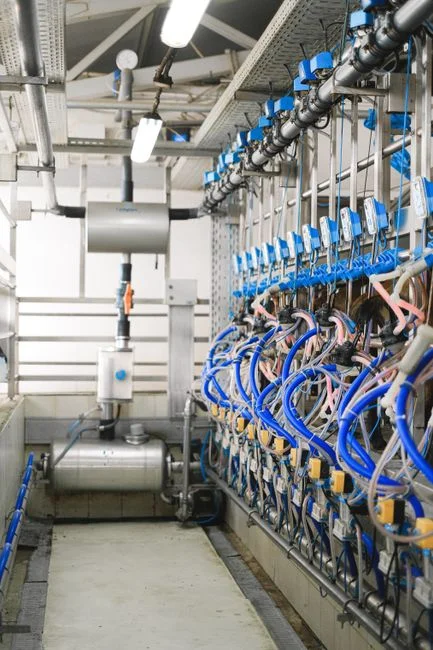
Effective pretreatment starts before treatment: repair leaks, eliminate unnecessary once-through cooling, inspect dosing systems and trigger blowdown from measured chemistry rather than an assumed schedule. These measures reduce the volume and variability entering the treatment train. Genesis Water Technologies, in 2026, describes physical separation followed by targeted contaminant treatment as a practical approach where advanced blowdown-to-make-up treatment is not justified.
The theoretical relationship cited by Genesis defines blowdown ratio as 1/(CoC−1). It gives a blowdown ratio of 25% at four cycles of concentration and 20% at six cycles. The source also warns that biological and scaling risks can rise above five to six cycles without advanced treatment, so raising CoC is a chemistry and control decision rather than a water-saving calculation alone. Actual blowdown must be reconciled against measured make-up and evaporation.
- Stabilise the source. Correct leaks, verify chemical feeds, control fouling and establish the real blowdown flow.
- Remove material that would obstruct downstream equipment. Screening and equalisation should protect pumps and treatment vessels. Where suspended solids, colloids, oil or grease are significant, dissolved air flotation equipment can provide physical separation before finer treatment.
- Protect membranes and control scaling. Where fine solids, colloids and bacteria are priorities, UF pretreatment for data center wastewater can form the selected barrier. Softening may be needed where hardness must be reduced before RO.
- Apply chemicals only against verified objectives. Dosing should respond to measured pH, coagulation, flocculation or specialty-treatment requirements rather than a generic recipe.
The supplied HydropureWater specifications provide equipment-selection boundaries, not Arusha design loads: the DAF range is 4–300 m³/h across 13 standard models; the hollow-fiber UF system operates at 2,000–40,000 L/h, removes bacteria, colloids and suspended solids without chemicals, and accepts up to 300 ppm turbidity; and twin-tank industrial softeners cover 1–45 T/h with 60–2,000 L brine tanks. The actual selection must follow measured flow, chemistry, operating envelope and available space.
| Barrier | Where it fits | Information needed before selection |
|---|---|---|
| Source control | All streams | Make-up, evaporation, blowdown, losses, emergency dumps and dosing records |
| DAF or filtration | Suspended solids, colloids, oil or grease ahead of sensitive equipment | Flow range, particle characteristics, oil content and required solids outlet |
| UF | Fine solids, colloids, bacteria and membrane protection | Feed turbidity, flow variability, recovery, cleaning method and reject destination |
| Softening | Hardness control for RO or sensitive cooling service | Hardness, alkalinity, throughput, regeneration route and brine disposal |
| Chemical dosing | Verified pH or contaminant-control need | Dose range, contact time, chemical compatibility and control interlocks |
Choose the Right Recovery Train for Blowdown
The appropriate recovery train depends on the reuse target, feed chemistry, concentrate destination and operating capability. Three options can be compared without assuming that the highest recovery is the lowest lifecycle cost.
| Option | Treatment concept | Strength | Main engineering limitation |
|---|---|---|---|
| Lower-complexity reuse | Filtration or physical separation followed by targeted chemistry control | Simpler operation and a credible route to a less demanding process use | May not produce water suitable for direct cooling make-up |
| Conventional brackish RO | Pretreatment followed by single- or staged brackish water reverse osmosis | Produces high-quality permeate suitable for reuse when the feed is compatible | IDE reports that conventional BWRO commonly plateaus at 75–80% recovery before scaling becomes unmanageable |
| High-recovery reuse | RO with controlled salt precipitation or specialist brine treatment | Can reduce freshwater withdrawal and concentrate handling by recovering more water | Requires controlled chemistry, solids handling, specialist operation and a defined concentrate route |
IDE Water Technologies, dated 2026, reports that conventional BWRO commonly reaches 75–80% recovery. It also reports an industrial MAXH₂O brine desalter operating at around 95% recovery with approximately 1 mg/L silica in the permeate. That desalter handled a blended industrial stream including cooling-tower blowdown, RO brine and process wastewater; it was not demonstrated as an Arusha data-center installation. The comparison must therefore distinguish a conventional recovery range from a site-specific high-recovery case.
Compare systems using hydraulic and chemical data: flow variability, TDS, silica, calcium hardness, alkalinity, sulfate, temperature, scaling potential, concentrate destination and operator capability. The industrial reverse osmosis system for cooling water reuse is specified by HydropureWater at recovery rates up to 95%, but that equipment capability does not establish project recovery. Site chemistry determines the defensible rate.
A suitable process sequence is:
- Segregated collection.
- Equalisation, screening and flow measurement.
- DAF or filtration where required.
- Softening and/or UF as required for the selected recovery train.
- RO or specialist brine treatment.
- Disinfection and protected storage where required.
- Reuse, authorised discharge or managed concentrate disposal.
The concentrate remains part of the design. Its flow, chemistry, temperature and disposal route must be defined before increasing recovery. A high-recovery claim is incomplete without a solids and brine-management plan.
Protect People, Equipment, and the Reuse Water
Disinfection must follow the destination and a site-specific risk assessment rather than automatically follow every membrane or filter. HydropureWater’s chlorine dioxide range includes manual units from 50 g/h and automated industrial systems from 20,000 g/h, with industrial cooling loops identified as an application. These are equipment capacities, not treatment doses: dosage depends on flow, demand, contact conditions and the required residual or inactivation result.
For open cooling systems, specify a documented microbiological-control programme and monitor conditions associated with biofilm and Legionella risk. Reuse chemistry alone does not establish microbiological safety. The chlorine dioxide generator options should be assessed against feed conditions, operator safety, residual management and downstream compatibility.
UV is an alternative when chemical-free disinfection, residual maintenance or receiving-water compatibility is important. HydropureWater’s UV range includes pipeline, flange, quick-connect, lamp, medium-pressure, self-cleaning, outdoor and open-channel configurations, as detailed in its UV sterilizer configurations. Compare UV and chlorine dioxide on actual water matrix, flow, turbidity, maintenance and power availability rather than selecting by label.
Check compatibility among disinfectants, corrosion inhibitors, biocides, coagulants and membrane materials. A treatment train that works hydraulically can still damage membranes if residual chemistry is uncontrolled. Reclaimed water should enter segregated, protected storage to prevent cross-contamination, with pipework and tanks clearly distinguished from potable systems. The final storage and disinfection barriers should follow the intended cooling configuration, personnel exposure and the site’s water-safety plan.
Build an Arusha-Specific Engineering and Procurement Brief
The engineering brief should contain measured Arusha inputs, not a treatment train scaled from another facility. IDE Water Technologies, dated 2026, states that a 100-megawatt data center can use up to 2 million litres of water per day. That figure is a scale illustration for a facility of that configuration; it is not a design load for an Arusha site. IT load, cooling configuration, climate and operating profile must be reconciled with actual make-up, evaporation and blowdown measurements.
Ask the relevant Tanzanian authorities and the receiving utility or discharge-route owner to confirm applicable environmental, water-use, sewer-discharge, temperature, pH and whole-effluent requirements. The supplied research does not establish Arusha-specific limits, so none should be inserted into tender documents as assumed facts. Source-water quality, groundwater conditions, public-water reliability, discharge ownership and future expansion must also be verified locally.
Build the cost model on total cost of ownership. Include capital equipment, installation, energy, chemicals, membrane or UF replacement, solids handling, operator labour, redundancy, testing, maintenance, disposal charges, avoided freshwater, avoided discharge charges and the operational cost of interruptions. HydropureWater’s automatic chemical dosing systems should be specified around the verified dose range, controls and interlock requirements rather than included merely because every reuse train includes a dosing skid.
Genesis reports 70–90% recovery for advanced treatment of cooling tower blowdown, RO reject and facility processes. Use this only as a screening range because the source does not define a guaranteed Arusha design value. The selected value must follow the measured feed and intended reuse.
| Procurement item | Supplier information required | Buyer check |
|---|---|---|
| Design basis | Measured stream flows, source chemistry, operating variability and intended reuse | Do the supplied data represent normal, peak and emergency operation? |
| Performance guarantee | Feed-water envelope, permeate quality, recovery and availability | Are guarantees tied to a defined site water matrix? |
| Concentrate and solids | Quantity, chemistry, solids characteristics and disposal route | Is the route authorised, available and included in cost? |
| Operations | Controls, cleaning method, chemicals, spare parts and operator competency | Can local staff operate and maintain the system? |
| Validation | Pilot or side-stream trial where chemistry or scaling is uncertain | Were results measured over representative operating conditions? |
| Local support | Delivery scope, commissioning plan and local spare-parts support | Are response times and responsibilities explicit? |
Require a pilot or side-stream trial when silica, hardness, scaling or biological variability remains unresolved. The tender should also require membrane and UF cleaning methods, chemical compatibility, solids-disposal arrangements and performance tests under the supplier’s stated feed-water range. A supplier that guarantees recovery without defining the feed envelope or concentrate route has not supplied a complete offer.
Frequently Asked Questions
Should an Arusha data center target 80% recovery or approximately 95%?
Do not select a headline recovery rate without site chemistry. IDE Water Technologies reports that conventional BWRO commonly plateaus at 75–80% recovery, while a specialist industrial desalter operated at around 95% recovery in a different application. Ask the designer to model silica, hardness, alkalinity, sulfate, TDS, temperature and concentrate management at each proposed recovery. The decision should compare net reuse, energy, chemical demand, solids handling and operating risk.
What measurements are needed to size the wastewater treatment system?
Request measured make-up, evaporation, blowdown, RO reject, sanitary wastewater, washwater, reclaimed-water demand and discharge flows, together with flow variability and seasonal chemistry. The supplier also needs cycles of concentration, reuse targets, available utilities, space, redundancy requirements and operator capability. IT load alone is insufficient, as IDE Water Technologies’ 100-megawatt water-use example is only a scale illustration rather than an Arusha design load.
What inputs are required for a defensible treatment cost and budget?
Obtain local freshwater and discharge tariffs, measured flow, source chemistry, selected end-use quality, energy prices, chemical requirements, waste-disposal charges, maintenance assumptions and the required equipment life. No defensible Arusha price can be stated from the supplied research because it contains no local quotation or complete Arusha design load. Ask each supplier for a priced total-cost-of-ownership model with sensitivity cases for recovery and concentrate disposal.
How should supplier selection and compliance risk be managed?
Require site-specific feed-water ranges, permeate quality, recovery, concentrate quantity and chemistry, availability, cleaning methods, controls, commissioning tests and local spare-parts support. Product guidance does not replace legal approval: obtain confirmation from the relevant Tanzanian authorities and receiving utility about the discharge route and applicable environmental, water-use, sewer, temperature and pH conditions. Use the data center blowdown treatment methodology to structure that verification rather than importing another jurisdiction’s limits.