What Wastewater Does a Campo Grande Data Center Need to Treat?
A data center in Campo Grande needs separate treatment plans for sanitary wastewater and process wastewater because they have different sources, chemistry, and disposal routes. Process wastewater may include cooling tower blowdown, RO reject, treatment backwash, equipment-cleaning wastewater, and air-handling-unit condensate. The engineering sequence is to characterize each stream, calculate average and peak flows, identify the intended reuse or discharge destination, and then size pretreatment around the receiving limits. Blowdown is the principal process-water concern because evaporation concentrates dissolved minerals and treatment chemicals in the circulating cooling water. A data-center wastewater and cooling-blowdown planning guide provides the broader separation framework, but Campo Grande requirements must be confirmed locally.
Sanitary wastewater comes from occupied facilities such as toilets, kitchens, washrooms, and staff amenities. Its flow and treatment requirements should be coordinated with the receiving sanitation system, but it should not be combined indiscriminately with concentrated cooling blowdown. Process wastewater includes water deliberately removed from a recirculating cooling system to prevent dissolved-material buildup, together with RO reject, water-treatment backwash, cleaning wastewater, and condensate. Black & Veatch’s 2026 data-center discharge guide explains that every unit of cooling makeup water not evaporated ultimately enters a residual wastewater stream.
The project team should not calculate discharge volume from IT load or adopt a generic percentage of water consumption. It should obtain the blowdown estimate from the mechanical engineer because the result depends on cooling configuration, climate, makeup-water quality, evaporation, drift, chemical dosing, and the operating cycles of concentration. Campo Grande’s hot climate makes peak cooling demand a necessary design case, but the absence of a supported local water-stress statistic is not a reason to invent one.
Prepare a separate flow-and-chemistry schedule for every wet stream. Include flow range, temperature, pH, TDS or conductivity, hardness, alkalinity, silica, chloride, sulfate, suspended solids, treatment chemicals, sampling point, and proposed destination. For additional stream definitions and discharge-path screening, use the data-center wastewater and cooling-blowdown planning guide.
Build the Blowdown and Water-Reuse Balance
Cycles of concentration provide the central relationship between circulating-water quality and blowdown volume: as dissolved solids accumulate, the required blowdown rises unless the system increases cycles of concentration or adds another control measure. Genesis Water Technologies’ commercial blowdown-treatment article, published in 2026, states that a cooling tower operating at four cycles typically loses approximately 25–30% of makeup water as blowdown; at that benchmark, a facility using 10 million gallons monthly would discharge 2.5–3 million gallons. This is an international benchmark, not a Campo Grande design value.
Build several operating cases rather than one nominal calculation. Each case should reflect cooling configuration, source-water analysis, evaporation, drift, chemical program, minimum bleed, and intended cycles of concentration. The monthly balance should then show freshwater withdrawal, evaporation, drift, blowdown, reuse return, concentrate export, and disposal as separate lines. That structure exposes whether reuse reduces net withdrawal without double-counting water returned to the cooling loop.
| Water-balance input | Project information required | Decision use |
|---|---|---|
| Cooling demand | Average and peak heat load; operating configurations | Defines evaporation and makeup demand |
| Source-water chemistry | TDS, hardness, alkalinity, silica, chloride, sulfate, pH, turbidity | Sets cycles of concentration and scaling constraints |
| Cooling-water program | Biocide, corrosion inhibitor, antiscalant, and dispersant chemistry | Checks reuse compatibility and pretreatment needs |
| Measured operations | Logged flow, conductivity, temperature, makeup, blowdown, drift, and evaporation | Validates average and peak cases |
| Reuse and disposal | Permeate demand, return location, concentrate destination | Sets treatment flow and recovery basis |
Request continuous or logged flow and conductivity data, supplemented by a source-water analysis covering TDS, hardness, alkalinity, silica, chloride, sulfate, pH, turbidity, and the proposed cooling-water chemical program. Genesis Water Technologies’ 2026 article gives a typical blowdown TDS benchmark of 1,200–6,000 mg/L and suspended-solids benchmark of 10–50 mg/L. Use these as screening references only; final values must come from Campo Grande source water and representative operating samples.
Where treatment components are being scoped, request water-treatment valves and filter media with the same design basis. Do not finalize media, membranes, or dosing equipment until the operating cases and water chemistry are accepted.
Choose the Wastewater End Use Before Buying Equipment
The preferred disposal route determines which contaminants must be removed and how much treatment capacity is justified. Cooling-tower makeup reuse generally provides the strongest balance among water conservation, technical complexity, and return, according to Genesis Water Technologies’ 2026 commercial assessment, but the recovered water must remain compatible with the cooling-water chemical program. For washdown, construction dust control, or irrigation, define the receiving-water quality before selecting UF, NF, or RO.
Sewer discharge requires written acceptance from the responsible utility or authority, together with local discharge limits, temperature constraints, sampling and reporting duties, pretreatment requirements, and confirmation of industrial-user status. The connection should be treated as a development entitlement rather than assumed infrastructure. Black & Veatch’s 2026 guide reports that utilities may decline service, impose conditions, or pause new connections where wastewater capacity is unresolved.
| End-use route | Quality objective | Residual-management question | Decision gate |
|---|---|---|---|
| Cooling makeup reuse | Permeate compatible with cooling chemistry and cycles of concentration | Concentrate export and cooling-chemical residuals | Site-water trial and guaranteed recovery |
| Lower-grade reuse | Application-specific quality specification | Concentrate and pretreatment waste | Written receiving-water requirement |
| Sewer discharge | Utility limits, temperature, pH, TDS, solids, and chemical residuals | Sludge impact and sewer-capacity exposure | Written utility acceptance and permit basis |
| Partial ZLD | Concentrate volume minimized; residual liquid requires approval | Concentrated brine transport or permitted discharge | Residual route and recovery economics |
| Full ZLD | Liquid discharge eliminated | Salt-bearing solids need an approved management route | Energy, solids, and lifecycle-cost case |
For zero-liquid-discharge (ZLD), assess membrane recovery limits, concentrate chemistry, available energy, crystallization residues, solid-residue acceptance, and long-term operating costs. Genesis Water Technologies’ 2026 article cites U.S. significant industrial user thresholds of 25,000 gallons per day, 5% of plant capacity, or authority designation. These are international planning analogues only; they are not Brazilian legal thresholds and should not be imported into a Campo Grande permit basis.
If partial or full ZLD remains under consideration, evaluate mechanical vapour recompression for RO concentrate as an engineering option rather than a predetermined route.
Match the Treatment Train to the Contaminants
UF is appropriate when suspended solids, colloids, microorganisms, or high-molecular-weight organics threaten downstream equipment. Genesis Water Technologies’ 2026 article gives hollow-fiber UF pore sizes of 0.01–0.1 micron, operating pressure of 10–30 psi, and recovery of 90–95%. In a blowdown recovery train, its principal role is pretreatment for RO or NF, particularly where the target is hollow-fiber ultrafiltration pretreatment.
NF is the intermediate option when hardness, sulfate, and partial demineralization are the primary constraints. The same 2026 source cites operating pressure of 75–150 psi, recovery of 70–85%, and permeate TDS around 30–50% of feed TDS. It can be appropriate when softening or partial desalination satisfies the reuse or discharge objective without the pressure and energy demand of RO.
RO is the benchmark for high-quality cooling makeup. The 2026 Genesis Water Technologies article states that the process removes 95–99% of dissolved solids, operates at 150–400 psi, and typically recovers 50–85% of blowdown. It can provide permeate at 10–50 mg/L TDS, subject to the actual feed and treatment design. For a reuse project, compare that performance with industrial RO treatment for cooling-water reuse and require site-water guarantees rather than generic equipment claims.
| Process | Primary role | 2026 cited benchmark | Principal design condition |
|---|---|---|---|
| UF | Remove solids, colloids, microorganisms, and high-molecular-weight organics | 0.01–0.1 micron; 10–30 psi; 90–95% recovery | Use before NF or RO when feed solids or biology would foul the membranes |
| NF | Partial demineralization and hardness reduction | 75–150 psi; 70–85% recovery; permeate TDS 30–50% of feed | Use when hardness and sulfate, rather than total TDS, govern the objective |
| RO | High-quality cooling makeup or discharge pretreatment | 95–99% dissolved-solids removal; 150–400 psi; 50–85% blowdown recovery | Control scaling and concentrate saturation |
| MVC | Further concentration of RO or NF concentrate | 95–98% concentrate recovery; distillate below 10 mg/L TDS; 15–25 kWh per 1,000 US gallons of distillate | Use only after membrane recovery and energy balance are established |
| Crystallization | Convert concentrated brine to a manageable solid | No project-specific benchmark supplied | Proceed only if the salt-bearing residue has an approved management route |
Membrane feed should be filtered below 10–15 microns, with scaling controlled through antiscalant conditioning and monitoring of calcium, alkalinity, silica, and concentrate saturation, according to Genesis Water Technologies’ 2026 source. These figures are cited design benchmarks, not substitutes for site testing. If RO concentrate must be reduced further, MVC or another approved brine-concentration process can recover additional distillate. Full crystallization should follow only where liquid elimination is required and the resulting solid can be lawfully managed.
Integrate the treatment train with the cooling-water chemical program. Biocides, corrosion inhibitors, antiscalants, and dispersants can accumulate in blowdown or foul membranes. Membrane and filter-element requirements should therefore be checked against compatible RO and UF membrane and filter-element specifications.
Size Equipment, Control Residuals, and Protect Operations
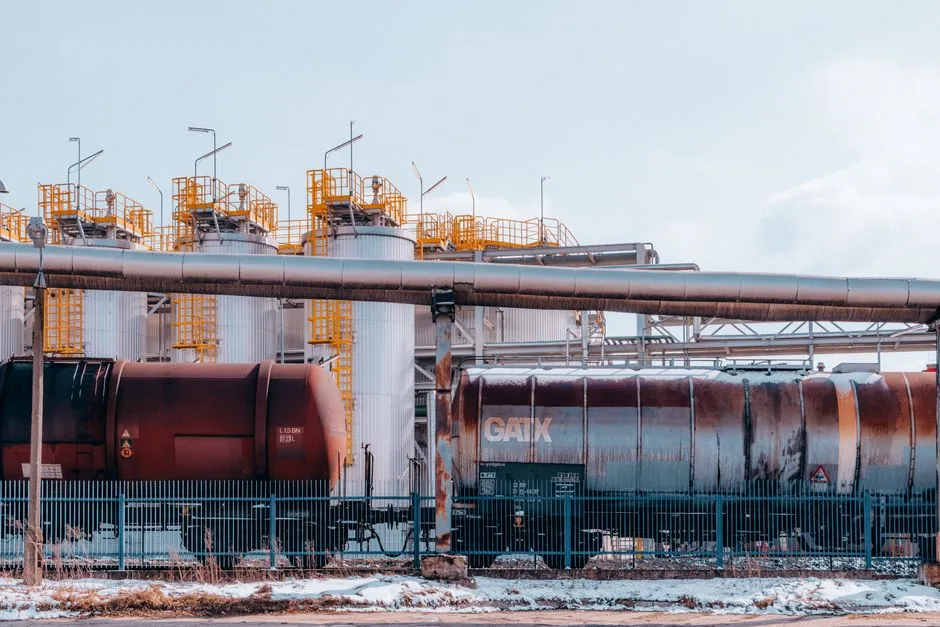
Treatment equipment should be sized from measured peak blowdown, minimum required bleed, reuse demand, recovery, and contaminant loading—not from a generic percentage of IT load. UF, NF, and RO trains also need allowance for the operating cases developed in the water balance, maintenance demands, and future expansion. The final design must be supported by site water and, where recovery or fouling remains uncertain, pilot testing.
Size pretreatment from peak flow, turbidity, suspended-solids loading, and the selected downstream membrane requirements. Genesis Water Technologies’ 2026 article cites filtration capacity equal to 1–5% of total circulation flow for a side-stream filtration installation; that rule concerns continuous circulation-water filtration and must not be applied as a universal blowdown-treatment sizing rule.
Include equalization, cooling, or holding provisions where hot, variable blowdown could upset downstream equipment or biological treatment. For membrane systems, define automatic controls for flow, conductivity or TDS, pressure, pH, turbidity, differential pressure, antiscalant and biocide dosing, permeate quality, and concentrate export. Specify interlocks that pause membrane operation when feed quality, pressure, or control conditions fall outside their approved envelope.
Do not assume dissolved-air flotation is required. If DAF is considered for oil-and-grease, colloids, or suspended material, evaluate the actual load and float characteristics. Similarly, compare DAF, clarification, and biological treatment by contaminant load; they are not interchangeable substitutes for treatment of concentrated cooling blowdown.
Procurement should include sampling points, laboratory analysis, membrane-cleaning procedures, cartridge replacement, solids or sludge handling, instrument calibration, operator training, and local service support. Chemical injection must be coordinated with the membrane train and cooling program; a chemical-dosing system scope should therefore cover monitoring and interlocks rather than only pumps and tanks. If DAF remains in the concept, use the DAF equipment specification to align capacity and controls with measured wastewater characteristics.
Compare Reuse, Sewer Discharge, Partial ZLD, and Full ZLD
The correct route is the one that satisfies cooling reliability, lawful discharge, water-saving targets, residual acceptance, budget, schedule, and expansion requirements without hiding costs in the concentrate stream. Reuse usually offers the clearest water benefit, sewer discharge offers the lowest treatment complexity if the utility accepts the stream, partial ZLD reduces liquid discharge but does not eliminate it, and full ZLD converts the liquid residual into a solid that still requires an approved management route.
| Route | Freshwater and discharge effect | Residual and cost exposure | Main implementation risk |
|---|---|---|---|
| Cooling makeup reuse | Reduces freshwater demand and blowdown discharge | RO or NF capital, pretreatment, membrane replacement, and concentrate export | Permeate chemistry and membrane scaling |
| Sewer discharge | Retains discharge but may avoid onsite desalination | Utility pretreatment or capacity charges, sampling, monitoring, and sewer upgrades | Utility acceptance and available treatment-plant or conveyance capacity |
| Partial ZLD | Genesis Water Technologies’ 2026 article cites an 80–90% reduction in discharge volume | Concentrated brine remains and requires an approved route | Long-term brine transport, treatment, or discharge acceptance |
| Full ZLD | The same 2026 article cites 95–99% overall water recovery | Cited U.S. capital range is $3–8 million and operating cost is $5–15 per thousand gallons treated | Energy demand, solids handling, capital exposure, and lifecycle economics |
The ZLD capital and operating figures are U.S.-based benchmarks from Genesis Water Technologies’ 2026 article, not Campo Grande quotations. Local bids must include membranes, pretreatment, pumps, energy equipment, evaporation, controls, civil works, chemical consumption, maintenance, brine handling, residue disposal, and operator labor.
Sewer capacity must be verified at the site connection, lift station, conveyance system, and receiving plant; nominal plant headroom does not prove that the complete route has capacity. Black & Veatch’s 2026 guide reports utility restrictions and capacity disputes affecting large data centers, demonstrating that approval and infrastructure can affect development timing. Use the data-center wastewater due-diligence checklist to structure utility, capacity, and residual-route questions before scoring alternatives.
Turn the Treatment Plan into a Campo Grande Project Workflow
The wastewater system belongs on the project critical path from the first cooling-concept comparison, because treatment capacity, discharge approvals, and concentrate handling can determine the operating model. Begin with the cooling configuration, makeup-water source, average and peak load, intended reuse quality, and discharge outcome. Document which data are measured, which are vendor guarantees, and which remain contingent on local authority acceptance.
- Collect representative source-water and operating blowdown samples. Include seasonal chemistry where available and reconcile it with logged flow, conductivity, temperature, makeup, blowdown, evaporation, and drift.
- Complete the monthly water balance and peak operating cases. Identify freshwater withdrawal, reuse return, blowdown, concentrate export, and disposal separately.
- Confirm the discharge route with the relevant Campo Grande environmental, water, and sanitation authorities and the receiving utility. Establish current permitting, monitoring, sampling, reporting, temperature, capacity, and industrial-user duties in writing.
- Define treatment objectives. Select UF, NF, RO, partial ZLD, or full ZLD only after mapping contaminants to the required permeate or discharge quality.
- Validate the proposed train with site water. Finalize membranes, antiscalant selection, recovery targets, cleaning frequency, materials of construction, and residual handling from the test results.
- Prepare tender documents around measured design flows, guaranteed permeate and concentrate quality, recovery guarantees, availability requirements, controls scope, maintenance provisions, spare parts, commissioning support, and local service capability.
- Commission against an agreed water balance and water-quality test. Track freshwater reduction, discharge volume, membrane differential pressure, cleaning frequency, chemical consumption, equipment availability, and residual-management performance.
The tender should also separate compliance responsibility from equipment performance. Require suppliers to identify their assumptions, guarantees, exclusions, and required utilities. Coordinate the dosing and water-treatment design using the 2026 coagulant-dosing engineering guide, while requiring the final chemical program to remain compatible with the selected membranes, cooling chemistry, and reuse specification.
Frequently Asked Questions
How should wastewater-treatment equipment be sized for a Campo Grande data center?
Base equipment flow on measured average and peak blowdown, minimum required bleed, permeate demand, and selected recovery. Include operating cases and future expansion, then verify feed chemistry through representative sampling or piloting. Do not size from a generic percentage of IT load.
What will the wastewater and cooling-blowdown treatment cost?
Request a local quotation rather than applying U.S. benchmarks. The quotation should separate membrane capacity, pretreatment, controls, civil works, energy, chemical consumption, brine management, solids handling, maintenance, and operator support. The 2026 Genesis Water Technologies benchmarks of $3–8 million capital and $5–15 per thousand gallons treated for full ZLD are planning references only, not Campo Grande prices.
Which supplier qualifications should be checked before awarding the treatment package?
Require references using comparable site water, recovery and permeate guarantees, membrane-fouling support, concentrate-quality guarantees, spare-parts availability, commissioning support, and transparent total-cost reporting. Also verify who remains responsible for performance when the feed chemistry changes or the cooling-water program is adjusted.
Which compliance requirements must be confirmed in Campo Grande?
Obtain current requirements directly from the relevant Brazilian federal, Mato Grosso do Sul, and municipal environmental, water, and sanitation authorities and from the receiving utility. Confirm discharge routes, connection capacity, industrial-user status, sampling, monitoring, reporting, temperature, and residual-handling duties. U.S. thresholds cited in international guidance are not Brazilian law.
Should the project use RO directly, or include UF and NF first?
Use UF when solids, colloids, or biological loading could compromise downstream membranes. Use NF when hardness and partial demineralization are the principal targets. Use RO when high-quality cooling makeup or substantial dissolved-solids removal is required, with scaling control and a defined concentrate route. The final choice must be validated against site-water chemistry rather than selected from equipment descriptions alone.
Related Equipment
- industrial RO treatment for cooling-water reuse — specifications, capacity range, and technical data