Why Caloocan Data Centers Need a Dedicated Blowdown and Wastewater Plan
Cooling towers at power and process plants typically account for 20–30% of total water demand (Open Engineering), and at data centers blowdown alone can represent 20–40% of intake (Genesis Water Tech). In Caloocan, that ratio is pushed upward by year-round high wet-bulb temperatures, which raise evaporation loss per kWh of heat rejected and therefore the make-up and blowdown volumes a tower must handle compared with temperate sites. Any Caloocan facility that runs water-cooled IT equipment is sitting on a large, recoverable wastewater stream that is a compliance liability if discharged untreated.
Discharge from Caloocan sites falls under two overlapping gates: the Manila Water or Maynilad concessionaire's sewer acceptance limits and the national effluent parameters in DENR DAO 2016-22. Before ordering equipment, the operator should obtain both documents in writing, list the parameters that apply to cooling-tower blowdown and sanitary wastewater, and attach them to the equipment tender. Without that step, a treatment train that is technically correct can still fail the discharge permit.
The practical pathway is staged: measure the existing blowdown and water-quality baseline, optimize the current system (leaks, control sequences, side-stream filtration), upgrade the cooling-water chemistry, deploy modular blowdown treatment, and only then evaluate advanced reuse. Genesis Water Tech lays out this five-stage roadmap, which the following sections adapt to a 5–10 MW Philippine colocation or enterprise site.
Cooling-Tower Blowdown Math for a Caloocan Site
The blowdown ratio equals 1 / (cycles of concentration − 1).
At 4 CoC, roughly 25% of make-up water leaves as blowdown; at 6 CoC, it falls to about 20% (Genesis Water Tech). The improvement from 4 to 6 CoC is about 5 percentage points, or a 20% relative reduction in blowdown volume—not the 50% many engineers assume when they first see the numbers (Genesis Water Tech).
Above 5–6 CoC, biological and scaling risks rise exponentially without advanced treatment, so CoC is usually capped by chemistry rather than hydraulics (Genesis Water Tech). Pushing cycles higher with aggressive chemical dosing often eliminates the water savings through higher chemical cost and a dirtier blowdown that is harder to reuse downstream.
Genesis Water Tech's worked example is useful as a sizing anchor: a 10 MW facility using evaporative cooling at 4 CoC can intake 15 million gallons per month, of which about 3.75 million gallons per month leaves as blowdown (Genesis Water Tech). That recoverable stream is what the rest of this article sizes equipment around. A Caloocan operator should re-run the same arithmetic with the site's own IT load, PUE, and Manila Water / Maynilad tariff, and request a quote for treatment sized to the resulting m³/day rather than to a vendor's standard skid.
| Cycles of concentration | Blowdown ratio (1 / (CoC − 1)) | Blowdown as % of make-up | Relative reduction vs. 4 CoC |
|---|---|---|---|
| 3 | 0.50 | 50% | −100% (baseline doubled) |
| 4 | 0.33 | 25% | 0% (baseline) |
| 5 | 0.25 | 20% | 20% |
| 6 | 0.20 | 17% | 33% |
| 7 | 0.17 | 14% | 43% |
Source for ratio and percentage mechanics: Genesis Water Tech.
Wastewater Streams a Caloocan Data Center Has to Treat
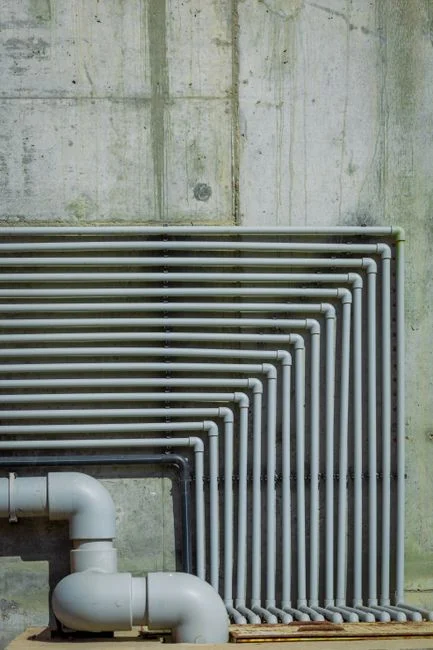
Cooling-tower blowdown is the dominant stream by volume, but it is not the only one.
Site sanitary wastewater, humidification bleed-off, RO/UF reject, and floor and equipment drain water each need a defined disposal or treatment route (Valicor, applied to data center operations). Designing only for blowdown and ignoring the rest is one of the most common ways Philippine sites end up with a hybrid mess of hauling contracts and ad-hoc tanks. Generator coolant, battery-room wash water, and small-volume hazardous wastes such as solvent wipes and UPS electrolyte residues are regulated streams that should go to a licensed hauler rather than through on-site treatment (Valicor). A Caloocan operator should map every drain in the mechanical yard, classify it by volume and hazard, and decide which lines feed the on-site treatment train, which go to sewer, and which are picked up.
Blowdown chemistry is dominated by dissolved solids from evaporation, residual scale and corrosion inhibitors, biocides, and suspended solids carried over from the tower (Genesis Water Tech). That is the target list any downstream train has to address. Sanitary wastewater from staff areas is small in flow but must be treated to DENR DAO 2016-22 standards before sewer discharge, and is a good candidate for a packaged biological plant such as a packaged sewage treatment plant rather than the blowdown train.
Modular Treatment Train for Blowdown and Reuse
For a 5–10 MW Caloocan colocation or enterprise site, the right-sized train is modular and sequenced, not hyperscale.
- DAF or lamella clarification. A DAF system drops suspended solids, oil and grease, and any flocked silica or iron carry-over before downstream membranes. This is also where coagulant and flocculant doses are tuned to local make-up water.
- Multi-media filtration. A multi-media filter reduces turbidity and protects any downstream membrane by bringing the Silt Density Index down to a value suitable for UF or RO duty.
- Ultrafiltration. A UF system at 0.03 µm (PVDF) removes bacteria, colloids and most turbidity spikes. Operating pressure stays low, and automatic backwash with air scour keeps the membranes clean without taking the skid offline.
- Targeted chemical dosing. An automatic chemical dosing skid handles pH correction, antiscalant and dispersant control before any RO step, and blowdown polishing when RO is not used.
- Disinfection. An on-site chlorine dioxide generator is effective over a wide pH range and against biofilms in cooling loops; UV can be added for chemical-free polishing where residual oxidant is restricted.
A side-stream filtration skid on the cooling loop itself is the cheapest insurance for keeping the tower clean enough to push CoC above 5 without runaway biology. For Caloocan sites, the loop should also include adequate equalization volume, because monsoon-driven inflow variability can swing blowdown turbidity and temperature inside a single shift.
When a Full UF+RO Reuse Train Is Overkill in Caloocan
The Open Engineering LCA shows that a UF+RO reuse train uses over five times the energy of a fresh-water system, and that about 80% of the global warming potential gap between reuse and fresh water comes from treatment energy (Open Engineering).
The energy penalty shrinks under a decarbonized grid, but the Philippine grid is not there yet, so every additional membrane stage costs kilowatt-hours that the PUE number has to absorb. Hyperscale water reuse technology—RO, ion exchange, multi-stage filtration—needs dedicated operators and high CapEx that does not scale down. A 5 MW colocation site can face 3–4× higher CapEx per gallon than a hyperscaler running the same technology (Genesis Water Tech). For a 5–10 MW Caloocan colocation or enterprise site, the modular DAF + MMF + UF + ClO₂ train above plus side-stream filtration and 15–25% blowdown reuse is usually the right-sized answer. A full industrial RO system only becomes economic when the site has both the load and the staff to run it.
| Parameter | Modular DAF + MMF + UF + ClO₂ | Hyperscale UF + RO reuse train |
|---|---|---|
| Relative energy use vs. fresh water | Modest; close to fresh-water baseline | Over 5× fresh water (Open Engineering) |
| Operator skill required | Standard facilities team | Dedicated water-treatment operators (Genesis Water Tech) |
| CapEx per gallon at 5 MW | Baseline | 3–4× higher (Genesis Water Tech) |
| Typical reuse target | 15–25% blowdown reuse (Genesis Water Tech, Stage 4) | Higher cycles, blowdown-to-makeup closure |
| Fit for 5–10 MW Caloocan colocation | Right-sized | Usually oversized and uneconomic |
Compliance and Environmental Limits for Caloocan
Two compliance gates must be passed before any blowdown leaves the site: the concessionaire's sewer acceptance limits and the national effluent parameters in DENR DAO 2016-22.
The operator should obtain both in writing from the utility and the DENR regional office and attach them to the equipment tender so the supplier is sizing against the same numbers. Effluent parameters to verify on the blowdown stream include BOD, COD, TSS, total dissolved solids, oil and grease, pH, temperature, residual chlorine or ClO₂, and any metal limits carried over from corrosion inhibitors. Temperature is a common rejection reason in Philippine concessionaire acceptance criteria, so equalization or cooling may be needed before discharge even if the chemistry is in spec. The full DENR DAO 2016-22 schedule of parameters and the concessionaire's specific acceptance criteria should be requested in writing and attached to the equipment tender. If the site plans any reuse of blowdown for toilet flushing, irrigation, or cooling make-up, the reuse-side requirements also need to be checked against the Department of Health and the local building code.
CapEx, Opex and a Phased Build-Out for Philippine Sites
Genesis Water Tech's worked example for a 15 MW facility shows a roughly 6.7-year simple payback at 60% blowdown recovery against a $200,000 CapEx base, improving to 3–5 years once avoided discharge, compliance and energy costs are counted (Genesis Water Tech).
The same logic scales to a Philippine site in PHP, but the operator should request quotes in PHP with a sensitivity for the local water tariff and any effluent surcharge in the Maynilad or Manila Water service area. Energy is the largest Opex line for a reuse train—about 80% of the global warming potential gap between reuse and fresh water comes from treatment energy (Open Engineering)—so high-efficiency pumps and right-sized membranes pay back faster in the Philippines than in temperate grids where electricity is cheaper relative to water. A Caloocan operator should size the equalization tank and the chemical dosing skids to the actual diurnal load, not to a nameplate number, or the system will cycle on and off and burn through membranes faster than the design assumes. A staged build—measure, optimize, upgrade chemistry, deploy modular blowdown treatment, then evaluate advanced reuse—matches both the cash-flow reality of a Caloocan build-out and the operational learning curve of the on-site team. A related Vadodara data center blowdown guide applies the same staging logic to a different climate, and a Diyarbakir data center blowdown guide covers a colder, lower-humidity case for comparison.
Frequently Asked Questions
What is a realistic CapEx envelope for blowdown treatment at a 5 MW Caloocan colocation site?
Public, location-specific quotations for Philippine colocation blowdown skids were not in the research data, so a defensible PHP figure cannot be quoted here. The right move is to ask each shortlisted vendor for a sized quote in PHP, including the DAF, multi-media filter, UF, chemical dosing, and ClO₂ generator, and benchmark the result against Genesis Water Tech's 15 MW / $200,000 reference case scaled down to a 5 MW
Frequently Asked Questions
What is the recommended cooling-tower blowdown treatment train for a 5 MW data center in Caloocan?
For a 5 MW data center, a robust treatment train typically begins with side-stream filtration using multi-media filters (5-10 micron) to manage suspended solids. This is followed by a membrane-based treatment train consisting of an Ultrafiltration (UF) unit for colloidal removal and a two-stage Reverse Osmosis (RO) system to reduce Total Dissolved Solids (TDS) and alkalinity, which are critical for preventing scaling and corrosion in Caloocan's hard-water environment.
The treated permeate is then routed back to the cooling tower makeup water storage, while the RO concentrate is directed to a chemical neutralization and discharge monitoring station. This configuration ensures compliance with local water reuse standards while minimizing the volume of water sent to the municipal sewer system.
How much does a modular blowdown treatment and reuse system cost in PHP for a Philippine colocation site?
The capital expenditure for a modular, packaged blowdown treatment system for a 5 MW facility in the Philippines typically ranges between 8,000,000 PHP and 15,000,000 PHP. This cost includes the skid-mounted RO units, UF membranes, chemical dosing pumps, and automated PLC control systems designed for remote monitoring.
Variations in pricing are primarily driven by the specific water chemistry of the local Caloocan utility supply and the desired recovery rate of the system. Operational expenses, including energy consumption, membrane replacement, and chemical reagents, should be budgeted at an additional 5% to 8% of the initial capital cost annually.
Which Philippine effluent and sewer discharge parameters apply to data center cooling blowdown in Caloocan?
Data center operators in Caloocan must adhere to the Department of Environment and Natural Resources (DENR) Administrative Order 2016-08 (DAO 2016-08), which governs water quality guidelines and effluent standards. Key parameters include a pH range of 6.0 to 9.5, a maximum Total Suspended Solids (TSS) limit of 70 mg/L, and strict monitoring of heavy metals and mineral content if discharging into Class C or D water bodies.
Additionally, local ordinances from the Caloocan City Environment and Management Office (CEMO) may impose specific sewer discharge limits regarding conductivity and chemical oxygen demand (COD). Facilities must ensure that cooling tower blowdown is effectively de-chlorinated and cooled to below 45 degrees Celsius before entering the public sewage system.
How many cycles of concentration can a Caloocan data center safely run on its cooling tower with side-stream filtration?
By implementing side-stream filtration and automated chemical dosing, a data center in Caloocan can safely operate between 5 and 7 cycles of concentration. Without advanced filtration, systems are often limited to 3 cycles due to the high silica and calcium carbonate levels prevalent in local municipal water supplies, which significantly accelerate scale formation on heat exchanger surfaces.
Achieving higher cycles of concentration is dependent on the precise management of alkalinity and the use of high-performance antiscalant polymers. Operators should monitor the Langelier Saturation Index (LSI) in real-time to ensure the water remains non-corrosive while maximizing water efficiency during peak ambient temperatures in the Philippine climate.
What is the typical lead time to deliver and commission a packaged blowdown treatment system in the Philippines?
The typical lead time for a custom-engineered, packaged blowdown treatment system ranges from 16 to 24 weeks from the date of purchase order. This timeline includes the procurement of specialized membrane components, fabrication of stainless-steel piping skids, and factory acceptance testing (FAT).
On-site installation and commissioning, including piping integration, electrical connection, and control system programming, generally require an additional 3 to 5 weeks. Delays may occur due to logistics and the availability of specific instrumentation sensors, necessitating early planning for site preparation and utility tie-ins at the data center facility.