What Wastewater Does a Cimahi Data Center Need to Treat?
A Cimahi data center needs separate treatment decisions for cooling-tower blowdown, equipment-room drainage, basin-cleaning wastewater, softener-regeneration brine, chemical-dosing residuals and domestic sewage. The treatment train cannot be sized until site flow and chemistry data define each stream, because their salinity, organic loading and discharge routes differ. Cooling blowdown reuse is usually the main water-recovery opportunity, while smaller intermittent streams may need characterization, neutralization or separate handling before entering an ultrafiltration and reverse-osmosis train. Final FEED design must also establish Cimahi’s receiving-water constraints and current environmental approvals.
Start with a segregated source inventory. Identify cooling-tower blowdown, server-room and equipment-room floor drainage, cooling-tower overflow, basin-cleaning wastewater, softener regeneration brine, residual chemical-dosing streams and domestic sewage. Do not blend them at the inlet merely because they connect to the same building drainage system. The returned 2026 wastewater limit-values reference should be used to structure the compliance check, not as a substitute for site data.
| Source | Principal treatment issue | FEED information required |
|---|---|---|
| Cooling-tower blowdown | Dissolved-salt concentration, scaling salts, suspended solids and treatment chemicals | Flow; TDS; conductivity; hardness; alkalinity; silica; calcium; sulfate; chloride; TSS; cooling-water chemicals |
| Floor and equipment-room drainage | Intermittent flow and potentially higher BOD; contamination risk | Flow frequency; pH; BOD; COD; TSS; pathogens; cleaning agents |
| Basin-cleaning wastewater | Variable solids, disinfectant residues and cleaning chemistry | Event volume; constituents; chemicals used; disposal route |
| Softener regeneration brine | Lower-TDS stream with possible hardness and regenerant residuals | Flow; hardness; chloride; sodium; residual regenerant; pH |
| Domestic sewage | Organic load and biological treatment requirement | Flow; BOD; COD; TSS; pH; sanitary discharge route |
The HydropureWater Pekanbaru data-center guide, published in 2026, gives a preliminary CTBD screening envelope of 1,200–6,000 mg/L TDS, four to eight times makeup-water concentration, and 10–50 mg/L suspended solids. It also identifies floor drainage and softener brine as intermittent, lower-TDS but higher-BOD contributors that require characterization before blending. These values are screening references, not Cimahi design criteria. Request a 12-month water-balance and influent dataset covering flow, pH, conductivity, TDS, hardness, alkalinity, silica, calcium, sulfate, chloride, iron, manganese, TSS, COD and BOD, together with the cooling-water chemical inventory. The supplied research establishes neither Cimahi receiving-water conditions, local intake chemistry nor current site-specific effluent limits; these remain mandatory FEED inputs.
Build the Cimahi Water Balance Before Sizing Equipment
Equipment capacity must follow the validated cooling-water balance, not a generic data-center water-use estimate. For each cooling tower, establish makeup demand, evaporation, drift, blowdown, operating cycles of concentration, maximum permitted cycles, treated-permeate blend ratio and emergency operating conditions. Then size filtration, ultrafiltration, reverse osmosis, storage and equalization around the maximum valid blowdown flow, bypass flow and maintenance outages.
The IDE data-center water-reuse article, dated 2026, states that a 100 MW facility can consume up to 2 million litres of water per day. That is only an order-of-magnitude screen; the developer’s measured or guaranteed site demand must replace it before FEED sizing. The same source describes the operating relationship more directly: at four cycles of concentration, 25–30% of makeup water leaves as blowdown. These figures provide a check on the site model, not a substitute for it.
| Water-balance input | Why it affects the treatment package | Required source |
|---|---|---|
| Makeup-water flow and quality | Sets salt loading, pretreatment requirements and allowable cycles of concentration | Twelve-month utility and laboratory record |
| Evaporation and drift | Establishes the portion of water leaving the circulating system | Cooling design calculation and operating data |
| Maximum blowdown flow | Determines feed pumps, filtration, UF, RO and storage duty | Validated peak-case water balance |
| Design wet-bulb temperature | Influences cooling performance and operating concentration limits | Cooling designer |
| Minimum cycles of concentration | Controls blowdown volume and membrane scaling exposure | Cooling-water chemistry specialist |
| Utility outage and bypass conditions | Determines storage, flush routing and redundancy | Reliability and operations plan |
Ask the cooling designer for design wet-bulb temperature, minimum cycles of concentration, the expected chemistry-control range and permitted blend ratios with treated permeate. Humid-weather peaks and interruptions to circulation must be included because they can increase blowdown or send an off-specification flow to storage. Conversely, do not size from peak electrical demand alone: cooling configuration, operating schedule and water balance determine the wastewater load.
The tropical data-center cooling blowdown treatment reference is useful for the decision structure, but its example flows and site assumptions should not be transferred to Cimahi. Build the project case from actual tower-by-tower flow and chemistry data, then test whether the proposed recovery target remains stable during wet-bulb peaks, shutdowns and startup.
Route Each Stream Through a Controllable Treatment Train
The recommended CTBD sequence is segregated collection and equalization, characterization and chemistry control, side-stream solids removal, ultrafiltration or equivalent membrane protection, reverse osmosis, permeate storage, reuse or discharge polishing, and controlled concentrate handling. Each unit should have a defined operating purpose: filtration protects UF, UF protects RO, RO controls dissolved salts, and storage decouples intermittent treatment from makeup demand.
Begin with segregated collection and equalization. Keep floor drainage, softener brine and cleaning wastewater out of the main CTBD tank until their chemistry and discharge route are known. Characterize the combined CTBD, then control pH and feed antiscalant before the membranes. Side-stream filtration removes bulk solids; a multi-media filter ahead of UF can carry the larger particulate load, while hollow-fiber ultrafiltration systems for CTBD pretreatment provide a finer barrier and protect the RO elements.
The 2026 HydropureWater guide specifies a 10–25 μm side-stream filter cut and a 0.01–0.1 μm hollow-fiber UF pore range. It reports UF recovery of 90–95% on the backwash cycle; this must not be represented as recovery of the complete treatment train. The guide also identifies feed filtration below 10–15 μm as a stable-RO precondition. Suitable hollow-fiber ultrafiltration systems for CTBD pretreatment should therefore be compared by validated feed chemistry, flux, cleaning demand and permeate quality rather than by nominal pore size alone.
Place PLC-controlled antiscalant and pH adjustment before RO. Monitor feed and permeate conductivity, pH, differential pressure, flow and relevant permeate-quality parameters. Antiscalant dosing must be linked to actual feed chemistry and concentrate concentration; an uncontrolled fixed dose can either permit scaling or create unnecessary chemical loading.
Connect on-site chlorine dioxide generation to microbial control where required, while ensuring the selected biocide and its residual do not create an incompatible phosphorus, salt or disinfection byproduct burden. On-site generation can reduce chemical-storage requirements, but the design still needs residual monitoring, demand control, safe-changeover provisions and an operator response to permit limits.
Operational narratives must cover membrane cleaning, element replacement, equalization-tank turnover, chemical cleaning waste, off-specification permeate and emergency dump routing. The automatic chemical dosing system should be integrated with the PLC controls rather than operated as an isolated skid. Where microbial control is justified, a chlorine dioxide generation system should include power-failure, UPS-transition and neutralization arrangements. This route keeps reuse, discharge and concentrate decisions controlled by measured water quality rather than by treatment assumptions.
Compare Reuse, Permitted Discharge and High-Recovery Treatment
The treatment objective should follow verified water availability, permit conditions, recovery needs and whole-life cost. Reuse usually reduces both freshwater demand and discharge volume, but it introduces water-quality requirements for the cooling tower. Discharge polishing addresses a permitted outlet rather than the site’s water balance. Partial or full zero liquid discharge can reduce liquid waste further, but requires more complex solids and energy management. The supplied research does not establish that any one route is acceptable at a specific Cimahi site.
| Route | Evidence from the supplied research | Decision conditions for Cimahi |
|---|---|---|
| Cooling-tower makeup reuse by BWRO | IDE, 2026: conventional BWRO is generally limited to approximately 75–80% recovery by silica, calcium carbonate and calcium sulfate scaling. HydropureWater, 2026: cooling-tower makeup reuse typically achieves 60–85% recovery. | Select when permeate chemistry, scaling control, recovery and concentrate handling are demonstrated by site testing. |
| Permitted discharge polishing | The research provides no Cimahi receiving-water conditions or site-specific effluent table. | Use only after the receiving water, sewer acceptance, groundwater constraints and current approval route are verified. |
| Partial ZLD with controlled salt precipitation | IDE, 2026: RO operates below scaling limits, problematic salts precipitate in a fluidized-bed reactor, and the remaining brine becomes more sodium-chloride dominated. | Consider when additional recovery is justified, but require a site-specific solids and mass balance. |
| Full ZLD | HydropureWater, 2026: RO, thermal evaporation and crystallization can reach 95–99% overall recovery; the cited capital range is US$3–8 million and operating cost is US$5–15 per thousand gallons. | Compare on water scarcity, discharge constraints and lifecycle cost rather than treating it as a default. |
The controlled salt-precipitation route described by IDE in 2026 separates salt removal from osmotic-pressure limits. It treats CTBD with RO below scaling limits, precipitates silica, calcium carbonate and related salts in a fluidized-bed reactor, and handles the remaining more sodium-chloride-dominated brine. That route may support closed-loop operation at higher overall recovery, but the supplied research does not establish guaranteed performance for Cimahi chemistry.
The Open Engineering Inc preprint, dated 2026, adds a lifecycle caution. Its UF+RO wastewater scenario used more than five times the freshwater energy, although improved cycles of concentration reduced blowdown and chemical consumption. It also reports an indirect water penalty of approximately 0.93 L/m³, less than 0.1% of the direct freshwater-displacement benefit. These findings apply to the modeled scenario; they are not a Cimahi energy model, but they show why permeate energy and concentrate management must be evaluated alongside purchased water.
Use the high-TDS reverse osmosis design considerations and the high-salinity RO engineering guide as screening references, then validate silica, hardness and concentrate chemistry with actual feed. Do not select a discharge route until Cimahi’s receiving water, sewer acceptance, groundwater-discharge constraints and environmental approvals are confirmed.
Specify a Cimahi-Ready Equipment Package
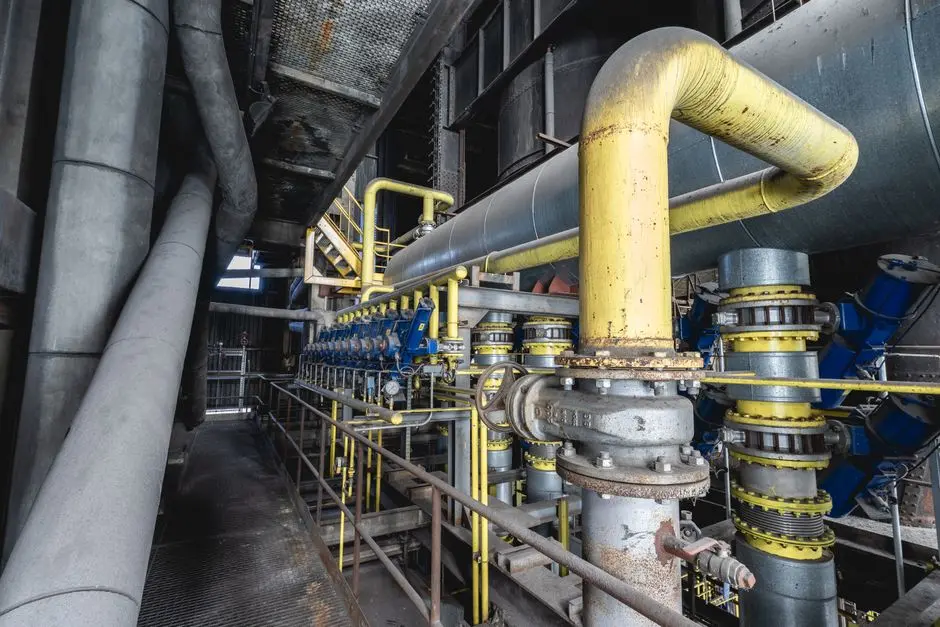
Vendors should quote the treatment objective, feed envelope, recovery, permeate quality and concentrate fate as one package. A blowdown RO skid without defined pretreatment, storage, controls or concentrate routing is not comparable with a complete treatment train. Give each bidder the same validated water balance, chemistry dataset, operating philosophy and compliance basis.
The 2026 HydropureWater guide gives an order-of-magnitude installed cost of US$250,000–500,000 for a 50,000 GPD blowdown RO package. It also reports operating cost of US$1.50–3.00 per thousand gallons. These are preliminary comparators, and the stated scope, materials, automation, utility requirements and concentrate disposition must be checked in each quotation. Capacity, automation, pretreatment and concentrate handling can materially change the price.
| Procurement package | Required quotation or guarantee | Supplier evidence |
|---|---|---|
| CTBD pretreatment | Validated feed flow; solids-removal duty; filter cut; UF flux; backwash and chemical-cleaning demand | Side-stream and UF test data using site chemistry; membrane-material details |
| RO train | Feed and permeate flow; system recovery; permeate TDS; energy use; membrane flux; cleaning intervals | Project-specific mass balance and pilot or side-stream trial |
| Controls and instrumentation | Conductivity, pH, differential pressure, flow, antiscalant dosing, interlocks and data export | Control narrative, cause-and-effect matrix and alarm list |
| Concentrate and reuse | Concentrate volume and chemistry; precipitation or disposal route; permeate storage and blend control | Mass balance, waste classification and operational procedure |
| Commercial and operational support | Installation boundary; commissioning tests; spares; local service; operator training; membrane replacement cost | Service schedule, warranty terms and proposed maintenance plan |
Require guarantees for feed and permeate flow, recovery, permeate TDS, specific energy consumption, membrane flux, antiscalant consumption and automatic backwash or cleaning cycles. Request documentation covering membrane materials, pressure-vessel compatibility, controls architecture, redundancy, local service availability, spare parts and operator training.
For the reuse option, evaluate industrial reverse osmosis systems for cooling-tower makeup reuse and confirm the proposed RO and UF membrane and filter elements against the design chemistry. Pilot or side-stream testing should use actual Cimahi makeup and CTBD because IDE and HydropureWater both identify scaling chemistry as the central constraint. A pilot is not a substitute for vendor guarantees, but it can expose unsuitable flux, antiscalant or cleaning assumptions before the final design.
Verify Compliance, Monitoring and Operational Readiness
The environmental approval must be treated as an input to process selection, not a document obtained after equipment selection. The 2026 HydropureWater guide cites Indonesia’s KLHK framework, Kepmen LH No. 5/2014 as amended, PP No. 22 of 2021 and site-specific AMDAL or UKL-UPL commitments. It does not provide a numeric Cimahi effluent table or establish the current project’s applicable limits.
The environmental engineer should obtain the latest parameter list and permit conditions from the competent West Java authority and reconcile them with the project’s AMDAL or UKL-UPL documents. Confirm the receiving water or sewer connection, groundwater-discharge constraints, monitoring frequency, sampling points and reporting responsibilities. Do not transfer Pekanbaru or generic Indonesian limits to Cimahi.
Once applicable requirements are confirmed, map TDS, pH, temperature, TSS, COD, BOD, total phosphorus, residual chlorine and monitoring frequency into the UKL-UPL compliance matrix. Include permits for permeate reuse and concentrate disposal, instrument calibration, bypass alarms, chemical-storage controls, emergency routing and incident reporting. The matrix should state the operating response when a limit or reuse-quality criterion is exceeded.
Reuse quality also requires a cooling-water chemistry program covering biocides, scale and corrosion inhibitors, dispersants and phosphorus content. These inputs affect both membrane performance and permit relevance. A high-recovery architecture such as controlled salt precipitation or dynamic RO remains an engineering option requiring scale-up and vendor proof; it is not a guaranteed outcome for every CTBD stream.
Frequently Asked Questions
What treatment route is preferred for cooling-tower blowdown in Cimahi?
Use segregated collection and equalization, followed by side-stream filtration, ultrafiltration, controlled antiscalant and pH adjustment, and reverse osmosis, with permeate stored for cooling-tower makeup reuse. Confirm this route through site chemistry, cooling cycles of concentration, permeate blending limits and concentrate disposition. Domestic sewage and chemical-cleaning wastewater should not be added to the CTBD train without separate treatment review.
What recovery can conventional BWRO achieve for cooling-tower blowdown?
Conventional BWRO is commonly limited to approximately 75–80% recovery for CTBD because silica, calcium carbonate and calcium sulfate constrain stable operation, according to IDE’s 2026 article and the 2026 HydropureWater guide. Controlled salt precipitation or dynamic RO may provide a higher-recovery alternative, but actual Cimahi makeup and CTBD must be tested before recovery is guaranteed.
What should a buyer budget for a blowdown RO package?
The 2026 HydropureWater guide gives US$250,000–500,000 as an installed order-of-magnitude range for a 50,000 GPD blowdown RO package and US$1.50–3.00 per thousand gallons for preliminary operating-cost comparison. Request a project quotation that separately prices electricity, membranes, chemicals, pretreatment, concentrate management, labor and disposal; do not use the benchmark as a fixed price for a Cimahi installation.
How should vendors be selected and what compliance risk must be resolved?
Compare vendors using guarantees for feed and permeate flow, recovery, permeate TDS, energy consumption, membrane flux, antiscalant use and cleaning cycles, supported by pilot data with actual Cimahi chemistry. Separately, obtain the current requirements from the competent West Java authority and project permit documents. The supplied research contains no Cimahi-specific numeric effluent limits, so discharge acceptance and reuse compliance remain unresolved until confirmed in writing.