Why Pekanbaru's climate and water profile change the data center water math
Pekanbaru sits in Riau Province on central Sumatra, with an urban population of over one million served by PDAM Tirta Siak and a network of shallow groundwater borefields (S1). A 100 MW hyperscale or edge facility in this setting can pull on the order of 2 million liters of water per day, a withdrawal comparable in scale to a small district (S3).
When that withdrawal is multiplied by evaporation losses in an adiabatic cooling plant, the rejected blowdown ends up in the Kampar/Siak river system, where S4 documents measurable downstream microbial pressure from hospital and community wastewater in the same city. Tropical wet-bulb temperatures in Sumatra compress the achievable cycles of concentration in any evaporative cooling tower compared to a temperate design, so the blowdown volume per MWh of IT load is higher than a template sized for Frankfurt or Virginia. Sizing a water and blowdown package without re-anchoring these numbers to the Riau context guarantees an undersized RO train and an oversize discharge permit application.
What comes out of a Pekanbaru data center's cooling tower and floor drains
Cooling tower blowdown (CTBD) in a typical data center runs 1,200–6,000 mg/L TDS, 4–8× the makeup water, with suspended solids in the 10–50 mg/L band (S2). At 4 cycles of concentration, a tower loses 25–30% of makeup water to blowdown, resulting in a 10 million-gallon-per-month site discharging 2.5–3 million gallons (S2). The chemistry that drives equipment selection is summarized in the table below.
| Parameter | Typical CTBD range | Driver for treatment selection |
|---|---|---|
| Total dissolved solids (TDS) | 1,200–6,000 mg/L | Sets RO feed osmotic pressure and discharge cap |
| Suspended solids | 10–50 mg/L | Sets side-stream filter cut and UF flux |
| Calcium, magnesium, alkalinity | Scaled with cycles of concentration | Drives antiscalant dose and RO recovery ceiling |
| Silica | Concentrates near scaling limit | Caps conventional BWRO recovery at 75–80% (S3) |
| Iron and manganese | Elevated in groundwater-fed PDAM/bor feed | Contributes to corrosion-product suspended solids (S2) |
| Treatment chemicals | Biocides, scale/corrosion inhibitors, dispersants | Must be characterized before reuse or discharge design is locked (S2) |
| Floor drain / softener regen | Intermittent, lower TDS, higher BOD | Routed to neutralization tank before blending with CTBD |
Server-room floor drainage and softener regeneration brine are intermittent but must be characterized before blending. Riau groundwater-fed makeup typically adds iron and manganese to the load, which S2 flags as corrosion-product contributors in the suspended solids fraction. If those streams are blended into the blowdown equalization tank without separate characterization, the downstream membrane sees a feed that is harder than any steady-state assumption.
The treatment train: side-stream filtration, UF, RO and where each step belongs
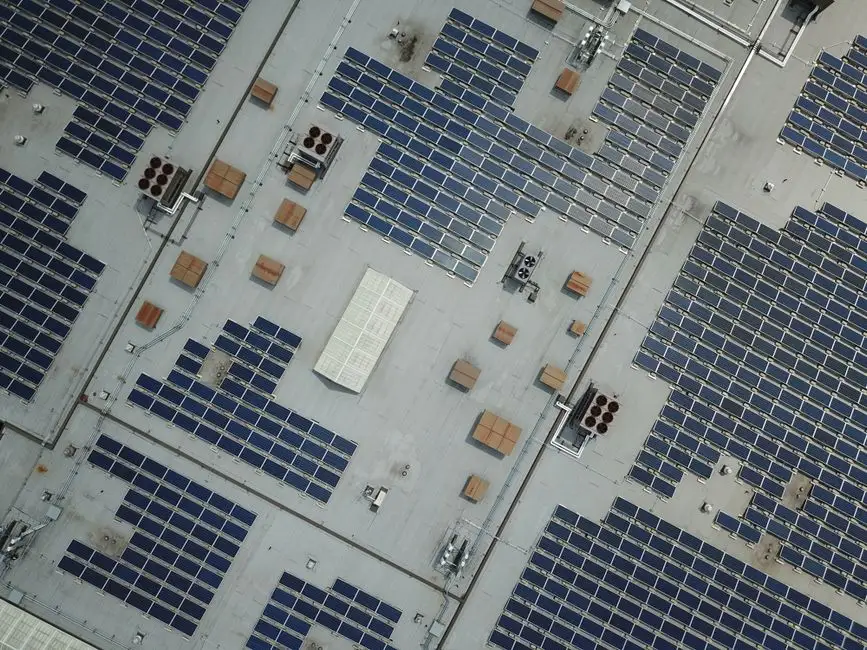
Self-cleaning side-stream filters at 10–25 micron cut blowdown suspended solids to a level manageable for downstream membranes, with 1–5% of circulation flow typically filtered (S2). A multi-media filter as the side-stream pretreatment ahead of UF handles the bulk load, after which a hollow-fiber UF pretreatment for the cooling-tower blowdown RO train operates at 0.01–0.1 micron pore size, removing bacteria, viruses, and high-molecular-weight organics, and achieving 90–95% recovery on its own backwash cycle (S2). An industrial RO unit sized for 50,000 GPD blowdown duty then removes 95–99% of dissolved solids, producing permeate at 10–50 mg/L TDS suitable for direct return to the cooling tower as high-quality makeup (S2).
| Stage | Function | Key operating point | Source |
|---|---|---|---|
| Side-stream spiral filter | 10–25 micron suspended-solids cut | 1–5% of circulation flow | S2 |
| Multi-media filter | Bulk TSS reduction ahead of UF | Backwash on differential pressure | S2 |
| Ultrafiltration (UF) | 0.01–0.1 micron barrier for RO protection | 90–95% recovery; CEB every 1–3 months | S2 |
| Reverse osmosis (BWRO) | Dissolved solids removal; permeate to cooling tower | 75–80% recovery ceiling on CTBD | S3 |
| Antiscalant and pH adjustment | Keep silica, CaSO4, CaCO3 below saturation | Feed filtered to <10–15 microns first | S2 |
Standard BWRO on CTBD is limited to 75–80% recovery before silica and calcium sulfate scaling become unmanageable, so this figure must be flagged on the P&ID rather than quoted as a generic 95% RO figure (S3). A 50,000 GPD RO package on blowdown sits in the $250,000–500,000 installed range with $1.50–3.00 per thousand gallons operating cost (S2), providing a useful order-of-magnitude benchmark for a Pekanbaru pre-feasibility study. Antiscalant chemistry, pH adjustment, and feed filtration below 10–15 microns are the three non-negotiable preconditions for stable RO operation on this stream (S2); the cross-reference RO membrane design criteria reference covers the sizing arithmetic in more detail.
Reuse, discharge, or zero liquid discharge — which path fits Pekanbaru
Cooling-tower makeup reuse is the highest-value option and typically achieves 60–85% recovery on blowdown (S2), which directly cuts both freshwater intake and discharge volume. Where discharge is the only option, TDS caps in some jurisdictions are already below 1,500 mg/L, and discharge fees in water-stressed regions run $5–15 per thousand gallons (S2) — a benchmark to confirm against the local Pekanbaru tariff. Zero liquid discharge combines RO (70–80% recovery) with thermal evaporation (95–98% on concentrate) and crystallization, reaching 95–99% overall water recovery but at $3–8 million capital and $5–15 per thousand gallons operating cost (S2).
| Pathway | Typical recovery | CAPEX band | OPEX band | Best fit for Pekanbaru |
|---|---|---|---|---|
| Cooling-tower makeup reuse (BWRO) | 60–85% on blowdown | Low–moderate | Low | Default for most sites (S2) |
| Discharge compliance polishing | Varies with permit | Low | Driven by discharge tariff | Only if reuse is blocked (S2) |
| Full ZLD (RO + MVC + crystallizer) | 95–99% | $3–8 million | $5–15 / 1,000 gal | Rare; only when freshwater is unavailable (S2) |
| Partial ZLD / salt precipitation | Above 80% | Moderate | Moderate | Riau sites that need higher recovery without ZLD cost (S3) |
Full ZLD is rarely economic in Pekanbaru unless freshwater is physically unavailable. Partial ZLD with deep-well injection or controlled outfall is the more realistic option, and this should be stated as a deliberate decision in the FEED report rather than defaulted to. S3's MAXH₂O-style architecture (controlled salt precipitation, dynamic RO flushing) is a relevant reference for Riau sites that need recovery above 80% without paying the full ZLD bill. A peer comparison for a similar tropical-Asian context is the Dhanbad, India data center blowdown guide; for an African tropical counterpart, see the Matola, Mozambique data center blowdown guide.
Indonesian compliance: KLHK, AMDAL and discharge to the Kampar/Siak basin
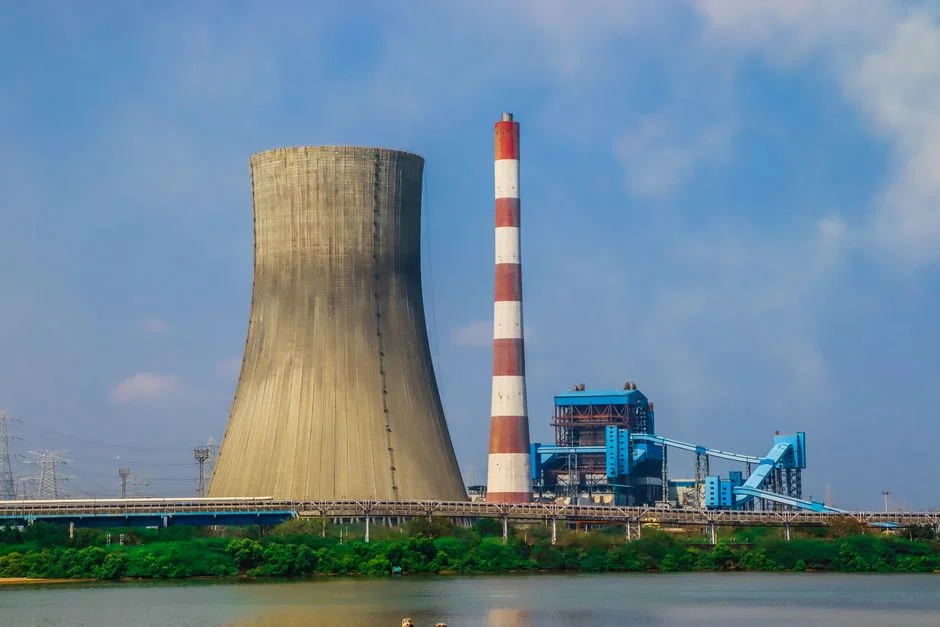
Industrial wastewater discharges in Indonesia are governed by KLHK standards under the framework that includes Kepmen LH No. 5/2014 as amended, plus site-specific AMDAL/UKL-UPL commitments, and the design must close these out before blowdown RO sizing is locked. Pekanbaru's receiving waters are already under documented microbial pressure from hospital and community wastewater, with ESBL-producing Enterobacteriaceae detected at hospital and community health center outlets in the city (S4), which pushes the design toward reuse over direct discharge. The Riau provincial environmental agency (DLH Provinsi Riau) typically sets site-specific TDS, BOD, COD, total phosphorus, and residual chlorine limits tighter than the national minimum where the receiving waterbody is classified as a water-supply source. Operator-facing items — biocide selection, neutralization of phosphate-based legacy chemistry, emergency dump-tank routing — must be visible in the UKL-UPL matrix from the start. Since the supplied research does not include the numeric KLHK limit tables, the engineer must request the latest parameter list from DLH Provinsi Riau during FEED rather than rely on a generic quoted number.
Operating the system in a tropical, grid-variable environment
Side-stream filtration and RO must hold steady through wet-bulb spikes that drive cooling-tower cycles down and blowdown volume up; the design margin on feed pump and RO train sizing is what keeps the system on spec through these events (S2). Tablet-based, low-phosphate cooling-water chemistry reduces blowdown contamination that would otherwise foul membranes and complicate discharge permits (S2), directly relevant to KLHK phosphorus limits. A PLC-controlled antiscalant and biocide dosing skid keeps the inhibitor program stable through monsoon-season intake-quality swings, while a chlorine dioxide generator for cooling-water biocide control lets the operator switch to a low-residual biocide regime without storing large volumes of liquid hypochlorite. Generator and UPS transitions on a Sumatra grid typically cause short cooling-tower flow interruptions; RO feed tanks and flush routines must be sized for these, not just for steady-state operation. S2's point that antiscalant programs and periodic cleaning enable higher RO recovery on blowdown is the bridge between design numbers and the 75–80% ceiling that S3 flags for conventional BWRO.
Sizing checklist a Pekanbaru FEED team can hand to procurement
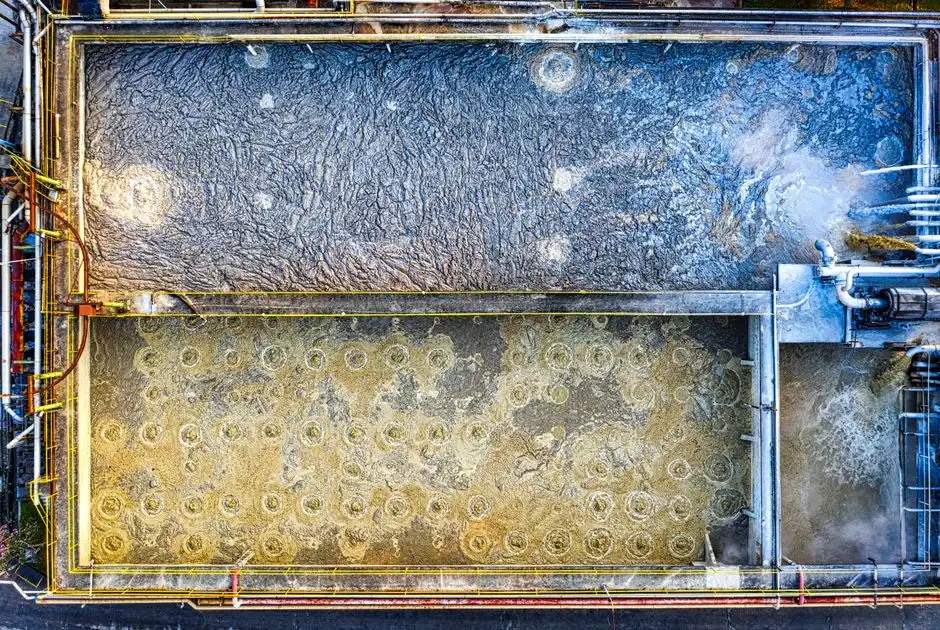
- Confirm peak IT load, design PUE, expected makeup source (PDAM Pekanbaru vs groundwater vs hybrid), and target cycles of concentration before sizing blowdown flow.
- Request a 12-month water analysis from PDAM or the chosen groundwater borefield covering iron, manganese, silica, hardness, chloride, total phosphorus, and microbial counts.
- Lock the discharge pathway first (reuse / sewer / surface water / deep well), because this drives whether the design needs 75–80% recovery RO or a higher-recovery salt-precipitation train (S2, S3).
- Decide upfront whether the project will pursue a KLHK standard permit or a site-specific negotiated limit, since the latter is common in Riau but adds 6–12 months to the schedule.
- Specify sludge-handling equipment from the start; a filter press for RO concentrate and clarifier sludge dewaters the brine stream that blowdown RO inevitably produces, and an MBR for the floor-drain and softener-regen blend handles the higher-BOD side stream before it is sent to RO feed.
Frequently Asked Questions
What CAPEX and OPEX should we budget for a Pekanbaru-sized blowdown RO train?
For a
Frequently Asked Questions
What cooling-tower blowdown treatment system does a data center in Pekanbaru, Indonesia actually need in 2026?
In 2026, a data center in Pekanbaru requires a multi-stage treatment train designed to handle high silica and hardness concentrations typical of Riau’s groundwater. The system must include pre-treatment via ultrafiltration (UF) to remove suspended solids, followed by anti-scalant dosing and a high-recovery reverse osmosis (RO) system. Given the tropical climate and high humidity, the system must also integrate real-time conductivity and pH monitoring to ensure the blowdown meets the stringent water quality parameters required for cooling tower makeup cycles of concentration (COC) optimization.
How much does a 50,000 GPD blowdown RO train cost to install and operate for a data center in Riau Province?
The estimated capital expenditure (CAPEX) for a 50,000 GPD (gallons per day) blowdown RO system in Riau ranges from $250,000 to $400,000 USD, depending on the level of automation and materials—typically 316L stainless steel or high-grade PVC. Operational expenditure (OPEX) is projected at $0.80 to $1.50 per 1,000 gallons treated, accounting for electricity, membrane replacement cycles of 24–36 months, and chemical consumables like coagulants and antiscalants specific to local water chemistry.
Which supplier or technology should a Pekanbaru FEED team shortlist for a hyperscale CTBD reuse system?
FEED (Front-End Engineering Design) teams should prioritize suppliers offering Vibratory Shear Enhanced Processing (VSEP) or high-recovery RO configurations capable of handling high-salinity concentrations. Key technology providers active in the Southeast Asian hyperscale sector include Veolia, DuPont Water Solutions, and SUEZ, specifically those with local technical support in Pekanbaru or nearby Riau industrial zones. Shortlisted vendors must demonstrate proven capability in managing silica scaling, which is the primary operational bottleneck for cooling tower blowdown (CTBD) reuse in the region.
What KLHK and AMDAL permits apply to data center cooling-tower blowdown discharge in Riau Province, and how long do they take?
Data centers must comply with KLHK (Ministry of Environment and Forestry) regulations, specifically PP No. 22 of 2021 regarding environmental management. Discharge permits (Persetujuan Teknis Pembuangan Air Limbah) require a detailed AMDAL (Environmental Impact Assessment) or UKL-UPL report depending on the facility's scale and proximity to local water bodies. The permitting process in Riau typically takes 6 to 12 months to secure, contingent on the submission of a comprehensive wastewater quality management plan and evidence of compliance with the latest effluent standard parameters (Baku Mutu Air Limbah).
Can a Pekanbaru data center reuse 80% or more of its cooling-tower blowdown without going to full zero liquid discharge?
Yes, achieving 80% to 85% water recovery is technically feasible through the implementation of a high-recovery RO configuration coupled with high-efficiency side-stream filtration. By utilizing advanced membrane technology that operates at higher osmotic pressures and implementing precise antiscalant dosing, facilities can significantly reduce waste volume without the high energy and capital costs associated with full Zero Liquid Discharge (ZLD) thermal evaporators or crystallizers. This approach effectively balances water conservation goals with the operational budget requirements of a hyperscale data center in 2026.