What Tlalpan’s data center must decide first
A data center in Tlalpan needs separate treatment trains for cooling-tower blowdown and sanitary wastewater because their contaminants, reuse pathways and permit conditions differ. The industrial train should be sized from measured water chemistry, the site water balance and a confirmed discharge route; filtration plus reverse osmosis, partial zero liquid discharge and full ZLD become relevant only after those inputs are defined. The same discipline applies to sanitary flow, which requires biological treatment rather than routing through the industrial membrane train. This article develops a Tlalpan-specific decision framework for equipment shortlisting, authority review and a defensible bid package.
Cooling blowdown is the principal industrial wastewater stream because evaporation leaves dissolved minerals and treatment chemicals in the recirculating water. Sanitary flow has different biological loading and permitting requirements, so RSP Engineers treats the two streams separately. A site balance must also include treatment backwash, equipment cleaning and air-handling condensate; otherwise, the bidders’ flow estimates will omit recurring wastewater that requires treatment, storage or disposal.
Makeup flow, evaporation, blowdown and backwash must be measured before equipment selection. HydropureWater, citing Genesis Water Tech (2025), reports that at 4 cycles of concentration, blowdown equals 25–30% of makeup water. The buyer must also decide whether the treated stream will enter the sewer, replace cooling-loop makeup, support non-potable reuse, or be prevented from producing any liquid discharge. Each outcome produces a different process train and commercial basis.
Do not assume that a sewer connection is available. Confirm the receiving authority, permitted route, flow and quality limits, water-allocation conditions and non-potable reuse requirements with the authority and local counsel. The supplied research identifies NOM-001-SEMARNAT and applicable Edomex reuse rules as compliance checks, but it contains no current Tlalpan effluent limits or reuse parameters. Those mandatory inputs must be obtained before final sizing. The 2026 data-center wastewater treatment guide for Cimahi offers a parallel location framework, but Tlalpan’s site data must remain the governing basis.
Build a measured Tlalpan water balance
A defensible Tlalpan equipment bid begins with a measured water balance, not a generic treatment rate per gallon. Request a 12-month site analysis of source water, cooling-loop water and blowdown, then reconcile those results with monthly makeup, evaporation, blowdown, backwash and reuse volumes. The resulting flows and constituent concentrations determine pretreatment, membrane recovery, storage and concentrate-management requirements.
HydropureWater, citing Genesis Water Tech (2025), identifies TDS, hardness, silica, chloride, sulfate, iron and manganese as parameters that set the RO recovery ceiling and antiscalant dose. Characterize blowdown separately for suspended solids, pH, temperature, treatment-chemical residuals and relevant metals. The same source reports basin suspended solids of 10–50 mg/L despite effective side-stream filtration and blowdown TDS of 1,200–6,000 mg/L; these figures define the analytical basis to test, not Tlalpan design values.
Document the complete cooling-water chemistry package: biocides, corrosion inhibitors, scale inhibitors and dispersants. RSP Engineers explains that these compounds, concentrated minerals, phosphates, sulfates and chlorides shape pretreatment requirements. Open Engineering Inc.’s 2026 life-cycle assessment also reports that improved cycles of concentration can reduce blowdown and chemical consumption, so the existing cooling program should be reviewed before adding membranes.
| Design input | Evidence to request | Decision affected |
|---|---|---|
| Water balance | Makeup, evaporation, blowdown, backwash, cleaning and condensate flows | Treatment and storage capacity |
| 12-month analysis | TDS, hardness, silica, chloride, sulfate, iron and manganese | RO recovery and antiscalant dosing |
| Blowdown analysis | TDS, suspended solids, pH, temperature, residuals and relevant metals | Filtration, chemical control and discharge compliance |
| Cooling program | Biocide, corrosion-inhibitor, scale-inhibitor and dispersant information | Reuse compatibility and pretreatment |
| Authority inputs | Discharge or reuse route, applicable limits and allocation conditions | RO, partial ZLD or full ZLD |
Issue measured flows and chemistry with the procurement package. A multi-media pretreatment filter for industrial wastewater can then be specified against the actual solids load rather than selected from a generic flow assumption.
Treat cooling blowdown as an industrial stream

Cooling-blowdown treatment should progress from particulate and biological control to selective membrane separation, with concentrate management determined by the permitted discharge route. The first barrier is side-stream filtration for corrosion products, biofilm fragments, dust and other suspended solids. This protects downstream equipment and supports the membrane-feed specification.
Use ultrafiltration where biological control and membrane protection justify it. HydropureWater, citing Genesis Water Tech (2025), reports a 0.01–0.1 micron pore size, 90–95% recovery and chemical cleaning every 1–3 months for the described blowdown-pretreatment duty. A hollow-fiber ultrafiltration system for cooling-blowdown pretreatment should therefore be evaluated against the measured feed, temperature, flux and chemical program rather than accepted on catalog performance alone.
Select RO or nanofiltration using hardness, silica, sulfate and scaling risk, not feed TDS alone. HydropureWater, citing Genesis Water Tech (2025), reports RO rejection of 95–99% of dissolved solids, 50–85% recovery on blowdown, 150–400 psi operating pressure and permeate TDS of 10–50 mg/L. The industrial reverse osmosis system for cooling-water reuse should be offered with recovery and permeate guarantees tied to the submitted water analysis.
Integrate biocide and antiscalant control with pretreatment. HydropureWater reports UF operation at 10–30 psi and 90–95% recovery for the referenced duty, but no guarantee should displace responsibility for the actual cooling program. Review chemical compatibility with the membrane supplier and confirm whether a chemical dosing skid for antiscalant and biocide control is required. If chlorine is part of the approved control strategy, evaluate a site-generated chlorine dioxide system against the complete control plan.
For sewer discharge, confirm pH neutralization, dechlorination or non-persistent biocide requirements, solids removal and metal controls with the receiving utility. RSP Engineers identifies these as common industrial pretreatment requirements. Reserve MVC and crystallizer steps for sites where the residual brine cannot be accommodated by the permitted route; authority limits and the site water balance must trigger that decision.
Keep sanitary wastewater on a biological train
Sanitary wastewater requires a biological treatment train separate from concentrated cooling blowdown because the streams carry incompatible contaminant profiles. HydropureWater, citing Genesis Water Tech (2025), reports sanitary wastewater demand of 80–120 L per person per day. That figure supports sanitary-flow estimation, but the final design must use the project’s occupancy, shift pattern and fixture assumptions.
Restroom and other sanitary flows should not enter the RO feed or blowdown-pretreatment system. HydropureWater states that combining the streams can invalidate membrane and cooling-chemistry design assumptions: sanitary wastewater introduces biological oxygen demand, suspended-solids and nutrient variations that RO was not selected to treat in this application.
An MBR biological treatment system for data-center sanitary wastewater is appropriate when the project requires compact biological treatment with fine solids separation. HydropureWater specifies its MBR system for 10–2,000 m³/day and near-reuse-quality effluent below 1 μm. These are supplied equipment benchmarks, not Tlalpan sizing values.
Give the sanitary train its own discharge or reuse pathway, sampling plan and operating responsibility. It should not inherit the cooling train’s permit, chemical controls or concentrate assumptions. This separation also makes the two equipment packages easier to price, commission and operate independently.
Compare reuse and ZLD options against site constraints
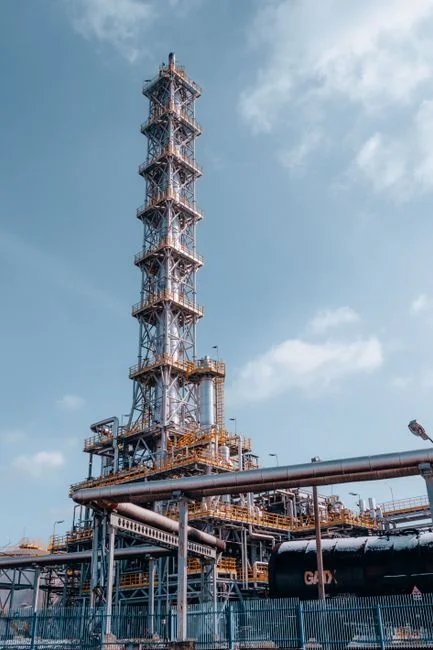
The industrial treatment route should follow the actual discharge and reuse constraint: filtration plus RO where concentrate can be lawfully discharged, partial ZLD where liquid discharge must be reduced, and full ZLD where no liquid discharge route is available or liquid reuse is mandatory. The decision must include energy and carbon as well as capital and operating cost.
| Site condition | Indicative treatment route | Basis and open issue |
|---|---|---|
| Stable allocation and obtainable sewer permit | Side-stream filtration plus RO with controlled concentrate discharge | HydropureWater describes 60–75% blowdown reuse for its low-stress scenario; this is not a Tlalpan requirement |
| Contested allocation or partial discharge restrictions | NF or partial softening plus RO, with MVC treatment of concentrate | HydropureWater describes an 80% reuse target in its medium-stress scenario; concentrate acceptance remains an authority input |
| No liquid discharge or water-positive objective | RO plus MVC plus crystallization | HydropureWater, citing Genesis Water Tech (2025), reports 95–99% recovery, $3–$8 million capital cost and $5–$15 per thousand gallons operating cost |
Use the reported 50,000 GPD RO benchmark only for initial order-of-magnitude comparison. HydropureWater, citing Genesis Water Tech (2025), gives $250,000–$500,000 installed and $1.50–$3.00 per thousand gallons operating cost for that benchmark. These are not a Tlalpan bid and cannot be used as site quotations.
Energy can materially change the comparison. Open Engineering Inc.’s 2026 LCA found that the wastewater scenario had about twice the freshwater scenario’s global warming potential; treatment energy accounted for roughly 80% of the difference. Its UF+RO scenario used over five times the freshwater energy, although improved cycles of concentration reduced blowdown and chemical consumption.
The same 2026 LCA found an indirect water penalty of approximately 0.93 L/m³ for the reuse train, less than 0.1% of the direct freshwater-displacement benefit. That result supports reuse, but it does not replace a Tlalpan-specific energy assessment using the proposed power source, membrane recovery and concentrate route. RO and UF replacement elements should therefore be evaluated as operating-cost items alongside the initial skid scope.
Plan the treatment area, controls and compliance evidence
The treatment concept must be accommodated in the civil design before equipment orders are placed. Reserve space for skids, tanks, chemical storage, spill containment, drainage, sampling points and maintenance access. RSP Engineers warns that late recognition of treatment-equipment footprint can produce redesign and layout conflicts; the site plan should therefore show normal and failed-operating states rather than equipment envelopes alone.
Specify automated controls for flow, conductivity, pH and chemical dosing where required, together with local monitoring and laboratory sampling. RSP Engineers identifies these as elements of ongoing permit compliance. Require bidders to provide cause-and-effect logic, alarm response, data logging and safe sampling arrangements so that the system can support operating records and authority reporting.
Make the bid measurable. Require guarantees for treatment flow, recovery, permeate quality, concentrate volume, cleaning frequency, membrane or consumable life and—where included—MVC energy consumption and ZLD salt-cake output. Tie each guarantee to the submitted 12-month analysis and identify the operating envelope that would exclude the guarantee.
Confirm the discharge and reuse pathway with the relevant authority and local counsel before final orders. The supplied research does not establish current Tlalpan effluent limits or tariffs, so sizing from assumed regulatory values would create avoidable redesign risk. The procurement package should also cover start-up support, operator training, spare membranes, chemical inventory planning and preventive maintenance. A parts and filter-media schedule for planned maintenance and change-out can be included with the technical bid.
Frequently Asked Questions
Can a Tlalpan data center discharge cooling blowdown directly to the sewer?
Only after the receiving utility confirms the route, permitted flow, constituent limits, temperature and pretreatment requirements. RSP Engineers states that sewer connection requires authority approval and site-specific pretreatment. A conceptual bid should request the applicable industrial-user or discharge conditions,
Frequently Asked Questions
Can a data center in Tlalpan discharge cooling-tower blowdown to the municipal sewer?
Yes, but it is subject to the strict regulations set by the Mexico City Water System (SACMEX) and NOM-002-SEMARNAT-1996. Because Tlalpan often faces water scarcity and strict drainage discharge limits, you must ensure your blowdown meets specific parameters for pH (5.5 to 10.0), total suspended solids (TSS), and heavy metals before discharge.
If your cooling tower uses high concentrations of biocides or corrosion inhibitors, you may exceed the toxicity limits allowed for the municipal sewer system. Pre-treatment is typically required to remove scale inhibitors and adjust alkalinity to comply with local discharge permits.
How much does cooling-blowdown treatment cost for a Tlalpan data center?
Capital expenditure (CAPEX) for a standard treatment system typically ranges from $150,000 to $500,000 USD depending on flow rates, while operational expenditure (OPEX) generally falls between $0.50 and $1.50 USD per cubic meter of treated water. These costs vary significantly based on the local energy tariffs in Mexico City and the required chemical consumption for membrane maintenance.
If you implement Zero Liquid Discharge (ZLD) to meet stringent environmental goals, costs can escalate by 300% to 500% due to the high energy demand of thermal evaporators or high-pressure brine concentrators. Regular water quality monitoring is essential to optimize these costs and prevent membrane fouling.
What water-quality data do I need to size UF, RO or ZLD equipment?
To accurately size equipment, you must conduct a full laboratory analysis of your source water and the resulting blowdown, specifically testing for Total Dissolved Solids (TDS), silica (SiO2), alkalinity, hardness, and Langelier Saturation Index (LSI). High silica levels are particularly critical, as they can cause irreversible scaling on Reverse Osmosis (RO) membranes.
You also need to establish the expected blowdown flow rate (m³/day) and the concentration cycles of your cooling towers. Without accurate baseline data on conductivity and organic carbon (TOC), sizing for Ultrafiltration (UF) and RO systems often leads to either undersized hardware that fails to meet regulatory limits or oversized systems with unnecessary energy consumption.
Should a Tlalpan data center choose UF plus RO or full zero liquid discharge?
The choice depends on your specific water-use efficiency (WUE) targets and the discharge constraints of the Tlalpan district. UF plus RO is the industry standard for recycling blowdown, allowing for 70% to 85% water recovery, which is usually sufficient to meet standard sustainability certifications and local discharge requirements.
Full Zero Liquid Discharge (ZLD) should only be selected if your facility has a net-zero water mandate or if local authorities have prohibited all industrial liquid discharges from your site. ZLD is significantly more complex and energy-intensive, requiring advanced thermal or mechanical evaporation technologies to handle the final concentrated sludge.
Can sanitary wastewater be mixed with cooling-tower blowdown?
It is strongly recommended to treat these two streams separately. Sanitary wastewater contains biological contaminants, high levels of nitrogen, and phosphorus, requiring a biological treatment process such as a Membrane Bioreactor (MBR) to meet discharge standards.
Cooling-tower blowdown is primarily an inorganic stream containing high concentrations of dissolved salts and chemical treatment additives. Mixing the two streams complicates the treatment process, as the biological components can foul RO membranes used for cooling water recovery, and the concentrated chemicals from the cooling tower can inhibit the bacterial cultures required for sanitary wastewater treatment.