Build the Controlling-Limits Matrix First
Food and beverage plants near Jackson meet pretreatment limits by applying the most restrictive requirement for each parameter, not by treating one permit or one regulation as the whole design basis. The federal National Pretreatment Program in 40 CFR Part 403 supplies the framework, while applicable categorical standards appear in 40 CFR Parts 405–409. Mississippi requirements and the local POTW industrial user permit must be confirmed for the actual discharge point. Because the supplied research provides no Jackson-specific numerical limits, this project workbook leaves those entries open until current permit documents are obtained.
Start with the US food and beverage pretreatment compliance guide to identify the applicable category and delegated POTW role. For every regulated parameter, obtain the federal condition, any Mississippi condition, and the site-specific permit condition. The controlling value is the most restrictive applicable limit at the designated monitoring point; surcharge thresholds remain separate from discharge limits and must not be used as design targets.
| Parameter | EPA or categorical standard | Mississippi requirement | POTW permit limit | Monitoring point | Averaging period | Surcharge threshold | Controlling value |
|---|---|---|---|---|---|---|---|
| BOD or COD | Confirm applicable subpart and process category | Enter current condition | Enter written permit limit | Final discharge manhole | Enter permit method | Enter current schedule | Most restrictive applicable condition |
| TSS | Confirm applicable categorical standard | Enter current condition | Enter written permit limit | Final discharge manhole | Enter permit method | Enter current schedule | Most restrictive applicable condition |
| FOG | Confirm applicable categorical standard | Enter current condition | Enter written permit limit | Final discharge manhole | Enter permit method | Enter current schedule | Most restrictive applicable condition |
| pH | Confirm categorical condition | Enter current condition | Enter written permit limit | Final discharge manhole | Enter continuous or composite method | Enter if applicable | Most restrictive applicable condition |
| Temperature | Confirm categorical condition | Enter current condition | Enter written permit limit | Final discharge manhole | Enter permit method | Enter if applicable | Most restrictive applicable condition |
| Total phosphorus | Confirm applicability | Enter current condition | Enter written permit limit | Final discharge manhole | Enter permit method | Enter current schedule | Most restrictive applicable condition |
| Ammonia or total nitrogen | Confirm applicability | Enter current condition | Enter written permit limit | Final discharge manhole | Enter permit method | Enter current schedule | Most restrictive applicable condition |
| Flow | Confirm any categorical condition | Enter current condition | Enter written permit limit | Final discharge manhole | Enter permit method | Enter current schedule | Most restrictive applicable condition |
The supplied Jacksonville engineering guide gives BOD at 300 mg/L, TSS at 300 mg/L, and oil and grease at 100 mg/L only as Jacksonville example thresholds. Those values must not be transplanted to Jackson, Mississippi. A buyer should use the comparative structure in the industrial pretreatment limits guide while obtaining Jackson-area documents directly.
Characterize the Wastewater at Plant Conditions
A seven-day sampling campaign should cover a CIP day, a non-CIP day, and a weekend low-flow period at the plant sewer manhole. The HydropureWater Jacksonville engineering guide identifies the resulting peak-to-average ratio as the key input for equalization and peak-capacity sizing. This campaign must represent the plant’s actual discharge sequence; permit language alone cannot establish the hydraulic and contaminant peaks that equipment must handle.
Record continuous flow and pH, along with BOD, COD, TSS, FOG, temperature, and ammonia or total nitrogen where relevant. Time-stamp production, washdown, CIP, and batch discharges so peaks can be matched to their causes. Record caustic, acid, sanitizer, and other CIP contributions separately rather than treating all high-strength wastewater as one stream.
The same 2026 engineering guide reports that food and beverage plants can experience 2–3x flow swings during CIP and shift changeovers. Size the equalization basin and downstream treatment for measured peak flow, not daily average flow. A single composite concentration can also conceal a short FOG or caustic slug; pair composite chemistry with a continuous hydraulic record.
Separate the process basis into two pollutant groups. High-FOG streams need free and emulsified oil characterization and coagulation testing. Sugar and starch loads require soluble BOD or COD characterization because they can increase biological oxygen demand rapidly even when suspended solids appear manageable. The wastewater characterization guide supports the principle of using plant-specific data rather than assuming the wastewater profile from another industry.
Pilot the proposed train on actual wastewater. Laboratory-spiked samples do not reproduce the chemistry or sequence of a full CIP cycle, a high-FOG slug, and the interaction between cleaning chemicals, fats, and readily biodegradable material. Record inlet and outlet flow, BOD, TSS, FOG, pH, and ammonia or total nitrogen, with additional parameter-specific tests where required.
Design the Pretreatment Train Around Peak Loads
The defensible process sequence is screening, equalization, DAF, biological treatment, pH correction, and final clarification or polishing as the permit and wastewater data require. Each stage needs a measured design target; buying a unit by flow alone leaves the compliance basis incomplete.
| Process stage | Primary function | Design input | Evidence or procurement requirement |
|---|---|---|---|
| Rotary or bar screening | Remove suspended solids, rags, plastics, and fibrous debris before pumps and biological systems | Peak flow, debris size, capture requirement | Specify the GX Series rotary mechanical bar screen against measured debris loading |
| Equalization | Buffer CIP and shift-discharge peaks; blend pH and concentration variations | Measured peak-to-average ratio, batch timing, usable volume | Provide hydraulic calculations and verified working volume |
| DAF | Remove emulsified FOG and floatable solids | Peak flow, FOG, TSS, hydraulic loading, air-to-solids ratio, recycle | Pilot actual wastewater; compare the industrial DAF system for food-processing wastewater on a like-for-like basis |
| Biological treatment | Reduce soluble BOD and, where required, ammonia or nitrogen | Flow, BOD, F/M basis, HRT, nutrients, reuse target | Use measured loading; compare conventional activated sludge with the MBR membrane bioreactor for stringent discharge limits |
| pH correction | Hold the final discharge within the controlling pH condition | CIP chemical mass, flow range, target range | Specify flow-proportional control, alarms, and manual standby |
| Chemical precipitation or polishing | Control phosphorus or improve residual solids where required | Phosphorus form, alkalinity, TSS, final limit | Include the automatic chemical dosing system and PLC flow-proportional control |
| Sludge dewatering | Reduce hauling volume to the required cake dryness | Sludge quantity, required dryness, disposal route | Compare the plate-and-frame filter press by cake dryness and total disposal cost |
The HydropureWater US pretreatment guide gives a DAF design range of 4–25 m/h surface loading, a 0.005–0.02 air-to-solids ratio, and 20–40% recycle. It also cites performance of 25–50 mg/L O&G and 50–100 mg/L TSS. These are design references, not a substitute for Jackson permit limits or pilot results.
For biological treatment, the same guide contrasts conventional activated sludge at 8–24 hours HRT with MBR at 4–10 hours. Its cited MBR example achieves effluent below 30 mg/L BOD and below 5 mg/L TSS. Where phosphorus is controlled, it cites 50–250 mg/L alum or 30–150 mg/L ferric chloride with PLC-controlled, flow-proportional dosing. For sludge, evaluate the plate and frame press range of 1–500 m² against the required cake dryness and disposal route, not wet flow alone.
Choose DAF, MBR, or a Combined Train
DAF is the stronger primary fit when FOG and TSS dominate the constraint, provided actual wastewater falls within the demonstrated hydraulic and air-to-solids ranges. MBR becomes the stronger choice when ammonia or total nitrogen, very low solids, reuse quality, or footprint is binding. Neither technology should be accepted as an automatic answer for every permit parameter.
| Decision condition | Preferred scope | Selection evidence | Procurement check |
|---|---|---|---|
| FOG and TSS are dominant | DAF, followed by biological treatment if soluble BOD remains binding | Measured peak flow, FOG, TSS, hydraulic loading, air-to-solids ratio, recycle, pilot removal | Compare the industrial DAF system for food-processing wastewater against equalization and biological options |
| Ammonia, total nitrogen, very low solids, reuse, or footprint is binding | MBR, with upstream equalization and pretreatment as required | Measured ammonia or nutrient loading, HRT basis, reuse target, pilot solids and nutrient results | Compare the MBR membrane bioreactor for stringent discharge limits with conventional biological alternatives |
| Residual solids polishing is required before membranes | Lamella clarification before membrane filtration | TSS loading, surface-loading calculation, membrane feed quality, pilot solids result | Evaluate the high-efficiency sedimentation tank, whose catalog cites 20–40 m/h surface loading and up to 30% lower chemical consumption |
| Breweries have sufficient load and a defined biogas use | Anaerobic treatment as a specialized option | Upstream removal of hops and spent grains, loading basis, biogas balance, pilot evidence | Require protection of downstream equipment and an explicit biogas-use plan |
The DAF catalog covers 4–300 m³/h, while the MBR catalog covers 10–2,000 m³/day. These catalog capacities are screening filters, not a basis for ordering. A plant’s measured flow, loading, operating envelope, footprint, utilities, and permit basis must determine final size.
Require a side-by-side guarantee showing that each proposed train meets the controlling value for every regulated parameter under the stated peak-flow and loading conditions. A DF MBR membrane bioreactor module may be compared as an upgrade path where future discharge or reuse requirements justify it.
Put Monitoring and Reporting into the Equipment Scope
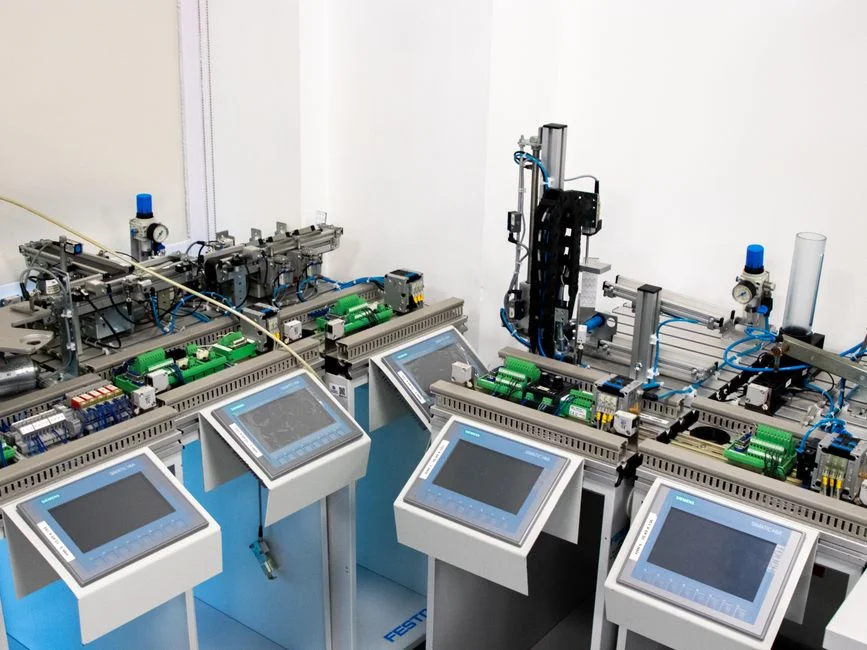
A compliant treatment train needs instrumentation that produces an auditable compliance record, not merely a discharge that occasionally passes a sample. Specify continuous flow and pH monitoring where required by the permit. Add TSS and ammonia monitoring when those parameters are needed to demonstrate the controlling limits or to protect downstream biological performance.
The controls scope should include high-level and low-level alarms, flow-proportional chemical dosing, event logs, data export, and reporting interfaces compatible with the plant’s compliance obligations. The automatic chemical dosing system should log dose commands, actual flow, operator interventions, and alarm acknowledgment. A failed or bypassed signal must create an event rather than disappear from the trend.
For polishing equipment, define automatic backwash cycles, differential-pressure monitoring, membrane cleaning limits, and recovery procedures. Controls must preserve treatment performance between manual samples. Include calibration intervals for meters, pH sensors, and any online TSS or ammonia instruments.
Write an exceedance procedure before commissioning. It should identify the responsible operator, notification path, immediate isolation or diversion decision, corrective-action record, resampling method, evidence retention, and restart authorization. The US pretreatment guide notes that a passing sample alone is inadequate when an excursion was not reported.
Confirm local reporting requirements and accepted electronic systems directly with the Jackson-area control authority. The supplied Connecticut example involving electronic noncompliance reporting is not a Mississippi rule. Applicable treatment parts, valves, and media should be included in commissioning and spares planning so critical replacements do not delay startup.
Budget for the Full Project, Not Just the Main Vessel
Capital and operating-cost examples provide planning context, but they are not Jackson quotations. The 2026 industrial flotation comparison and Virginia project guide cite a generic range from $250,000 for a basic DAF system to more than $2,000,000 for a complex MBBR or MBR train. They also cite annual operating expenses of $50,000–$200,000 for sludge hauling, chemicals, and power. Actual costs depend on flow, loading, disposal terms, and local surcharges.
| Bid item | Minimum information required | Bidder deliverable |
|---|---|---|
| Equipment and vessels | Process basis, capacity envelope, material specification, performance data | Priced bill of materials and selected-duty performance curve |
| Concrete and civil work | Excavation, foundations, containment, access, site interfaces | Civil scope, drawings, and exclusions |
| Piping and valves | Flow, pressure, materials, backflow and drainage requirements | Line list, piping plan, valve schedule, testing scope |
| Electrical and controls | Available power, area classification, PLC/SCADA, reporting interface | Load list, I/O list, drawings, controls narrative, alarm list |
| Pilot testing | Actual wastewater, agreed test protocol, parameter list | Raw data, calculations, deviations, final performance report |
| Freight, startup, training and spares | Delivery point, commissioning dates, operator scope | Named inclusions, exclusions, schedule, and recommended spares |
| Chemicals and sludge disposal | Dose assumptions, operating hours, disposal route, cake target | Initial fill quantities, unit-price basis, hauling assumptions |
| Engineering contingency | Site integration, piping, electrical modifications | 15–20% allowance as stated in the HydropureWater Jacksonville guide |
Reserve the stated 15–20% engineering contingency for site integration, piping, and electrical modifications. Do not spend that allowance on unverified performance gaps. Obtain the current permit first, complete characterization and pilot testing, then use the results to lock the design basis.
Plan around the 12–18 month lifecycle cited in the Jacksonville guide: 3–4 months for design and engineering, 3–6 months for permitting, and 4–8 months for long-lead procurement and installation. The applicable permit path and Jackson-area approval lead time must be confirmed locally; the Jacksonville schedule is planning context, not a Mississippi commitment.
Use the industrial flotation equipment comparison to normalize technology bids and the wastewater equipment cost and supplier checklist to normalize complete project scopes.
Frequently Asked Questions
Can Jackson permit limits alone determine the required DAF size?
No. DAF sizing also requires measured peak flow, FOG and TSS concentrations, hydraulic loading, air-to-solids ratio, recycle, and equalization performance. Ask the bidder to show how each supplied value drives the selected surface area, recycle rate, and air system. Pilot results should then confirm performance on actual wastewater.
Should a plant choose MBR simply because it is the most advanced option?
No. Select MBR when the controlling permit condition or reuse target requires tighter solids or nutrient performance, or when footprint is binding. Compare conventional activated sludge and MBR against the same measured loads, discharge requirements, footprint, utilities, and disposal costs. The engineering comparison of flotation alternatives illustrates why technology claims should be checked against the actual application.
What evidence should demonstrate that the treatment train will comply?
Require the current written permit conditions, actual wastewater characterization, a stated process-design basis, and pilot results. The final guarantee should identify the controlling value for each regulated parameter and state the flow and loading conditions covered by the guarantee. A supplier’s general performance brochure is not enough.
How should a buyer compare budget estimates for pretreatment equipment?
Compare complete scopes, not vessel prices. The cited $250,000 to more than $2,000,000 capital range and $50,000–$200,000 annual operating range are planning references from other jurisdictions, not Jackson quotations. Request itemized pricing for equipment, concrete, piping, electrical, controls, pilot work, freight, startup, training, chemicals, spares, sludge disposal, and the stated 15–20% engineering contingency.
What should an industrial wastewater supplier provide before selection?
Require a performance guarantee, process basis, electrical and controls drawings, FAT or SAT plan, installation boundary, consumables list, and startup support. Check references using comparable wastewater, flow, and permit duties. The supplier-selection framework in the engineering supplier checklist can be applied without importing the jurisdiction-specific rules from that source.