When to Choose Pressure Flotation Over Alternatives: 5 Industrial Wastewater Scenarios
Pressure flotation systems (DAF) remove 92–97% of total suspended solids (TSS) from industrial wastewater, outperforming lamella clarifiers (80–85%) and conventional sedimentation tanks (70–75%) at influent TSS > 500 mg/L (EPA 2024 benchmarks). Unlike gravity-based systems that rely on particle density, DAF systems utilize micro-bubbles (10–100 μm) to overcome the buoyancy of light contaminants. This makes the technology essential in specific industrial contexts where traditional clarification fails to meet discharge permits.
For industrial facilities with influent FOG (Fats, Oils, and Grease) > 200 mg/L, DAF is often the only viable technology capable of meeting EPA 40 CFR Part 439 limits without extensive pre-treatment. In food processing applications, internal data from HydropureWater indicates that a 300 m³/h DAF system can achieve 95% FOG removal, whereas API separators or sedimentation tanks typically struggle to exceed 60% removal for emulsified oils. This capability is critical for plants that must avoid "surcharge" fees from municipal utilities or comply with direct discharge regulations.
In the pulp, paper, and textile industries, the presence of colloidal matter necessitates a technology that pairs well with advanced coagulation and flocculation. DAF achieves up to 90% removal of these fine particles compared to just 60% in sedimentation tanks. The process requires a precise chemical prerequisite, typically maintaining an optimal pH of 6.5–7.5 and a polymer dose of 1–5 mg/L to ensure micro-bubbles effectively attach to the flocs. For a guide to FOG removal technologies, including DAF and API separators, understanding these chemical interactions is paramount to system efficiency.
Space-constrained brownfield sites frequently favor DAF due to its high hydraulic loading rates. While a dissolved air flotation (DAF) system for high-efficiency TSS and FOG removal is roughly 20% larger than a lamella clarifier, it is 30–50% smaller than a conventional sedimentation tank for the same flow volume. This footprint advantage allows factories to increase treatment capacity within existing facility boundaries.
| Technology | Footprint (m² per 100 m³/h) | Ideal TSS Range (mg/L) | FOG Handling Capability |
|---|---|---|---|
| Pressure Flotation (DAF) | 50–80 | 500–2,000+ | Excellent (>95% removal) |
| Lamella Clarifier | 30–50 | 100–500 | Poor (clogging risk) |
| Sedimentation Tank | 150–300 | <500 | Moderate (requires skimming) |
Pressure Flotation vs Alternatives: Parameter Comparison Table
Selecting the correct wastewater technology requires a technical trade-off analysis between removal efficiency, energy consumption, and operational complexity. While DAF offers superior TSS and COD removal in high-load scenarios, its energy profile is significantly higher than passive gravity systems. The following table provides a head-to-head comparison based on EPA 2024 benchmarks and HydropureWater internal benchmarks for 2025.
| Parameter | DAF (Pressure Flotation) | Lamella Clarifier | Sedimentation Tank | MBR (Membrane Bio-Reactor) |
|---|---|---|---|---|
| TSS Removal (%) | 92–97% | 80–85% | 70–75% | 98–99% |
| COD Removal (%) | 70–85% | 30–50% | 20–40% | 90–95% |
| Footprint (m²/m³/h) | 0.5–0.8 | 0.3–0.5 | 1.5–3.0 | 0.2–0.4 |
| Energy (kWh/m³) | 0.3–0.5 | 0.1–0.2 | 0.05–0.1 | 0.5–1.2 |
| Chemical Dose (mg/L) | 1–5 (Polymer) | 3–10 | 5–15 | 0–2 |
| CAPEX (USD/m³/h) | $1,500–$3,000 | $800–$1,500 | $500–$1,200 | $4,000–$7,000 |
| OPEX (USD/m³) | $0.15–$0.30 | $0.05–$0.15 | $0.03–$0.10 | $0.40–$0.80 |
Note: Data assumes influent TSS 500–1,000 mg/L, pH 6.5–7.5, and temperature 20–30°C. Actual performance varies by wastewater composition. For high-clarity requirements, engineers often evaluate integrated MBR systems for near-reuse-quality effluent as a downstream step following DAF.
How Pressure Flotation Works: Process Flow and Engineering Parameters
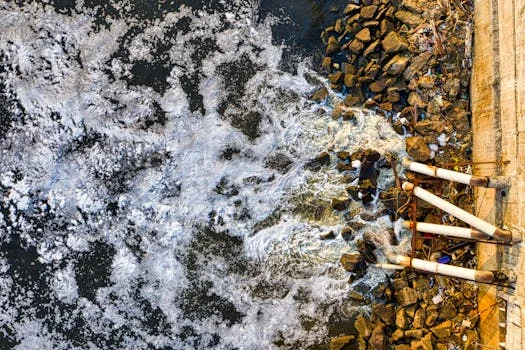
Pressure flotation operates on the principle of Henry’s Law, which states that the solubility of a gas in a liquid is proportional to its partial pressure. In a DAF system, air is dissolved into the wastewater (or a portion of the recycled effluent) under high pressure. When this pressurized liquid is released into the flotation tank at atmospheric pressure, the air precipitates out of the solution in the form of millions of micro-bubbles.
The engineering of a high-performance DAF system involves four distinct stages:
- Saturation: A recycle pump takes 15–30% of the clarified effluent and forces it into a pressure vessel. Air is injected at 4–6 bar (60–90 psi), achieving an air-to-water ratio of 8–12% by volume.
- Release: The saturated water passes through a specialized release valve. The sudden pressure drop creates micro-bubbles with a diameter of 10–100 μm. Research indicates that bubbles smaller than 50 μm improve attachment efficiency by up to 20% by increasing the available surface area for contaminant binding.
- Attachment: In the contact zone, these micro-bubbles collide with and attach to chemically flocculated particles. The bubble-floc aggregate has a combined density lower than water, causing it to rise rapidly.
- Separation: The floating "sludge blanket" is removed by a mechanical skimmer, while the clarified water is drawn from the bottom of the tank.
Key design parameters are critical for engineering success. The hydraulic loading rate for DAF is typically 5–10 m/h, which is significantly higher than the 1–2 m/h standard for sedimentation tanks. However, if influent TSS exceeds 1,000 mg/L, engineers should limit the loading rate to 5 m/h to prevent solids carryover. DAF produces a more concentrated sludge (3–5% solids) compared to sedimentation (1–2% solids), reducing the cost of downstream sludge dewatering. For systems requiring high throughput, detailed comparison of DAF clarifiers against lamella and sedimentation tanks can provide further site-specific engineering benchmarks.
Cost Comparison: DAF vs Lamella Clarifiers vs Sedimentation Tanks
From a procurement perspective, the higher initial investment of a pressure flotation system must be weighed against its operational efficiencies in chemical usage and solids handling. While CAPEX for DAF ranges from $1,500 to $3,000 per m³/h of capacity, the long-term ROI is often superior in high-load industrial environments. For example, a 100 m³/h food processing plant can expect a payback period of approximately 2.5 years when choosing DAF over lamella clarifiers, primarily due to a 40% reduction in polymer consumption and lower municipal TSS surcharges.
| Cost Component | DAF (USD/m³) | Lamella Clarifier (USD/m³) | Sedimentation (USD/m³) |
|---|---|---|---|
| Energy Consumption | $0.06–$0.10 | $0.02–$0.04 | $0.01–$0.02 |
| Chemical Dosing | $0.04–$0.08 | $0.06–$0.12 | $0.08–$0.15 |
| Maintenance & Labor | $0.03–$0.05 | $0.02–$0.04 | $0.02–$0.03 |
| Sludge Handling* | $0.02–$0.07 | $0.05–$0.10 | $0.06–$0.12 |
| Total OPEX | $0.15–$0.30 | $0.15–$0.30 | $0.17–$0.32 |
*Sludge handling costs are lower for DAF because the float is more concentrated (higher % solids), requiring less energy for dewatering. These calculations assume a 20-year lifespan and 300 operating days per year. In textile wastewater applications, HydropureWater internal data has shown up to 30% OPEX savings compared to traditional gravity settling.
Compliance Checklist: Which Technology Meets Which Discharge Standard?
Regulatory compliance is the primary driver for wastewater equipment selection. Failure to meet standards such as the EU Industrial Emissions Directive 2010/75/EU or China’s GB 8978-1996 can result in daily fines or operational shutdowns. DAF is widely regarded as a "compliance-safe" technology because its performance can be fine-tuned via pressure and chemical adjustments to meet stringent limits.
| Regulation | Key Limits | DAF Compliance | Lamella Compliance | Sedimentation Compliance |
|---|---|---|---|---|
| EPA 40 CFR Part 439 | TSS < 35, FOG < 15 | Yes | No (needs filter) | No |
| EU Directive 2010/75/EU | TSS < 35, COD < 125 | Yes | No | No |
| China GB 8978-1996 | TSS < 70, COD < 100 | Yes | Yes | With Pre-treatment |
| Direct River Discharge | TSS < 20, FOG < 5 | With Tertiary | No | No |
Compliance assumes proper operation and maintenance. For facilities using DAF as a pretreatment step for sensitive downstream equipment, referring to a maintenance guide for downstream RO systems after DAF pretreatment is recommended to prevent membrane fouling and ensure total system compliance.
Decision Framework: How to Choose the Right Flotation or Clarification Technology
To select the most cost-effective technology for your facility, follow this step-by-step engineering decision tree:
- Analyze Influent Wastewater: Conduct a 24-hour composite sampling to determine average and peak TSS, FOG, and COD levels. If TSS > 500 mg/L or FOG > 200 mg/L, DAF is the technical frontrunner.
- Define Discharge Requirements: If your permit requires TSS < 35 mg/L, gravity-based HydropureWater lamella clarifiers for cost-effective TSS removal may require additional sand filtration, whereas DAF can often meet this limit in a single stage.
- Evaluate Site Constraints: Calculate available square footage. For a 100 m³/h flow, if you have less than 100 m² of available space, eliminate conventional sedimentation tanks from consideration.
- Calculate Total Cost of Ownership (TCO): Do not look at CAPEX alone. Compare the 5-year TCO including chemical costs and sludge disposal fees. DAF often wins on TCO despite higher energy use because it produces drier sludge.
- Final Selection:
- Choose DAF if: TSS is high, FOG is present, or space is at a premium.
- Choose Lamella if: TSS is low/moderate (<500 mg/L) and energy costs are the primary concern.
- Choose Sedimentation if: Land is abundant and wastewater is simple, inorganic, and settles easily.
Frequently Asked Questions
What is the difference between DAF and SAF?
DAF (Dissolved Air Flotation) uses air dissolved under pressure (4–6 bar) to create micro-bubbles (10–100 μm). SAF (Suspended Air Flotation) uses mechanical agitation or impellers to generate larger bubbles (100–500 μm). DAF is significantly more efficient for industrial wastewater, achieving 92–97% TSS removal compared to SAF’s 85–90%, though SAF has lower energy requirements.
What are the disadvantages of dissolved air flotation?
The primary disadvantages include higher CAPEX ($1,500–$3,000/m³/h) and higher energy consumption (0.3–0.5 kWh/m³) compared to gravity systems. DAF also requires more mechanical maintenance for components like saturation pumps, pressure vessels, and skimmer assemblies. It is also sensitive to pH fluctuations, requiring an optimal range of 6.5–7.5 for effective floc-bubble attachment.
What are the different types of flotation machines?
The four main types are: 1) DAF (Dissolved Air Flotation), 2) IAF (Induced Air Flotation), 3) SAF (Suspended Air Flotation), and 4) CAF (Cavitation Air Flotation). DAF is the industrial standard for fine particle and oil removal, while IAF and CAF are more common in heavy oil-water separation or mineral processing where larger bubble sizes are acceptable.
What are the disadvantages of froth flotation?
Froth flotation is a mineral processing technique, not a standard wastewater treatment method. Its disadvantages in a wastewater context include excessive chemical consumption (collectors and frothers) and lower efficiency for total suspended solids removal (typically 70–80%) compared to the 92–97% achieved by industrial DAF systems.
How do I measure the performance of my flotation system?
Performance should be monitored via weekly lab analysis of TSS (EPA Method 160.2) and COD (EPA Method 410.4). For a healthy DAF system, target TSS removal of >90%. If performance drops, engineers should check the air-to-water ratio, ensure bubble size is in the 10–100 μm range, and verify that the chemical flocculation pH is within the 6.5–7.5 range.
Related Equipment
- Dissolved air flotation (DAF) system for high-efficiency TSS and FOG removal — view specifications, capacity range, and technical data
Need a customized solution? Request a free quote with your specific flow rate and pollutant parameters.