The Three-Layer Regulatory Chain Facing Jacksonville F&B Plants in 2026
Jacksonville food and beverage plants discharging to the municipal sewer in 2026 must satisfy three nested authorities simultaneously. The federal floor is the EPA categorical pretreatment standards under 40 CFR Parts 403 and 405–471. Florida layers a state program on top, administered by the Florida Department of Environmental Protection (FDEP), which focuses on nutrient removal due to concerns about impacts on water bodies, particularly in sensitive ecosystems like the Everglades, and may require advanced treatment such as biological nutrient removal (BNR), per Integrated Water Services (2023).
The local cap is the publicly owned treatment works (POTW) industrial user permit — in the City of Jacksonville service area, JEA — which sets site-specific discharge limits and surcharges through its sewer use ordinance. Compliance means each regulated parameter (BOD, TSS, FOG, pH, ammonia) must meet the most restrictive of the three limits at the monitoring point, and the engineer's job is to map every parameter to its controlling authority before sizing equipment.
A 2026 F&B plant rarely designs only to one set of numbers. A brewery may pass EPA categorical BOD/TSS yet still fail an FDEP ammonia target or a JEA FOG surcharge threshold; a dairy can clear the federal TSS cap but trip the local surcharge on the same parameter. An early step is to obtain the current JEA industrial user limits, the FDEP permit template applicable to the plant's SIC code, and the relevant 40 CFR subcategory — then build a single compliance table that highlights the tightest value per parameter, per Integrated Water Services (2023).
What Comes Out of a Jacksonville Food & Beverage Plant: The Influent Profile
Food and beverage processing utilizes substantial amounts of water that must be pumped, processed and treated, and the resulting streams carry a distinct contaminant signature that drives equipment selection, per JWC Environmental. Plants generate a significant amount of wastewater with relatively high concentrations of total suspended solids (TSS), and it is necessary to treat this wastewater before sending it to a municipal sewage system to limit municipal surcharges. That surcharge pressure is a useful procurement lever: lowering TSS in-plant often beats paying for hauled sludge.
Sub-sectors that cluster in the Northeast Florida economy — breweries, dairies, meat and poultry, beverage bottling, and food packaging — each layer their own problem on top of the baseline. Meat and poultry operations produce wastewater rich in fats, oils, and grease that can clog pipes and interfere with biological treatment unless properly removed, per ALAR. Beverage, confectionery, and bakery lines produce wastewater high in sugars and starches, which drive rapid bacterial growth and BOD swings, per ALAR. Dairy and protein-rich streams foam and create odor issues during treatment, again per ALAR. Clean-in-place (CIP) chemicals can alter pH and affect downstream biological processes, per ALAR, and Jacksonville-area breweries face a particular complication: the waste enzymes that result from beer brewing can cause considerable disruption to the sewer system, which is why many municipalities have strict limits before releasing wastewater, per JWC Environmental. The same JWC source flags that breweries pursuing anaerobic digestion must pretreat the wastewater to remove coarse solids, like hops and spent grains, to protect sensitive downstream equipment.
For sizing purposes, the engineer should request a 7-day composite sampling campaign at the plant's sewer manhole covering a CIP day, a non-CIP day, and a weekend low-flow period; the resulting peak-to-average ratio is the single most useful number for specifying equalization and for setting DAF and biological-reactor peak hydraulic capacity. Without that data, equipment is specified against assumed ranges rather than the actual plant, which is where most 2026 permit failures originate.
The 2026 Jacksonville F&B Pretreatment Train, Stage by Stage
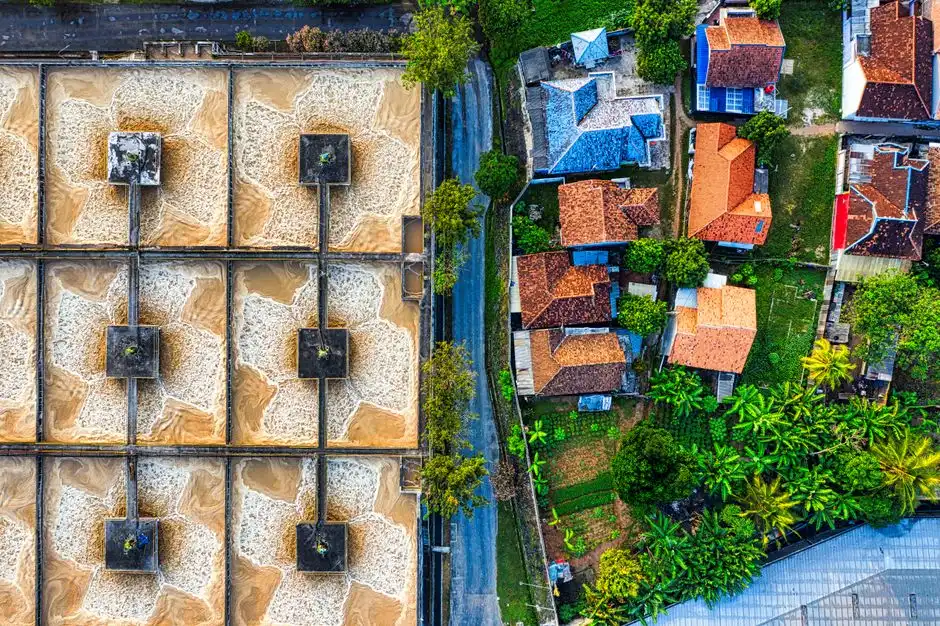
A compliant Jacksonville F&B train typically moves wastewater through the following stages, in this order, with each stage's design target set against the local and state limits described above.
- Coarse and fine screening — a rotary mechanical bar screen for headworks solids removal strips organics, FOG rags, seeds, feathers, and spent hops before they reach pumps or biological reactors, per JWC Environmental.
- pH neutralization and equalization — CIP surges can swing pH outside the band that flocculation and biology tolerate, so an automatic chemical dosing system for pH and coagulant control stabilizes the stream before downstream steps, per ALAR.
- Coagulation and flocculation — coagulant and flocculant dosing binds fine colloids ahead of flotation or clarification, per ALAR.
- Dissolved air flotation (DAF) — a dissolved air flotation (DAF) system for FOG and fine solids removal is the workhorse step for meat, dairy, and brewery streams, removing free and emulsified FOG plus fine suspended solids that escape screening, per ALAR. The DAF oil water separator design criteria for 2026 walks through hydraulic and air-to-solid ratios.
- Biological treatment — MBBR or IFAS reduces BOD and nutrients; an MBR membrane bioreactor for tight discharge or reuse limits combines biological treatment with membrane filtration for higher removal rates and a tighter effluent, per Integrated Water Services (2023) and ALAR. The MBBR design guide for brewery wastewater in 2026 and the MBBR engineering guide for beverage wastewater cover aerobic sizing in more depth.
- Clarification and sludge handling — clarifiers polish suspended solids and route sludge to a plate and frame filter press for on-site sludge dewatering or rotary vacuum drum to cut hauling volume, per ALAR.
- Optional membrane polishing — UF and RO polish effluent toward reuse quality, with ZwitterCo's SF membranes documented for protein, oil, and fat removal as either a polishing step or RO pretreatment, per ZwitterCo.
| Stage | Primary target | Equipment | Key design input |
|---|---|---|---|
| Screening | Coarse organics, FOG rags, hops, feathers, seeds | Rotary drum / mechanical bar screen | Peak flow, debris size, capture rate |
| pH / equalization | Stabilize pH and flow swings | EQ basin, chemical dosing | CIP peak vs. base flow, acid/alkali mass |
| Coag / floc | Colloidal solids, emulsified FOG | Flash mix, flocculator | Jar-test dose, residence time |
| DAF | Free and emulsified FOG, fine TSS | DAF unit with skimmer | Air-to-solids, hydraulic loading |
| Biological | BOD, ammonia, total nitrogen | MBBR / IFAS / MBR | F/M ratio, HRT, nutrient target |
| Clarification / sludge | Residual TSS, sludge volume | Clarifier, filter press | SVI, cake dryness target |
| Membrane polish (optional) | Reuse quality, residual organics | UF / RO | Flux, fouling control |
Plant engineers designing for the Jacksonville service area should compare this sequence against the F&B pretreatment reference in the Peach Bottom food and beverage pretreatment guide for parallel regulatory comparisons, which walks a similar three-layer compliance problem in a different jurisdiction.
Choosing the Right Biological Step: MBBR vs MBR vs Anaerobic for a 2026 Jacksonville Plant
MBBR and IFAS are compact, aerobic options that efficiently reduce BOD and nutrient loads and are suited to high-strength F&B waste streams when standard BOD/TSS limits apply, per ALAR. An MBR adds membrane filtration to the activated-sludge basin and is the right answer when the local sewer ordinance, an FDEP-driven nutrient cap, or an on-site reuse target demands sub-1 µm effluent, per Integrated Water Services (2023). Anaerobic digestion is attractive at breweries because it cuts aeration energy and yields biogas, but it is contingent on upstream screening: hops and spent grains must be removed first to protect the digester, per JWC Environmental.
The decision should be driven by the controlling limit. A simple framework: if JEA's ammonia or TN limit and FDEP's BNR expectations are the binding constraints, an MBR earns its higher capex through tighter effluent, smaller footprint, and a compliance margin that survives seasonal load swings. If only BOD/TSS matter and the plant has space, MBBR is the lower-risk choice. Anaerobic makes sense where the brewery has both the load to feed a digester and a use for the biogas, and only after a properly sized rotary drum screen protects the reactor. In all three cases, the engineer should request pilot testing on the actual wastewater before committing, per ALAR.
Sizing and Specifying Equipment to Pass a Sewer Discharge Permit in 2026

Size every stage to peak flow, not average flow — F&B plants see 2–3× swings during CIP and shift changeovers, and biological reactors in particular must hold their food-to-microorganism ratio at the peak. Specify pH correction, coagulant dosing, and automatic backwash controls so the system holds limits with minimal operator attention, per ALAR. The supplier should provide a pilot test on the actual plant wastewater that demonstrates BOD, TSS, FOG, and ammonia removal before full-scale commitment, per ALAR — this is non-negotiable, because lab-spiked samples rarely reproduce CIP chemistry and high-FOG slugs.
Cross-check the biological selection against FDEP's nutrient-removal expectations and the POTW's ammonia limit before signing the RFQ, per Integrated Water Services (2023). On the sludge side, size dewatering to a cake dryness target, not a flow rate, because hauling cost is driven by wet tons. For procurement parity, compare the MBR option side-by-side with the MBR membrane bioreactor for tight discharge or reuse limits and the auxiliary MBR module at /product/3-mbr-membrane-bioreactor-module-df.html for upgrade paths, and pair either with the high-efficiency sedimentation tank where a settling step is needed ahead of the membrane.
2026 Compliance Checklist Before You Sign a Discharge Permit
Confirm the EPA categorical standard, the FDEP permit conditions, and the JEA industrial user limits in writing — and build a single table of the most restrictive value per parameter — before equipment order. Verify that the selected biological step can meet that most-restrictive value on every regulated parameter, per Integrated Water Services (2023). Plan for sludge handling and disposal cost up front: on-site dewatering cuts hauling volume and is usually cheaper than off-site disposal, per ALAR. Build instrumentation for flow, pH, TSS, and ammonia so compliance reporting is auditable and a single failed sample cannot snowball into a permit violation. A final instrumentation and consumables kit, including spare valves and media, is worth sourcing alongside the main train using the water treatment parts, valves, and media catalog to avoid a six-week wait mid-commissioning.
Frequently Asked Questions
What is the actual cost range for a full Jacksonville F&B pretreatment train in 2026?
There is no published 2026 price benchmark that ties equipment cost to the Jacksonville F&B influent profile, the JEA surcharge schedule, and F
Frequently Asked Questions
What discharge limits do Jacksonville food and beverage plants have to meet before sending wastewater to the sewer in 2026?
Jacksonville’s local limits for industrial users discharging to the Publicly Owned Treatment Works (POTW) typically require compliance with specific concentration-based thresholds. While limits are site-specific based on individual Industrial User Permits, standard pretreatment requirements often cap Biological Oxygen Demand (BOD) at 300 mg/L, Total Suspended Solids (TSS) at 300 mg/L, and Oil and Grease (O&G) at 100 mg/L. Facilities exceeding these concentrations are subject to high-strength surcharges or mandatory pretreatment mandates to prevent interference with the city’s biological treatment processes.
Do I need a DAF, MBBR, or MBR for a Jacksonville food and beverage plant that discharges to the city sewer?
The selection of technology depends on your facility's specific influent loading and the city's discharge permit requirements. A Dissolved Air Flotation (DAF) unit is generally sufficient for facilities needing to reduce Fats, Oils, and Grease (FOG) and TSS. If your facility must reduce high-strength BOD or COD before discharge, a Moving Bed Biofilm Reactor (MBBR) is often preferred for its small footprint and shock-load resilience. Membrane Bioreactors (MBR) are typically reserved for facilities aiming for water reuse or those facing extremely stringent, low-milligram discharge permits that standard aerobic systems cannot achieve.
How much does a food and beverage pretreatment system cost for a Jacksonville plant in 2026?
Capital costs for pretreatment systems vary significantly based on flow rate and pollutant loading, typically ranging from $250,000 for basic DAF-based systems to over $2,000,000 for complex biological treatment trains (MBBR/MBR). Operational expenses, including sludge hauling, chemical reagents, and utility power, generally add an annual cost of $50,000 to $200,000 depending on the volume of wastewater processed. Engineering estimates should account for a 15-20% contingency for site-specific integration, local piping upgrades, and electrical service modifications.
How long does it take to design, permit, and install a pretreatment system for a Jacksonville F&B plant?
A typical project lifecycle spans 12 to 18 months from project inception to commissioning. The design and engineering phase generally takes 3 to 4 months, followed by the City of Jacksonville and Florida Department of Environmental Protection (FDEP) permitting process, which can take an additional 3 to 6 months depending on the system's complexity. Procurement of long-lead equipment and onsite civil/mechanical installation requires another 4 to 8 months, meaning facilities should initiate planning at least 1.5 years before their compliance deadline.
What happens if a Jacksonville food plant exceeds its POTW discharge permit limits?
Exceeding discharge limits triggers a graduated enforcement response as outlined in the City of Jacksonville’s Sewer Use Ordinance. Initial violations often result in a Notice of Violation (NOV) and mandatory corrective action plans. Persistent non-compliance leads to escalating administrative fines, increased sampling frequency at the facility's expense, and potential surcharges that can triple the cost of standard sewer fees. In extreme cases of willful or repeated non-compliance, the city may initiate enforcement actions that include suspension of discharge permits or permanent revocation of sewer access.