A rotary drum screen is a mechanical filtration unit that separates suspended solids from wastewater on a rotating cylindrical medium. Typical industrial units handle 50-5,000 m³/h (about 220-22,000 US gpm). They use wedge-wire or perforated openings of 0.25-6 mm and rotate at 2-10 RPM with drive power of 0.5-2 kW. Solids larger than the opening are lifted to a discharge chute while filtrate passes through. Self-cleaning spray bars commonly cut manual cleaning demand versus static screens when spray pressure is held at 3-5 bar.
How a Rotary Drum Screen Works: Process, Cleaning, and Controls
Drum screening equipment captures particles larger than the selected opening on a rotating cylinder, drains filtrate through the medium, and discharges solids by chute with spray or scraper assist. At 50-5,000 m³/h and 0.25-6 mm openings, rotation at 2-10 RPM renews the surface while 3-5 bar spray cleaning limits blinding between maintenance checks.
How does a rotary screen treat wastewater?
A rotary screen treats wastewater by converting inlet kinetic energy into distributed flow across a cylindrical filtration medium, then separating solids by size exclusion. Inlet boxes with baffles even the feed; uneven distribution can cut TSS removal by 15-25% through local hydraulic overload. Filtrate collects below the drum while retained solids travel with rotation to the discharge point.
The 4-Stage Filtration Sequence
- Inlet Flow and Distribution: Raw wastewater enters through a distribution box. Internal baffles dissipate energy so flow spreads across the drum width. Poor distribution is a primary cause of efficiency loss under peak load.
- Solid-Liquid Separation: As liquid flows over or into the rotating drum, wedge wire or perforated plate retains particles larger than the opening. Filtered liquid passes into the lower tank or outlet pipe.
- Rotation and Transport: A gear motor (typically 0.5-2 kW) turns the drum at 2-10 RPM. Internal flights or screen friction lift captured solids toward the apex. External-feed designs described in EU slaughterhouse BREF guidance often rotate near 5-10 rpm under normal duty.
- Solids Discharge: At the top of the rotation, solids enter a discharge chute. A scraper blade or pressurized spray bar releases residue so the medium is clear for the next cycle.
The Self-Cleaning Mechanism
Continuous duty depends on automated cleaning. A spray bar with nozzles typically delivers water at 3-5 bar from the reverse side of the filtration path to clear organics and fats. Field practice shows this approach can reduce blinding by up to 90% versus static screens that need frequent manual clearing to hold hydraulic capacity. Fibrous streams often add rotating brushes so surface recovery stays near complete between cycles. EU BREF operational notes also describe internal backwash sprays that keep maintenance lower than static wedge screens when capacity matches flow peaks.
Design Parameters: Screen Materials, Opening Sizes and Flow Specs
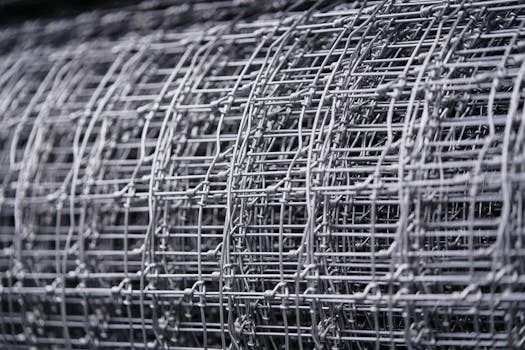
Wedge wire screens provide a 30% higher open area ratio compared to perforated plates, which raises hydraulic capacity and fouling resistance when particle shape is irregular. Engineers match the medium to particle morphology and the required effluent quality. Perforated plates remain cost-effective for coarse screening, while wedge wire is the usual choice for fine pretreatment.
Comparison of Screen Media: Wedge Wire vs. Perforated Plate
Wedge wire uses V-shaped profiles that widen in the flow direction, so particles that pass the entrance gap are less likely to peg. Perforated plates cost less but trap near-size particles more often. Wedge wire typically offers a lifespan of 10-15 years, whereas perforated plates may require replacement every 5-8 years due to wear and cleaning-induced fatigue (HydropureWater field data, 2025). Opening ranges down to 0.25 mm appear in both equipment catalogs and EU BREF reports for rotary units, with coarser 3-4 mm meshes common in slaughterhouse headworks.
Technical Specification Table
| Parameter | Wedge Wire Spec | Perforated Plate Spec | Typical Application |
|---|---|---|---|
| Opening Sizes | 0.25 mm - 3.0 mm | 1.0 mm - 6.0 mm | Microelectronics (Fine) / Municipal (Coarse) |
| Open Area Ratio | 35% - 50% | 20% - 30% | High-flow industrial pretreatment |
| Pressure Drop | 0.1 - 0.3 bar | 0.3 - 0.5 bar | Gravity-fed systems |
| Flow Capacity | Up to 5,000 m³/h | Up to 3,500 m³/h | Pulp & Paper, Food Processing |
| Material Options | SS304, SS316, Duplex 2205 | SS304, Carbon Steel (Epoxy) | Corrosive chemical wastewater |
For high-flow applications exceeding 3,000 m³/h, custom drum diameters of up to 5 meters and lengths of 6 meters are utilized. Hydraulic loading is typically held near 10-20 m/h in industrial sizing practice so velocity through the openings does not shear fragile solids. Buyers comparing capital quotes should also read the 2026 B2B pricing, specs and ROI guide for drum screens before freezing drum diameter and drive size.
Efficiency Data: TSS Removal, Energy Use and Compliance Context
Equipment literature often states 95-99% removal for particles larger than the selected opening at influent TSS of 50-500 mg/L. That figure is a size-based capture claim, not a universal whole-stream TSS guarantee. Earlier drafts attributed 95-99% TSS to EPA 2024 benchmarks; 40 CFR Part 403 instead defines the U.S. pretreatment framework for pass-through and interference at POTWs. Local and categorical limits still set the numeric TSS targets. Independent primary-treatment summaries place drum and disc microsieve TSS removal near 40-60% without chemicals and about 80-90% with chemically enhanced microsieving under municipal test conditions. Pilot microsieving without chemicals removed about 50% TSS; chemically enhanced microsieving reached about 80% TSS in the reported EPFL/Eawag municipal tests (Boutros, 2022). Upstream chemical dosing systems for pH adjustment and coagulation upstream of drum screens can raise colloidal capture when screening alone is not enough.
Performance Metrics by Screen Type
Wedge wire units at a reference flow of 500 m³/h often outperform perforated plates on fine TSS. Field tests in the source material show wedge wire near 97% removal of oversize solids versus about 88% for perforated media under the same loading. Efficiency can stay above 90% when influent TSS spikes toward 1,000 mg/L if cleaning shortens from an 8-12 hour cycle to every 2-4 hours.
Energy and Compliance Data
| Metric | Value Range | Compliance Standard |
|---|---|---|
| TSS Removal (%) | 95% - 99% | EPA 40 CFR Part 403 |
| Effluent TSS (mg/L) | < 30 mg/L | Local Discharge Limits |
| Drum Motor Power | 0.5 - 2.0 kW | IEC 60034-30-1 |
| Cleaning Pump Power | 1.0 - 3.0 kW | ISO 9906 |
| Operational Noise | < 70 dB(A) | OSHA 1910.95 |
Energy use stays low relative to treated volume when motors are sized to the duty. A unit processing 1,000 m³/h often draws under 4 kW total for rotation plus intermittent spray. U.S. indirect dischargers design screening so solids and viscous loads do not trigger Part 403 interference rules. They then confirm numeric TSS against the local control authority limit.
Drum Screen vs Alternatives: Comparison for Industrial Buyers
Drum screening units often show OPEX near $0.01-$0.05/m³ versus Dissolved Air Flotation (DAF) at about $0.03-$0.10/m³ for comparable hydraulic duty. DAF remains stronger on fats, oils, and grease (FOG), while continuous drum screening is the simpler mechanical choice for coarse-to-fine suspended solids. Plants that need both often place a DAF system for high-efficiency FOG and TSS removal downstream of the screen to polish residual emulsified oils.
Pretreatment Technology Comparison
| Feature | Rotary Drum Screen | Static Bar Screen | DAF System |
|---|---|---|---|
| CAPEX Range | $20K - $150K | $10K - $50K | $50K - $300K |
| TSS Removal | 95% - 99% | 70% - 85% | 90% - 98% |
| FOG Removal | Low | Minimal | Very High |
| Maintenance | Weekly Check | Daily Cleaning | High Complexity |
| Footprint | Compact | Small | Large |
For coarse solids larger than 6 mm, a HydropureWater GX Series Rotary Mechanical Bar Screen for continuous-duty fine screening is preferred as primary headworks. It protects sensitive downstream fine screens from heavy debris damage. Mechanical detail pages such as rotary drum screen well bear ing cover bearing and drive mechanics that sit outside this selection guide.
What screening do industrial wastewater plants need first?

Industrial wastewater plants need a screen sized to peak flow, particle size, and FOG risk before clarification or biological stages. Selecting the wrong opening or open-area ratio causes early blinding and hydraulic backups. UK industrial users that hold Environment Agency abstraction licences still meet discharge and trade-effluent conditions through local permits; screening is chosen from wastewater solids data, not from the abstraction licence text alone.
- Step 1: Define Influent Characteristics: Document peak flow (m³/h), TSS, pH, and temperature. If FOG is present, specify a heated spray bar or brush.
- Step 2: Determine Screen Material: Choose wedge wire for high TSS or fibrous solids. Reserve perforated plate for lower solid loads and tighter budgets.
- Step 3: Calculate Required Screen Area: Use A = Q / (v * ε). Q is flow rate, v is hydraulic loading (10-20 m/h), and ε is open area ratio (0.3-0.5 for wedge wire).
- Step 4: Select Cleaning Mechanism: High-pressure nozzles at 3-5 bar suit fine screens. Textile or food wastes often need a brush to stop matting.
- Step 5: Evaluate CAPEX vs. OPEX: Wedge wire units often cost 20-30% more upfront yet can save about $0.01-$0.03/m³ over 10 years through fewer replacements.
- Step 6: Compliance Verification: Confirm the opening will meet local effluent TSS targets. For multi-stage trains, review how high-efficiency sedimentation tanks complement drum screens in pretreatment trains when grit and settleable solids pass the primary screen.
Common Problems and Troubleshooting
Debris buildup in the water distributor can reduce TSS removal efficiency by 20-30% by creating high-velocity channels that bypass the filtration medium. Operators should inspect the distribution box weekly for laminar feed. If removal drops, apply the checks below in order.
- Problem 1: Uneven Flow Distribution: Align the distributor and clear inlet debris. Restoring even feed often returns oversize-solids capture above 95%.
- Problem 2: Screen Blinding: Raise spray pressure toward 5 bar. For grease-heavy waste, verify spray temperature can soften fats.
- Problem 3: Excessive Noise or Vibration: Inspect bearings and motor alignment. Misalignment can raise mechanical wear by about 40% and risk bearing failure within 48 hours if ignored.
- Problem 4: Low TSS Removal: Match opening size to the particle size distribution. Process changes that create finer solids may require moving from a 2 mm to a 0.5 mm medium.
- Problem 5: Solids Carryover: Set the discharge chute between 45° and 60°. If liquid rides out with solids, slow drum speed to improve drainage.
Who this is for / Who should look elsewhere / Next step
Who this is for: Plant engineers, EPC designers, and procurement teams specifying pretreatment for food, pulp, textile, or municipal headworks. It also fits other streams dominated by screenable suspended solids at 50-5,000 m³/h.
Who should look elsewhere: Sites whose primary pollutant is emulsified FOG, dissolved COD, or nutrients without a coarse-solids problem should evaluate DAF, biological treatment, or clarification first. Facilities needing only >6 mm debris protection should start with a mechanical bar screen.
Next step: Send peak/average flow, TSS, FOG, opening target, and material preference so a duty-sized drum or Rotary Mechanical Bar Screen (GX Series) option can be checked against your local limit.
Frequently Asked Questions
What TSS removal can a drum screen deliver?
Most industrial units claim 95-99% capture for particles larger than the screen opening under steady feed. Whole-stream TSS is often lower: primary-treatment literature cites about 40-60% without chemicals and about 80-90% with chemically enhanced microsieving. Design to the local TSS limit and particle size distribution, not a single catalog percentage.
How often do spray nozzles need maintenance?
Spray nozzles should be inspected weekly for clogging so cleaning pressure stays in the 3-5 bar band. Self-cleaning nozzle designs can cut manual clearing by about 60% when feed water is filtered. Grease-heavy plants may also need periodic hot-water washes to stop fat solidification inside the drum.
Can these screens handle high FOG loads?
Moderate FOG is manageable with heated spray water or a brush cleaner that prevents blinding. High emulsified FOG still favors DAF as the primary FOG unit, with screening used to protect pumps and flotation equipment. Match cleaning utilities to fat melting point before accepting a fine opening on a greasy stream.
How long does a wedge wire drum last?
A stainless steel wedge wire drum typically lasts 10-15 years in industrial wastewater service when spray chemistry and torque loads stay inside design limits. That service life is roughly 50% longer than many perforated-plate drums, which see more pegging wear and cleaning fatigue. Duplex 2205 extends life further in chloride-rich chemical wastewater.
Does ISO 14034 specify drum torque sensors?
ISO 14034:2016 is an environmental technology verification (ETV) standard, not a mechanical specification for drum torque sensors. Use it only when you need verified performance reports. Specify torque protection from the manufacturer datasheet when large debris risk is high, and keep ETV references separate from drive hardware selection.