Start with three distinct wastewater streams
A data center in Nakuru requires three separately engineered treatment trains: raw-water pretreatment for cooling-tower makeup, a cooling-tower blowdown train, and a sanitary sewage plant. Cooling blowdown needs solids polishing, hardness control, biocide management and, where justified, RO for reuse. Sanitary sewage requires biological treatment. The concept should support a NEMA effluent discharge licence under the Water Quality and Management Act, with separate sampling and discharge points. HydropureWater’s 2026 field data indicates that licensing typically takes 60–120 days.
The correct treatment boundary follows the wastewater source, not the location of the nearest drain. RS&P Engineers identifies cooling-tower blowdown as the principal process-wastewater stream, while sanitary sewage is usually a smaller domestic flow requiring biological rather than mineral-removal treatment. Combining them prevents the sanitary plant from operating on its intended waste profile and exposes the cooling-water treatment train to organic and pathogen loads.
The following Nairobi values are preliminary analogues, not Nakuru design data. HydropureWater’s 2026 field data reports raw-water TDS of 500–1,200 mg/L, cooling-tower blowdown TDS of 1,200–6,000 mg/L at 25–32 °C, and sanitary-sewage BOD₅ of 200–300 mg/L. Replace them with Nakuru-specific sampling covering seasonal source-water variation and actual cooling-system conditions.
| Stream | Preliminary evidence | Treatment boundary | Inputs required before sizing |
|---|---|---|---|
| Raw-water intake | 500–1,200 mg/L TDS in the Nairobi analogue, HydropureWater, 2026 | Screening, filtration, controlled chemical pretreatment and RO where required | Source analysis, seasonal turbidity and salinity, intake flow, quality variability |
| Cooling-tower blowdown | 1,200–6,000 mg/L TDS at 25–32 °C in the Nairobi analogue, HydropureWater, 2026 | Solids, hardness, biocide and scaling control; optional RO reuse | Cooling-system chemical inventory, evaporation and blowdown calculation, peak flow, cycles of concentration |
| Sanitary sewage | 200–300 mg/L BOD₅ and about 100 L per employee per day in the Nairobi analogue, HydropureWater, 2026 | Biological treatment, sedimentation and disinfection | Workforce, fixture schedule, peak flow, sewer or environmental discharge route |
Cooling-tower blowdown is mineral-bearing and chemically treated. RS&P Engineers specifically identifies TDS, chlorides, sulfates, phosphates, biocide residuals, pH and temperature as characteristic concerns. The inventory must therefore cover corrosion inhibitors, antiscalants, biocides and any other circulating-water chemicals.
Before selecting equipment, request source-water analysis, the complete cooling-system chemistry inventory, evaporation and blowdown calculations, peak-flow records, employee numbers, and the proposed sewer or environmental discharge route. A lamella clarifier for cooling-blowdown polishing belongs in the industrial train; it does not replace the WSZ underground sewage treatment plant used for domestic flow.
Build the raw-water pretreatment train
The Nairobi guide specifies an SDI below 3 as the pretreatment target for brackish-water RO, making pretreatment consistency—not feed pressure—the primary membrane-protection criterion. The sequence is intake screening, multi-media filtration, PLC-controlled antiscalant and chlorine dioxide dosing, and brackish-water RO where reuse economics justify it.
Configure the multi-media pretreatment filter to remove suspended solids before chemical conditioning. The PLC-controlled chemical dosing skid should adjust antiscalant dose from the chemistry of the incoming blend rather than applying a fixed generic dose. Chlorine dioxide can address biofouling, but the application needs an equipment and compatibility review rather than a transferable default concentration.
Use the reported Nairobi raw-water TDS band of 500–1,200 mg/L only to establish a preliminary selection range (HydropureWater, 2026). It does not justify a Nakuru membrane loading or recovery rate. Test the actual source for seasonal changes in TDS, suspended solids, turbidity, hardness, silica and treatment demand. These variables determine pretreatment duty, chemical consumption and RO recovery.
Include a lamella clarifier where suspended-solids removal or floc-forming pretreatment is required. Its duty should follow Nakuru source-water testing and the selected RO feed condition. Automatic dosing must respond to measured feed characteristics, including changes during wet periods.
Cartridge filtration does not replace the multi-media stage described in the supplied engineering evidence. A cartridge filter can protect downstream components after the principal solids have been removed, but it is not equivalent to the coarse pretreatment that protects membrane elements from sustained solids loading.
For a conventional raw-water RO application, the industrial RO system for water reuse should be specified only after the pretreatment train and source-water variability are defined. The resulting P&ID should show screening, multi-media filtration, chemical injection, cartridge protection where required, RO, permeate storage and separate connections to cooling-tower makeup and other permitted service uses.
Procurement should require the supplier to state its design feed analysis, expected variability, SDI basis, chemical dosing control, membrane selection and recovery calculation. Without Nakuru data, those items remain unresolved design inputs—not commercial assumptions.
Treat cooling-tower blowdown for safe reuse or discharge
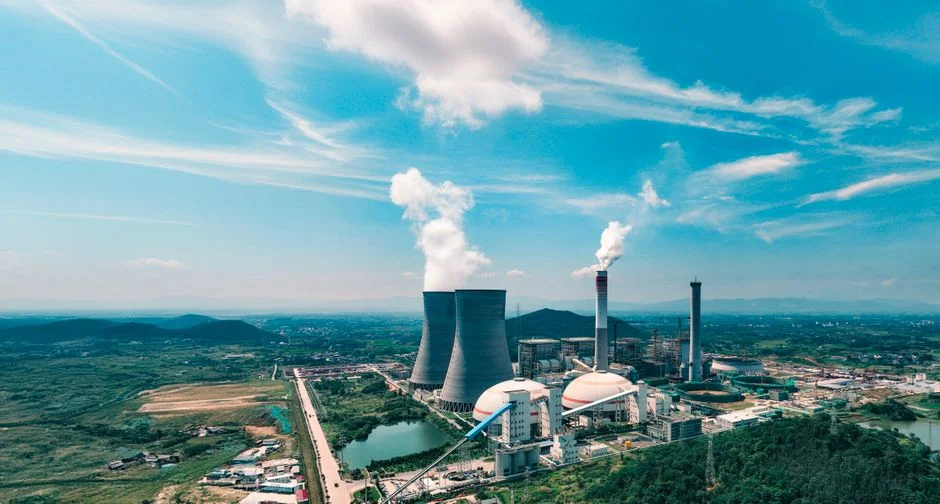
Cooling-tower blowdown treatment must remove or control each constituent that limits reuse or discharge: suspended solids, hardness, silica, residual oxidant, temperature and pH. The supplied Nairobi benchmarks are CTBD TDS of 1,200–6,000 mg/L and temperature of 25–32 °C (HydropureWater, 2026). Nakuru testing must establish the actual cycles of concentration, silica, hardness and chemical-residual profile before equipment duty is fixed.
The process chain begins with a lamella clarifier for solids polishing, followed by side-stream softening to control hardness. An on-site chlorine dioxide generator can provide microbial control where justified, while automatic chemical dosing manages the polishing chemistry. An industrial RO system for water reuse is optional and should follow the water balance, scaling assessment and discharge alternative.
Use the source’s 0.5–1.0 mg/L chlorine dioxide range only for the cooling-water application described in the Nairobi guide (HydropureWater, 2026). It is not a universal discharge limit. The design must establish residual demand, contact conditions, compatibility with other chemicals and the residual concentration at each discharge or reuse point. Where chlorine limits apply, RSP Engineers recommends dechlorination.
For industrial RO on blowdown, the supplied guide reports 50–85% recovery, 150–400 psi feed pressure and permeate TDS of 10–50 mg/L. It reports conventional BWRO as capped at 75–80% recovery before scaling becomes unmanageable, with higher recovery requiring controlled precipitation or dynamic RO operation outside the standard procurement envelope. These are source-backed reference conditions, not a guarantee of Nakuru performance.
Treated permeate may be blended into cooling-tower makeup at the source’s stated 30–50% raw-water cut, subject to the final water balance, chemistry and NEMA approval. A side-stream industrial water softener supports this option by reducing hardness before further polishing and RO.
| Decision point | Evidence | Procurement consequence |
|---|---|---|
| Solids polishing | RSP Engineers identifies suspended solids and treatment-chemical residues as blowdown concerns | Provide a lamella clarifier and automatic dosing; size from Nakuru TSS and settling tests |
| Hardness and scaling | Side-stream softening can raise the practical CoC ceiling from 2–3 to 4–6 without RO polish, according to HydropureWater’s 2026 Nairobi guide | Size softener from blowdown hardness, flow and target cycles of concentration |
| Microbial control | 0.5–1.0 mg/L chlorine dioxide is reported for the Nairobi cooling-water application, HydropureWater, 2026 | Verify residual demand and compatibility; provide dechlorination if the receiving route requires it |
| RO reuse | 50–85% recovery and 10–50 mg/L permeate TDS are reported for industrial RO on blowdown, HydropureWater, 2026 | Require a site-specific scaling and recovery calculation |
| Makeup blending | 30–50% raw-water cut is the stated band for the softened, polished and RO-treated train | Confirm through the complete water balance and permit basis |
Temperature, pH, residual chlorine, suspended solids and heavy metals remain separate acceptance checks. RSP Engineers recommends cooling or holding tanks where thermal limits apply and pH neutralization where extreme pH may damage receiving infrastructure. Sewer acceptance and direct environmental discharge must not be assumed equivalent.
Use cycles of concentration to compare water-saving options
The supplied formula defines cooling-tower blowdown as a fraction of makeup water equal to 1/(CoC − 1). At 4 CoC, blowdown equals 25% of makeup; at 6 CoC, it falls to 20% of makeup. The change is five percentage points, or a 20% reduction in blowdown relative to the 4-CoC case, according to Genesis (2025) as cited in HydropureWater’s 2026 Nairobi guide.
This arithmetic prevents an equipment selection based on an assumed linear water saving. Raising CoC also concentrates hardness, silica, corrosion products and treatment residuals. The practical ceiling in the supplied guide is 4–6 CoC without RO polish because biological and scaling risks increase above 5–6 CoC.
Conventional treatment with controlled CoC is the base case. Side-stream softening with lamella polishing can extend the operating range, while RO on blowdown supports the source’s 30–50% raw-water cut when the chemistry and water balance permit it. Full zero-liquid-discharge is a separate option, not the default treatment train.
| Option | Water-saving basis | Principal design inputs | Procurement decision |
|---|---|---|---|
| Controlled CoC | Blowdown is 25% of makeup at 4 CoC and 20% at 6 CoC, Genesis (2025), as cited by HydropureWater, 2026 | Evaporation, make-up flow, tower chemistry, scaling and biological limits | Select as the base operating case before evaluating advanced reuse |
| Softening plus lamella polishing | Practical ceiling rises from 2–3 to 4–6 CoC in the supplied Nairobi guide | Hardness, silica, TSS, chemical inventory and peak blowdown flow | Use when the economic curve supports greater blowdown concentration |
| Softening, polishing and blowdown RO | Potential 30–50% raw-water cut in the supplied Nairobi guide | RO recovery, scaling, permeate quality, blend analysis and storage | Select when reuse value offsets membrane, power and chemical costs |
| Full ZLD | High-cost comparison option | Evaporation performance, power, concentrate handling and disposal route | Carry as a separate option pending Nakuru site data |
HydropureWater’s 2026 field data estimates that ZLD adds 25–40% CAPEX for the inland Nairobi site. Use that figure only as a high-level comparison: Nakuru evaporation, power cost, concentrate disposal and local site conditions are not established by the supplied research. The industrial water softener and industrial RO system should therefore be compared against the controlled-CoC base case on total cost and verified water demand, not on headline recovery alone.
Keep sanitary sewage separate and package it for Nakuru
Sanitary sewage must remain hydraulically separate because its treatment objectives differ from cooling blowdown. HydropureWater’s 2026 Nairobi guide gives a preliminary sanitary-sewage benchmark of 200–300 mg/L BOD₅ and approximately 100 L per employee per day. These figures support an initial loading check only; Nakuru workforce numbers, fixture schedules and operating hours determine the design flow.
Specify an anoxic/aerobic package treatment train with sedimentation and disinfection. The WSZ underground sewage treatment plant is described in the supplied guide as handling 1–80 m³/h, permitting below-grade installation and automated operation without a full-time operator. Final selection still requires confirmation of the Nakuru peak flow, effluent route and utility requirements.
Handle sludge dewatering separately from the main biological treatment decision. The supplied Nairobi guide recommends a small plate-and-frame sludge dewatering press for a 50–150-person workforce rather than a centrifuge. Confirm actual staffing and sludge-generation estimates before including that equipment line.
Provide a separate licensed sampling point and hydraulic route from CTBD. The supplied guide states that sharing a sampling point can trigger the wrong permit action and is rejected at application stage. Keep the sanitary drain separate from the building drain serving cooling-blowdown treatment, and show both routes on the process flow diagram and site plan.
The sanitary package should not inherit industrial pH-neutralization, softening or oxidant controls merely because they are already installed for CTBD. Conversely, the biological plant should not be sized from cooling-system peak flow. Keep the two equipment lists, operating strategies and monitoring regimes independent.
Plan the NEMA permit before final equipment order
The governing instrument identified in the supplied guide is a NEMA effluent discharge licence under the Water Quality and Management Act for discharge to land, sewer or a watercourse. Permit work should begin with the three treatment boundaries, the proposed receiving route and Nakuru-specific characterization rather than with an equipment catalogue.
HydropureWater’s 2026 field data states that a NEMA effluent discharge licence typically takes 60–120 days from application to issue, depending on application completeness, EIA status and discharge-characterization quality. This is a planning range for the cited field experience, not a statutory decision period or a guarantee for a Nakuru project.
The application package should characterize each stream separately for TDS, BOD₅, TSS, residual chlorine, heavy metals and temperature. Include the complete cooling-water chemical inventory because residual disinfectant, pH and corrosion-inhibitor constituents determine treatment and acceptance criteria. The supplied guide also identifies proof against the NEMA Water Quality Regulations 2006 schedule for the receiving environment.
Prepare a process flow diagram showing the raw-water intake, cooling tower, blowdown storage, treatment units, reuse connections, sanitary package, licensed discharge manholes and sampling locations. It should identify each final discharge point rather than depicting a common outfall. Include a separate sanitary route and a separate industrial route.
Engage NEMA and the relevant sewer or environmental authority early. RS&P Engineers identifies late sewer-authority consultation as a cause of restrictive limits, redesign and schedule slippage. Confirm whether the Nakuru route is a sewer connection, land discharge or watercourse discharge, and obtain the applicable acceptance conditions in writing.
Show ongoing compliance obligations in the site layout and operating plan: sampling points, flow measurement, pH monitoring, laboratory analysis, reporting responsibility and access for sampling personnel. The PLC-controlled chemical dosing skid should also provide the monitoring and control interfaces required for the permitted operating envelope.
Do not place the final equipment order beyond the point supported by the permit concept. A staged sequence is practical: characterize the three streams, confirm authority requirements, pilot uncertain unit operations, size equipment, then tie the final duty to the approved discharge basis.
Budget equipment, footprint and implementation risk
HydropureWater’s 2026 field data places the full three-stream process-equipment train in the low single-digit USD millions. This is an equipment-only CAPEX envelope that excludes site civil works, generator backup and the NEMA licence fee; it is not a Nakuru quotation.
| Budget line | Included treatment | Sourcing and commercial treatment |
|---|---|---|
| Raw-water pretreatment | Screening, multi-media filtration, automatic dosing and RO where selected | Size from Nakuru source analysis and seasonal duty |
| Cooling-tower blowdown | Lamella clarification, side-stream softening, chlorine dioxide where justified and optional industrial RO | Separate equipment quote from reuse and discharge alternatives |
| Sanitary sewage | WSZ anoxic/aerobic package, disinfection and plate-and-frame dewatering where justified | Confirm workforce, peak flow and sludge basis |
| Inbound logistics | Freight and inland delivery risk | Carry a 25–40% inland logistics premium over Asian or European CIF supply, as reported in HydropureWater’s 2026 field data |
| Excluded cost lines | Civil works, generator backup and NEMA licence fee | Price and schedule separately from process equipment |
| Operating costs | Chemicals, antiscalant, RO membrane replacement, biocide and power | Compare total cost per cubic metre treated against the applicable water tariff |
The logistics premium must appear in the RFQ, not arrive as a later contingency. HydropureWater’s 2026 field data reports a 25–40% inland premium over Asian or European CIF supply into the inland Kenyan market. Require bidders to state freight origin, Incoterm, delivery location, import responsibility, commissioning exclusions and validity period.
Reserve site area for treatment skids, tanks, chemical storage, containment, drainage, vehicle access and maintenance. RS&P Engineers identifies treatment footprint as a common source of redesign. Lay out separate CTBD and sanitary areas, with safe chemical delivery and service routes that do not compromise spill containment.
Include available treatment parts, valves and media in the scope schedule so consumables, spares and replacement media are identified before award. Their quantities should follow the selected process, storage inventory and supplier recommendations rather than a generic allowance.
Stage procurement around the permit. First commission characterization and pilot work; then finalize treatment sizing; then issue the equipment RFQ. Require the selected supplier to confirm final duty, feed and discharge basis, controls integration, chemical compatibility, local service capability, documentation and lifecycle support before price acceptance.
Frequently Asked Questions
What CAPEX should a Nakuru data center allow for wastewater and cooling blowdown treatment?
Allow a low single-digit USD millions screening envelope for the complete three-stream process-equipment train, based on HydropureWater’s 2026 field data. This excludes civil works, generator backup and the NEMA licence fee, so request itemized quotations for each train. Add a separately identified inland logistics allowance using the reported 25–40% premium, but require the bidder to show the freight basis rather than accepting the percentage as a fixed price.
How should equipment be sized across the raw-water, CTBD and sanitary streams?
Size each stream independently from its own flow and chemistry. Request raw-water intake and seasonal demand data, CTBD evaporation and peak-blowdown calculations, target cycles of concentration, storage duration, employee numbers, fixture data and permit discharge constraints. Do not let one flow figure drive all three packages; the raw-water train is for intake quality, the CTBD train for concentrated mineral and chemical loads, and the sanitary plant for domestic biological loading.
What should a buyer check when selecting a wastewater equipment supplier?
Check demonstrated duty compatibility with the specified Nakuru feed and discharge basis, local commissioning and maintenance capability, controls integration, chemical-handling safeguards, document completeness and lifecycle support. Ask the supplier to identify membrane or media assumptions, worst-case feed conditions, spare-parts lead times and operating responsibilities. Then confirm those commitments in the technical schedule and commercial offer.
Can industrial blowdown and sanitary sewage use one treatment plant?
No. Cooling blowdown is oxidizing, mineralized and biocide-bearing, while sanitary sewage is reducing, organic and pathogen-bearing. Keep their hydraulic routes, treatment units and sampling points separate. The supplied Nairobi guide notes that a shared sampling point can cause the wrong permit action and can be rejected at application stage.
When is advanced blowdown reuse or ZLD justified?
Evaluate advanced reuse after the controlled-CoC base case. The supplied guide identifies a potential 30–50% raw-water cut with side-stream softening, lamella polishing and RO, and estimates that ZLD adds 25–40% CAPEX at the inland Nairobi analogue site. Request Nakuru evaporation, power, water-tariff and concentrate-disposal inputs before selecting either route; the supplied evidence does not establish a Nakuru ZLD case.