Why Nairobi Is Not a Coastal Template
NCWSC and Athi River raw water for a Nairobi data center typically analyses at TDS 500–1,200 mg/L (HydropureWater field data, 2026), well below a Mombasa baseline above 1,500 mg/L but firmly inside the brackish envelope that RO design treats as saline, not soft. The Climate Neutral Data Centre Pact (CNDCP, Jan 2025) caps Water Usage Effectiveness at 0.4 L/kWh, and the NEMA effluent discharge licence under the Water Quality and Management Act is the binding permit instrument for any discharge to land, sewer, or watercourse. These three numbers — 500–1,200 mg/L intake TDS, 0.4 L/kWh WUE, and the NEMA licence — fix the engineering envelope before any equipment is selected.
Nairobi sits inland, so the dry-bulb ambient envelope falls outside the ASHRAE TC 9.9 Class A1/A2 territory used in the coastal Kenya Mombasa data center treatment guide. Higher dry-bulb pushes evaporation loss up, and ZLD remains uneconomic on this site for the same reason it does in Mombasa — wet cooling is feasible year-round and ZLD adds 25–40% CAPEX with no operating benefit. Inland logistics carry a 25–40% premium over Asian or European CIF supply (HydropureWater field data, 2026), a number the procurement team needs to see on day one of the RFQ. Any imported template that does not account for the Athi River baseline, the inland logistics premium, and the NEMA permit timeline will land late and over budget.
The Three Wastewater Streams at a Nairobi Data Center
"Wastewater" at a Nairobi data center is not one stream. It is three, each with its own chemistry, peak flow, and NEMA permit pathway. Combining any two of them destroys reuse economics or breaches pathogen limits (HydropureWater Freetown 2026 field data), and no single technology can handle two incompatible waste profiles without re-dosing the other side.
Stream 1 is raw-water intake from NCWSC or the Athi River — TDS 500–1,200 mg/L, suspended solids variable in the rainy season, treated to cooling-tower makeup and facility service water. Stream 2 is cooling-tower blowdown (CTBD) — TDS 1,200–6,000 mg/L at 25–32 °C, biocide-bearing, silica and calcium hardness-loaded, and the largest treatable volume on the site. Stream 3 is sanitary sewage — BOD₅ 200–300 mg/L, pathogen-bearing, roughly 100 L per employee per day, low-flow, reducing, and biological in character.
The mechanical reason to keep them separate is straightforward: sanitary sewage is reducing and biological; CTBD is oxidizing and mineral. One technology cannot handle both without re-dosing the other side. A combined equalization tank destroys the reuse economics of the CTBD and forces a full biological plant on a stream that is already pathogen-controlled upstream. For a small-footprint packaged biological reference, see the small-footprint A/O package plant engineering reference.
| Stream | Source | Typical TDS / BOD₅ | Temperature | Character | Daily Volume (5 MW campus) |
|---|---|---|---|---|---|
| 1 — Raw water intake | NCWSC / Athi River | 500–1,200 mg/L TDS | 20–26 °C | Mineral, TSS-variable | 150–300 m³/day |
| 2 — Cooling-tower blowdown | Evaporative cooling loop | 1,200–6,000 mg/L TDS | 25–32 °C | Oxidizing, mineral, biocide-bearing | 30–75 m³/day (at 4–6 CoC) |
| 3 — Sanitary sewage | Office / operations workforce | 200–300 mg/L BOD₅ | Ambient | Reducing, biological, pathogen-bearing | 5–15 m³/day (50–150 staff) |
Raw-Water Pretreatment: Brackish Intake, Not Soft River

Specify the raw-water train in the order it should appear on a P&ID, not the order it appears in a vendor catalogue: intake screening, multi-media filter ahead of brackish RO sized for SDI <3, PLC-controlled chemical dosing skid for antiscalant and chlorine dioxide, then BWRO at 50–70% recovery. The raw-water train is the single largest determinant of RO membrane life on an inland site, and a multi-media filter sized for a steady tropical design number will fail in the long rainy season when Athi River turbidity spikes above 100 NTU.
Antiscalant dose is set against the Langelier Saturation Index of the blend entering the RO banks, not against a generic vendor curve. Chlorine dioxide at 0.3–0.5 mg/L on the intake prevents biofouling without forming trihalomethanes, which the NEMA effluent discharge licence schedule keeps below 0.1 mg/L at the discharge boundary. Brackish operation in the 500–1,200 mg/L band is comfortable for standard thin-film composite membranes operating at 150–250 psi; the design constraint is not pressure but pretreatment consistency. Skipping the multi-media filter and relying on cartridge filters alone is the single most common cause of premature membrane replacement on inland Kenya sites.
Cooling-Tower Blowdown: Where the Water Actually Is
Cooling-tower blowdown is the largest single treatable stream on a Nairobi campus. A 5 MW IT load in 20–28 °C ambient conditions loses 150–250 m³/day to evaporation (HydropureWater field data, 2026); without blowdown, hardness, silica, and TDS climb until scaling and biological fouling shut the tower down. The treatment chain runs: a lamella clarifier for CTBD polishing with automatic chemical dosing to drop TSS and silica carryover, then a side-stream softener on the circulating water that raises the practical CoC ceiling from 2–3 to 4–6 without aggressive chemical dosing, and an on-site chlorine dioxide generator at 0.5–1.0 mg/L for biofilm control without forming trihalomethanes under NEMA effluent limits.
At the upper end, industrial RO on cooling-tower blowdown at 50–85% recovery produces permeate at TDS 10–50 mg/L and 150–400 psi feed pressure, antiscalant-protected, with permeate blended back into cooling-tower makeup. Conventional BWRO is capped at 75–80% recovery before scaling becomes unmanageable (per IDE, 2026); pushing higher needs controlled salt precipitation or dynamic RO operating modes, which sit outside the standard procurement envelope. Size the blowdown storage tank for at least 24 hours of peak evaporation loss to absorb intermittent heat-load transients during the Karura / grid instability events that affect Nairobi campuses.
| CTBD Process Unit | Function | Design Parameter | Reuse Target |
|---|---|---|---|
| Lamella clarifier + dosing | TSS, silica, hardness reduction | Surface loading 2.5–5 m³/m²/h | Pre-RO polish, irrigation |
| Side-stream softener | Calcium / magnesium removal | Hardness cut to <40 mg/L as CaCO₃ | Raise CoC from 2–3 to 4–6 |
| On-site ClO₂ generator | Biofilm control | 0.5–1.0 mg/L residual, no THM formation | NEMA THM limit <0.1 mg/L at boundary |
| Industrial RO on blowdown | Demineralization for reuse | 50–85% recovery, 150–400 psi, permeate TDS 10–50 mg/L | Cooling-tower makeup blend (30–50% raw-water cut) |
Sanitary Sewage: Keep It on a Dedicated A/O Train
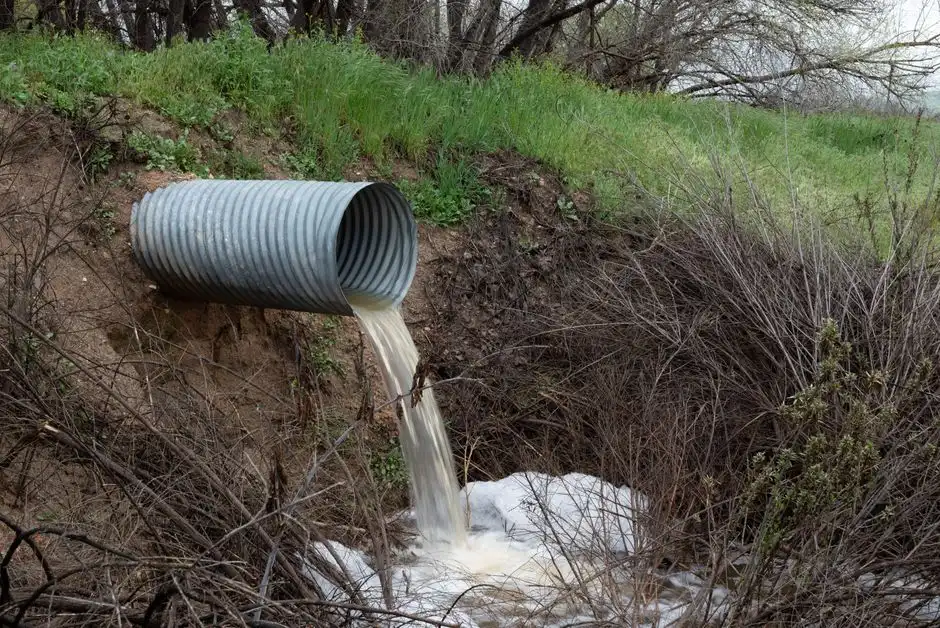
Sanitary sewage is organic, low-flow, and pathogen-bearing at BOD₅ 200–300 mg/L. It cannot be combined with the oxidizing, mineralized CTBD stream. Route it to a WSZ A/O package plant for sanitary sewage sized at approximately 100 L per employee per day, buried or skid-mounted, with no on-site operator. Sludge volumes from a 50–150-person Nairobi workforce are too small to justify a centrifuge; a small plate-and-frame filter press handles dewatering at the right scale.
Discharge from the WSZ unit routes to the NEMA effluent discharge licence boundary at a separate sampling point from the CTBD. Sharing a sampling point forces one stream's exceedance to trigger the other's permit action and is rejected at the application stage. The two streams must remain hydraulically separate from the building drain to the licensed discharge manhole.
CoC Economics: The Math That Catches Sustainability Directors
The cycles-of-concentration (CoC) instinct is wrong, and the math is the only thing that fixes it. Blowdown as a fraction of makeup water is 1/(CoC − 1). At 4 CoC, blowdown equals 25% of makeup water. At 6 CoC, it drops to 20% — a 5 percentage-point, 20% reduction, not the 50% that linear intuition suggests (per Genesis, 2025). Sustainability directors who mandate a 4→6 CoC step expecting a 50% freshwater cut will underwrite a chemistry spend that delivers a 20% cut and then wonder why the WUE number did not move.
Biological and scaling risks increase exponentially above 5–6 CoC without advanced treatment, so the practical ceiling sits at 4–6 on a Nairobi campus without RO polish. Run a CoC economic curve before sizing the softener: a 4→6 step is a 5 pp cut on its own, but it can unlock a 30–50% raw-water cut when paired with side-stream softening, lamella polishing, and RO on blowdown, depending on the chemistry. Conventional 75–80% recovery is the BWRO scaling ceiling (per IDE, 2026); pushing higher requires controlled precipitation or a dynamic RO operating mode that does not sit in a standard procurement envelope. The credible target band for a 5 MW Nairobi campus is 30% raw-water cut at the lower end and 50% at the upper end — not the inflated numbers that show up in vendor slides.
2026 CAPEX and OPEX Band for a 5 MW Nairobi Campus
Frame the 2026 cost band as a range, not a single number. The full three-stream process train — raw-water pretreatment, CTBD, sanitary sewage — lands in the low single-digit USD millions for CAPEX, process equipment only, excluding site civil works and generator backup (HydropureWater field data, 2026). Nairobi's inland logistics carry a 25–40% premium over Asian or European CIF supply, in line with the Mombasa premium cited in the coastal Kenya guide. OPEX is dominated by chemical dosing, antiscalant, RO membrane replacement, and biocide, and is best framed as $/m³ treated against the NCWSC tariff to give a CFO a clean ROI conversation. For contract structuring, see the performance-based wastewater O&M contract structure reference.
| Cost Element | 2026 Engineering Band (USD) | Basis / Notes |
|---|---|---|
| Raw-water pretreatment (intake, MMF, dosing, BWRO) | $0.6–0.9M | 5–10 m³/h, antiscalant-protected, SDI <3 |
| CTBD train (lamella, softener, ClO₂, RO) | $1.0–1.6M | 50–85% RO recovery, side-stream softener at 4–6 CoC |
| Sanitary sewage (WSZ A/O + plate-frame press) | $0.15–0.25M | 5–15 m³/day at 50–150 staff |
| Inland logistics premium (Nairobi) | +25–40% on equipment CIF | Over Asian / European supply |
| OPEX (chemicals, membranes, biocide, power) | $0.4–0.8 / m³ treated | Excluding labour; benchmark against NCWSC tariff |
Use this band as the procurement envelope and the CFO conversation frame. Equipment cost is the visible line; the inland logistics premium is the line that arrives late if it is not priced in at RFQ stage. Civil works, generator backup, and the NEMA licence fee are outside the band and should be carried as separate lines.
Frequently Asked Questions
What wastewater and cooling blowdown treatment does a data center in Nairobi, Kenya need?
Three separate trains: a brackish-tolerant raw-water pretreatment (intake screening, multi-media filtration at SDI <3, antiscalant and chlorine dioxide dosing, BWRO at 50–70% recovery) sized for Athi River / NCWSC raw water at TDS 500–1,200 mg/L; a cooling-tower blowdown train combining lamella clarification, side-stream softening, on-site chlorine dioxide at 0.5–1.0 mg/L, and optional BWRO at 50–85% recovery; and a dedicated WSZ A/O package plant for sanitary sewage at BOD₅ 200–300 mg/L. All three discharges route through a NEMA effluent discharge licence under the Water Quality and Management Act, with WUE ≤0.4 L/kWh alignment to the Climate Neutral Data Centre Pact (Jan 2025).
How long does a NEMA effluent discharge licence take in Kenya, and what does the application require?
A NEMA effluent discharge licence under the Water Quality and Management Act typically takes 60–120 days from application to issue, depending on completeness of the Environmental Impact Assessment and the quality of the discharge characterization data (HydropureWater field data, 2026). The application requires stream-by-stream characterization of TDS, BOD₅, TSS, residual chlorine, heavy metals, and temperature; a process flow diagram showing each stream to the licensed discharge manhole; and proof that discharge limits meet the NEMA Water Quality Regulations 2006 schedule for the receiving environment (sewer, land, or watercourse).
Is zero liquid discharge (ZLD) economic for a Nairobi data center?
ZLD is not economic for a Nairobi data center in 2026. Wet cooling is feasible year-round at ASHRAE Class A3/A4 ambient conditions, and ZLD adds an estimated 25–40% CAPEX with no operating benefit (HydropureWater field data, 2026). The credible target band is a 30–50% raw-water cut at the lower and upper ends of a side-stream softening + lamella + RO-on-blowdown train, not full ZLD. Where corporate water-stewardship commitments require it regardless of payback, the brine concentrate from a high-recovery RO stage can be routed to an evaporator-crystallizer as a separate capex line.