Why Mombasa is a different design problem from an inland African data center
A 100 MW facility can draw up to 2 million liters of water per day (per IDE, 2026), but a 5–10 MW Mombasa campus sits in the 150,000–300,000 L/day band (HydropureWater field data, 2026) — a meaningful pull on a municipal supply that already has to balance the port, tourism, and irrigated agriculture. Three site conditions make a generic "tropical" design insufficient for Mombasa: the coastal Indian Ocean intake with seasonal salinity intrusion, the ASHRAE TC 9.9 Class A1/A2 wet-bulb envelope that runs year-round, and grid-driven diesel runtime that elevates both raw-water demand and intermittent heat load.
Mombasa County is a declared water-stressed basin. MWASCO and the broader CUWASCO supply profile depend on the Mwache and Mtongwe catchments, both of which run near seasonal capacity, and seawater intrusion at the intake is a documented operational risk during peak demand. That single hydrological fact — a brackish baseline TDS at the intake rather than the soft Congo River profile used in the Kinshasa data center cooling blowdown treatment guide — disqualifies any template that assumes a freshwater-equivalent raw source.
Wet cooling is feasible year-round on the Kenya coast. ASHRAE TC 9.9 Class A1/A2 wet-bulb conditions rule out zero-liquid discharge (ZLD) for most Mombasa campuses and point designers toward on-site reuse and irrigation instead. The regulatory anchor is the NEMA effluent discharge licence under the Water Quality and Management Act, with county-level alignment to the Climate Neutral Data Centre Pact WUE ≤ 0.4 L/kWh target (CNDCP, Jan 2025). The 25–32 °C warm-water band sits squarely inside the ASHRAE TC 9.9 Legionella growth optimum, which sets biocide choice later in the spec.
The three wastewater streams a Mombasa data center must treat separately
"Wastewater" at a Mombasa data center is not one stream but three, each with its own chemistry, peak load, and NEMA permit pathway. Combining any two of them destroys reuse economics, breaches pathogen limits, and forces one technology to handle two incompatible waste profiles (HydropureWater Freetown 2026 field data).
Stream 1 — coastal intake — is the saline-tolerant pretreatment train. It carries seasonal TSS spikes during long-rain and short-rain events, a baseline hardness and silica profile typical of east African coastal boreholes and MWASCO surface blends, and a brackish TDS that climbs during dry-season intrusion. The pretreatment goal is Silt Density Index (SDI) below 3 to protect downstream reverse osmosis. Stream 2 — cooling-tower blowdown — sits at TDS 1,200–6,000 mg/L, runs at 25–32 °C, is biocide-bearing, and is loaded with silica and calcium hardness. It is the largest single treatable stream and the biggest freshwater lever on the campus. Stream 3 — sanitary sewage — is pathogen-bearing, organic, and low-flow at BOD₅ 200–300 mg/L, roughly 100 L per employee per day.
The mechanical reason streams must not be combined is straightforward: sanitary waste is reducing and biological, while blowdown is oxidizing and mineral. Sending them through one clarifier overloads the biology and ruins the reuse chemistry. The blowdown-ratio math is non-linear and counter-intuitive (Genesis, 2025): at 4 cycles of concentration (CoC) blowdown equals 25% of makeup water; at 6 CoC it drops to 20% — a 5 percentage-point, 20% reduction in blowdown volume, not the 50% that linear intuition suggests. The 30–50% raw-water cut on a 5 MW campus is achievable with side-stream softening and lamella polishing alone at the lower end, and with RO on blowdown at the upper end.
| Stream | Typical parameters | Treatment target | Reuse / discharge |
|---|---|---|---|
| Coastal intake (pretreatment) | Seasonal TSS spikes; brackish TDS at intrusion; baseline hardness and silica; trace organics | SDI < 3 to protect RO | Cooling-tower makeup, humidification |
| Cooling-tower blowdown | TDS 1,200–6,000 mg/L; 25–32 °C; biocide-bearing; silica- and hardness-loaded | Strip hardness, polish TSS, disinfect | Cooling-tower makeup (30–50% cut), on-site irrigation |
| Sanitary sewage | BOD₅ 200–300 mg/L; ~100 L/employee/day; pathogen-bearing | Pathogen compliance; <25 mg/L BOD for irrigation | On-site irrigation under NEMA permit, or licensed haul-out |
Stream 1 begins with a GX rotary mechanical bar screen at the intake to remove rags, plastics, and fibrous debris. Stream 3 is handled on a dedicated WSZ underground A/O package plant sized at 1.5× commissioning-day headcount to absorb shift turnover and contractor surges.
Raw-water pretreatment: defending the RO membrane from Mombasa's coastal intake
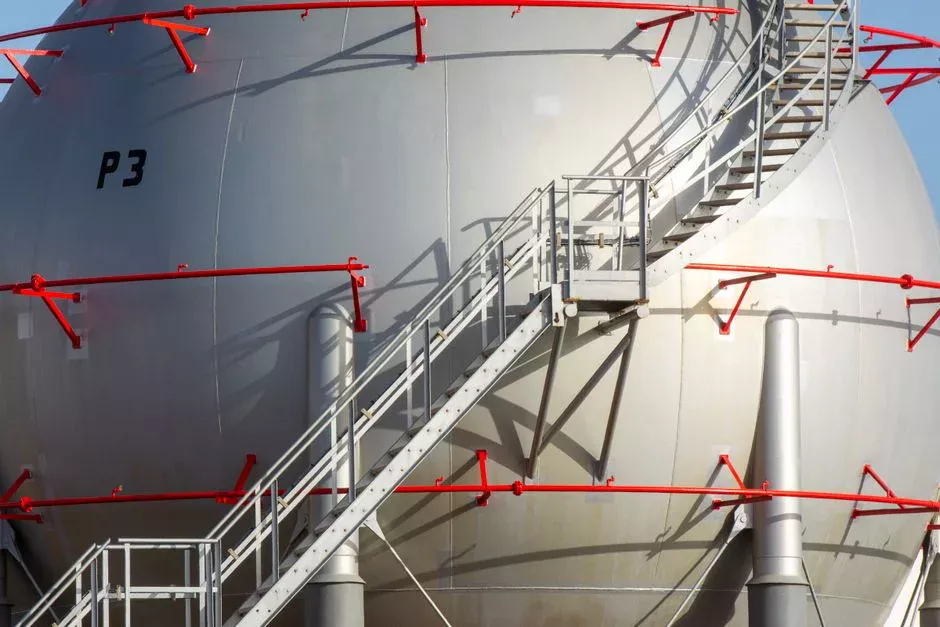
The raw-water train is the single largest determinant of RO membrane life on a coastal Kenya site, and it has to be specified in the order it should appear on a P&ID. The defensible sequence is: a GX rotary mechanical bar screen at the intake, a lamella clarifier with automatic chemical dosing for coagulant and flocculant, a multi-media filter (quartz sand over anthracite), activated carbon polishing, cartridge filtration, then an industrial RO system with up to 95% recovery and antiscalant dosing.
The rotary bar screen runs continuously and removes debris that would otherwise foul the lamella plates. The lamella clarifier with automatic chemical dosing handles wet-season turbidity spikes at surface loading 20–40 m/h and cuts coagulant demand by up to 30% versus conventional clarification (lamella clarifier product specification). The multi-media filter targets SDI below 3 for the downstream RO and runs automated backwash on differential pressure.
Activated carbon is non-optional on a coastal Kenya intake with Mwache and Mtongwe catchment disturbance. It strips trace organics, residual chlorine, and trace metals that would otherwise shorten RO membrane life — without it, the membrane cycle drops from roughly 3 years to 12 months at the same feed quality, which is a deal-breaker for a site that already carries Mombasa's coastal logistics premium (HydropureWater field data). The automatic chemical dosing system is sized for coagulant and flocculant on the lamella plus antiscalant on the RO. Industrial RO delivers permeate into cooling-tower makeup storage, with a 1–3 month chemical-cleaning cycle on the RO/UF membrane elements. Size the blowdown storage tank for at least 24 hours of peak evaporation loss to absorb intermittent heat load from diesel runtime — a design point carried from the Chittagong industrial wastewater treatment cost and standards guide for sites with similar grid instability.
Cooling-tower blowdown train: the largest freshwater lever on the campus
Cooling-tower blowdown is the largest single treatable stream on a coastal Kenya campus. A 5 MW IT load in 25–32 °C ambient conditions loses 150–250 m³/day to evaporation; without blowdown, hardness, silica, and TDS climb until scaling and biological fouling shut the tower down. The blowdown train has four jobs: strip hardness, polish particulates, disinfect against Legionella, and reuse what it can.
Job 1 — side-stream softening. A twin-tank industrial water softener (KJ-WT, 1–45 T/h) on 5–10% of tower flow strips Ca²⁺ and Mg²⁺, allowing cycles of concentration to climb from 2–3 to 4–6 without exceeding calcium carbonate or silica scale limits. The freshwater lever here is non-linear: hold calcium hardness below 600 mg/L as CaCO₃ and silica below 90 mg/L as SiO₂, in line with ASHRAE TC 9.9 guidance. Above 5–6 CoC the scaling and biological risks climb exponentially without advanced treatment, so design around 4–6 and stop there.
Job 2 — lamella clarification. A lamella clarifier with automatic chemical dosing drops TSS and silica carryover, after which the polished blowdown splits between cooling-tower makeup (typically a 30–50% raw-water cut) and on-site irrigation.
Job 3 — on-site chlorine dioxide. An on-site chlorine dioxide generator doses 0.5–1.0 mg/L residual. ClO₂ is preferred over chlorine in the 25–32 °C band because it does not form trihalomethanes (THMs) and remains effective against Legionella in the ASHRAE TC 9.9 warm-water optimum window — a documented failure mode for free chlorine on warm-water systems.
Job 4 (optional) — brackish water RO on blowdown. An industrial RO system on blowdown at 50–85% recovery, permeate TDS 10–50 mg/L at 150–400 psi, antiscalant-protected, with permeate blended into cooling-tower makeup (Genesis, 2025). Advanced brine desalters reach ~95% recovery with permeate silica around 1 mg/L (per IDE, 2026), but only justify above ~10 MW IT load in a Mombasa logistics context. Mechanical vapor compression (MVC) evaporative concentration at 15–25 kWh per 1,000 US gallons produces distillate below 10 mg/L TDS at 95–98% recovery; reserve for sites where surface discharge is fully prohibited.
| Unit operation | Specification | Operating envelope | Function |
|---|---|---|---|
| Industrial water softener (KJ-WT, 1–45 T/h) | 5–10% of tower flow; NaCl regeneration | Ca hardness <600 mg/L as CaCO₃; silica <90 mg/L as SiO₂ | Raise CoC from 2–3 to 4–6 |
| Lamella + automatic chemical dosing | 20–40 m/h surface loading | TSS and silica carryover reduction | Polish blowdown for reuse split |
| On-site ClO₂ generator | 0.5–1.0 mg/L residual | 25–32 °C; no THM formation | Legionella control per ASHRAE TC 9.9 |
| Industrial RO (BWRO configuration) | 50–85% recovery; 150–400 psi | Permeate TDS 10–50 mg/L | Cooling-tower makeup reuse; antiscalant-protected |
| MVC evaporative concentrator (optional) | 15–25 kWh/1,000 US gal | Distillate <10 mg/L TDS | 95–98% recovery; ZLD or no-discharge sites only |
Sanitary sewage: keep it off the blowdown train
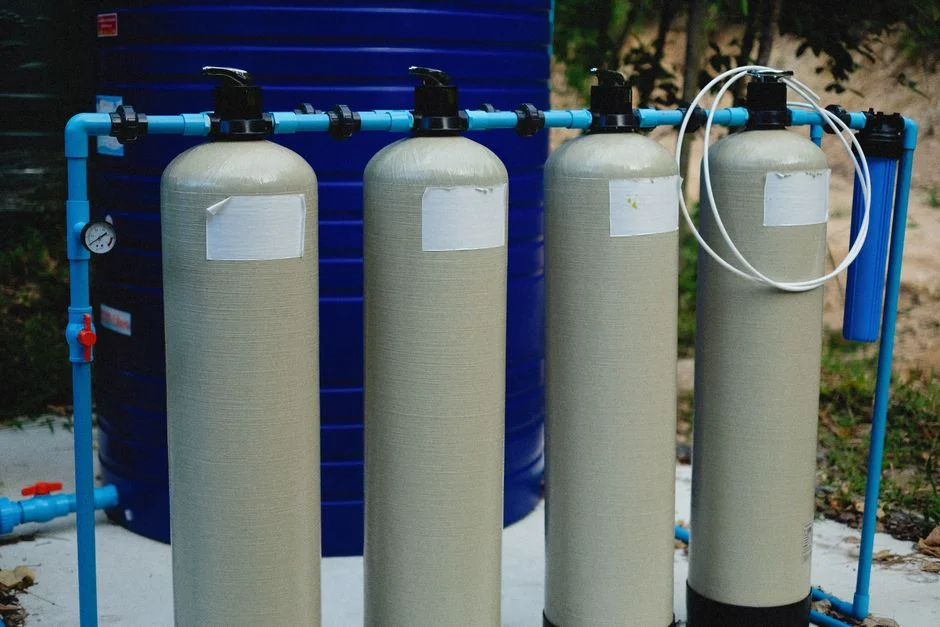
Sanitary load is the smallest of the three streams by volume but the most operationally sensitive, because it runs every day regardless of whether the IT load is online. At ~100 L per employee per day and BOD₅ around 250 mg/L, with cafeteria peaks layered on top, a 200-person campus generates a hydraulic load that the package plant must be sized for at 1.5× the commissioning-day headcount to absorb shift turnover and contractor surges (HydropureWater Freetown 2026 logic).
Specify the WSZ underground A/O package plant in the 1–80 m³/h range, fully buried with landscaping above to suit a low-rise coastal campus. The A/O (anoxic/oxic) contact oxidation process is robust against load swings typical of a phased build-out, and the unit is fully automatic with no dedicated operator. Discharge is either land-irrigated on the campus perimeter under a NEMA irrigation permit, or trucked to the nearest accredited off-site facility if the site footprint is tight.
Sludge is routed to a plate-and-frame filter press for dewatering before off-site disposal — non-negotiable on the Mombasa road network, where un-dewatered sludge cannot be hauled at acceptable cost. The press brings sludge cake to 25–35% dry solids, suitable for licensed off-site disposal. For future expansion that adds a cafeteria upgrade or staff housing, an MBR integrated wastewater treatment upgrade covers biological polishing without redesigning the A/O plant.
Mombasa site profile vs. handling strategy: a small decision matrix
Site footprint, catchment mineralogy, and discharge permittability govern whether to invest in on-site reuse, accept haul-out, or specify ZLD. The matrix below maps each Mombasa site profile to a defensible handling strategy. Wet-bulb rules out ZLD for most campuses: wet cooling is feasible year-round in ASHRAE Class A1/A2 territory, and ZLD adds 25–40% CAPEX with no operating benefit.
| Site profile | Sanitary handling | Blowdown handling | Permit pathway | Cost posture |
|---|---|---|---|---|
| Footprint >5 ha, NEMA irrigation permit obtainable, non-mineral catchment | On-site irrigation (30–50% raw-water cut) | Cooling-tower makeup + on-site irrigation | NEMA effluent discharge licence | Higher CAPEX, lower long-term OPEX |
| Footprint <2 ha or catchment drains to a protected water body | Truck to accredited off-site facility | Truck to accredited off-site facility | NEMA discharge + haul contract | Lower front-end CAPEX, higher long-term OPEX |
| Mineral-bearing catchment (artisanal upstream disturbance) | On-site irrigation only after pathogen compliance | On-site reuse with activated carbon polishing; no surface discharge | NEMA + contaminant-release reporting | Mid-range CAPEX, reporting-driven |
Spec activated carbon polishing on any RO permeate blended for humidifier use: Mombasa's salt-air catchment drives chloride-induced corrosion on humidifier coils, which is a documented failure mode on coastal data centers. Always run a CoC economic curve before sizing the softener — the 4→6 CoC step is a 5 percentage-point reduction in blowdown volume, not the 50% linear intuition suggests (Genesis, 2025).
CAPEX/OPEX bands and the NEMA permit path for a 2026 Mombasa campus
CAPEX and OPEX for a 5 MW hyperscale or colocation campus in 2026 should be framed as a range, not a single number, because Mombasa's coastal logistics carry a 25–40% premium over Asian or European CIF supply (HydropureWater field data, 2026), in line with the inland premium seen in the Kinshasa template. As a 2026 engineering band, the full three-stream process train — raw-water pretreatment, cooling-tower blowdown, sanitary sewage — lands in the low single-digit USD millions for CAPEX (process equipment only, excluding site civil works and generator backup).
OPEX is dominated by RO membrane elements on a 3-year replacement cycle, ClO₂ precursor (sodium chlorite plus HCl) on continuous dosing, NaCl regeneration salt sized to site hardness, and activated carbon change-out at 12–18 month intervals. Reuse scenarios lower OPEX through 30–50% raw-water reduction but raise front-end CAPEX; haul-out scenarios lower CAPEX but raise long-term OPEX through trucking contracts and discharge fees.
| Cost driver | 2026 Mombasa band | Note |
|---|---|---|
| Three-stream process train CAPEX (5 MW) | Low single-digit USD millions, equipment only | Excludes civil works, generator backup |
| Coastal logistics premium | +25–40% over CIF Asia/Europe | Customs + inland haul |
| RO membrane replacement | ~3-year cycle | Drops to 12 months if carbon polish skipped |
| ClO₂ precursor (NaClO₂ + HCl) | Continuous dosing | 0.5–1.0 mg/L residual target |
| Activated carbon change-out | 12–18 month intervals | Non-optional on coastal intake |
| Permit critical path | NEMA effluent discharge licence under WQMA | Engage NEMA before equipment PO |
Any new discharge to land or water requires a NEMA effluent discharge licence under the Water Quality and Management Act, with county-level alignment to the Climate Neutral Data Centre Pact WUE ≤ 0.4 L/kWh target (CNDCP, Jan 2025). Mineral-bearing catchments — including sites with artisanal upstream activity — add contaminant-release reporting obligations on top of the standard irrigation or discharge permit. Engage NEMA early — the permit timeline, not the equipment lead time, is the critical path on a 2026 Mombasa greenfield. For a peer African industrial reference frame under similar logistics conditions, the South Africa industrial wastewater treatment guide covers a comparable permit environment, and the Jakarta data center cooling blowdown treatment guide covers a comparable humid coastal hydrology.
Frequently Asked Questions
What wastewater and cooling blowdown treatment does a Mombasa data center need in 2026?
Three separate trains: a saline-tolerant intake/pretreatment train sized for coastal TSS spikes and brackish TDS, a cooling-tower blowdown train (side-stream softener, lamella clarifier, on-site chlorine dioxide at 0.5–1.0 mg/L, optional BWRO at 50–85% recovery) that pushes cycles of concentration from 2–3 to 4–6 and cuts freshwater draw 30–50%, and a dedicated WSZ A/O package plant for sanitary sewage at BOD₅ 200–300 mg/L. All three discharges route through a NEMA effluent discharge licence under the Water Quality and Management Act, with WUE ≤ 0.4 L/kWh alignment to the Climate Neutral Data Centre Pact.
Is ZLD required for a data center in Mombasa, Kenya?
No for most campuses. Mombasa's coastal wet-bulb sits in ASHRAE TC 9.9 Class A1/A2 territory year-round, which means wet cooling is feasible and a ZLD alternative would add 25–40% CAPEX with no operating benefit. A side-stream softener, lamella clarifier, and on-site chlorine dioxide generator cover the reuse case at a fraction of the cost. Reserve mechanical vapor compression (MVC) evaporative concentration for sites where discharge is fully prohibited or where catchment mineralogy rules out surface discharge.
Can sanitary sewage and cooling-tower blowdown be treated on the same plant?
No. Sanitary sewage is organic, low-flow, and pathogen-bearing at BOD₅ 200–300 mg/L; cooling-tower blowdown is mineralized, warm, and biocide-bearing at TDS 1,200–6,000 mg/L. Combining them complicates reuse, blows pathogen counts past NEMA irrigation limits, and forces one technology to handle two incompatible waste profiles. Treat them on parallel trains — a WSZ underground A/O package plant for sanitary and the side-stream softener-to-ClO₂ train for blowdown — and only blend at the irrigation reuse point if both streams independently meet the irrigation quality target under the NEMA permit.
What is the best biocide for cooling towers in warm coastal Kenya?
On-site chlorine dioxide at 0.5–1.0 mg/L residual. ClO₂ is preferred over free chlorine in 25–32 °C warm water because it does not form trihalomethanes and stays effective against Legionella in the ASHRAE TC 9.9 warm-water growth optimum window — a failure mode for chlorine on warm-water systems.
How much freshwater can a 5 MW Mombasa campus realistically save?
A 30–50% raw-water cut is defensible — 45,000–150,000 L/day on a 150,000–300,000 L/day campus. The 30% end of the band is achievable with side-stream softening and lamella polishing alone; the 50% end requires RO on blowdown at 50–85% recovery, with permeate TDS 10–50 mg/L blended back into cooling-tower makeup. At 5 MW that is enough to meet the CNDCP WUE ≤ 0.4 L/kWh target without ZLD.
Related Equipment
- industrial RO system with up to 95% recovery and antiscalant dosing — specifications, capacity range, and technical data