Mineral Wastewater, Tailings, and Concentrates Are Different Filter-Press Duties
A filter press for mineral processing wastewater uses pressure filtration to separate suspended solids from liquid: slurry enters between filter-cloth-covered plates, solids form a cake, and filtrate exits through the cloth. It is most relevant when a plant needs dry, transportable tailings or concentrate, or lower-volume solids from mining wastewater. Equipment selection depends on feed solids, particle size, compressibility, throughput, target cake moisture, filtrate requirements, and recovery goals. Filter presses generally use less energy per tonne of dry solids than centrifuges and can produce drier cakes than belt presses, but cloth selection, cycle time, washing, and cake discharge must be engineered around the specific mineral slurry.
A complete duty description separates three feeds that are often grouped under mineral-processing dewatering. Mineral-processing wastewater solids are sludge-like material whose primary objective may be volume reduction, contaminant management, and filtrate recovery. Tailings are the residual solids stream from mineral separation, with the cake required to meet a defined storage, transport, or disposal condition. Concentrates are valuable solids whose recovery, moisture, and product quality affect downstream sale or transport.
Roxia’s industry review identifies mining and mineral processing and wastewater treatment as the two largest global users of filter-press technology (Roxia, “What industries use filter presses the most?”, 2026). The same source observes that mining feeds are often relatively consistent and predictable, whereas wastewater sludges can vary substantially in composition, solids concentration, and filtration behavior.
Before requesting equipment, define the dry-solids production rate, feed-solids concentration, particle-size distribution, compressibility, target cake moisture, filtrate quality, and desired solids recovery. These inputs determine whether the project is primarily a tailings filtration duty, concentrate dewatering duty, or wastewater-solids duty.
A filter press performs solid-liquid separation; it does not remove oversized debris or replace every upstream treatment step. Screens, settlers, thickeners, or slurry-conditioning equipment may be needed before filtration. Mining and metals wastewater pretreatment requirements are covered in the guide to meeting sewer pretreatment limits and the related case-based explanation of mining-plant pretreatment constraints.
How Pressure Filtration Produces a Mineral Slurry Cake
Batch pressure filtration creates a mineral cake through a repeatable sequence of mechanical and hydraulic steps. McLanahan defines the core arrangement as pumping slurry at high pressure into hydraulically closed recessed plates lined with filter cloths. That arrangement converts the solids-retention duty of each cloth into a controlled filtration surface.
- Slurry is pumped into the chamber formed by closed filter plates.
- Pressure drives liquid through the cloth, while retained solids build a filter-cake layer on each cloth surface.
- As the cake thickens, resistance to filtrate flow increases and the filtration rate falls.
- Filtrate leaves through the cloth and is collected separately from the retained solids.
- If required, cake washing removes residual filtrate or dissolved contaminants from the cake.
- The press depressurizes, plates separate or opening mechanisms move, and the cake is discharged.
Pressure also compresses the cake, which is why a filter press can produce a drier result than a belt press. Roxia notes that vertical Tower Press configurations can apply diaphragm pressing for further cake compression and still drier results. The plate-and-frame arrangement described by HydropureWater plate-and-frame filter press applies pressure across cloth-covered plates while retaining the solids between them.
The resulting cake may have three different end uses. Tailings cake is evaluated for storage, transport, and disposal requirements. A concentrate cake may need controlled moisture and preservation of product value. Wastewater sludge cake is judged mainly by solids reduction, handling, and disposal or reuse conditions.
Moisture cannot be predicted from one number. Pressure, cycle duration, feed concentration, cloth permeability, cake thickness, and cake compressibility interact during filtration. Retained minerals also influence whether washing is required and whether the filtrate can be reused, discharged, or must be treated further.
Screen the Mineral Slurry Before Sizing Equipment

Plate area and cycle time should be selected only after the slurry has passed a feed-characterization and test-work gate. The required data covers mass rate as well as filtration behavior; a low feed-solids concentration can make a press undersized even when the hourly wet-feed rate appears manageable.
| Qualification input | Why the buyer needs it | Decision enabled |
|---|---|---|
| Dry-solids production rate | Defines the required solids-production basis independently of wet-feed volume | Number of presses, filtration area, and parallel arrangement |
| Feed-solids concentration | Determines the liquid volume handled per tonne of dry solids | Wet-feed rate and feed-pump duty |
| Particle-size distribution | Influences cake resistance and filtration rate | Cloth candidate, cycle time, and pretreatment |
| Compressibility | Influences achievable moisture and pressure demand | Pressing arrangement and operating-pressure requirement |
| Temperature, pH, and chemistry | Identify viscosity, corrosion, conditioning, and disposal constraints | Materials, pretreatment, and filtrate handling |
| Target cake and filtrate quality | Defines whether washing, recovery, or additional treatment is required | Cake washing, filtrate return, and acceptance criteria |
Roxia states that finer particles generally require longer cycle times, compressibility affects achievable moisture and operating-pressure requirements, and higher feed-solids concentrations reduce the liquid volume processed per tonne of dry solids (Roxia, “What industries use filter presses the most?”, 2026).
The National Research and Innovation Agency study on plate-frame dewatering provides a useful but narrow cloth result. Its simulated activated sludge consisted of CaCO₃ at 1–4% w/w, and cotton cloth outperformed drill cloth; the reported solids-removal efficiency was 56.00% at 4% w/w (National Research and Innovation Agency, “Studi Proses Dewatering Di Unit Pengolahan Air Limbah menggunakan Plate-Frame Filter Press”). This was a specific CaCO₃ and cloth study, not a mineral-tailings comparison. It supports testing the actual slurry rather than selecting cloth from a generic material label.
Pilot testing and solids analysis should therefore gate a firm plate-area or performance guarantee. Where upstream biological treatment changes the solids characteristics, the selected process must remain consistent with the wider mining wastewater treatment process selection.
Choose Plates, Cloth, Pressure, and Cycle Controls for the Duty
The equipment specification should separate confirmed catalog capabilities from project-dependent choices. Filter area and operating mode can be defined, but cloth, pressure, cycle time, washing demand, and discharge arrangement must be confirmed against the mineral slurry and pilot results.
| Specification item | Required project-specific definition | Basis for selection or acceptance |
|---|---|---|
| Feed type | Wastewater solids, tailings, or concentrate | Solids recovery, cake use, and variability |
| Feed solids and throughput | Dry-solids rate and measured feed concentration | Dry-basis production requirement |
| Particle size and compressibility | Full distribution and measured deformation behavior | Filtration resistance and pressing requirement |
| Target cake moisture | Acceptance limit at defined cake condition | Pilot result and downstream handling requirement |
| Filtrate destination | Reuse, discharge, or further treatment | Quality limit and plant integration |
| Cake washing | Required wash objective and water demand | Filtrate quality or product-recovery requirement |
| Enclosure and controls | Manual, hydraulic, or automatic PLC operation | Exposure, labor, remote-operation, and recovery needs |
The 2022 Sustainability study Iron Ore Tailings Dewatering: Measurement of Adhesion and Cohesion for Filter Press Operation is directly relevant because it addresses iron-ore tailings dewatering and the adhesion and cohesion behavior affecting filter-press operation. Its subject matter supports testing the actual tailings stream rather than inferring performance from a generic concentrate description.
Cloth selection remains a testable decision. The National Research and Innovation Agency found cotton better than drill cloth in its specified CaCO₃ system at 1–4% w/w, but that result should not be transferred automatically to abrasive iron-ore tailings or another concentrate. Cloth permeability, surface, weave, wear resistance, washing compatibility, and chemical tolerance must be evaluated together.
Diaphragm pressing is an option where further cake compression is justified. Where slurry conditioning is needed, an automatic chemical dosing system for slurry conditioning must be integrated with feed characterization and the press-control strategy.
HydropureWater’s verified catalog states that its plate-and-frame presses are available with filtration areas from 1 m² to 500 m² and manual, hydraulic, or fully automatic PLC-controlled operation (HydropureWater verified product catalog, 2026). Automatic controls, forced cake discharge, cake washing, and enclosed handling should be specified where they support measurable operating, safety, or product-recovery requirements.
Size Filtration Area from Dry-Solids and Cycle-Time Inputs
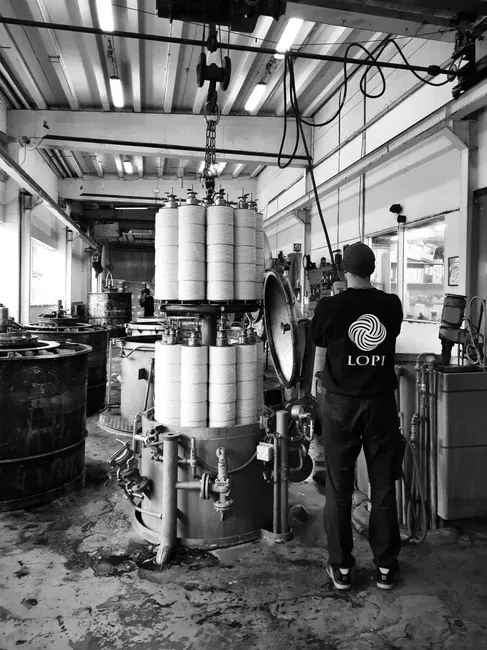
Filter area should be developed from the project’s dry-solids duty and pilot-derived cake capacity, not from wet-feed volume alone. Begin with the required dry-solids rate, then convert it to wet feed using the measured feed-solids concentration.
- State the required dry-solids rate in the same production basis used by the plant.
- Convert that rate to wet feed using the project’s measured feed-solids concentration.
- Divide the cycle production by the selected cycle duration to determine the wet-feed and dry-solids requirement per cycle.
- Apply the verified dry-specific cake capacity for the actual slurry to determine required filtration area.
- Check feed-pump duty, cake thickness, plate filling, washing time, discharge time, and surge requirements.
- Arrange parallel presses if one unit cannot sustain production while another is discharging.
| Sizing input | Information required before finalization | Output affected |
|---|---|---|
| Dry-solids production rate | Plant production basis and operating schedule | Total solids-processing duty |
| Feed-solids concentration | Measured representative sample | Wet-feed rate per cycle |
| Dry-specific cake capacity | Pilot-derived value for the actual slurry | Required filtration area |
| Cycle duration | Fill, press, wash, depressurize, and discharge schedule | Cycle throughput |
| Parallel-unit arrangement | Plant availability and discharge-cycle allowance | Installed press count |
Roxia publishes two sizing contexts. Its mid-scale example cites 15–20 tonnes per hour with 16–44 m² of filtration area. Its large-concentrator example cites 50–85 tonnes per hour with 60–168 m² of filtration area (Roxia, “What industries use filter presses the most?”, 2026). These are supplier examples, not universal conversion factors. They demonstrate the need to pair throughput with a verified cake capacity and duty definition.
Batch operation affects plant capacity because a press is not producing cake throughout the complete cycle. Multiple presses in parallel may be required when one unit is washing or discharging while filtration continues elsewhere. An upstream surge vessel can help balance feed, but it does not remove the need to size the installed filtration duty for the required schedule.
Do not finalize the number of plates, filter area, feed-pump duty, or parallel arrangement from the supplier examples alone. Require pilot-derived cake capacity and cycle time for the actual mineral slurry, then reconcile those results with the plate-and-frame filter press configuration offered by each bidder.
Compare Filter Presses with Centrifuges and Belt Presses
Filter presses, centrifuges, and belt presses should be compared against the same production target rather than by purchase price or nominal throughput alone. Roxia states that filter presses typically consume less energy per tonne of dry solids than centrifuges and achieve superior final dryness compared with belt presses (Roxia, “What industries use filter presses the most?”, 2026).
| Criterion | Filter press | Centrifuge | Belt press |
|---|---|---|---|
| Final cake dryness | Higher through mechanical pressure and, where used, diaphragm compression | Must be established for the specific mineral slurry | Generally lower than filter-press results |
| Energy per tonne of dry solids | Typically lower than centrifuges, according to Roxia | Higher comparison basis in Roxia’s assessment | Project-specific comparison required |
| Operating mode | Batch | Continuous | Continuous |
| Cake washing | Available as a defined cycle operation | Project-specific | Project-specific |
| Product recovery | Can retain concentrate value when washing and recovery criteria are specified | Can suit continuous high-throughput separation | Lower-separation alternative |
| Plant integration | May require surge capacity or parallel presses | Suited to continuous process flow | Suited to continuous process flow |
| Maintenance | Includes cloth replacement, plate and cloth condition, and discharge-system upkeep | Includes rotating machinery and wear-part maintenance | Includes belt, tensioning, and wash-system upkeep |
For a continuous concentrator, a centrifuge may fit the process-flow requirement better, while a filter press may remain attractive where dryness, batch washing, or concentrate recovery governs the decision. A belt press may be adequate where the required separation is lower and its operating and maintenance conditions are preferable.
Compare total cost of ownership rather than acquisition cost alone. Include electricity, filter-cloth replacement, preventive and corrective maintenance, wash-water demand, cake-disposal cost, downstream transport, and the value or consequences of lost filtrate quality. The decanter centrifuge design guide provides a useful reference for understanding continuous separation, although mineral-slurry performance still requires project data.
Build a Vendor Request That Produces Comparable Proposals
A comparable quotation starts with one controlled data package and a common set of supplier assumptions. Send every bidder the same dry-solids rate, feed-solids concentration, full particle-size distribution, compressibility data, chemistry, temperature, target cake moisture, filtrate limit, and required recovery.
Ask each supplier to state its assumed cycle time, filtration area, cake thickness, operating pressure, cloth specification, wash-water demand, and whether its performance basis is pilot-derived or estimated. Require proposed feed-pump duty and the basis for that duty. A quoted filtration area is not meaningful unless the bidder states the cycle and slurry assumptions behind it.
The supplier deliverables list should identify feed pumps, controls, cake-discharge equipment, filtrate handling, safety guarding, wash-water connections, utilities, spare parts, commissioning, and training. Where automatic operation is offered, define the interlocks, alarm response, data recording, and access to replacement parts. Maintenance responsibilities should also connect to automated wastewater system maintenance planning.
Ask how operating conditions will be monitored and adjusted. The Processes study Cake Moisture Estimation Based on Image Analysis and Regression Model for Controlling the Compression Time of Filter Press in Sludge Dewatering supports indirect cake-moisture estimation using drain-outlet images and differential-pressure data during compression (2024). Those signals can support control logic, while direct measurement remains the reference where the acceptance procedure requires it.
Compare delivered performance, operating consumption, maintainability, controls, supplier support, and complete scope. Filter area alone is not a procurement metric. Record every assumption that remains untested so it can become a pilot-test item or a clear contractual exclusion.
Frequently Asked Questions
How should a filter press for mineral processing wastewater be sized?
Size it from the dry-solids production rate, measured feed-solids concentration, pilot-derived dry-specific cake capacity, and a complete cycle schedule. Roxia’s 50–85 tonnes per hour with 60–168 m² example is a vendor context, not a sizing rule; require the bidder to show how its own assumed cake capacity and cycle time produce the proposed area.
What determines the cost of a filter press for mineral processing wastewater?
Request a delivered total-cost-of-ownership breakdown rather than relying on an unstated purchase price. The comparison should include energy, filter-cloth replacement, maintenance, cake washing and water demand, disposal, downstream transport, controls, utilities, commissioning, and spare parts. No supported quotation range is available in the research, so require project-specific pricing inputs.
How should filter cloth be selected for tailings filtration?
Test candidates against the actual mineral slurry rather than relying on a generic material description. The National Research and Innovation Agency found cotton cloth outperformed drill cloth in simulated activated sludge represented by CaCO₃ at 1–4% w/w, with 56.00% reported removal efficiency at 4% w/w; that result does not establish performance for abrasive iron-ore tailings. Compare permeability, cake release, retention, washing, wear, and chemical compatibility.
What proof should a supplier provide before a performance guarantee?
Require a pilot report using the actual feed or a justified representative sample. It should state feed solids, particle-size distribution, compressibility, pressure, cycle stages, cake thickness, measured moisture, filtrate quality, cycle time, and dry-specific cake capacity. An estimate should be identified as such rather than presented as demonstrated performance.
How does wastewater-sludge dewatering differ from concentrate dewatering?
Wastewater-sludge duty normally prioritizes solids-volume reduction, handling, disposal, and filtrate management; concentrate duty must also protect recovered-product value and meet a defined cake-moisture or product-quality target. Roxia observes that mining feeds are often relatively consistent, while wastewater sludges vary more in composition and filtration behavior, so the control strategy and acceptance tests should reflect the actual duty. Review the plate-and-frame filter press options against those distinct objectives.