Determine the cooling and wastewater balance first
A data center in Londrina needs two treatment trains: one for concentrated cooling-tower blowdown and one for sanitary wastewater. The correct equipment scope follows the site water balance, measured chemistry, cooling cycles of concentration and reuse target—not a generic Brazilian treatment template. Blowdown treatment normally starts with equalization, solids removal and dechlorination; UF and RO become relevant when the water must return as cooling makeup. Sanitary wastewater can use a package plant or MBR, with MBR favored for reuse. CONAMA 430/2011 is a national baseline, but the Paraná authority, sewer operator, receiving point and current authorization must be confirmed. Final sizing depends on measured flows, makeup TDS, target COC, chemical residuals and reuse quality.
Start by reconciling potable makeup, evaporation, drift, cooling-tower blowdown and sanitary wastewater across every operating case. The University of Georgia Extension bulletin reports that 70–80% of cooling water in evaporative systems can be lost through evaporation; it also reports that closed-loop cooling can reduce water consumption by up to 70% relative to open evaporative cooling, although that source identifies an energy-versus-water trade-off (UGA Extension, 2026).
For a screening balance, HydropureWater’s 2026 Brasília guide gives blowdown = makeup/(COC − 1), equivalent to 0.3–0.8% of makeup at 4–6 COC. Its separate 40 MW, PUE 1.4 hybrid-cooling example produces approximately 60–240 m³/day of blowdown and 50–80 m³/day of sanitary wastewater. These are reference cases, not Londrina design values. The Cimahi data center wastewater guide illustrates the same need to start with site-specific flows.
| Water-balance input | Engineering question | Evidence required before RFQ |
|---|---|---|
| Cooling architecture | Open evaporative, closed-loop, hybrid, economizer or direct cooling? | Vendor design cases with IT load and selected system |
| Makeup | What are average, peak and future flows? | Meter data and contracted supply basis |
| Evaporation and drift | How much water leaves the loop? | Vendor calculation at local wet-bulb design conditions |
| COC | What minimum and maximum cycles are permitted? | Cooling chemistry and operations constraints |
| Sanitary wastewater | What are average, peak and staffing-driven loads? | Flow monitoring and sanitary loading survey |
Ask the cooling vendor for IT load, selected architecture, makeup source, design wet-bulb temperature, evaporation, drift, chemical program, minimum and maximum COC and planned IT growth. If those inputs remain unresolved, specify modular treatment capacity and instrumented equalization, but do not select membrane area or biological reactor loading as if the final water balance were known.
Characterize the two wastewater streams
Cooling blowdown and sanitary wastewater must remain separate until measured chemistry proves that combined treatment can meet both the cooling reuse specification and every applicable discharge requirement. Blowdown concentrates the substances deliberately added to protect the cooling loop; sanitary wastewater carries organic, solids and ammonia loads that require biological treatment. Treating them as one dilute stream can increase membrane loading, obscure biocide controls and make reuse compliance harder to demonstrate.
HydropureWater’s 2026 Brasília source provides preliminary characterization bands for cooling blowdown at 4–6 COC: 1,500–2,500 mg/L TDS, 400–800 mg/L total hardness as CaCO₃, 5–50 mg/L free chlorine or bromine residual and 5–30 mg/L TSS. These are screening bands, not Londrina acceptance limits or permit conditions. The same source characterizes sanitary wastewater at BOD 150–300 mg/L, TSS 150–250 mg/L and NH₃-N 20–40 mg/L. Confirm all values through representative sampling of makeup, tower water, blowdown and sanitary effluent.
The chemical inventory can control the treatment route. UGA Extension identifies anticorrosive and antiscalant chemicals, biocides, chlorine compounds and glycols among common cooling additives (UGA Extension, 2026). Obtain every safety data sheet, dosing record and batch inventory; do not assume chlorine is the only biocide. Multi-media filtration for RO pretreatment should be evaluated only after those residuals and solids have been characterized.
| Parameter | Cooling blowdown | Sanitary wastewater | Design implication |
|---|---|---|---|
| pH, conductivity or TDS | Tower concentration and treatment chemistry | Diurnal and loading variability | Sets RO loading and biological controls |
| Hardness, alkalinity and silica | Primary scaling constraints | Usually secondary for treatment selection | Determines recovery and pretreatment |
| TSS and turbidity | Drift, corrosion products and precipitates | Wastewater solids fraction | Sets equalization and filtration duties |
| BOD/COD and ammonia | Not the principal sizing drivers | Core biological load | Sets package-plant or MBR capacity |
| Biocide and antiscalant | Residual and product-specific | Normally not applicable | Controls dechlorination and membrane compatibility |
| Oil, grease and temperature | Site-specific | Relevant to biological and collection systems | Must be confirmed by local sampling |
Select the cooling-blowdown treatment train
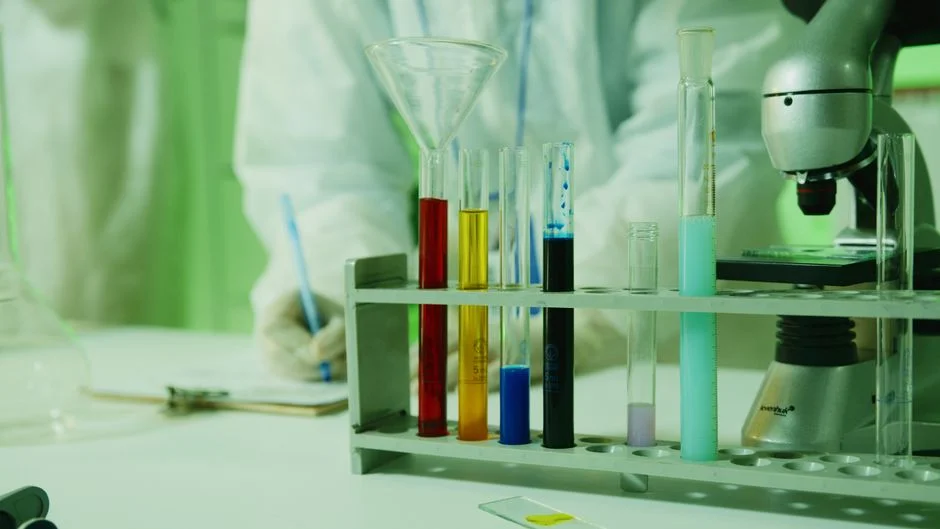
A CTBD train should match removal objectives in sequence: control solids and biocide, protect membranes, remove dissolved solids where reuse requires it, and condition the final water for the cooling system. Equalization also provides operational buffering, but it does not replace filtration or dechlorination.
HydropureWater’s 2026 Brasília guide describes a 24–48-hour hold-and-decay tank as its standard permit approach for blowdown and sodium bisulfite dechlorination to no more than 0.5 mg/L before discharge. It describes isothiazolinone destruction as requiring longer holding time or activated-carbon polishing. These are references for method selection, not a Londrina permit specification; the receiving sewer and environmental authority must establish the required residual and monitoring conditions.
Use multi-media filtration to reduce suspended solids, turbidity and colloids before UF and RO. Then evaluate a 0.03 μm PVDF ultrafiltration skid. HydropureWater’s 2026 Guarulhos guide gives UF pore size of 0.01–0.1 μm, operating pressure of 10–30 psi and recovery of 90–95%, with feed suitable for less than 10–15 micron SDI targets. The available industrial RO system for cooling-blowdown recovery must be sized from feed chemistry rather than catalog capacity.
HydropureWater’s 2026 Guarulhos source reports BWRO recovery of 50–85% and dissolved-solids removal of 95–99%. Conventional CTBD recovery is constrained to roughly 75–80% by silica, calcium carbonate and calcium sulfate scaling. It identifies antiscalant injection as necessary above approximately 2,000 mg/L TDS. Match the antiscalant to the complete scale-former profile and use automatic antiscalant and dechlorination dosing where controls justify automatic dosing.
| Treatment objective | Indicative unit operation | Sizing gate | Main risk |
|---|---|---|---|
| Equalize and control solids | Hold-and-decay basin plus filtration | Average and peak blowdown | Drift and corrosion products entering membranes |
| Remove oxidizing biocide | Sodium bisulfite or validated alternative | Measured residual and contact time | Incomplete destruction |
| Protect UF and RO | Multi-media filtration and UF | TSS, turbidity, SDI and chemistry | Fouling and loss of recovery |
| Reduce dissolved solids | BWRO | Feed TDS, hardness, alkalinity and silica | Scaling and concentrate disposal |
| Fit cooling reuse | Permeate blending or polishing | Vendor water-quality specification | Incompatible conductivity or chemistry |
Use softening or another validated control strategy when hardness and alkalinity constrain recovery. Obtain conductivity, silica and residual limits from the cooling-system chemical vendor before fixing RO product quality. Although HydropureWater’s industrial RO product is rated for recovery up to 95%, the allowable site recovery must be established from feed chemistry, temperature, scaling projections and the required reuse specification.
Treat sanitary wastewater for discharge or reuse
Sanitary wastewater should use a package plant for straightforward discharge treatment or an MBR when treated water must support a defined reuse. The choice depends on hydraulic and organic loading, peak factor, footprint, automation, sludge handling and reuse quality—not simply on the headline capacity of a catalog unit.
HydropureWater’s 2026 Brasília guide identifies a WSZ underground package sewage treatment plant as suitable below roughly 80 m³/day where there is no reuse intent. The corresponding unit has a 1–80 m³/h handling envelope and combines anoxic and aerobic biological treatment, sedimentation and disinfection. Confirm actual flow and peak factors because the product handling envelope is not the site design flow.
Where reclaimed water is required for cooling makeup, irrigation or toilet flushing, HydropureWater’s 2026 Brasília source recommends MBR with submerged PVDF membranes below 1 μm, BOD below 5 mg/L and TSS below 1 mg/L. The available MBR system for sanitary wastewater reuse covers 10–2,000 m³/day and combines activated sludge with submerged membrane filtration; its replaceable DF flat-sheet modules are offered in 80–225 m² configurations.
| Selection issue | Package treatment | MBR | Procurement check |
|---|---|---|---|
| Primary objective | Discharge treatment | Discharge or reuse | State reuse end use and quality |
| Hydraulic basis | Average and peak sanitary flow | Average, peak and membrane loading | Require measured diurnal data |
| Footprint and installation | Buryable package option | Process tanks, membrane skid and controls | Confirm available plot area |
| Sludge | Handling arrangement | Excess sludge removal | Price removal and disposal |
| Automation and staffing | Confirm remote controls | Confirm PLC and alarm strategy | Define operating responsibility |
Include disinfection and residual control in any sanitary reuse train. HydropureWater’s chlorine-dioxide product range runs from 50 g/h manual units to 20,000 g/h fully automated systems for industrial cooling loops and wastewater reuse. Confirm target residual, contact basin, monitoring duty and compatibility with the reuse application before including it in the RFQ.
Choose between discharge, partial recovery and ZLD
Discharge, partial recovery and ZLD should be compared against the same site water balance, current receiving-sewer authorization and brine-disposal route. Reuse-first is usually the most direct way to reduce potable demand, but it is not automatically the lowest-cost or lowest-compliance-risk option for every Londrina site.
Discharge-only treatment remains dependent on sewer acceptance and receiving-water conditions. HydropureWater’s 2026 Brasília source describes CONAMA 430/2011 as the national floor, including pH 5–9 for receiving-water discharge, BOD typically no more than 120 mg/L for sewer discharge unless stricter local rules apply, and oils and greases no more than 50 mg/L. These values do not establish the authorization applicable to a Londrina discharge point.
Partial recovery normally combines pretreatment, UF and RO, then returns permeate as supplemental cooling makeup. The objective is to displace potable water and reduce liquid discharge while meeting the cooling vendor’s water-quality specification. Partial ZLD should be reserved for sites where discharge volume is binding: HydropureWater’s 2026 Guarulhos source reports an 80–90% reduction in discharge volume, with the remaining brine managed by hauling or controlled disposal.
HydropureWater’s 2026 Brasília source makes ZLD defensible where basin TDS exceeds 1,500 mg/L or discharge is effectively prohibited and describes RO plus MVC plus crystallizer at 95–99% overall recovery. Its 2026 Guarulhos source gives MVC recovery of 95–98%, distillate below 10 mg/L TDS, energy use of 15–25 kWh/kgal distillate and $1–3 million CAPEX for a 10,000–30,000 GPD system. In the Guarulhos CTBD recovery and cost comparison, partial ZLD retains the recovery benefit while reducing complexity relative to full crystallizer ZLD.
| Route | Main benefit | Principal exposure | Decision test |
|---|---|---|---|
| Discharge | Simplest operating concept | Local sewer and receiving-water constraints | Does the authorized route accept the measured effluent? |
| Partial recovery | Displaces potable cooling makeup | RO recovery, fouling and concentrate disposal | Does permeate meet cooling chemistry and lifecycle economics? |
| Partial ZLD | Reduces remaining liquid discharge | Brine hauling or controlled disposal | Is there a contracted disposal route? |
| Full ZLD | Highest recovery and minimum liquid discharge | Capital, energy and solids handling | Is discharge effectively prohibited and the case economically defensible? |
Compare each route with future IT load, drought restrictions, freshwater tariffs and the consequences of an interrupted discharge route. Also include solids-handling equipment, such as a high-efficiency sedimentation tank where required by the selected train, and residual control such as a chlorine dioxide generator where the approved process relies on it.
Build the capital and operating-cost case
The business case should compare installed cost and lifecycle operating cost at the site’s design flow and a defined future-load case. Headline recovery percentages are not comparable without feed chemistry, concentrate handling, utilities, staffing and residual-management requirements.
HydropureWater’s 2026 Brasília source cites $250,000–500,000 installed and $1.50–3.00/kgal OPEX for a 50,000 GPD RO system. These figures are early planning references, not quotations for Londrina. The supplied research also gives a global discharge-fee benchmark of $5–15 per thousand gallons for water-stressed regions; it does not establish Londrina’s applicable fee. Obtain the current sewer tariff and any discharge or pollution charge from the local utility.
For higher recovery, HydropureWater cites MVC energy use of 15–25 kWh/kgal distillate and full ZLD at $3–8 million CAPEX and $5–15/kgal OPEX at 95–99% overall recovery. These benchmarks exclude unresolved site-specific requirements such as Paraná authorization, brine handling, electrical infrastructure and local service.
| Cost line | Calculation method | Information required |
|---|---|---|
| Freshwater displaced | Recovered volume multiplied by applicable tariff, adjusted for actual use | Utility tariff and reuse profile |
| Liquid discharge avoided | Reduced volume multiplied by the confirmed discharge fee | Current local sewer charge |
| Energy and chemicals | Vendor consumption at guaranteed operating point | Feed chemistry, recovery and duty cycle |
| Membrane and wear parts | Replacement cycle multiplied by local service cost | Warranty terms and consumable prices |
| Sludge or brine | Generated quantity multiplied by hauling or disposal rate | Disposal route and frequency |
| Labor and availability | Staffing model plus consequence of downtime | Service agreement and site operating concept |
Include membrane replacement, chemicals, energy, sludge or brine handling, operator labor and the value of reducing drought-related operating risk. Request treatment parts, valves and media pricing, local spares and lead times as part of the RFQ rather than treating them as post-award details.
Specify guarantees for flow, treated-water quality, recovery, availability, membrane replacement intervals, chemical consumption, automatic controls and a documented acceptance test. Use the Brasília and Guarulhos guides as planning references, but require each bidder to demonstrate performance on the proposed Londrina feed chemistry rather than transferring generic guarantees.
Confirm Londrina permits, utility requirements and site inputs

The supplied research establishes no numeric Londrina permit, sewer tariff, receiving-water classification or industrial water-allocation rule. Those values must be obtained from the applicable Paraná environmental authority, the municipal sewer and water operator, and the current authorization for the specific discharge point. CONAMA 430/2011 is a national baseline, not proof that a proposed discharge is permitted.
Start the permitting and concession path during front-end engineering. HydropureWater’s 2026 Brasília source emphasizes aligning the approval timeline with the water-rights calendar rather than equipment delivery. Apply that discipline in Londrina, but do not import Brasília basin rules, drought declarations or sewer conditions into Paraná without confirmation.
Ask the utility for current industrial water tariffs, discharge fees, allocation and drought restrictions, connection requirements, maximum TDS or conductivity limits, temperature limits, biocide-residual limits and monitoring frequency. Ask the environmental authority for the permit pathway, discharge-point restrictions, reuse authorization requirements, residual-discharge monitoring and the treatment evidence required for both streams.
| Workstream | Required site or authority input | Purpose |
|---|---|---|
| Water balance | Average and peak makeup, evaporation, drift, blowdown and sanitary flow | Defines hydraulic capacity |
| Cooling chemistry | Makeup TDS and hardness, COC, chemical products, reuse specification | Defines RO and pretreatment duty |
| Sanitary loading | Flow, peak factor, BOD, COD, ammonia and TSS | Defines biological process capacity |
| Discharge route | Receiving point, sewer conditions, authorization and monitoring | Defines discharge compliance |
| Residual route | Brine or sludge disposal access, quantities and permitted destination | Prevents an unusable treatment scheme |
| Site infrastructure | Footprint, power, drainage, access and future-load scenario | Tests constructability and scalability |
Complete a site survey and representative testing before issuing the equipment RFQ. Validate average and peak flows, makeup TDS and hardness, tower COC, chemical residuals, sanitary loading, available footprint, electrical supply, drainage and residual-disposal access. The Brasília data center blowdown treatment guide provides a useful permit-sequence reference, but the final Londrina scope should be built from Paraná authority and utility inputs.
Frequently Asked Questions
How much does treatment cost?
HydropureWater’s 2026 Brasília source gives $250,000–500,000 installed and $1.50–3.00/kgal OPEX for a 50,000 GPD RO system; its full-ZLD benchmark is $3–8 million CAPEX and $5–15/kgal OPEX at 95–99% overall recovery. These are planning benchmarks, not Londrina quotations. Request installed pricing at the measured design flow and confirmed future-load case, plus separate costs for pretreatment, chemicals, membrane replacement, power, operators, sludge or brine handling, freight, commissioning and local service.
Should the project use UF and RO?
Use UF and RO when recovered water must meet a defined cooling-makeup chemistry. A discharge-only project may require a different train based on the actual sewer conditions and residual limits. Require the cooling vendor’s conductivity, silica, hardness and biocide specifications before deciding whether UF alone, UF plus BWRO or another polishing arrangement is justified.
What data is required for sizing?
Provide average and peak makeup, blowdown and sanitary flows; makeup TDS and hardness; design and operating COC; chemical products and residuals; representative blowdown and sanitary chemistry; cooling reuse quality; target reuse volumes; and local discharge and brine constraints. Without these inputs, equipment flow capacity can be stated, but membrane area, recovery, biological loading and ZLD scope cannot be responsibly fixed.
How should a supplier be selected?
Compare installed and lifecycle cost, demonstrated recovery on comparable feed chemistry, guarantee terms, membrane and spare-part availability, PLC and remote-monitoring capability, local service response and permitting experience. Require the bidder to state which assumptions affect price, identify the acceptance test and disclose any performance not covered by the guarantee. The Penang data-center treatment guide and Mississauga data-center treatment guide provide additional procurement questions, but their local assumptions should not be transferred to Londrina.
Is CONAMA 430/2011 sufficient for a Londrina site?
No. It is the national framework, while current Paraná rules, sewer-operator acceptance conditions, receiving-water classification and the site-specific authorization must also be confirmed. Obtain the applicable limits and monitoring requirements in writing before selecting a discharge train or treating reuse as automatically authorized.
Can sanitary and cooling streams share equipment?
Keep them separate unless a validated design study demonstrates that the mixed influent consistently meets the cooling reuse specification and all sanitary reuse or discharge requirements. Separate equalization and treatment generally provide clearer chemical control, biological loading, residual management and regulatory reporting than an unverified combined train.
Related Equipment
- MBR system for sanitary wastewater reuse — specifications, capacity range, and technical data