
What Streams Does a Mississauga Data Center Need to Treat?
A Mississauga data center needs a site-specific treatment train that separates sanitary and process wastewater from cooling-tower blowdown, characterizes the blowdown chemistry, protects downstream equipment from scaling and solids, and establishes a lawful outlet for concentrate. Cooling-tower blowdown is the controlled purge from a recirculating loop that removes accumulated dissolved solids, scale formers and treatment chemicals. Evaporation leaves salts and treatment chemicals behind, so blowdown can contain elevated salts, heavy metals, suspended solids, biocides, corrosion inhibitors and altered pH. Water Utility Report (2026-04-14) identifies these constituents as site-dependent, so equipment selection should follow characterization rather than precede it.
Build a stream-by-stream mass balance rather than treating all site wastewater as one combined flow. Sanitary sewage, equipment-room washdown, process wastewater, stormwater and once-through cooling discharge require separate flow estimates, sampling plans and outlets. Confirm whether once-through cooling will exist, how cooling systems will reject heat, and whether emergency dumps or seasonal bypasses can enter the treatment train.
Request at least one full seasonal campaign covering flow, conductivity and TDS, pH, hardness, alkalinity, silica, chloride, sulfate, TSS, metals, biocides, corrosion inhibitors and scale inhibitors. Include makeup-water quality and the cooling chemical program because the incoming water and treatment chemistry determine the blowdown load.
Use HydropureWater’s data-center wastewater and cooling-blowdown treatment roadmap only as a screening reference. Its Toronto guide describes a 4–8-times concentration range corresponding to TDS of 1,200–6,000 mg/L and typical suspended solids of 10–50 mg/L; those are Toronto/Lake Ontario screening values, not Mississauga design values. Mississauga testing must establish the actual range.
Which Regulations and Receptors Govern the Final Design?
Mississauga is in the Region of Peel, so the sewer authority, industrial-user requirements, discharge limits, tariff structure and downstream capacity must be confirmed for the specific receiving catchment. Toronto bylaws, rates and Lake Ontario assumptions should not be transferred to a Peel site without verification. The governing question is which sewer or receiving water actually accepts each stream under current local rules.
HydropureWater’s Toronto guide (2026) provides a workflow example rather than a Mississauga determination: Ontario’s Permit to Take Water applies when daily makeup exceeds 50,000 L/day, and a water-taking strategy should document source justification, daily and peak taking, conservation and reuse. Confirm the current Ontario threshold and application requirements for the proposed facility.
Sanitary-sewer discharge, direct discharge to Lake Ontario, storm drains and other receiving waters are different pathways. Direct discharge can add federal and Ontario environmental approvals. For any discharge route, screen heat, pH, total residual chlorine, TSS, phosphorus, oil and grease, metals and any locally applied TDS ceiling. A sewer approval does not solve concentrate management; establish whether the residual can be further treated, reused or hauled.
The OpenAlex-hosted The Development document for the effluent monitoring regulation for the electric power generation sector reports that physical-chemical and biological processes can control wastewater pollutants and that some sites discharge effluent directly without treatment. A site-specific engineered basis is required to determine the Mississauga facility's actual needs.
| Decision point | Evidence or approval required | Effect on treatment design |
|---|---|---|
| Sanitary sewer acceptance | Current Peel industrial-user requirements, limits, tariffs and downstream capacity for the receiving catchment | Sets pretreatment, discharge flow and concentrate restrictions |
| Ontario water taking | Current PTTW applicability, source justification, daily and peak taking, conservation and reuse plan | Supports the reuse case and water-resilience basis |
| Direct receiving-water discharge | Applicable federal and Ontario approvals, receiving-water constraints, thermal and chemical limits | May require additional treatment or eliminate the route |
| RO concentrate | Local acceptance, further-treatment feasibility, reuse option and hauling route | Must be engineered separately from permeate |
| Cumulative loading | Number and discharge profile of data centers served by the receiving system | Tests whether site acceptance remains sustainable |
What Treatment Train Should the Site Evaluate?
The site should compare three pathways: discharge-only, partial reuse and high reuse, then develop a train with an independently engineered concentrate route. The process sequence is source-water characterization; side-stream or equalization storage; solids removal; optional chemical conditioning; UF where required; brackish-water RO; permeate reuse or permitted discharge; and concentrate treatment or disposal.
Use multi-media filtration when suspended solids and fouling protection are the dominant concerns. Use hollow-fiber UF pretreatment for cooling blowdown when the reuse target or feed variability requires stronger solids and microbiological protection. HydropureWater’s Toronto guide describes 0.01–0.1 µm PVDF UF for this duty, while the product guidance specifies hollow-fiber PVDF membranes with a 0.03-micron rating, automatic backwash and air scour. It gives capacities from 2,000 to 40,000 L/h and acceptance of up to 300 ppm turbidity. These are product guidance values, not automatic selections for a Mississauga feed.
Use industrial RO for cooling-tower makeup reuse when TDS and silica control are required. HydropureWater’s Toronto guide identifies RO as the default for TDS and silica removal; NF may be considered when hardness is limiting, while UF alone may suit lower-concentration loops or polishing before permitted discharge. The Toronto guide identifies UF plus RO at 75–80% recovery for cooling-tower makeup reuse. IDE (2026) also reports that conventional BWRO commonly reaches 75–80% before scaling becomes unmanageable, so recovery must be projected from actual chemistry rather than copied as a guarantee.
For higher recovery, IDE’s MAXH₂O approach uses conservative local RO followed by controlled removal of sparingly soluble salts as dense solids. An industrial case reported by IDE (2026) achieved around 95% recovery and permeate silica of about 1 mg/L, but it does not establish applicability to Mississauga cooling chemistry.
Keep DAF equipment as a contingency for oil, grease, colloids or unusually high suspended solids. Do not make it the default unit without a waste characterization. Where chemical control is required, assess PLC-controlled chemical dosing for blowdown pretreatment, with dosing tied to measured conductivity and chemistry rather than a fixed timer.
| Pathway | Applicable feed or site condition | Principal treatment train | Key unresolved issue |
|---|---|---|---|
| Discharge-only | Receiving sewer accepts the proposed flow and chemistry | Equalization, filtration and required chemical adjustment | Heat, solids and local discharge envelope |
| Partial reuse | Lower-concentration loop or polishing opportunity | Filtration or UF, with reuse where chemistry permits | Residual disposal and reuse-water quality |
| High-reuse makeup | Water conservation and discharge reduction justify RO | Filtration or UF, BWRO, chemical control | Concentrate chemistry and permitted outlet |
| Very high recovery | Conventional RO recovery is constrained by scaling | Controlled salt precipitation followed by further brine processing | Solid-residue handling and operating complexity |
How Should Recovery and Concentrate Management Be Evaluated?
Cycles of concentration is the ratio of TDS in circulating cooling water to TDS in makeup water. Genesis Water Technologies calculates a 25% blowdown ratio at 4 cycles and 20% at 6 cycles. The change is a 5-percentage-point reduction, or 20%. Genesis Water Technologies also warns that biological and scaling risks increase above 5–6 cycles without advanced treatment, so no site target should be fixed before testing the cooling program and feed chemistry.
Compare conventional UF plus RO, controlled salt precipitation for higher recovery, and full zero liquid discharge. Full ZLD should be reserved for sites where sewer access, hauling constraints or receiving-water rules leave no practical alternative. It adds equipment, controls and solid-waste handling that must be compared with the water and discharge value it creates.
HydropureWater’s Toronto comparison states that UF plus RO can provide 80–90% of the water benefit at roughly one-third the lifecycle cost of full ZLD in most Toronto cases. Recalculate this comparison using Peel sewer tariffs, the site’s water and discharge charges, concentrate route, energy, chemicals, membrane replacement, labour and residual disposal.
| Option | Recovery question | Concentrate route | Economic inputs required |
|---|---|---|---|
| UF plus RO | What recovery is supportable from seasonal feed chemistry? | Permitted sewer discharge, further treatment or haulage | Water purchase, sewer and discharge charges, energy, chemicals and membrane life |
| RO plus controlled salt precipitation | Does the additional recovery justify added controls? | Precipitated solids plus residual brine | Solids handling, equipment availability, operator requirements and brine disposal |
| Full ZLD | Is extensive recovery operationally and economically justified? | Concentrated solids for disposal | Installed cost, energy, maintenance, labour and haulage constraints |
What Must Be Tested Before Equipment Procurement?
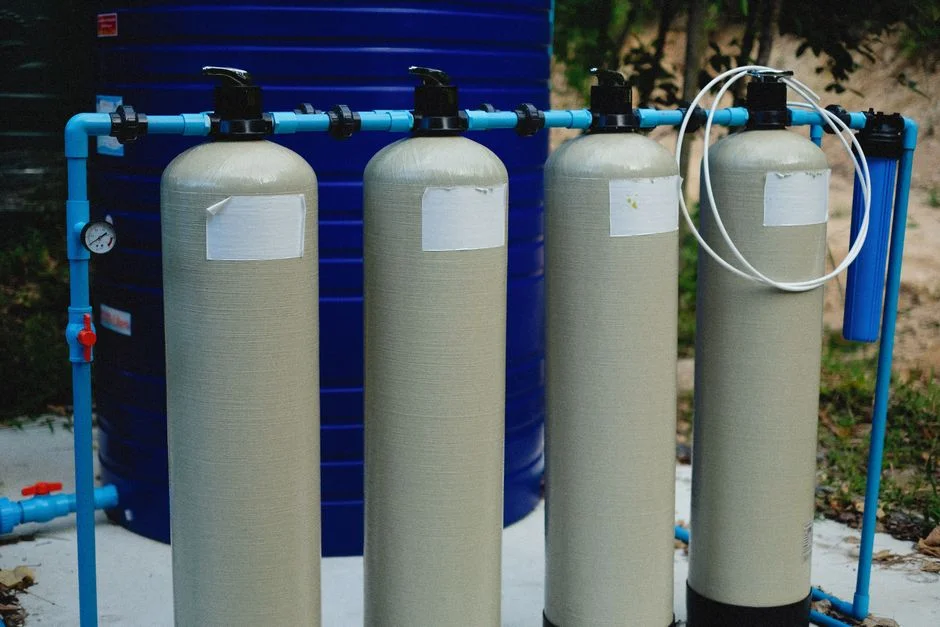
A 30-day minimum baseline is the evidence package required before sizing equipment. It must cover makeup, blowdown, evaporation, chemical use, emergency dumps and water quality. Genesis Water Technologies reports that actual blowdown can exceed theoretical calculations by 15–30% because of unmeasured losses and emergency dumps, so nameplate cooling capacity and the theoretical blowdown equation are insufficient design inputs.
Size flow equipment from measured peak and seasonal flows. Project membrane performance using the actual feed analysis, seasonal temperature, silica, hardness, alkalinity, sulfate, chloride, antiscalant and biocide residuals. Confirm pretreatment duty, cleaning frequency, membrane replacement assumptions and disposal routes before releasing an equipment specification.
Set acceptance targets for permeate quality, recovery, concentrate chemistry, differential pressure, energy consumption and automatic controls. HydropureWater reports a 5–8-year membrane replacement interval; use that as a lifecycle-planning reference, not a guarantee for every membrane or operating regime.
| Pre-procurement item | Required evidence | Procurement consequence |
|---|---|---|
| Water balance | At least a 30-day baseline, including emergency dumps and seasonal operating changes | Sets measured flow basis and storage duty |
| Feed chemistry | Seasonal analysis of scaling constituents, solids, metals and treatment residuals | Determines membrane, pretreatment and antiscalant design |
| Recovery projection | Vendor projection using the actual feed analysis and operating temperature | Defines recovery and concentrate flow |
| Residual route | Written confirmation of sewer acceptance, further treatment or haulage | Prevents a treatment train without an outlet |
| Lifecycle basis | Cleaning, replacement, energy, labour and disposal assumptions | Supports comparison of bids on a common basis |
Frequently Asked Questions
How much does wastewater and cooling-blowdown treatment cost in Mississauga?
Do not accept a generic installed price without the measured blowdown flow, seasonal chemistry, selected recovery, Peel sewer and water tariffs, concentrate route and residual-disposal method. Request an installed estimate plus lifecycle operating assumptions for energy, chemicals, membrane replacement, labour and waste handling.
How should a treatment supplier be selected?
Require site-specific feed data, a recovery projection for the actual chemistry, membrane warranties, controls scope, operator training and after-sales support. Check references for analogous cooling-blowdown duty and require the concentrate route to be included in the supplier’s performance basis.
What determines the required treatment-train size?
Use measured peak and seasonal flows rather than facility power or cooling-system capacity alone. The sizing package should reconcile makeup, evaporation, blowdown, emergency dumps, storage, pretreatment, RO recovery and concentrate flow.
Can Toronto discharge limits be used for a Mississauga data center?
No. Toronto and Lake Ontario figures are screening references only. Confirm the current Region of Peel sewer requirements, tariffs and downstream capacity for the specific receiving catchment, along with applicable Ontario and federal approvals, before freezing the design.
Related Equipment
- industrial RO system for cooling-tower makeup reuse — specifications, capacity range, and technical data