Why Toronto Is Now a Hyperscale Water Question
Southern Ontario data centers are projected to draw up to 200 million litres of water per day (L/day), a figure that surfaced in reporting captured by the Reddit thread Data centres will drink 200 million litres a day in Southern Ontario and has since become the benchmark regional headline (Reddit, 2026). Scaled to a single site, IDE's analysis puts a 100 MW facility at up to 2 million L/day of cooling-tower makeup, which is roughly the daily demand of a small Ontario town (IDE, 2026). Toronto is the surprising setting for that growth: the city sits on the shore of Lake Ontario, one of the most regulated watersheds in Canada, yet most proposed hyperscale builds still plan to draw makeup from municipal potable supply rather than from the lake itself. Toronto Water and the Region of Peel have begun flagging the cumulative load, and Ontario's Permit to Take Water (PTTW) framework now treats large data centers as significant water takers rather than light commercial users. The 2026 driver is AI workload density: as GPU-dense halls proliferate, cooling-water intensity rises, and a generic "blowdown reuse" white paper written for Phoenix or Querétaro is no longer a defensible specification for a Toronto project. This guide is built around the actual chemistry of Lake Ontario makeup, the actual receiving-water and sewer rules in the GTA, and the equipment list an engineer can put in front of procurement.
What the Blowdown Stream Actually Looks Like in Toronto
Cooling-tower blowdown (CTBD) is the controlled purge from a recirculating cooling loop, taken to keep dissolved solids, scale formers, and treatment residuals below their operating ceilings. The governing lever is cycles of concentration (COC), the ratio of total dissolved solids (TDS) in the circulating water to TDS in makeup. At a typical 4 COC baseline, about 25–30% of makeup leaves the tower as blowdown (Genesis Water Technologies, 2026). For a facility using 10 million US gallons per month (≈ 38 ML/month), that is 2.5–3 million US gallons (≈ 9.5–11.5 ML/month) of discharge that has to go somewhere every month.
The chemistry of that stream in Toronto is set by Lake Ontario and by the municipal treatment that delivers it. Lake Ontario makeup runs cold — roughly 4–10°C in winter and 18–22°C in summer at the intake — and moderately hard, with calcium and magnesium in the 30–45 mg/L CaCO₃ range, alkalinity around 85–110 mg/L, and low silica (<5 mg/L) compared with the deep-well sources used in Texas or Arizona (Genesis Water Technologies, 2026). Once concentrated through the tower, the blowdown profile tightens into a predictable envelope: TDS 4–8× makeup, 1,200–6,000 mg/L; scaling minerals dominated by calcium, magnesium, alkalinity, and silica; treatment-chemical residuals from biocides, scale inhibitors, and corrosion inhibitors; and suspended solids typically 10–50 mg/L from corrosion products and biofilm fragments (Genesis Water Technologies, 2026). The cold intake matters because it shifts viscosity, raises the feed pressure the downstream reverse-osmosis (RO) pump has to deliver, and limits the efficiency of any thermal brine-concentration step during the GTA winter.
Three operating parameters drive most of the rest of the design:
| Parameter | Toronto / Lake Ontario baseline | Design implication |
|---|---|---|
| Makeup temperature | 4–10°C winter, 18–22°C summer | Higher RO feed pressure; larger pump/motor sizing; freeze protection for outdoor skids |
| Makeup hardness (as CaCO₃) | 30–45 mg/L moderate | Softening or NF partial-softening can be skipped if antiscalant is well specified |
| Makeup silica (SiO₂) | < 5 mg/L | Silica rarely limits RO recovery; calcium carbonate does |
| CTBD at 4 COC | TDS 1,200–6,000 mg/L; TSS 10–50 mg/L | UF + RO is the workhorse pairing; MVC only on the concentrate |
| CTBD volume | 25–30% of makeup at 4 COC | Drives the case for reuse over discharge once makeup exceeds PTTW triggers |
Antiscalant and biocide selection is best handled on a PLC-controlled antiscalant and biocide dosing skid sized to blowdown conductivity rather than to a fixed timer; phosphate-based inhibitors should be avoided because they both foul RO membranes and breach most municipal phosphorus limits in the GTA.
The 2026 Process Train That Actually Fits a Toronto Site
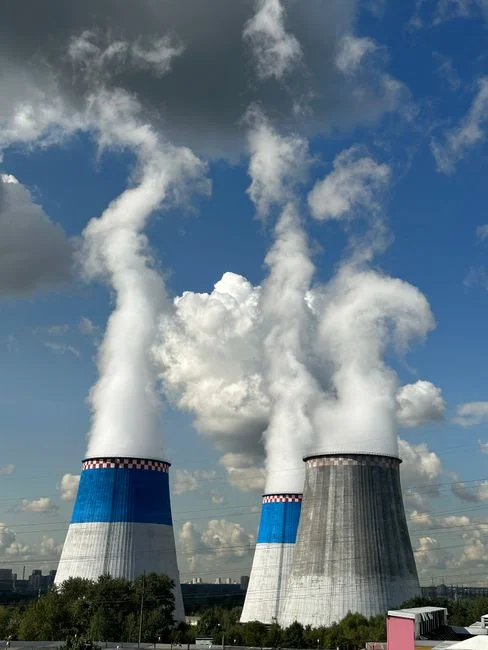
The train that consistently wins for GTA blowdown is a five-stage sequence, with the last step reserved for sites that cannot discharge concentrate at all.
- Side-stream filtration. Self-cleaning 10–25 µm mechanical filters on 1–5% of circulation flow. Capex $50K–$200K for typical data-center flows. This step keeps heat-exchanger surfaces clean and drops blowdown TSS to a level an RO can accept without chronic fouling (Genesis Water Technologies, 2026).
- Chemical conditioning. Non-phosphate antiscalant and a biocide program, ideally tablet-dosed for consistent delivery and low residuals. Phosphate-free chemistry protects both the downstream membrane and the Toronto Sewers Bylaw total-phosphorus limit.
- Ultrafiltration. A PVDF ultrafiltration system for blowdown pretreatment at 0.01–0.1 µm pore size, 90–95% recovery, 10–30 psi, fed at low pressure. UF removes the colloidal and biological load that RO pretreatment chemicals alone cannot catch, and it stabilizes downstream RO performance in cold-feed conditions (Genesis Water Technologies, 2026).
- Reverse osmosis. An industrial RO unit for cooling-tower makeup reuse operated at 50–85% recovery, 150–400 psi, with permeate at 10–50 mg/L TDS. The high end of that recovery band is realistic for Toronto because silica is low; calcium carbonate scaling is the practical ceiling. Cold-water operation forces the designer to upsize the high-pressure pump and motor, and to add a low-temperature feed blend if winter makeup drops below about 7°C (Genesis Water Technologies, 2026).
- Mechanical vapor compression (MVC) + crystallization for ZLD. Reserved for sites with no viable discharge path. MVC on the RO concentrate reaches 95–98% recovery at 15–25 kWh per 1,000 US gallons of distillate; a downstream crystallizer converts the remaining brine to a solid cake (Genesis Water Technologies, 2026). IDE's MAXH₂O Brine Desalter is the high-end reference design — operated at about 95% overall recovery, it delivers permeate silica of roughly 1 mg/L and lets the tower run at much higher COC without scaling (IDE, 2026).
A 50,000 US gallons-per-day (USGPD) RO skid treating blowdown lands in the $250K–$500K installed range, with operating cost around $1.50–$3.00 per 1,000 US gallons including energy, chemicals, and membrane replacement (Genesis Water Technologies, 2026).
Technology Comparison: UF, NF, RO, MVC, and ZLD Side by Side
This is the table an engineer pastes into the basis-of-design memo. Numbers are drawn from Genesis Water Technologies' 2026 technology comparison and IDE's MAXH₂O reference, both framed for a Toronto cold-feed, moderate-hardness feed.
| Technology | Primary removal | Recovery range | Operating pressure / energy | Permeate quality | Capex band | Opex band | Fit for Toronto reuse |
|---|---|---|---|---|---|---|---|
| UF (0.01–0.1 µm PVDF) | TSS, bacteria, colloids | 90–95% | 10–30 psi, low energy | NTU < 0.5, no TDS reduction | Included in pretreatment capex | Membrane replacement every 5–8 yr | Essential pretreatment for any RO/MVC |
| NF | Partial hardness, sulfate, organics | 70–85% | 75–150 psi | Permeate TDS ≈ 30–50% of feed | Lower than RO at same flow | Lower than RO | Use when hardness — not TDS — is the bottleneck to higher COC |
| RO | 95–99% dissolved solids, silica, hardness | 50–85% | 150–400 psi | 10–50 mg/L TDS | $250K–$500K for 50,000 USGPD | $1.50–$3.00 / 1,000 US gal | Workhorse for makeup reuse at 75–80% recovery |
| MVC on RO concentrate | Salts via distillate | 95–98% of concentrate | 15–25 kWh / 1,000 US gal distillate | < 10 mg/L TDS distillate | $1–3M for 10,000–30,000 USGPD | Energy-dominated | Use when sewer is constrained or for partial ZLD |
| Full ZLD (RO + MVC + crystallizer) | All salts; solid cake output | 95–99% overall | High thermal + electrical | Distillate reuse; solids to landfill | $3–8M for data-center scale | $5–15 / 1,000 US gal | Rarely justified in GTA; reserve for haul-only sites |
Membrane selection rules for the GTA: RO is the default because it solves TDS and silica in one step; NF earns its slot when hardness is the limiting factor and TDS is not; UF alone is acceptable only for low-COC loops or as a polishing step ahead of sewer discharge (Genesis Water Technologies, 2026). For sites that need to push recovery past 80%, brackish-water RO membrane elements rated for high-recovery cold-feed operation are the cheapest insurance against winter scaling events.
Compliance in Toronto: Sewers Bylaw, PTTW, and Lake Ontario Reality

The technical design lives or dies on three regulatory frames that any Toronto project will be held to.
Toronto Sewers Bylaw Chapter 681. The municipal discharge envelope includes pH 6–11, total residual chlorine typically 1–2 mg/L at the point of discharge, temperature ≤ 60°C, plus limits on TSS, BOD, total phosphorus, oil and grease, and metals such as Cu, Zn, Ni, and Pb. Several GTA trunk-sewer catchments now apply a TDS ceiling of < 1,500 mg/L, which on its own is a direct driver for RO reuse over direct discharge for any tower running above about 3 COC (Genesis Water Technologies, 2026). Industrial users also pay Toronto Water's industrial rate structure, which effectively taxes blowdown volume — another argument for reuse over discharge.
Ontario Permit to Take Water (PTTW). The PTTW framework applies when daily makeup exceeds 50,000 L/day, and large hyperscale sites are well above that. A full PTTW submission now requires source-water justification, projected daily and peak water taking, and a description of water-conservation and reuse measures — exactly the documentation a well-specified CTBD train supports.
Lake Ontario discharge. Any direct discharge to the lake, or to a storm sewer tributary, is regulated under the federal Fisheries Act and Ontario MECP Environmental Compliance Approval. Heated blowdown more than about 30°C above ambient triggers a thermal-load review, which is a real exposure for once-through or hybrid loops. Most GTA projects route discharge to the sanitary sewer under Chapter 681 and avoid the federal process altogether; the design implication is that the RO concentrate, if not reused on-site, still has to meet municipal limits before it can leave the property.
Choosing Reuse, Discharge, or ZLD: A 2026 Decision Framework
The decision matrix below maps the three viable water strategies to the site variables a Toronto engineer actually controls — sewer access, makeup cost trend, and ESG posture. It is written so the engineer can defend the choice at a procurement or board ESG review without softening the engineering.
| Site condition | Recommended strategy | Treatment train | Capex band | Payback / defensibility |
|---|---|---|---|---|
| Sewer available, TDS < 1,500 mg/L achievable at 4 COC, ESG targets modest | Discharge with light polishing | Side-stream filtration + pH/chlorine trim; optional partial NF for hardness | Lowest | Defensible where water cost is low and discharge capacity is confirmed |
| Municipal water cost rising, ESG targets aggressive, PTTW scrutiny high | Cooling-tower makeup reuse | UF + RO at 75–80% recovery; high-efficiency sedimentation ahead of UF if TSS is variable | Moderate | Typical 3–5 yr payback on water + sewer fee savings (Genesis Water Technologies, 2026) |
| Discharge contractually limited, site in stressed sub-catchment, no truck-haul option | Partial ZLD | RO + MVC on concentrate; crystallizer only if haul cost is the binding constraint | High | Justified by avoided discharge and reuse revenue, not by water savings alone |
| No sewer access and brine trucking is the only alternative | Full ZLD | RO + MVC + crystallizer with on-site chlorine dioxide generator for cooling-loop microbial control to keep biocide load out of the brine | $3–8M | $5–15 / 1,000 US gal opex; rarely wins in the GTA against a reuse + compliant sewer strategy (Genesis Water Technologies, 2026) |
One piece of context that changes the math in Toronto specifically: the Open Engineering LCA found that a reuse train has roughly 2× the global-warming potential (GWP) of freshwater, but about 80% of that penalty is grid-carbon (Cartagena Vaca et al., 2026). Under Ontario's increasingly decarbonized IESO grid, that penalty shrinks sharply over the 20–25 year service life of a cooling system, while the water-saving benefit accrues at full value. For procurement, that means the reuse case strengthens every year the grid cleans up — and the "discharge is cheaper today" case weakens on the same schedule.
Frequently Asked Questions
What wastewater and cooling blowdown treatment does a data center in Toronto, Canada need?
A Toronto data center typically needs a five-stage train: side-stream filtration, non-phosphate antiscalant and biocide dosing, ultrafiltration (0.01–0.1 µm PVDF), brackish-water reverse osmosis at 50–85% recovery, and optional mechanical vapor compression plus crystallization for ZLD sites. The configuration must meet Toronto Sewers Bylaw Chapter 681 limits — pH 6–11, total residual chlorine 1–2 mg/L, temperature ≤ 60°C, and TDS < 1,500 mg/L in catchments that apply it — and align with Ontario PTTW requirements where daily makeup exceeds 50,000 L/day (HydropureWater field guidance, 2026).
How much blowdown does a hyperscale data center in the GTA actually produce?
At a 4 cycles-of-concentration baseline, a cooling tower discharges 25–30% of its makeup as blowdown (Genesis Water Technologies, 2026). A 100 MW facility using up to 2 million L/day of makeup therefore generates 500,000–600,000 L/day of blowdown — roughly 15–18 million L/month — most of which becomes either a sewer discharge under Chapter 681 or a candidate stream for UF/RO reuse.
When does zero liquid discharge make sense for a Toronto data center?
Full ZLD (RO + MVC + crystallizer at $3–8M capex and $5–$15 per 1,000 US gallons opex) is justified in the GTA only when municipal sewer access is unavailable and brine trucking is the sole alternative, or when the receiving watershed is contractually closed to further industrial discharge. In most Toronto cases, a UF + RO reuse train at 75–80% recovery, combined with a compliant Chapter 681 discharge, delivers 80–90% of the water benefit at roughly a third of the lifecycle cost (HydropureWater field guidance, 2026).
Related Equipment
- industrial RO unit for cooling-tower makeup reuse — specifications, capacity range, and technical data