
What streams does the São José dos Campos data center need to treat?
Domestic sewage, cooling-system condensate, concentrated cooling-loop blowdown, process wastewater, fire-protection water and stormwater must remain separate during design because their destinations and treatment objectives differ. Sanitary sewage requires biological treatment; relatively clean condensate still needs approval before reuse or discharge; and concentrated blowdown may require removal of dissolved solids, suspended solids and treatment-chemical residues. Process wastewater must be characterized by source, while fire-protection water and stormwater need distinct containment and regulatory decisions. This separation prevents a treatment unit sized for dilute sewage from being applied to a more concentrated, chemically different stream.
Cooling-loop blowdown can contain elevated TDS, chloride, residual biocides, corrosion inhibitors and antiscalants. ASCE reported in March/April 2024 that municipal wastewater plants do not normally target TDS or chloride for removal, so connection to a sewer may still require on-site pretreatment. A packaged integrated sewage treatment plant may address the sanitary stream, while an on-site chlorine dioxide generator can provide microbial control where the approved treatment objective requires it.
| Stream | Principal design issue | Information needed before equipment selection |
|---|---|---|
| Domestic sewage | Sanitary treatment and disinfection | Average and peak flows, occupancy, sanitary discharge route and authority requirements |
| Cooling condensate | Potential reuse versus disposal | Seasonal chemistry, collection points, reuse application and written acceptance |
| Cooling-loop blowdown | TDS, chloride, hardness, silica, suspended solids and chemical residues | Measured blowdown flow, cycles of concentration, chemistry and confirmed end condition |
| Process wastewater | Equipment- or operation-specific contaminants | Source process, batch discharge profile, constituent analysis and disposal route |
| Fire-protection water | Containment and episodic discharge | Fire-water demand, drainage design, discharge route and regulatory direction |
| Stormwater | Site-specific contaminants and runoff control | Drainage areas, rainfall exposure, contaminants of concern and permitted destination |
The project team should obtain written confirmation from the relevant São José dos Campos discharge authority regarding permitted destinations, pretreatment obligations and monitoring. Requirements from another Brazilian municipality or from a different country should not be treated as local limits.
Build the site water balance before sizing treatment
Treatment capacity should be based on measured water flows, not a percentage copied from a generic data-center template. The water balance must reconcile makeup water, cooling-loop inventory, evaporation, blowdown, condensate, domestic wastewater, process water, stored water and every discharge point. It should also identify whether blowdown is piped separately from sewage and whether condensate is collected for reuse.
ASCE reported in March/April 2024 that one data-center cooling-effluent system was initially designed for approximately 20%–30% of total water supplied; after a flowmeter was installed, actual wastewater flows were verified. That case illustrates the risk of treating an assumed blowdown ratio as a measured design flow. The project should install flowmeters at blowdown, condensate, sewage and process-wastewater outlets and reconcile meter readings with the monthly water balance.
Source-water and blowdown sampling should cover seasonal conditions. ASCE identified pH, conductivity, TDS, chlorides, silica, hardness, alkalinity and microbial counts as relevant parameters for assessing cooling-water supply. A single laboratory result cannot establish the annual treatment envelope. Record evaporation, cycles of concentration, occupancy and cooling-system changes under average, peak and minimum makeup conditions.
| Water-balance item | Measurement or record | Use in equipment sizing |
|---|---|---|
| Makeup water | Continuous flow and seasonal chemistry | Establishes source-water baseline and supply variability |
| Evaporation | Calculated from reconciled supply and inventory | Separates consumptive cooling demand from wastewater discharge |
| Blowdown | Flowmeter readings by operating condition | Sets hydraulic capacity and equalization requirements |
| Condensate | Flow, temperature and seasonal quality | Determines whether collection and treatment are justified |
| Domestic sewage | Average, peak and minimum flow | Sizes biological treatment, disinfection and storage |
| Process wastewater | Continuous and batch-discharge profile | Sizes segregation, equalization and source-specific treatment |
| Stored water | Inventory and operational changes | Prevents storage and transfer time from being omitted from the balance |
Once measured flows and seasonal chemistry are available, the designer can define average and peak equipment cases, equalization volume and monitoring points. The project’s treatment valves, media and engineered water-treatment parts should then be selected around those verified conditions rather than preliminary consumption assumptions.
Match blowdown chemistry to the required end condition
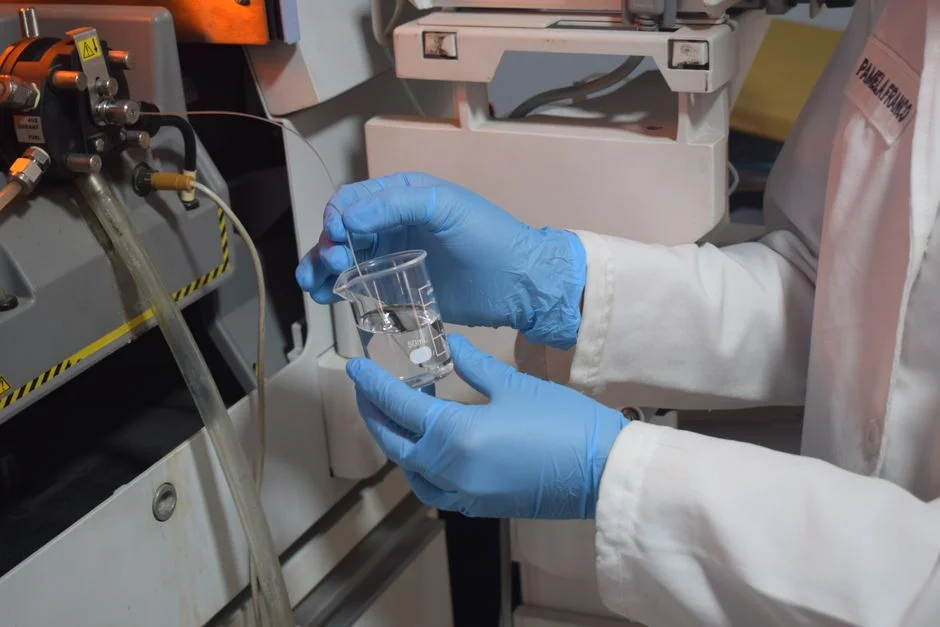
Reuse, direct discharge and zero-liquid discharge require different treatment trains because they control different contaminants and produce different residual streams. Genesis reports that a cooling tower operating at four cycles of concentration typically loses approximately 25%–30% of makeup water through blowdown. This relationship can support preliminary flow estimates, but measured meter data should control final sizing.
Genesis also reports typical blowdown TDS of 1,200–6,000 mg/L and suspended solids of 10–50 mg/L. These values are suitable for preliminary technology screening only; actual performance depends on source-water chemistry, cycles of concentration, treatment chemicals and operating conditions. Sampling must determine whether hardness, silica, alkalinity, chlorides or accumulated biocides and antiscalants are controlling performance.
For cooling-tower makeup reuse, the recovered water must preserve heat-transfer efficiency and remain compatible with the cooling-water chemistry program. Genesis identifies suspended-solids removal, scaling control and biological control as key requirements. The design should assess whether returned water can support the intended cycles of concentration without increasing corrosion, deposition or chemical demand.
| Confirmed end condition | Primary treatment objective | Required project information |
|---|---|---|
| Cooling-tower makeup reuse | Remove suspended solids and biological material while controlling scaling and compatibility | Cooling chemistry, heat-transfer requirements, target cycles and mixing strategy |
| Non-potable reuse | Meet the receiving application’s specified quality | Intended use, application standard, sampling and authority requirements |
| Direct discharge | Reduce specifically regulated pollutants | Current local limits, permitted destination, monitoring frequency and residual limits |
| Partial or full ZLD | Recover water and manage increasingly concentrated residuals | Water balance, brine chemistry, disposal route, energy source and lifecycle cost |
No São José dos Campos numerical discharge limit can be inferred from the supplied research. The project must obtain current limits from the responsible authority before defining an acceptance basis. An industrial reverse osmosis blowdown treatment train should be evaluated when low-TDS permeate or comprehensive dissolved-solids removal is required, with concentrate handling included in the scope.
Genesis reports installed costs of $250,000–$500,000 for a 50,000-GPD blowdown RO system, compared with typical full-ZLD capital costs of $3–$8 million and operating costs of $5–$15 per thousand gallons treated. These are US benchmarks, not São José dos Campos quotations; local scope, site works, energy, chemicals and residual disposal must be priced separately.
Screen the treatment technologies against the actual wastewater
Technology selection follows the contaminant and end-use requirement, not the largest catalog capacity. UF addresses suspended solids, colloids and microbial control and can provide pretreatment ahead of RO or NF. RO is appropriate where low-TDS permeate or broad dissolved-solids removal is required. DAF is suited to industrial streams containing suspended solids, FOG, oil and grease or colloidal matter. Packaged sewage treatment serves the sanitary stream, while chlorine dioxide provides chemical disinfection where that function is required.
HydropureWater’s hollow-fiber ultrafiltration pretreatment system is specified in the supplied research as a 2,000–40,000 L/h range with 0.03-micron PVDF membranes, automatic backwash and air scour. Genesis identifies UF primarily as pretreatment for RO/NF or as a standalone option where biological and particulate removal dominate. UF alone does not remove the dissolved salts that may drive cooling reuse or discharge requirements.
Genesis reports RO recovery of 50%–85% and permeate TDS of 10–50 mg/L for blowdown applications. It also recommends feed filtration below 10–15 microns and chemical conditioning against scaling. The UF specification can therefore be checked against pretreatment duty, while the industrial reverse osmosis blowdown treatment must be assessed for scaling, recovery, concentrate disposal and end-use quality.
For industrial wastewater pretreatment, HydropureWater’s DAF range is 4–300 m³/h across 13 standard models. The dissolved air flotation unit should be selected only where floatable or colloidal contaminants justify it and after feed chemistry and hydraulic loading are confirmed.
The WSZ sanitary range is 1–80 m³/h, with anoxic or aerobic biological contact oxidation, sedimentation and disinfection. Compare both average and peak sewage flows against that range rather than treating the upper limit as design capacity. The underground integrated sewage treatment plant also requires confirmation that its treatment objective and footprint suit the site.
| Technology | Best-fit wastewater and objective | Key screening checks |
|---|---|---|
| UF | Blowdown or process water requiring solids, colloid or microbial removal; pretreatment to RO/NF | Feed solids, recovery, cleaning frequency, permeate quality and downstream compatibility |
| RO | Low-TDS cooling makeup or comprehensive dissolved-solids removal | Scaling chemistry, antiscalant, recovery, pretreatment, concentrate route and energy |
| DAF | Industrial wastewater containing suspended solids, FOG, oil and grease or colloidal material | Contaminant type, flocculant demand, float removal, sludge handling and hydraulic variation |
| Packaged sewage treatment | Domestic sewage requiring biological treatment, settling and disinfection | Average and peak sanitary flow, wastewater characteristics, footprint and authority acceptance |
| Chlorine dioxide | Microbial control in industrial cooling loops or process wastewater | Required dose, residual, contact conditions, chemical supply, safety and discharge limits |
HydropureWater offers manual and automatic chlorine dioxide systems from 50 g/h to 20,000 g/h for industrial cooling loops and process wastewater. The chlorine dioxide generation system must be matched to demand, controls, residuals and site hazards. Catalog capacity is not evidence of permit compliance; acceptance criteria must follow the confirmed destination and measured feed chemistry.
Turn the selected process into an implementable project
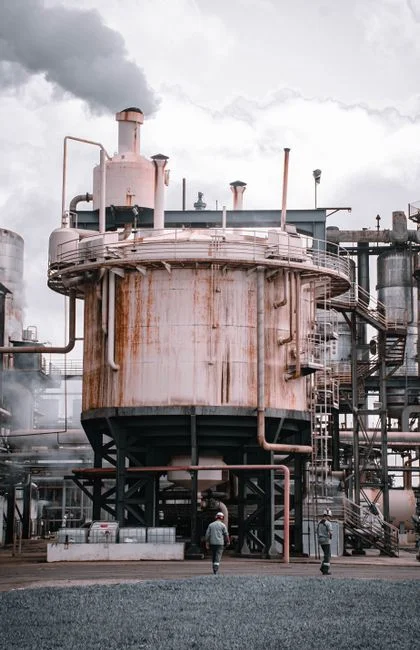
The selected treatment route should become a controlled process flow before commercial offers are compared. The drawing must show segregation, equalization, pretreatment, primary treatment, disinfection, storage, reuse or discharge, residual handling and monitoring points. Each transfer should have a defined owner, flow measurement point and controlled bypass or isolation arrangement.
Acceptance tests should match the confirmed end use. Depending on the route, these may cover flow, turbidity, suspended solids, TDS, conductivity, hardness, pH, chlorine dioxide residual and microbiological indicators. The permit or reuse specification should determine the required parameter list, test method, sampling point, frequency and acceptance threshold; a generic equipment demonstration is not a substitute.
| Project deliverable | Minimum engineering content | Procurement check |
|---|---|---|
| Process flow and P&ID | Segregation, equalization, treatment, storage, residuals, controls and monitoring | Scope boundaries and responsibility for each stream are explicit |
| Performance guarantee | Defined feed conditions, treated-water targets, recovery and test method | Guarantee does not rely on unverified source-water assumptions |
| Controls and safety | Alarms, interlocks, bypasses, access, chemical storage and fail positions | Local engineering and safety review covers site constraints |
| Residual management | Sludge, RO concentrate, spent media and cleaning chemicals | Removal route, storage and lifecycle cost are included |
| Lifecycle comparison | Installed cost, energy, chemicals, membrane cleaning, recovery, residuals and operator workload | Comparable assumptions and local quotations support the recommendation |
Controls should cover abnormal chemistry, high flow, loss of power, chemical-out-of-service and membrane or DAF upset conditions. Chemical dosing equipment and replacement membrane and filter elements should be included in maintainability, inventory and operating-cost reviews rather than treated as incidental accessories.
Before orders are placed, obtain local engineering confirmation, authority acceptance and equipment-performance guarantees. The bid documents should require suppliers to state the feed basis, guaranteed flow, treated-water quality, recovery, utility demand, residual output, control scope, commissioning method and exclusions. This closes the gap between equipment selection and operating compliance.
Frequently Asked Questions
What treatment capacity does a São José dos Campos data center need?
Size the system from measured average and peak flows for each segregated stream. Use the WSZ range of 1–80 m³/h and UF range of 2,000–40,000 L/h only as equipment-screening limits, not as site design values. Request the measured sanitary, condensate, blowdown and process-wastewater hydrographs, then compare each train with its confirmed end condition.
Is UF enough for cooling blowdown?
UF is appropriate when suspended solids, colloids and microbes are the main objectives. The supplied research identifies it primarily as pretreatment for RO or NF when dissolved-solids removal is required. Confirm whether TDS, chloride, hardness, silica or antiscalant residues control the reuse or discharge objective before accepting UF as the complete treatment route.
How much does data-center wastewater treatment cost?
The cited US benchmarks range from $250,000–$500,000 installed for a 50,000-GPD blowdown RO system to $3–$8 million for full ZLD; Genesis gives full-ZLD operating costs of $5–$15 per thousand gallons treated. Request local quotations based on measured flow and chemistry, with site works, utilities, chemicals, membrane cleaning, residual disposal, commissioning and operator workload shown separately. Do not convert these US benchmarks into a São José dos Campos price without a local scope.
Which treatment is best when discharge limits are uncertain?
Do not select from generic limits or another municipality’s rules. Obtain the current written requirements from the relevant São José dos Campos authority, sample the feed through relevant operating conditions, and evaluate UF, RO or other pretreatment against confirmed pollutants and end-use criteria. A hollow-fiber ultrafiltration pretreatment system or industrial reverse osmosis blowdown treatment should advance only when its feed assumptions and acceptance tests match that basis.
Should domestic sewage and cooling blowdown share one treatment plant?
They should remain separately characterized and controlled because sanitary sewage needs biological treatment, while blowdown may require dissolved-solids removal, scaling control, disinfection and separate residual handling. They may share downstream collection or monitoring infrastructure only after the authority and design team confirm that route. For the sanitary stream, screen the underground integrated sewage treatment plant separately from the blowdown train.