First Confirm Which Thuan An the Project Refers To
A data center in Thuan An, Vietnam, normally needs a segregated treatment train for cooling tower blowdown, domestic sewage, and process wastewater. CTBD is typically scale-prone: the supplied industry range is 1,200–6,000 mg/L TDS, 10–50 mg/L TSS, and 25–30% makeup loss at 4 cycles of concentration. A practical reuse train is filtration, UF where required, and RO at 50–85% recovery, with antiscalant and pH control. Domestic sewage should remain separate. Before design, obtain the Binh Thuan intake analysis, cooling chemistry, receiving-WWTP or marine-outfall permit, and local DONRE confirmation; do not transfer Hanoi limits to Thuan An.
Vietnam has more than one locality named Thuan An, so the first design action is administrative and geographic confirmation, not equipment selection. Record the ward or commune, district or city, province, site coordinates, and proposed receiving route. Thuan An in Binh Thuan must not be confused with Thuan An in Hanoi, and the supplied Hanoi and Da Nang material is comparative evidence rather than a local permit basis.
The regional drought context also requires careful wording. A 2025 remote-sensing study by the Journal of Science, Hanoi National University of Education found severe and extreme drought primarily in coastal plains including Thuan Bac and Thuan Nam within the broader Ninh Thuan study region. This supports a water-availability check for the wider province, but it does not establish site rainfall, intake yield, water temperature, or a wastewater limit for a Binh Thuan Thuan An campus.
Before FEED, request coordinates, intended sewer or outfall, industrial-park status, campus IT power, cooling configuration, water source, cooling chemistry, and the required reuse percentage. The Kagoshima data-center wastewater treatment planning example shows the type of question sequence to apply; the Samarkand cooling-blowdown treatment example is likewise comparative, not a source of local limits.
Build the Wastewater Mass Balance by Stream
The blowdown identity cited in the supplied 2026 Hanoi guide is the starting equation: blowdown fraction of makeup equals 1/(CoC − 1), so at 4 cycles of concentration the fraction is 25%. The FEED mass balance must nevertheless be built stream by stream because equal flow does not mean equal chemistry or equal discharge risk.
Segregate continuous cooling tower blowdown, staff domestic sewage, humidification bleed-off, chiller or generator blowdown, and periodic cleaning or test wastewater. Record each stream’s average and peak flow, operating schedule, temperature, pH, solids, dissolved salts, treatment chemicals, and intended destination. Keep sanitary sewage outside the high-TDS CTBD membrane train.
| Design input | Screening evidence | Confirmation required for Thuan An |
|---|---|---|
| Blowdown flow | 25% of makeup at 4 CoC, using 1/(CoC − 1), according to the supplied 2026 Hanoi guide | Measured tower flow, evaporation, makeup, and operating CoC |
| CTBD dissolved solids | 1,200–6,000 mg/L TDS screening range from Genesis Water Technologies, as reported in the supplied 2026 Da Nang guide | Seasonal intake and CTBD analyses |
| CTBD suspended solids | 10–50 mg/L screening range from Genesis Water Technologies, as reported in the supplied 2026 Da Nang guide | Site TSS, turbidity, and filtration loading |
| Source water | No confirmed Thuan An dataset supplied | At least 12 months of TDS or conductivity, hardness, silica, alkalinity, temperature, TOC, TSS, and turbidity |
| Cooling chemicals | Generic screening identifies accumulated residuals, not a verified local inventory | Biocide, antiscalant, corrosion inhibitor, dispersant, phosphonate, copper, zinc, pH, and CoC |
Do not treat the screening chemistry as design values. Request a minimum 12-month seasonal source-water record, then measure the actual cooling-loop chemistry and CTBD. Use the source-water data to calculate evaporation and blowdown, and use the measured blowdown chemistry to set pretreatment, antiscalant, membrane, and concentrate-management duties. The equipment boundary should also include appropriate intake protection; a rotary mechanical bar screen can be evaluated where drifting debris must be removed before the CTBD treatment train.
Match the Treatment Train to the Reuse Objective
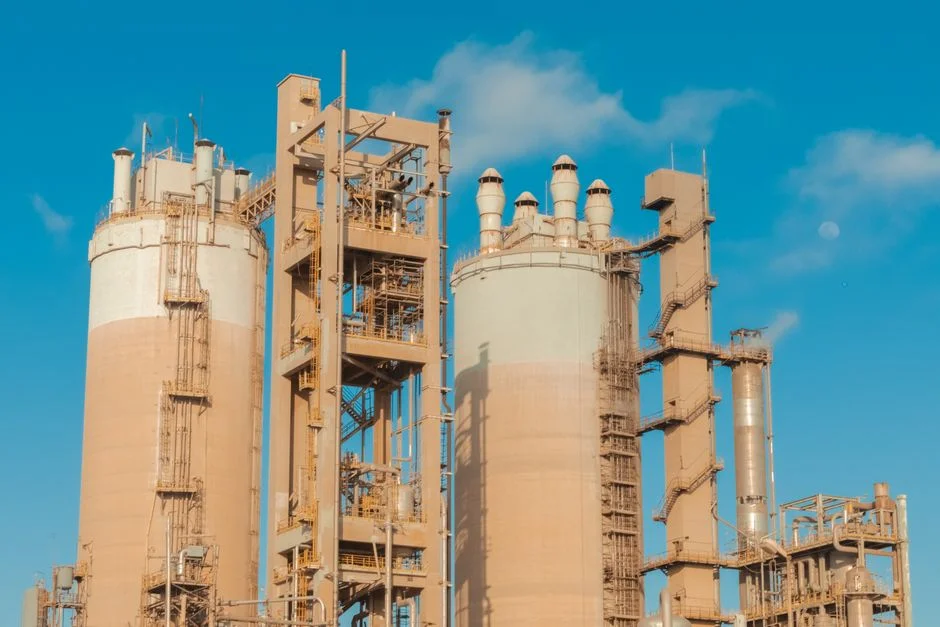
The reuse objective determines whether the project needs discharge treatment, softening, side-stream RO, or zero liquid discharge. For a reuse-led campus, the supplied 2026 Da Nang guide describes side-stream filtration, hollow-fiber UF at 90–95% recovery and 10–30 psi operating pressure, followed by industrial RO. Evaluate hollow-fiber UF pretreatment for CTBD against actual feed solids and the required permeate specification.
Genesis Water Technologies, as cited in the supplied 2026 Da Nang guide, reports that RO removes 95–99% of dissolved solids and produces 10–50 mg/L TDS permeate at 50–85% blowdown-RO recovery. For scaling control, IDE Tech’s 2026 comparison identifies silica, calcium carbonate, and calcium sulfate as the critical species and gives conventional brackish RO recovery of 75–80%. These are selection benchmarks, not guaranteed Thuan An performance; recovery must be set from the verified concentrate chemistry.
| Option | Indicative train | Best fit | Main FEED question |
|---|---|---|---|
| Discharge only | Filtration, chemistry control, solids or biocide treatment as required | Receiving route permits the treated stream and reuse demand is low | What are the sewer operator’s inlet limits? |
| Softening | Filtration plus sodium-cycle softening | Simpler loop management where verified chemistry supports it | Can industrial softening reduce scaling sufficiently without excessive salt addition? |
| UF plus RO reuse | Side-stream filtration, UF where justified, antiscalant and pH control, then industrial RO for cooling blowdown reuse | Cooling make-up reuse and freshwater reduction | What recovery and concentrate route are acceptable? |
| Full ZLD | RO followed by brine concentration and crystallization | Binding no-discharge condition, severe water constraint, or contractual water-positive target | Is the additional CAPEX, energy, solids handling, and operator burden justified? |
The commercial comparison is substantial. The supplied 2026 Da Nang guide reports $250,000–500,000 installed for a 50,000 GPD blowdown RO system and $1.50–3.00 per thousand gallons treated. It also reports $3–8 million CAPEX and $5–15 per thousand gallons OPEX for full ZLD. These are commercial benchmarks, not Thuan An quotations. A practical reuse train should be based on the 25–30% makeup loss, 1,200–6,000 mg/L TDS, and 10–50 mg/L TSS screening ranges only until site testing replaces them. Use the high-TDS RO design guide and high-salinity RO technology comparison to develop bidder requirements, not to assume local recovery.
Protect Membranes and Control the Residual Chemistry
CTBD pretreatment must protect membranes from particulates, colloids, scale, and incompatible chemical residuals. The supplied 2026 Da Nang guide gives three pretreatment requirements: feed filtration to less than 10–15 μm, antiscalant injection, and pH adjustment ahead of RO.
Multi-media filtration removes suspended solids and colloids that would otherwise foul downstream membranes. Add UF only when the verified feed quality or reuse specification justifies it. Coordinate membrane selection with the actual cooling program before issuing an RFQ. A non-phosphate, low-toxicity program may simplify pretreatment; phosphonate programs can increase fouling and nutrient-management burdens. Neither can be assumed until the site provides its chemical inventory, dosage rates, and residual concentrations.
| Control point | Required function | Supplier information to request |
|---|---|---|
| Cooling-loop chemistry | Control biocide, antiscalant, corrosion inhibitor, dispersant, and pH within the verified operating program | Complete chemical inventory, concentrations, feed points, and membrane compatibility statement |
| Multi-media pretreatment | Remove suspended solids and colloids before UF or RO | Filtrate specification, backwash capacity, media replacement assumptions |
| RO feed conditioning | Antiscalant and pH control | Dosing range, control signal, chemical consumption estimate, and membrane warranty conditions |
| Discharge or reuse header | Continuous conductivity, pH, temperature, and residual-biocide monitoring | Analyzer ranges, calibration method, data output, and alarm configuration |
| Microbial control | Provide the residual required by the selected cooling program | Generator capacity, feed-water quality, output controls, and residual monitoring |
Place online monitoring at the discharge or reuse header, with automatic pH trim where required. For chemical control, evaluate multi-media filtration for membrane protection, automatic dosing for conductivity-triggered antiscalant and biocide control, and on-site chlorine dioxide generation where the selected cooling program requires it. Use the data-center wastewater and cooling blowdown planning guide to frame the complete pretreatment and controls scope.
Keep Domestic Sewage Separate From Blowdown
Domestic sewage should be treated in a dedicated biological package because its organic load, nutrients, and biological treatment requirements differ fundamentally from CTBD. Staff, cafeteria, and welfare flows should not enter the blowdown equalization tank unless a specific hydraulic and process assessment demonstrates that dilution improves the overall treatment result.
The supplied 2026 Da Nang guide gives initial product screening ranges: compact integrated sewage package plants cover 1–80 m³/h, while MBR systems cover 10–2,000 m³/day. These ranges are vendor product capabilities, not proof that either technology is required. Evaluate an integrated sewage treatment package and an integrated MBR treatment system against the confirmed sanitary flow, footprint, effluent standard, odor control, and reuse route.
Size the sewage train from occupancy and domestic-flow generation, not IT power. The supplied data-center water-demand examples describe cooling demand rather than sanitary generation, so they cannot size the sewage plant. Obtain the design occupancy, operating shifts, visitor and contractor assumptions, cafeteria fixtures, and domestic-flow factors approved for the project. Include equalization, biological treatment, solids removal, disinfection, and discharge or non-potable reuse provisions in the sanitary scope.
Disinfect treated sewage before sewer discharge or any non-potable reuse. Use chlorine dioxide where appropriate for the confirmed site chemistry and residual-control requirements. Keep the final sewer acceptance criteria, reuse specification, and sampling programme separate from the CTBD permit basis; otherwise a permissive sewer solution can become a membrane-feed or reuse-quality constraint.
Confirm the Binh Thuan Discharge Route and Permit Basis
The discharge route must be fixed before the treatment train is optimized. Determine whether the destination is an industrial-park WWTP, municipal sewer, dedicated outfall, or another approved route. Obtain the sewer operator’s written inlet acceptance specification, not only a reference to national regulation.
The supplied 2026 Da Nang guide states that the MONRE regulation and actual numerical limits must be confirmed with the local DONRE before design freeze. It identifies QCVN 40:2015/BTNMT as a national reference through the supplied 2026 Hanoi guide, but the Hanoi guide’s Column A and Column B discussion does not establish automatic application to Thuan An. The public research supplied here contains no confirmed Thuan An-specific numerical wastewater limits.
| Permit or route input | Status in the supplied evidence | Required project document |
|---|---|---|
| Applicable national and local discharge regulation | National regulation identified; local applicability unresolved | Written DONRE confirmation and current permit |
| pH, temperature, TDS, TSS, residual chlorine, oil and grease, nutrients, and metals | No confirmed Thuan An-specific values supplied | Local limit schedule and sampling requirements |
| Industrial-park or municipal sewer acceptance | Not established | Signed inlet specification from the receiving operator |
| Marine outfall constraints | Coastal sensitivity is a design concern; no local thresholds supplied | Outfall study, receiving-water assessment, and approval pathway |
| Thermal discharge context | Medwin Publishers’ 2025 Vinh Tan study reports 32–35°C seawater discharge from a central cooling system | Site-specific thermal assessment; the study is context, not a permit limit |
Request the local limits for pH, temperature, TDS, suspended solids, residual chlorine, oil and grease, nutrients, and metals. Include receiving-water sensitivity and marine-outfall constraints in the environmental assessment before choosing reuse, partial concentration, or ZLD. Membrane and media selection should also account for the final water chemistry, so the RO and UF membrane elements for the confirmed feed should be issued only after that basis is available.
Turn the Design Basis Into a Supplier-Selection Package
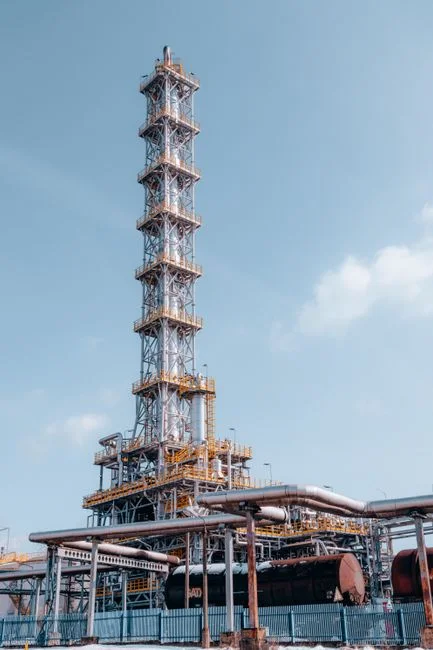
A comparable RFQ must make bidders expose their assumptions rather than allow them to bury the chemistry risk inside an equipment price. Require the feed-water analysis, flow basis, recovery, permeate quality, concentrate destination, cleaning method, availability, and membrane or media replacement assumptions to be stated explicitly.
Define the supply boundary to include pretreatment, chemical dosing, controls, online analyzers, sludge or concentrate handling, spare parts, commissioning tests, and operator training. Require each bidder to demonstrate compatibility with the site’s actual biocide, antiscalant, corrosion-inhibitor, and pH-control program. A membrane warranty does not replace pretreatment or chemical compatibility.
| RFQ schedule | Minimum bidder response | Evaluation check |
|---|---|---|
| Design basis | Feed flow and analysis; operating hours; target reuse rate; recovery | Are all values identified as measured, historical, assumed, or proposed? |
| Performance guarantee | Permeate quality, net recovery, availability, and test method | Can the guarantee be tested with the site’s actual water? |
| Concentrate and residuals | Final destination, quantity, chemistry, and handling method | Does the route satisfy the confirmed receiving requirement? |
| Chemical compatibility | Written compatibility matrix for cooling chemicals and membrane materials | Does it reflect the current site program rather than generic water? |
| Lifecycle cost | Capital, consumables, energy, cleaning, replacement, and waste-disposal assumptions | Are exclusions and price assumptions visible? |
Compare bids on whole-life cost and compliance certainty, not purchase price alone. The supplied commercial ranges show the step from a 50,000 GPD RO package at $250,000–500,000 installed to full ZLD at $3–8 million CAPEX, with reported OPEX of $1.50–3.00 per thousand gallons for RO and $5–15 per thousand gallons for ZLD. Require every bidder to identify assumptions requiring confirmation from the owner, WWTP, DONRE, or water utility. Make unresolved assumptions a commercial clarification item before award rather than an accepted commissioning surprise.
Frequently Asked Questions
How much does a CTBD treatment system for a Thuan An data center cost?
The supplied commercial benchmark is $250,000–500,000 installed for a 50,000 GPD RO system and $1.50–3.00 per thousand gallons treated; full ZLD is benchmarked at $3–8 million CAPEX and $5–15 per thousand gallons OPEX, according to Genesis Water Technologies as reported in the supplied 2026 Da Nang guide. These are not Thuan An quotations. Request pricing against confirmed design flow, seasonal chemistry, recovery, reuse rate, concentrate route, pretreatment scope, and local installation requirements.
Should the project buy UF plus RO, softening, or full ZLD?
Use UF plus RO where high-quality reuse is required and the verified feed chemistry supports the selected recovery. Use softening for a simpler loop-management approach where analysis shows it can control the relevant scaling risk without creating unacceptable salt or discharge loads. Reserve full ZLD for a binding no-discharge condition, severe local water constraint, or contractual water-positive requirement.
How should a data center select a wastewater-treatment supplier in Vietnam?
Require a defined feed-water basis, guaranteed recovery and permeate quality, compatible pretreatment, local service and consumables support, and a transparent concentrate and permit-compliance plan. Ask bidders to identify every assumed value and every item requiring owner, WWTP, DONRE, or utility confirmation. Compare whole-life cost and compliance certainty rather than equipment price alone.
Can untreated cooling tower blowdown be discharged in Thuan An?
Do not assume permission. Obtain written requirements from the local DONRE and the receiving WWTP or outfall authority because the supplied research contains no confirmed Thuan An-specific threshold for untreated CTBD. Establish the receiving route, permitted discharge characteristics, monitoring requirements, and concentrate destination before fixing the treatment train.
What measurements are needed before equipment sizing is finalized?
Request seasonal intake chemistry, CTBD chemistry, the cooling-loop chemical inventory, actual blowdown flow and cycles, wastewater-stream flows, receiving-route limits, and the required reuse rate. Also obtain source-water temperature, scaling indices, membrane-compatibility data, and the sewer operator’s written inlet specification. Without these inputs, published screening ranges cannot support a defensible FEED equipment size.