Why Da Nang, Vietnam Is Becoming a Data Center Build Site
Vietnam had 41 active data centers with a combined IT power capacity of 221 MW, according to Vietnam MOST as reported by the U.S. Commercial Service (trade.gov). Market revenue is projected at approximately $2.2 billion in 2025 and is forecast to reach roughly $2.6 billion by 2029 at about 3.7% CAGR, per a Statista figure cited by trade.gov. Two regulatory shifts make Da Nang a near-term build site rather than a theoretical one: the amended Vietnam Telecommunications Law, in force since July 2024, permits 100% foreign ownership of data centers, and the Personal Data Protection Law, ratified in June 2025 and effective January 2026, will require more domestic data storage capacity (trade.gov).
The same trade.gov brief notes that telecom developers are exploring decentralized, low-latency sites in second-tier cities like Da Nang for edge, 5G, IoT and Smart City workloads, and that Vietnam is also expanding subsea and terrestrial fiber capacity to support that footprint.
For water treatment, the relevant point is physical scale. IDE Tech notes that a 100 MW facility can require up to 2 million liters of water per day, on the order of thousands of households of daily demand. In a tropical coastal city with a tourism economy and seasonal water stress, that volume forces the design team to treat cooling tower blowdown (CTBD) as a managed resource, not a line-item disposal cost. The remainder of this guide maps that requirement to Vietnam's discharge framework and Da Nang's specific intake and discharge conditions.
What the Wastewater Streams Look Like at a Da Nang Data Center
Four streams converge at the wastewater plant. CTBD is the largest continuous flow. Genesis Water Technologies reports that a tower operating at 4 cycles of concentration loses roughly 25–30% of its makeup water as blowdown, with the discharge typically carrying 1,200–6,000 mg/L TDS, 10–50 mg/L suspended solids, scaling minerals (calcium, magnesium, silica, alkalinity), and accumulated treatment-chemistry residuals (biocides, corrosion and scale inhibitors, dispersants). Domestic sewage from staff, cafeteria and welfare facilities is a smaller but constant flow that must meet residential-strength discharge thresholds before any sewer or reuse route. Process wastewater includes humidification bleed-off, chiller and generator blowdown, and periodic cleaning or testing streams, all of which can be routed through a central equalization tank. Makeup water in Da Nang is drawn from municipal or surface sources with tropical coastal characteristics; intake TDS, hardness, silica and temperature must be confirmed with the local utility because they set blowdown chemistry and downstream scaling risk.
The table below is a starting template, not a Da Nang feed. Site-specific values must be filled in from intake analysis before the train is locked.
| Parameter | Typical CTBD range (Genesis Water Technologies) | Da Nang-specific input |
|---|---|---|
| TDS | 1,200–6,000 mg/L | Confirm against Da Nang utility analysis |
| Hardness (as CaCO₃) | Scaling-tier calcium and magnesium | Site-specific |
| Silica (as SiO₂) | Concentrated with cycles | Site-specific; governs RO recovery limit |
| Suspended solids | 10–50 mg/L | Site-specific |
| Biocide / inhibitor residuals | Variable; depends on chemistry program | Site-specific |
| Temperature | Warm recirculating water | Confirm against Da Nang intake; tropical conditions |
Cooling Tower Blowdown Treatment: Pretreatment, UF and RO
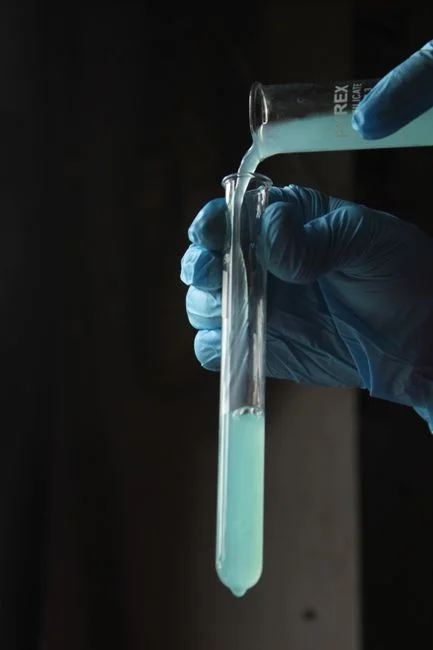
The standard reuse-oriented train has three blocks. Genesis Water Technologies recommends side-stream self-cleaning filtration at 10–25 μm, installed at 1–5% of circulation flow, to strip suspended solids, biofilm fragments and corrosion products out of the recirculating loop before they reach the blowdown. The water-quality lift from this step cascades through the whole system: cleaner heat exchangers, lower biological loading, and blowdown that is manageable for downstream membranes. A multi-media filter upstream of the membranes protects them from particulates that would otherwise shorten cleaning intervals.
Next, a hollow-fiber ultrafiltration system with 0.01–0.1 μm PVDF membranes removes bacteria, viruses, colloids and high-molecular-weight organics at low operating pressure (10–30 psi) and 90–95% recovery. UF operates as RO pretreatment or as standalone biological and particulate control, with chemical cleaning required every 1–3 months depending on feed quality (Genesis Water Technologies).
The third block is an industrial RO system for blowdown reuse. Genesis Water Technologies reports that RO removes 95–99% of dissolved solids, hardness, silica and most treatment chemicals, producing permeate at 10–50 mg/L TDS that can return to the cooling tower as high-quality makeup. Recovery on blowdown RO is typically 50–85%, limited by scaling on the concentrate side. Antiscalant injection, feed filtration to less than 10–15 μm, and pH adjustment are required, with chemical cleaning scheduled on a 1–3 month cycle depending on feed quality. For cost reference, Genesis Water Technologies places a 50,000 GPD blowdown RO system at $250,000–500,000 installed, with operating cost around $1.50–3.00 per thousand gallons treated. The broader treatment train, including side-stream filtration, UF, RO, and any polishing, should be specified against the same site data the table above calls for.
RO and UF membrane elements selected for this duty should be rated for high-TDS, scale-prone feed and verified for compatibility with the site's biocide and antiscalant program.
When to Add Evaporative Concentration or Full ZLD
Evaporative concentration is the right answer when membrane recovery hits scaling or osmotic limits, or when the project is approaching a zero liquid discharge (ZLD) target. Genesis Water Technologies reports that mechanical vapor compression (MVC) achieves 95–98% recovery from RO concentrate, producing distillate below 10 mg/L TDS at 15–25 kWh per 1,000 US gallons, with capital cost typically $1–3M for 10,000–30,000 GPD systems. Full ZLD combines RO (70–80% recovery), an MVC or brine concentrator (to 20–30% dissolved solids), and a crystallizer, reaching 95–99% overall water recovery; Genesis Water Technologies places ZLD CAPEX at $3–8M and OPEX at $5–15 per thousand gallons. The same source describes partial ZLD that reduces liquid discharge by 80–90% as a pragmatic middle ground in sites where marine discharge limits are tightening but full crystallization is not yet required.
The economic gate is the project's water-stewardship target. Genesis Water Technologies and IDE Tech both note that ZLD is justified primarily where freshwater is scarce, discharge is not permitted under any circumstances, or a binding water-positive commitment is part of the license to operate. If the objective is reuse and reduced freshwater draw rather than zero discharge, an RO-based reuse train is usually the right size of solution. ZLD is reserved for hyperscale sites with binding no-discharge permits, very high local water-stress, or aggressive corporate water-positive commitments; the engineer's decision rule of thumb is to match train complexity to the most binding discharge or stewardship constraint, not to a generic best-practice target.
Aligning the Train with Vietnam Discharge Rules and Da Nang Site Conditions
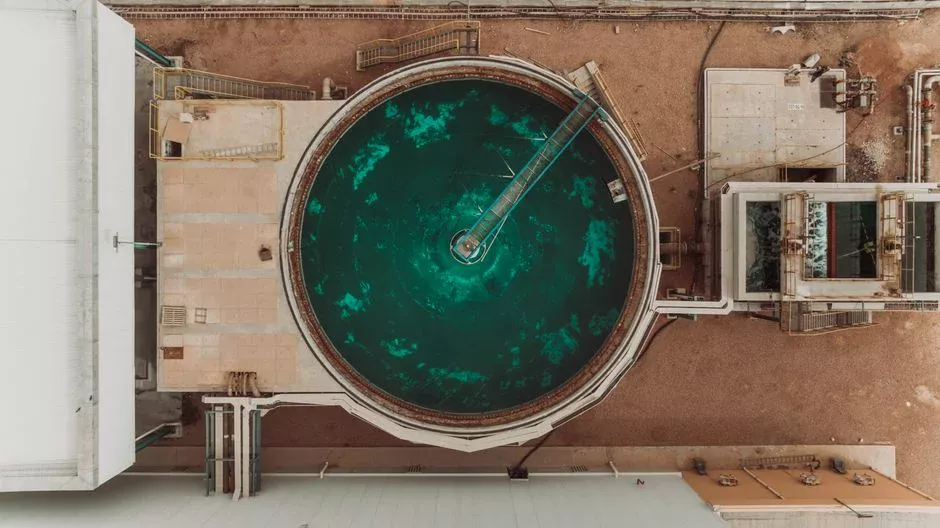
Generic treatment guidance does not design a plant in Vietnam. Final effluent to sewer or marine outfall must meet MONRE national technical regulations, and the engineer must confirm with the local Department of Natural Resources and Environment (DONRE) which standard applies: industrial wastewater, domestic wastewater, or a cooling-blowdown-specific regime. Genesis Water Technologies reports that some jurisdictions enforce TDS limits below 1,500 mg/L on industrial discharge, which is below the 1,200–6,000 mg/L typical blowdown range and effectively prohibits direct discharge of untreated CTBD. The same source places direct discharge fees in water-stressed regions at $5–15 per thousand gallons, which materially shifts the reuse-versus-discharge economics in favor of RO reuse before any regulatory pressure is layered on. None of these limits is given here as a Vietnam-specific number, because the public record does not contain a confirmed Da Nang threshold; the engineer must obtain the actual permit values from the local DONRE before design freeze.
Da Nang's coastal tropical setting adds three concrete variables: warm, high-humidity intake water that increases tower evaporation and the effective blowdown rate; marine discharge sensitivity that tightens the design margin for any outfall option; and a tourist-economy baseline that puts the plant under closer public and regulatory scrutiny. A checklist for the project data room before the train is locked:
| Input to confirm | Why it matters | Source / responsible party |
|---|---|---|
| Intake water analysis (TDS, hardness, silica, temperature, TOC) | Sets blowdown chemistry and RO recovery limit | Da Nang utility; site lab |
| Applicable MONRE national technical regulation and local sewer permit limits | Defines final effluent targets | Local DONRE; project EPC |
| Marine discharge constraints for the chosen outfall | Drives any partial ZLD or outfall design | DONRE; environmental consultant |
| Site profile (hyperscale vs. edge) and corporate water-stewardship targets | Sets the reuse-vs-discharge-vs-ZLD objective | Developer / operator |
| Biocide and antiscalant program compatibility with the recovery train | Avoids membrane fouling and discharge breaches | Water treatment vendor; O&M team |
Decision Framework: Matching the Treatment Train to the Blowdown Objective
Three blowdown objectives dominate the design conversation, and each maps to a different train. Cooling tower makeup reuse is the most common Da Nang case: side-stream filtration plus UF plus RO, with 60–85% overall recovery and direct freshwater savings (Genesis Water Technologies). Discharge compliance only is served by TDS reduction, metals removal and biocide neutralization sized to the local MONRE-aligned permit; the economic case rests on avoided discharge fees rather than water savings. ZLD is reserved for sites with binding no-discharge permits or ambitious water-positive targets, with the step-change in CAPEX ($3–8M) and OPEX ($5–15 per thousand gallons) cited above (Genesis Water Technologies). Domestic and staff wastewater should be handled by a dedicated package plant sized to occupancy, kept separate from the blowdown RO train, and disinfected before reuse or sewer discharge. A compact underground integrated sewage treatment system or an MBR integrated wastewater treatment system covers the 1–80 m³/h class typical of a Da Nang staff block; chlorine dioxide or equivalent disinfection is added before any reuse or sewer route. The decision matrix below is a working tool, not a substitute for the site-specific inputs above.
| Blowdown objective | Train | Indicative CAPEX / OPEX (Genesis Water Technologies) | Typical fit |
|---|---|---|---|
| Cooling tower makeup reuse | Side-stream filtration + UF + RO | $250,000–500,000 for 50,000 GPD RO; OPEX $1.50–3.00/kgal | Most Da Nang sites; 60–85% recovery |
| Discharge compliance only | TDS reduction, metals removal, biocide neutralization | OPEX-shaped by avoided discharge fees ($5–15/kgal in stressed regions) | Sites with limited reuse demand |
| Zero liquid discharge | RO + MVC / brine concentrator + crystallizer | CAPEX $3–8M; OPEX $5–15/kgal | Binding no-discharge permits; water-positive sites |
| Domestic / staff wastewater | Package plant + disinfection, separate from blowdown train | Sized to occupancy | All sites; never combined with CTBD RO |
Hyperscale sites should integrate the chemistry program (non-phosphate, low-toxicity scale and corrosion inhibitors) with the recovery train, so biocide and antiscalant residuals do not foul membranes or breach the local permit. A chlorine dioxide generator sized to the cooling loop and RO and UF membrane elements selected for scale-prone, high-TDS feed close out the equipment block.
Frequently Asked Questions
What is the typical blowdown volume and quality for a Da Nang data center?
A cooling tower at 4 cycles of concentration loses roughly 25–30% of makeup water as blowdown, and the stream typically carries 1,200–6,000 mg/L TDS, 10–50 mg/L suspended solids, scaling minerals, and treatment-chemistry residuals (Genesis Water Technologies). Da Nang intake water is municipal or surface water with tropical coastal characteristics, so the engineer must confirm TDS, hardness, silica and temperature with the local utility before fixing design recovery.
Can a Da Nang data center reuse cooling tower blowdown as cooling tower makeup?
Yes, and that is the most common objective. The reuse train is side-stream filtration followed by UF and RO, with 60–85% overall recovery and permeate at 10–50 mg/L TDS that returns to the cooling tower as high-quality makeup (Genesis Water Technologies). Antiscalant injection, feed filtration to less than 10–15 μm and pH adjustment are required to keep RO membranes within their scaling envelope.
When does a data center in Vietnam need ZLD rather than RO reuse?
ZLD is justified when freshwater is scarce, when discharge is not permitted under the local permit, or when a binding water-positive commitment is part of the license to operate (IDE Tech; Genesis Water Technologies). The step-change is real: ZLD CAPEX is typically $3–8M with OPEX of $5–15 per thousand gallons treated, against $250,000–500,000 for a 50,000 GPD RO reuse train at $1.50–3.00 per thousand gallons. If the objective is reuse rather than zero discharge, RO reuse is the right size of answer.
What Vietnam-specific permits and standards apply to data center wastewater discharge?
Final effluent to sewer or marine outfall must meet MONRE national technical regulations. The applicable standard (industrial wastewater, domestic wastewater, or a cooling-blowdown-specific regime) and the actual numerical limits must be confirmed with the local DONRE before design freeze; the public record does not contain a confirmed Da Nang-specific threshold, so the engineer must request the sewer permit and any marine discharge constraints directly. The same DONRE will confirm whether direct discharge of untreated CTBD is permissible at all, given that some jurisdictions enforce industrial TDS limits below 1,500 mg/L (Genesis Water Technologies).
How do I select a supplier for a data center blowdown treatment system in Da Nang?
Shortlist on three points: a UF plus RO product block sized for high-TDS, scale-prone feed (a hollow-fiber ultrafiltration system ahead of an industrial RO system for blowdown reuse); local service coverage in central Vietnam and demonstrable reference projects at tropical coastal sites; and a confirmed membrane and consumables supply chain so RO and UF elements can be replaced inside the project schedule. Ask each bidder to commit in writing to a recovery range, an OPEX range, and the pretreatment package that protects the membranes on Da Nang feed.
Related Equipment
- multi-media filter — specifications, capacity range, and technical data