What a Data Center Actually Discharges in 2026
Cooling-tower blowdown is the primary wastewater stream defining a data center's discharge profile in 2026, as water-based cooling remains the industry standard. UGA Extension TP-121 (May 2026) reports that 75–90% of data centers globally use water-based cooling, with water overwhelmingly drawn from potable municipal or groundwater sources — one analysis cited by TP-121 (Mytton, 2021) puts the potable share at about 57%.
Blowdown is the controlled bleed from a cooling tower that keeps cycles of concentration (COC) in range. Its volume equals evaporation plus drift, divided by (COC − 1); pushing COC higher is the cheapest way to shrink the discharge stream, at the cost of more chemical and membrane work on the loop. Secondary streams exist but are small: humidifier bleed, chiller purge, air-handling condensate, and the occasional dielectric-fluid leak that creates a PFAS pathway. Sanitary sewage is present but minor; UGA TP-121 (2026) emphasizes that data centers are primarily cooling-water users, so the blowdown line is the point of regulatory scrutiny.
The U.S. hosted roughly 38% of about 11,400 active global data centers as of May 20, 2026 (programs.com, via UGA TP-121), establishing the 2026 U.S. permit posture as the benchmark for global hyperscale and colocation design.
Blowdown Chemistry: Why It Cannot Be Discharged Without Thought
Blowdown contains concentrated calcium, magnesium, silica, and alkalinity, which are removed to prevent heat-exchanger scaling. UGA TP-121 (May 2026) lists the chemical additives expected by regulators: anti-corrosion and anti-scaling agents, biocides, chlorine compounds, and glycols. The same source flags a separate PFAS pathway: some non-water dielectric coolants and fluorinated gases (F-gases) used in air cooling leak or are spilled, and PFAS are difficult to remove downstream.
Thermal pollution is a parallel compliance trigger. UGA TP-121 (2026) notes that warmer discharge water can affect aquatic life, leading environmental groups to flag thermal discharge as a permitting concern. The regulatory consequence is concrete: under the Clean Water Act, blowdown discharged to U.S. surface waters may require an NPDES permit (U.S. EPA, 2026b, via UGA TP-121, May 2026). POTW discharges are governed by the local pretreatment ordinance, but the required chemical and thermal controls remain identical.
Cooling Architecture Choice Sets the Wastewater Problem
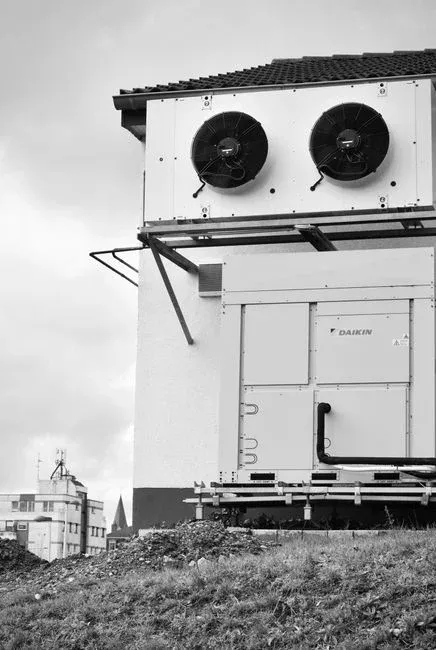
Wastewater train design is downstream of cooling-architecture choice. Open evaporative cooling has the lowest electricity use per kW of IT load but the highest water throughput, and therefore the largest blowdown stream. Closed-loop cooling, per UGA TP-121 (May 2026), can cut water consumption by up to 70% versus open evaporative, at the cost of increased electricity and system complexity. Direct liquid and immersion cooling shift the wastewater focus onto dielectric-fluid handling, where PFAS is the dominant permit risk (UGA TP-121, 2026). Free cooling and air-only systems reduce water use toward zero, but Siddik et al. (2021, via UGA TP-121) found that nearly half of U.S. data center servers are powered by plants in water-stressed regions, making the energy–water tradeoff a critical design factor.
| Architecture | Water Use | Electricity Use | Dominant Wastewater / Permit Driver |
|---|---|---|---|
| Open evaporative cooling | High | Lowest per kW | Large blowdown volume; scaling, biocides, thermal |
| Closed-loop cooling | Up to 70% lower (UGA TP-121, 2026) | Higher | Smaller blowdown; higher cycles of concentration |
| Direct liquid / immersion | Lowest water | Higher | Dielectric fluid handling; PFAS pathway (UGA TP-121, 2026) |
| Air-only / free cooling | Near zero | Highest | Indirect water via power plant cooling (Siddik et al., 2021) |
Treatment Trains Engineers Actually Specify in 2026
Engineers design treatment trains for two functions: the source-side train that conditions reclaimed municipal make-up, and the blowdown-side train that protects the cooling loop and minimizes discharge.
On the source side, Cartagena et al. (2026) model a depth-filtration → GAC → chlorination train for reclaimed municipal water, with an alternative UF+RO scenario that uses more than five times the energy of the freshwater baseline but raises COC enough to cut blowdown and chemical consumption. The same study reports that a reclaimed-source scenario carries roughly twice the GWP of freshwater, with treatment energy accounting for about 80% of the difference — a factor the 2026 trade study must price against local grid carbon intensity.
On the blowdown side, side-stream filtration (sand or multi-media) protects the cooling loop; softening or RO is used to push COC higher and shrink discharge volumes. Pretreatment ahead of any RO module is a multi-media filter, sized to keep the feed SDI within the membrane maker's envelope; SDI values must be requested from the membrane vendor rather than assumed. Disinfection on the loop is typically chlorine dioxide, with UV as the alternative where chlorinated byproducts are a concern. Any clarification or softening step produces a sludge stream that must be dewatered on site; sludge volume should be determined via jar tests on the actual blowdown.
| Unit Operation | Function in the Train | Source |
|---|---|---|
| Multi-media filtration | RO/membrane protection; side-stream loop filtration | Function per Cartagena et al. (2026); equipment mapping: multi-media pretreatment filter |
| Ultrafiltration (PVDF) | Part of UF+RO reclaimed-source train; particulate and microbial control | Cartagena et al. (2026); equipment mapping: PVDF ultrafiltration system |
| Reverse osmosis | Demineralization; raises COC, shrinks blowdown | Cartagena et al. (2026); equipment mapping: industrial RO system |
| Chemical dosing | Anti-scalant, biocide, corrosion inhibitor feed | Additive list per UGA TP-121 (2026); equipment mapping: PLC-controlled chemical dosing skid |
| Chlorine dioxide generation | Loop and make-up disinfection | Per supplied product literature; equipment mapping: on-site chlorine dioxide generator |
| UV sterilization | Byproduct-free disinfection; Cryptosporidium/Giardia control | Per supplied product literature; equipment mapping: UV sterilizer for the cooling loop |
| Sludge dewatering | Clarifier/softener sludge handling | Engineering requirement, no numeric in research; equipment mapping: plate-and-frame filter press for sludge |
| Membrane elements | RO/UF consumables and replacement | Cartagena et al. (2026); equipment mapping: RO and UF membrane elements |
For regional context, see a regional blowdown treatment design example and a 2026 data center wastewater case study, or a broader sustainability comparison in this 2026 data center cooling water solutions comparison.
Reclaimed Municipal Make-Up vs. POTW Discharge: A 2026 Decision Framework
The reuse-versus-discharge decision dictates capex, and the research supports a clear hierarchy. The displacement potential is significant: Stillwell & Webber (2014), cited in Cartagena et al. (2026), estimate that up to 300 million gallons per day of freshwater withdrawals could be displaced at Texas power plants alone if reclaimed municipal water were used for cooling. The treatment penalty is small in comparison: Cartagena et al. (2026) calculate the indirect water penalty of reclaimed reuse at about 0.93 L/m³ — less than 0.1% of the direct freshwater-displacement benefit.
The carbon penalty is conditional on the grid. While the same LCA shows a wastewater scenario with roughly twice the GWP of freshwater under the current grid, a sensitivity run under a fully decarbonized grid drives the reuse-side GWP penalty close to zero. A cooling system commissioned in 2026 will operate for most of its service life under grid conditions that favor the decarbonized case.
The POTW discharge path remains viable where reclaimed infrastructure is unavailable, but it carries three 2026 compliance burdens: NPDES permitting for surface-water discharge, local pretreatment-ordinance compliance, and proof of PFAS, biocide, and thermal-load control (U.S. EPA, 2026b; UGA TP-121, May 2026). Where reclaimed municipal water is available and the local grid is decarbonizing, reuse offers superior water and lifecycle carbon performance; where it is not, the discharge path requires a treatment train sized to the permit limits.
Public-disclosure requirements are increasing in 2026. Georgia SB 421, the "Data Center Transparency Act," is pending as of May 21, 2026 (via UGA TP-121), and prevents local governments from using NDAs to keep water and electricity data secret, effectively moving the reuse-vs-discharge decision into the public ESG report.
Sizing and Specifying the Equipment: A 2026 Procurement Checklist
Procurement requires a fixed list of inputs to price a treatment train. The engineer should request: site ambient wet-bulb, target PUE, evaporation and drift rates, target COC, and the local utility's water and grid carbon intensity. The chosen train must satisfy two outputs: cooling-grade make-up compatibility and discharge-line compliance (NPDES limits, POTW pretreatment limits, and thermal envelope). 2026 compliance risks include PFAS from dielectric fluids, biocide and disinfection byproducts, thermal discharge, and new transparency rules such as Georgia SB 421 (2026). The capex paper should highlight the closed-loop-vs-evaporative split, as saving water often increases electricity demand (UGA TP-121, May 2026). Essential equipment for the 2026 bid list includes multi-media pretreatment filtration, ultrafiltration, reverse osmosis, PLC-controlled chemical dosing, UV or chlorine dioxide disinfection, and on-site sludge dewatering with a plate-and-frame filter press, supported by RO and UF membrane elements.
Frequently Asked Questions
Do data centers need an NPDES permit for cooling-tower blowdown?
An NPDES permit is required if the discharge goes to U.S. surface waters. U.S. EPA (2026b), as cited in UGA TP-121 (May 2026), identifies cooling-system blowdown as a stream requiring permitting under the Clean Water Act. POTW discharge is governed by the local pretreatment ordinance, but the chemical and thermal requirements remain constant. Project teams should confirm the discharge route (surface water vs. POTW)
Frequently Asked Questions
Do data centers need an NPDES permit for cooling-tower blowdown in 2026?
Yes, under the Clean Water Act, data centers discharging cooling-tower blowdown to surface waters are required to obtain a National Pollutant Discharge Elimination System (NPDES) permit. As of 2026, regulatory scrutiny regarding thermal pollution and chemical additives—specifically biocides and corrosion inhibitors—has intensified, necessitating strict adherence to effluent limitation guidelines (ELGs) set by the EPA and delegated state authorities.
What is the most water-efficient cooling method for a data center?
Closed-loop liquid cooling combined with rear-door heat exchangers or direct-to-chip cooling is currently the most water-efficient method, as it allows for a Water Usage Effectiveness (WUE) rating approaching zero. Unlike traditional evaporative cooling systems that consume significant volumes of water through evaporation, these systems utilize secondary cooling loops that minimize or eliminate the need for make-up water, effectively decoupling the facility's thermal management from local water supply constraints.
Can reclaimed municipal wastewater be used as cooling-tower make-up water?
Yes, reclaimed municipal wastewater, or "purple pipe" water, is a viable alternative for cooling-tower make-up, provided it undergoes secondary or tertiary treatment. To prevent scaling, biofouling, and corrosion in cooling infrastructure, the water must be treated to meet specific conductivity and mineral content thresholds, often requiring additional on-site filtration or reverse osmosis (RO) polishing to manage high concentrations of ammonia, phosphorus, and total dissolved solids (TDS).
How long does it take to deliver and install a blowdown treatment skid for a hyperscale data center?
For a standard, modular blowdown treatment skid, the typical lead time from procurement to commissioning ranges between 20 and 34 weeks. This timeline accounts for custom engineering based on local discharge chemistry, fabrication of specialized membrane or ion-exchange components, on-site mechanical and electrical integration, and the mandatory performance validation testing required to ensure compliance with local pretreatment standards before the system goes live.
What is the biggest compliance risk for a new data center's wastewater discharge in 2026?
The primary compliance risk in 2026 is the exceedance of strict local pretreatment limits for heavy metals and conductivity, which can lead to significant fines or operational shutdowns by municipal Publicly Owned Treatment Works (POTWs). As municipalities tighten their industrial discharge ordinances to protect water reclamation facilities, data centers often face unexpected violations if their chemical treatment programs—specifically the discharge of phosphorus-based scale inhibitors—are not precisely calibrated to meet the evolving local sewer use ordinances.