Why Tirunelveli Data Centers Cannot Just Dump Blowdown in 2026
Cooling-tower blowdown is the single largest wastewater stream at any water-cooled data center, and at 4 cycles of concentration a typical facility loses roughly 25–30% of its makeup water to blowdown (S1, Genesis Water Technologies). Tirunelveli sits inside the Tamiraparani basin, where surface and groundwater are intensively withdrawn for irrigation, industry and municipal supply — the operating context that is pushing hyperscalers to demand reuse-ready designs rather than drain-tile layouts (S2, IDE Technologies).
Blowdown characteristics relevant to a Tirunelveli facility are 1,200–6,000 mg/L TDS, 10–50 mg/L suspended solids, plus accumulated biocides, scale/corrosion inhibitors and biofilm fragments (S1). TNPCB consent conditions typically constrain TDS, total suspended solids, residual chlorine/biocide and heavy metals; in many jurisdictions TDS discharge limits below 1,500 mg/L effectively prohibit direct blowdown discharge (S1). The article treats this as a "check your consent order" item rather than a fixed number, because Tamil Nadu's site-specific consent orders vary by discharge route and catchment. For a hyperscale or edge campus scoping in Tirunelveli in 2026, "just blow it to drain" is no longer a defensible design assumption — the water-stress backdrop, the basin allocation pressure, and the consent envelope together make blowdown treatment a siting prerequisite, not an add-on.
Cooling-Tower Blowdown Chemistry: What Is Actually in the Water
Blowdown TDS runs 4–8× the makeup water, landing in the 1,200–6,000 mg/L range depending on cycles of concentration and source water quality (S1). The scaling minerals — calcium, magnesium, silica and alkalinity — concentrate proportionally and govern downstream reverse-osmosis recovery limits, which is why Tirunelveli-source hardness and silica numbers must be measured before any skid is specified (S1). Treatment chemicals carry through: biocides, corrosion and scale inhibitors, dispersants, and any legacy chromate or high-phosphate chemistry from older cooling programs (S1). Suspended solids sit at 10–50 mg/L from corrosion products, biofilm fragments and airborne particulates; biological content includes planktonic bacteria, algae and biofilm-formers even in well-maintained systems (S1). For reuse as cooling-tower makeup, S5 (Genesis Water Technologies) defines the target envelope shown below.
| Parameter | Reuse target as cooling-tower makeup |
|---|---|
| TDS | 500–1,500 mg/L |
| Hardness | <200–400 mg/L as CaCO₃ |
| Suspended solids | 10–25 mg/L |
| pH | 6.5–8.5 |
| Alkalinity | 50–200 mg/L as CaCO₃ |
| Heterotrophic plate count | <10,000 CFU/mL |
A Tirunelveli site drawing from a mixed ground/municipal supply typically lands in the upper end of the TDS reuse window once makeup cycles are pushed to 5–6, so the question is not "do we need membranes" but "which membrane step is the right first cut," which the next section answers.
The 2026 Treatment Train for Tirunelveli Cooling Blowdown
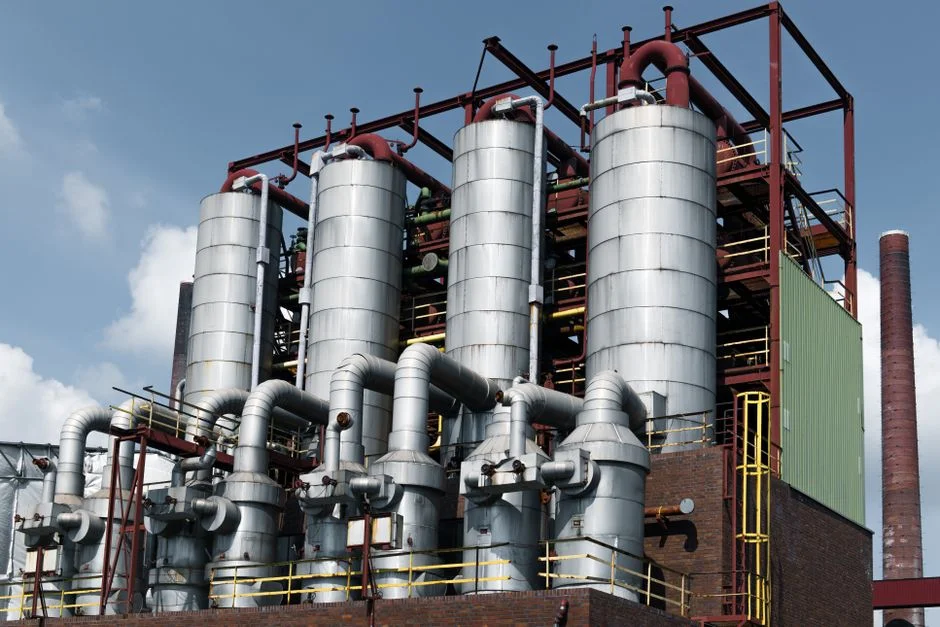
Side-stream filtration is the prerequisite that makes the rest of the train stable. Self-cleaning spiral or multimedia units sized at 1–5% of circulation flow drop blowdown suspended solids to a level downstream membranes can tolerate; CAPEX in S1 is $50,000–200,000 for typical data-center installations (S1). On Tirunelveli's hot, humid days, basin airborne-dust loading tends to be higher than the temperate-climate baseline that vendor curves assume, so conservative sizing here pays back in membrane life. HydropureWater multi-media filter skid packages handle this duty with minimal operator intervention.
Ultrafiltration (0.01–0.1 µm pore size) at 10–30 psi removes bacteria, viruses and colloids at 90–95% recovery, acting as RO pretreatment or as a standalone polishing step where dissolved solids are not the limiting factor (S1). A HydropureWater hollow-fiber UF system is the typical insertion point between the side-stream filter and the RO feed tank, with chemical cleans scheduled every 1–3 months depending on feed quality (S1).
Reverse osmosis is the reuse workhorse: 95–99% dissolved-solids rejection, permeate 10–50 mg/L TDS, operating pressure 150–400 psi, recovery 50–85% for blowdown because scaling potential sets the ceiling (S1). Conventional BWRO on cooling-tower blowdown (CTBD) plateaus at 75–80% recovery before silica, calcium carbonate and calcium sulfate scaling become unmanageable; high-recovery designs add a fluidized-bed salt-precipitation step and dynamic RO cycling to reach ~95% overall recovery, with permeate silica around 1 mg/L (S2). Nanofiltration (75–150 psi, 70–85% recovery) is the lower-energy middle ground when hardness rather than total TDS is the limiting parameter for reuse or discharge (S1). A HydropureWater industrial RO system with energy-recovery and antiscalant dosing typically covers the BWRO role; a secondary NF or RO pass polishes the concentrate stream when partial ZLD is in scope.
Evaporative polishers (MVC) at 95–98% recovery and distillate TDS <10 mg/L treat RO concentrate when approaching ZLD or partial ZLD, with energy demand 15–25 kWh per 1,000 US gallons and CAPEX of US$1–3M at 10,000–30,000 GPD (S1). Tablet-based chemistry programs (Genclean-S-style) reduce biocide and scale-inhibitor carryover that otherwise fouls membranes and complicates TNPCB discharge compliance, and pair naturally with a HydropureWater chlorine dioxide generator for residual disinfection on the polishing loop (S1, S5).
| Unit operation | Recovery / removal | Operating pressure | Indicative CAPEX (S1) | Tirunelveli-fit notes |
|---|---|---|---|---|
| Side-stream spiral / MMF | 10–25 µm cut | Gravity / low | US$50,000–200,000 | Size 1–5% of circ flow; pretreats RO feed |
| UF | 90–95% recovery, 0.01–0.1 µm | 10–30 psi | Sized with RO skid | Standalone polish or RO pre-treatment |
| NF | 70–85% recovery | 75–150 psi | Lower than RO | When hardness is the limit, not TDS |
| BWRO (single stage) | 75–80% recovery on CTBD | 150–400 psi | US$250,000–500,000 at 50,000 GPD | Baseline reuse train |
| High-recovery RO + fluidized-bed salt precipitation | ~95% overall | 150–400 psi + reactor | Higher than single-stage | Pushes cycles of concentration up (S2) |
| MVC (evaporative polisher) | 95–98% of concentrate | Thermal | US$1–3M at 10,000–30,000 GPD | Partial ZLD, distillate <10 mg/L TDS |
Reuse, Discharge Compliance, or Partial ZLD: A Tirunelveli Decision Framework
Reuse as cooling-tower makeup offers the strongest value — 60–85% recovery of blowdown, lower freshwater draw, and lower discharge fees (S1); on-site systems typically recover 70–90% of blowdown (S5). For a Tirunelveli hyperscale with reliable municipal sewer access and an achievable TNPCB consent order, reuse-as-makeup is the default. Discharge compliance is the right call when TNPCB consent is achievable, sewer access is reliable, and reuse water demand is limited; the economic case rests on avoided discharge fees, which S1 reports as >$5–15 per 1,000 gallons in water-stressed regions (S1). Partial ZLD (RO concentrate reduced by 80–90%) is the middle path when discharge is restricted but full crystallization is uneconomic; full ZLD combining RO + MVC + crystallizer achieves 95–99% overall recovery at CAPEX US$3–8M and OPEX US$5–15 per 1,000 gallons for typical data-center capacity (S1). For a remote edge site or a campus near a water-quality-sensitive receptor — think an irrigation-dependent village downstream of the outfall — partial ZLD is the safer consent strategy regardless of the headline CAPEX. Engineers in Tamil Nadu should treat the decision as consent-driven first, cost-driven second: a TNPCB officer will not sign off on a discharge route the basin cannot absorb, no matter how cheap the OPEX looks on paper.
| Strategy | Typical recovery | Best-fit Tirunelveli scenario | Cost driver |
|---|---|---|---|
| Reuse as makeup | 60–85% (S1), on-site 70–90% (S5) | Hyperscale with municipal sewer and consent | RO/NF skid + side-stream filtration |
| Discharge compliance | Driven by permit, not recovery | Low reuse demand, easy TNPCB consent | Avoided discharge fees (S1: >$5–15/kgal) |
| Partial ZLD | 80–90% volume reduction on concentrate | Restricted discharge, full ZLD uneconomic | MVC polish on RO concentrate |
| Full ZLD | 95–99% | No discharge path, high water-stress | US$3–8M CAPEX, US$5–15/kgal OPEX (S1) |
Sizing, CAPEX Envelope and the TNPCB Consent Checklist
A 50,000 GPD RO skid treating blowdown sits in the US$250,000–500,000 installed range, with operating cost US$1.50–3.00 per 1,000 gallons (S1) — a planning benchmark, with the caveat that the figure is USD and site-specific. MVC at 10,000–30,000 GPD capacity is US$1–3M CAPEX (S1); full ZLD at data-center scale lands at US$3–8M CAPEX with US$5–15 per 1,000 gallons OPEX (S1). Translated qualitatively for a Tirunelveli project: an edge or small colocation site (sub-2 MW IT) typically lands in the "single RO skid + side-stream filtration" CAPEX band and does not need thermal equipment; a mid-size colocation (2–10 MW) usually adds a high-recovery RO stage to push cycles and may justify a partial MVC polish if consent gets tight; a hyperscale campus (10 MW and up) is where full ZLD becomes a real conversation, especially if the site has no municipal sewer fallback. For a defensible INR envelope, the buyer should request from the EPC: design IT load, design PUE, makeup-water TDS, target cycles of concentration, peak wet-bulb temperature (which drives evaporation and blowdown rate on Tirunelveli's hot-humid days) and the TNPCB-mandated discharge limits from the draft consent order — these inputs gate any final CAPEX number. HydropureWater RO and UF membrane elements are the consumable layer the EPC should price separately from the skid, because membrane replacement frequency drives OPEX more than any other line item.
The TNPCB consent package should explicitly cover: source-water analysis, proposed blowdown TDS and flow, reuse end-use (cooling makeup vs. horticulture vs. toilet flush), residual biocide chemistry, concentrate disposal route, and a Legionella management plan. Side-stream filtration sized at 1–5% of circulation flow is a low-cost prerequisite that consistently improves downstream membrane performance and is easy to retrofit (S1) — useful when the consent order tightens after commissioning. Engineers comparing reference projects should look at the data center cooling blowdown treatment in Khulna, Bangladesh and the data center wastewater and cooling blowdown treatment in Kobe, Japan for parallel South/Southeast Asia siting logic, and at the microelectronics wastewater ZLD hybrid system design and cost breakdown when concentrate disposal is the binding constraint.
Frequently Asked Questions
What order-of-magnitude CAPEX should a Tirunelveli hyperscale data center budget for a blowdown reuse train in 2026?
For a 50,000 GPD RO skid treating blowdown, S1 places installed cost at US$250,000–500,000 with operating cost US$1.50–3.00 per 1,000 gallons; adding MVC polish or full ZLD pushes CAPEX into the US$1–8M range (S1). The honest move is to budget in three tiers — RO-only, partial ZLD, full ZLD — and let the TNPCB draft consent order decide which tier survives.
How do I pick a treatment equipment supplier for a Tirunelveli data center without getting locked into the wrong skid?
Ask the vendor for a reference list of operating data-center installs in hot-humid climates with cycles of concentration ≥5, request feed-water and concentrate water analyses from at least one of those sites, and confirm membrane-replacement intervals and CIP chemical consumption in writing. A supplier who can only quote US-temperate references is a flag, not a disqualifier — but it means you should price in a more conservative side-stream filter and a higher antiscalant dose to cover Tirunelveli's warmer feed water.
What TNPCB consent risks should an EPC flag for a Tirunelveli site in 2026?
S1 notes that some jurisdictions have implemented TDS discharge limits below 1,500 mg/L, which effectively prohibits direct blowdown discharge without treatment; in Tamil Nadu this risk is consent-order-specific, so the EPC must request the draft consent from the developer's TNPCB liaison before finalizing any discharge-route assumption. The dossier should explicitly cover source-water analysis, blowdown TDS and flow, reuse end-use, residual biocide chemistry, concentrate disposal route and a Legionella management plan (S1, S5).
Why does the article keep mentioning cycles of concentration, and what number should a Tirunelveli engineer target?
Cycles of concentration (CoC) is the ratio of dissolved solids in circulating water to makeup water, and it directly sets the blowdown volume: at 4 CoC roughly 25–30% of makeup water is lost to blowdown (S1). Pushing CoC to 5–6 with side-stream filtration and a high-recovery RO step is where freshwater draw and discharge volume both drop meaningfully (S1, S2); the practical ceiling is set by silica and calcium-sulfate scaling, which is why a Tirunelveli source-water analysis is the first deliverable, not the last.